MILLERTON — The 250th anniversary of the American Revolution has sparked a renewed interest in the nation’s origins, reflected in a wave of cultural commentary, new books and films like the recently released Ken Burns documentary that examines how the United States began.
While popular historical narratives often glorify famous battlefields and political figures, visitors of the NorthEast-Millerton Library indulged in an exhibit last month that explored how the Revolution unfolded right here in North East among everyday people.
Curated and written by the North East Historical Society — including President Ed Downey and Meg Downey — the exhibit was on view in the library’s main building through November.
“Telling the story of how 250 years ago the American War of Independence affected the people who lived where we live now is very difficult,” the exhibit text began, adding that a devastating 1911 fire destroyed many documents and archives in the New York State Library in Albany. “This disaster incinerated many 18th-century records from Dutchess County.”
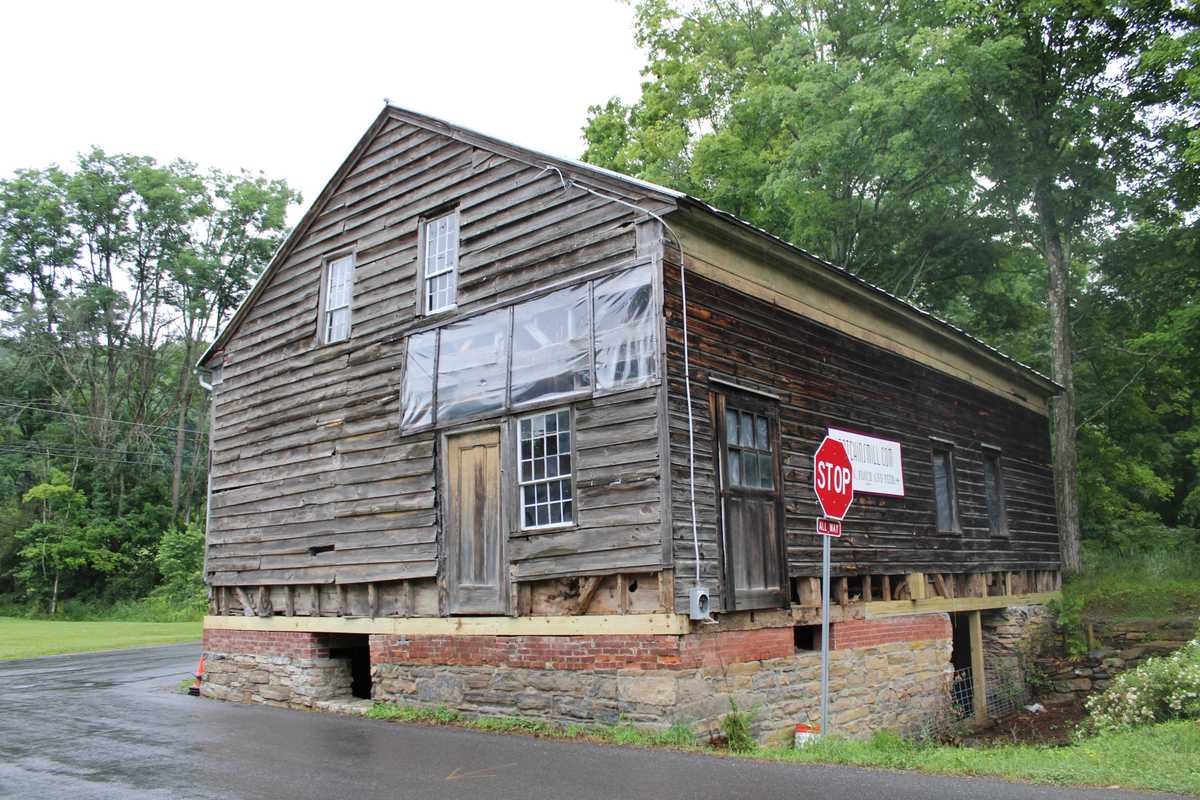
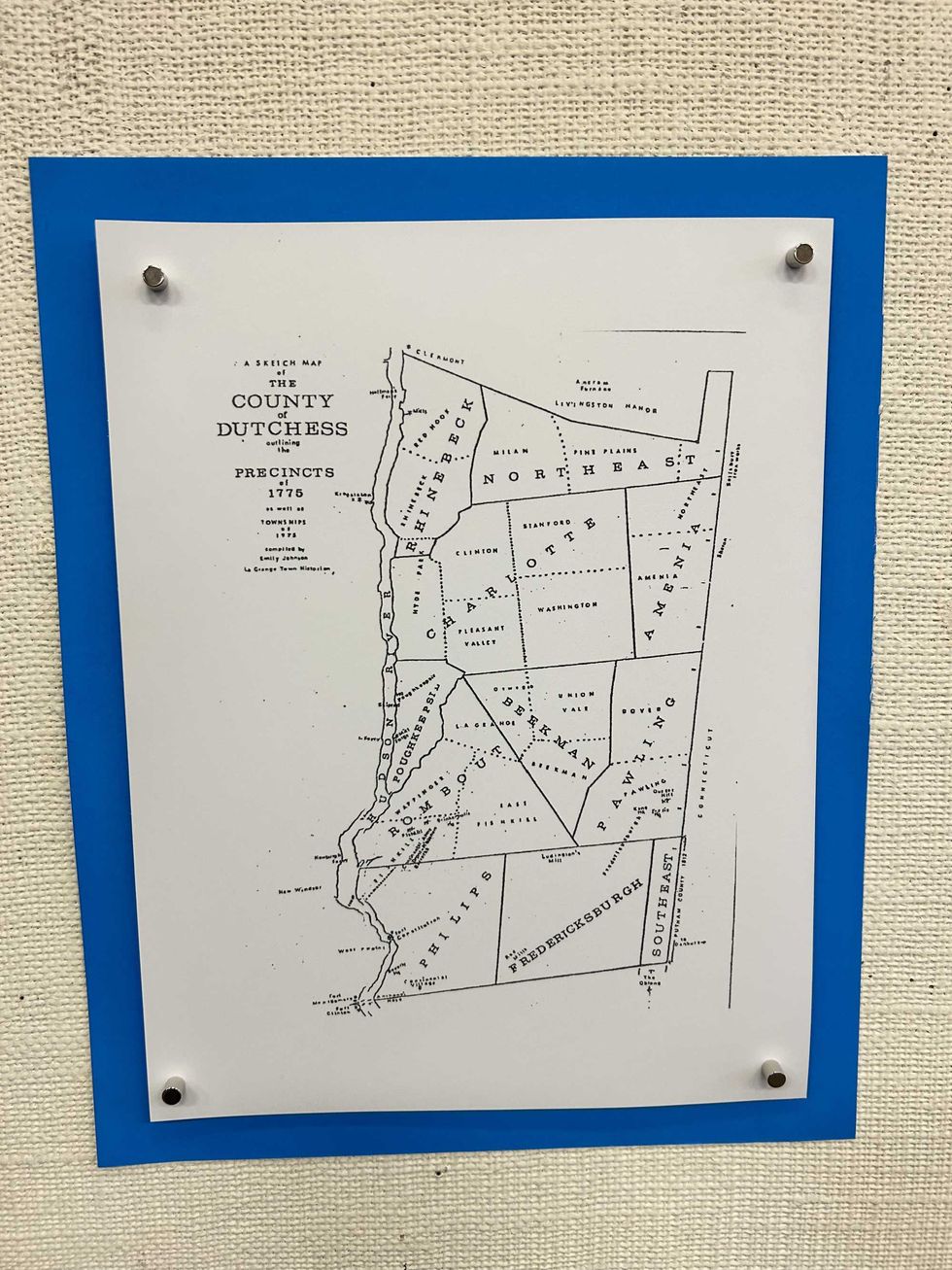 At the time of the American Revolution, local boundaries looked very different. Then known as the Northeast Precinct, which was created in 1737, North East was one of 11 precincts in Dutchess County and included what are now the towns of Pine Plains and Milan, along with the northern part of today’s Town of North East. The southern part of today’s town, with a dividing line roughly near North East Center by Downey Road, belonged to the Amenia Precinct. Photo By Aly Morrissey
Although the North East Historical Society is not in possession of any original documents or archives from the period, the exhibit drew on materials from the Dutchess County Historical Society, the History of Little Nine Partners, surviving 1778 meeting minutes discovered at the Huntington Library in California, and archived articles from The Lakeville Journal and The Millerton News, among other sources.
Everyday families felt the Revolution long before news of battles reached them. The exhibit described its impact as a “relentless stream that built up to a flood,” beginning with steep taxes, religious and political division, and eventually the forcible transfer of land and property. As local men left for battle, women managed farms and raised children alone, navigating fear, scarcity and a community split between Patriots and Loyalists.
A shadow government takes over North East
The miraculous discovery of 1778 meeting minutes from the “Committee on Safety” depicts a group of Patriots who became the de facto local government for what was then known as the Northeast Precinct, an area including the present-day towns of North East, Pine Plains and Milan.
Photographs of the meeting minutes were on display in the exhibit. The document was found in the Huntington Library of California and includes 64 clear, handwritten pages that span 17 meetings. The committee met regularly at the house of James Young in what is now Pine Plains.
“While the meetings begin in calm deliberation, grappling with problems in a seemingly orderly way, toward the end of the record book the pace becomes frenetic,” the introduction notes. The tone of the minutes become “increasingly filled with alarm” and civil unrest, and the meeting frequency increases “almost overnight.”
The committee’s work included collecting food for those in need, handling complaints such as unlicensed liquor sales, and arranging to deport families of Loyalists across enemy lines.
One prominent committee member was Samuel Eggleston IV, who lived in what is now the Town of North East. The exhibit showed his role in collecting and returning grain to support Continental troops. He is buried in Spencer’s Corners Cemetery just north of Millerton.
Local iron ore supported the Patriots
Although the region was “too sparsely settled and too dense with forests to be where armies would travel or territory worth capturing,” it had one critical resource that supported the American cause.
Pits of iron ore in nearby Ancram and surrounding areas helped “feed the blast furnace” in what is now Lakeville, Connecticut, and eventually supported the manufacturing of weaponry, including cannon and musket balls. “The Salisbury Association estimates that the approximately 850 cannons produced represented about three quarters of those made in the colonies,” the exhibit stated.
Places, faces and names
The exhibit was rich with stories, documents and local names — many of which are still recognizable in this region today. Visitors could view the full list of residents who signed, and those who refused to sign, the Patriot pledge — a commitment to reject British authority.
“Signing it would be a death warrant if their cause failed,” the exhibit noted. “But to refuse to sign could engender the hate and distrust of their fellow citizens.” Loyalty in the old Northeast Precinct was far from unanimous, with residents split over which side to support. 298 men signed while 146 declined.
Additionally, photos of local soldiers’ gravestones, records of supply collections and stories passed down through generations painted a picture of how the war shaped daily life in the region.
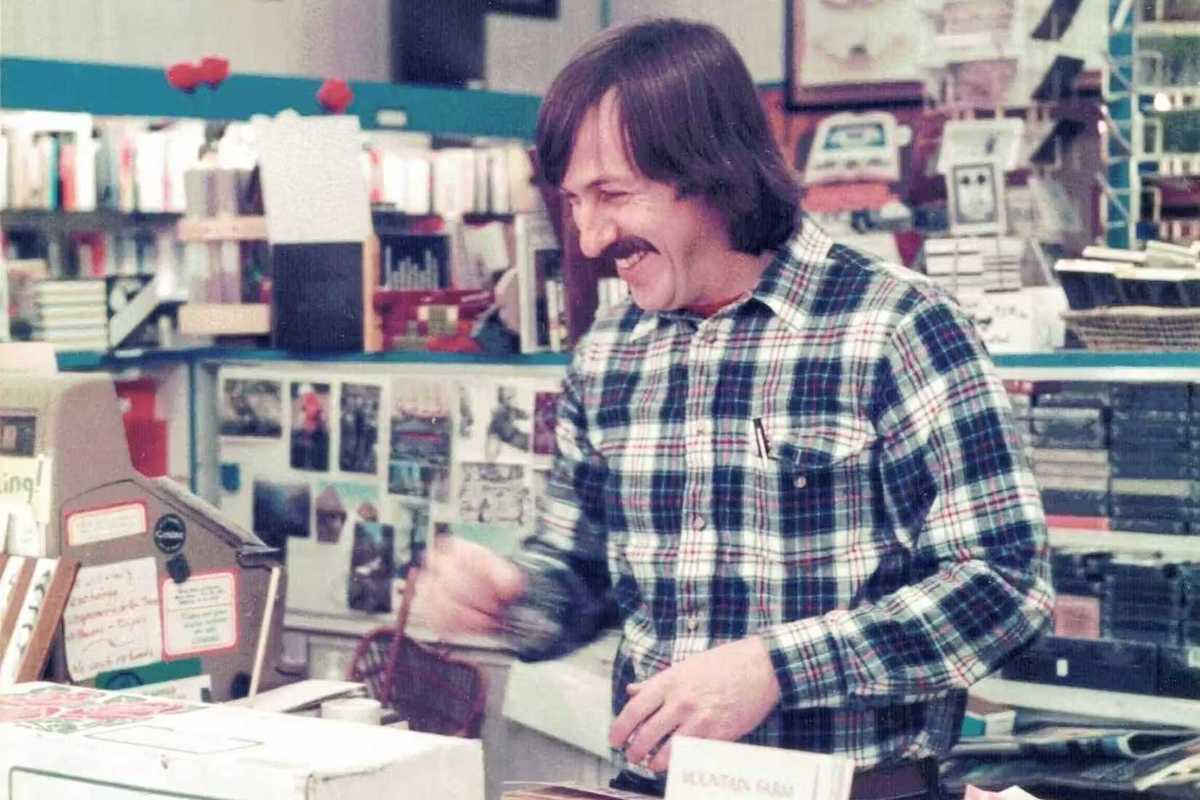
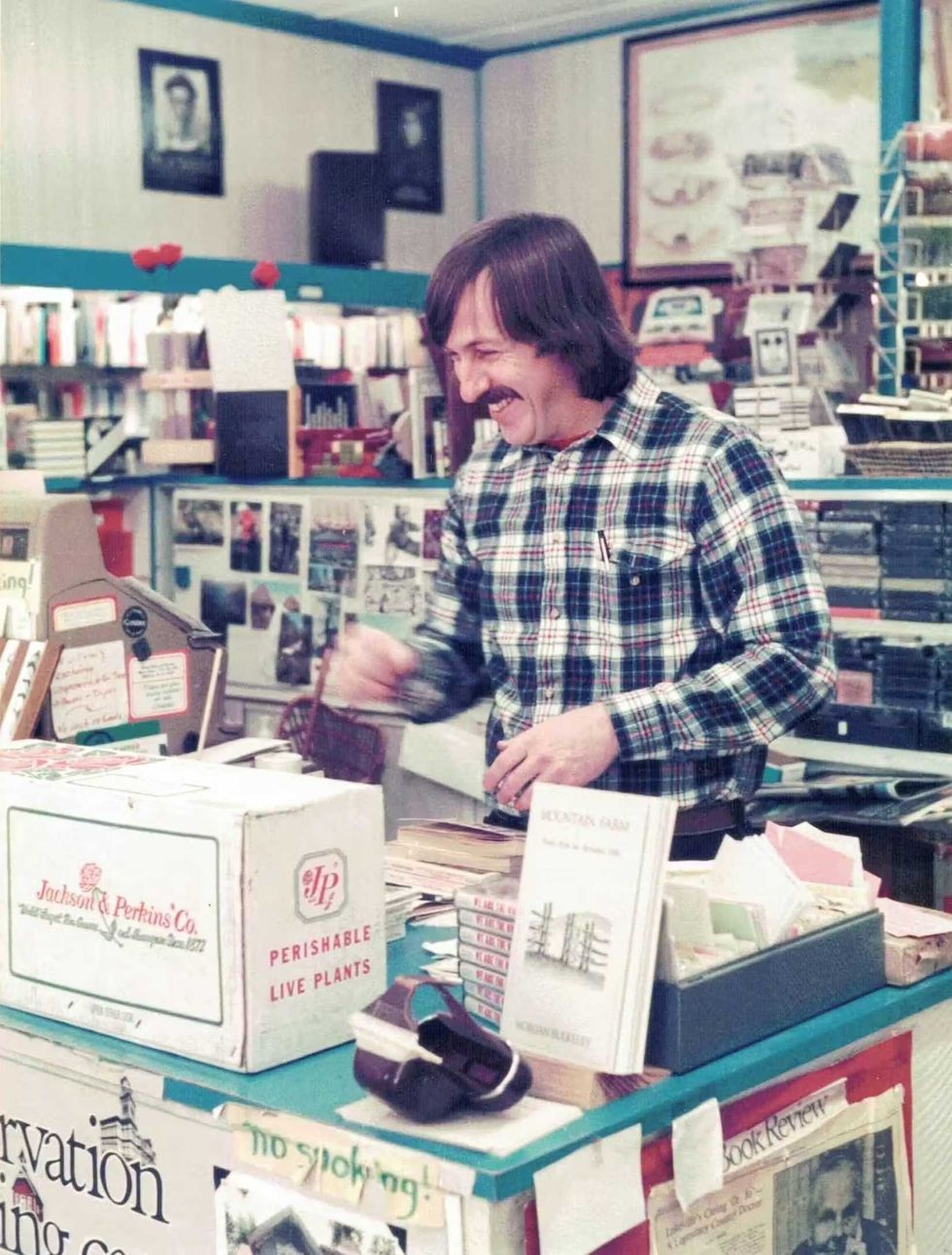 Dick Hermans in the Oblong Bookstore on Millerton’s Main Street in 1985.Provided
 Fall storage crop harvests amid soil building cover crops at Adamah Farm in Falls Village. Janna Siller