MILLERTON – While the Harlem Valley Rail Trail Association continues to pave the way for preserving the region’s historic railroad corridor, Board Chair and longtime local business owner Dick Hermans was reminded recently of how much the region has changed since its railroad days.
That reminder came in the form of a resurfaced documentary film that had been tucked away in an attic in Dover Plains for more than 40 years. The film’s subject was the Harlem Valley Transportation Association – a grassroots group that fought to retain passenger and freight rail service between New York City and Chatham, New York in the 1960s and 1970s. Hermans recalls being an early member after founder Lettie Gay Carson “handed over the organization’s checkbook” before retiring.
Opening his laptop, Hermans played the video – grainy but clear, with crisp audio. A young woman stood in the corner of a bookshop, speaking passionately into a handheld microphone about the loss of rail service and its impact on rural businesses, farms and residents.
“It brings in the whole question of rural powerlessness,” the woman said, warning that locals would soon become “highway hostages,” forced to drive gas-guzzling cars. She asked, “Do the small towns of America have a right to have their needs voiced? Have a right to say how decisions are made? We’ll fight 'til the very end to prevent these lines from being ripped up.”
With a smile, Hermans recognized the speaker instantly. “That’s my former partner, Holly Nelson, in our original Oblong store,’ he said.
Then located in the 750-square foot space most recently occupied by Demitasse, Oblong Books and Records was founded by Hermans, who also serves on the board of the Lakeville Journal and Millerton News, and Nelson in 1975. The film serves as a time capsule of the region’s transportation struggles and provides a rare glimpse into Millerton in the 1970s.
B-roll footage shows the former Saperstein’s building – now Westerlind – and its famed railroad mural, along with shots of the old Sharon and Millerton stations.
The late Frank Perotti, who served as the supervisor of North East for more than a decade, also appears, speaking about how the loss of freight service affected his dairy farm. Standing in front of the barn of Lone Pine Farm, Perotti said, “We’ve depended on the railroad for our freight coming in here. We see the loss in the economy since we’ve lost the service to the railroad.”
The filmmaker behind the 28-minute documentary is Philip Milano, a longtime Dover Plains resident who made the project while studying at New York University.
“It took me about a month to make,” Milano told The News. “I played all the music myself, lined up the interviews and edited it.” His dedication even left him with battle scars. He strapped his camera to a hand car, “the kind Buster Keaton used,” he noted, and pumped it by hand from Copake to Sharon to capture a moving shot. “By the time I got back, I had blisters all over my hands.” He said with a grin, “But I got the shot.”
Milano was recently contacted by a former Copake Falls resident who wanted to view the film for research. Skeptical that the old Scotch U-matic cassette – a bulky, professional-grade videotape used in the 1970s – would still play, Milano agreed to ship the only existing copy of his movie out west. To his surprise, it was successfully digitized in Las Vegas.
He remembers making the documentary “vividly.” Though it began as a school project, it went on to air on cable television, which was only available in Manhattan at the time. Milano watched the premiere from his aunt’s city apartment, surrounded by friends and bottles of wine. “This must be what the Beatles felt like the first time they heard one of their songs on the radio,” he remembers thinking.
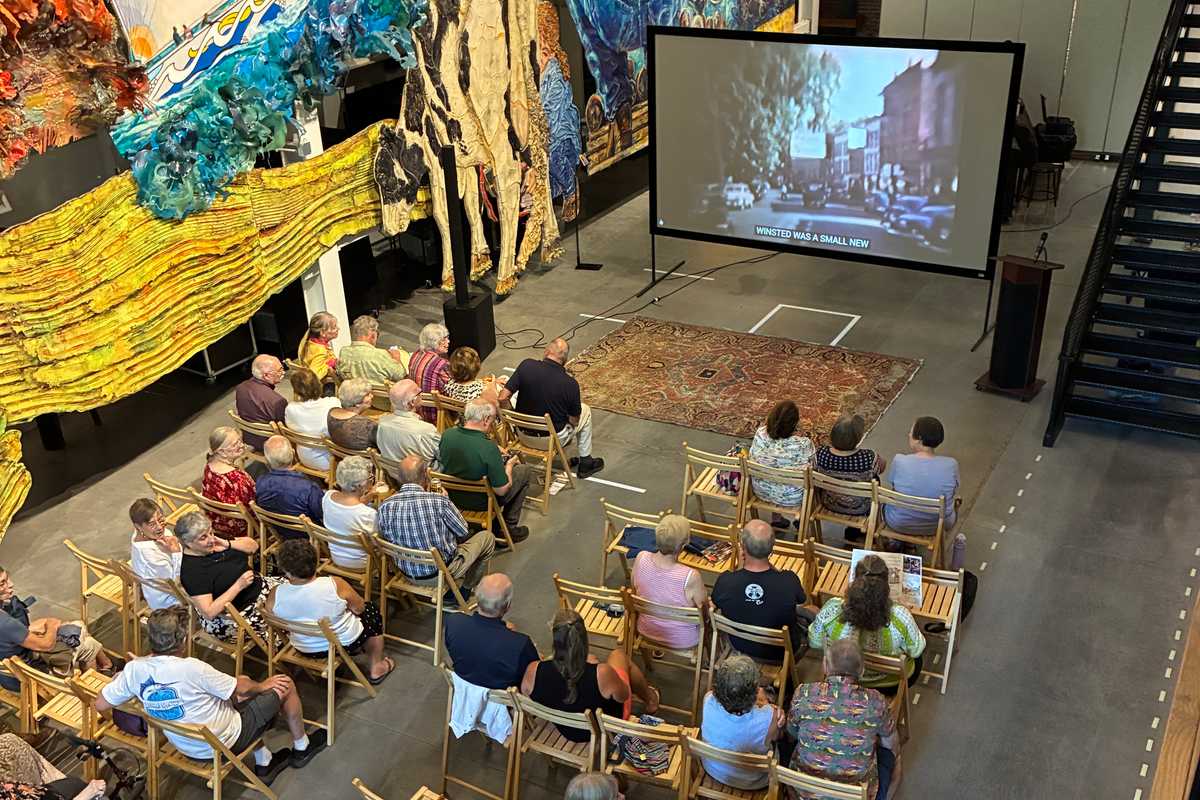
The film was also screened at The Moviehouse in Millerton for a one-night showing that drew many of its local participants.
Though Milano didn’t pursue filmmaking after NYU, he stayed rooted in the area, opening and running Milano’s Restaurant in Pine Plains for 14 years. The establishment, now Back Bar Beer Garden, still operates today.
Nearly 50 years later, Milano says he is content with how history unfolded. “If the trains had stayed, this whole area would look completely different,” he said. “In a way, I’m glad it didn’t happen because I still like bouncing along these scenic back roads. It’s one of the prettiest parts of New York.”
While Hermans and others once fought to keep the railroad from being torn up, it’s not far-fetched to think that its demise – and the halt of further development – may have helped preserve the rural character and charm of the Harlem Valley, best seen today from the rail trail that follows the old line.

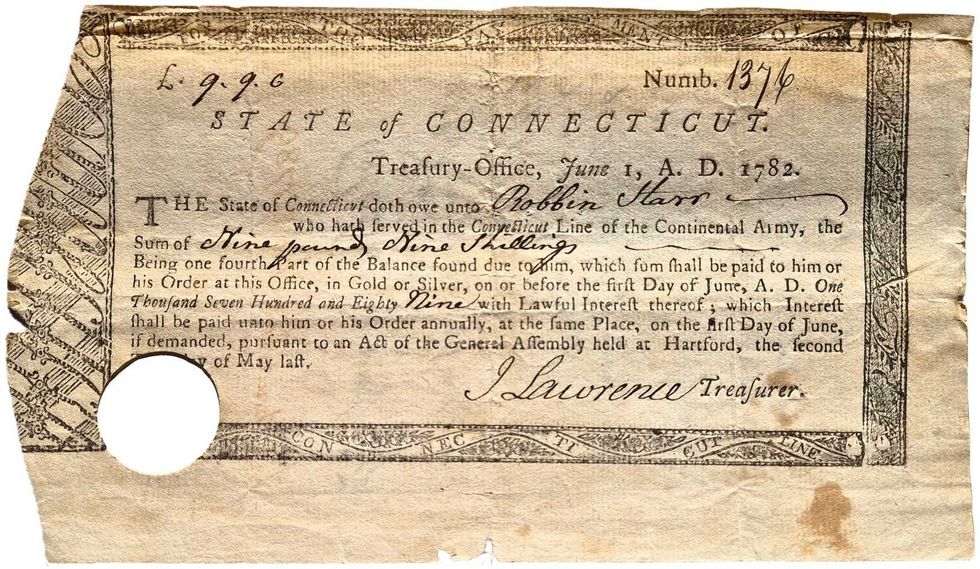 Pay Bill for Robin Starr’s service in the Continental Army.Courtesy the Alex Breanne Corporation
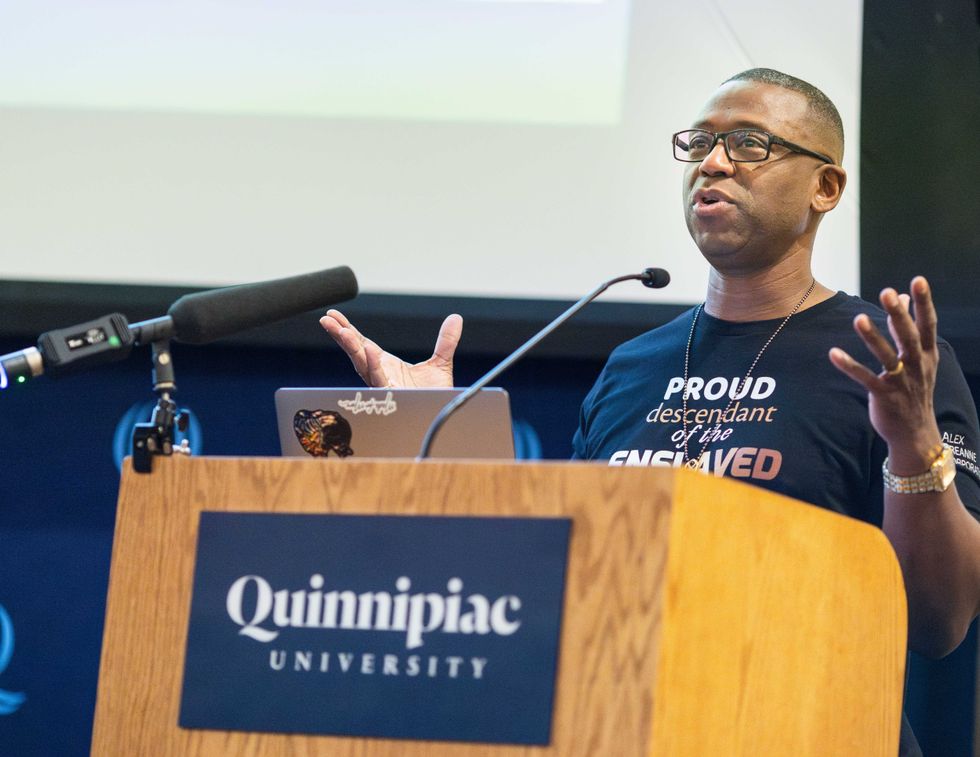 John Mills speaking at Quinnipiac University.Courtesy the Alex Breanne Corporation
 Stephanie Saetta,with her rescue dog George and Blue (left), a shepherd mix awaiting his forever home.Madi Long