Pine Plains surveillance controversy prompts questions in other communities

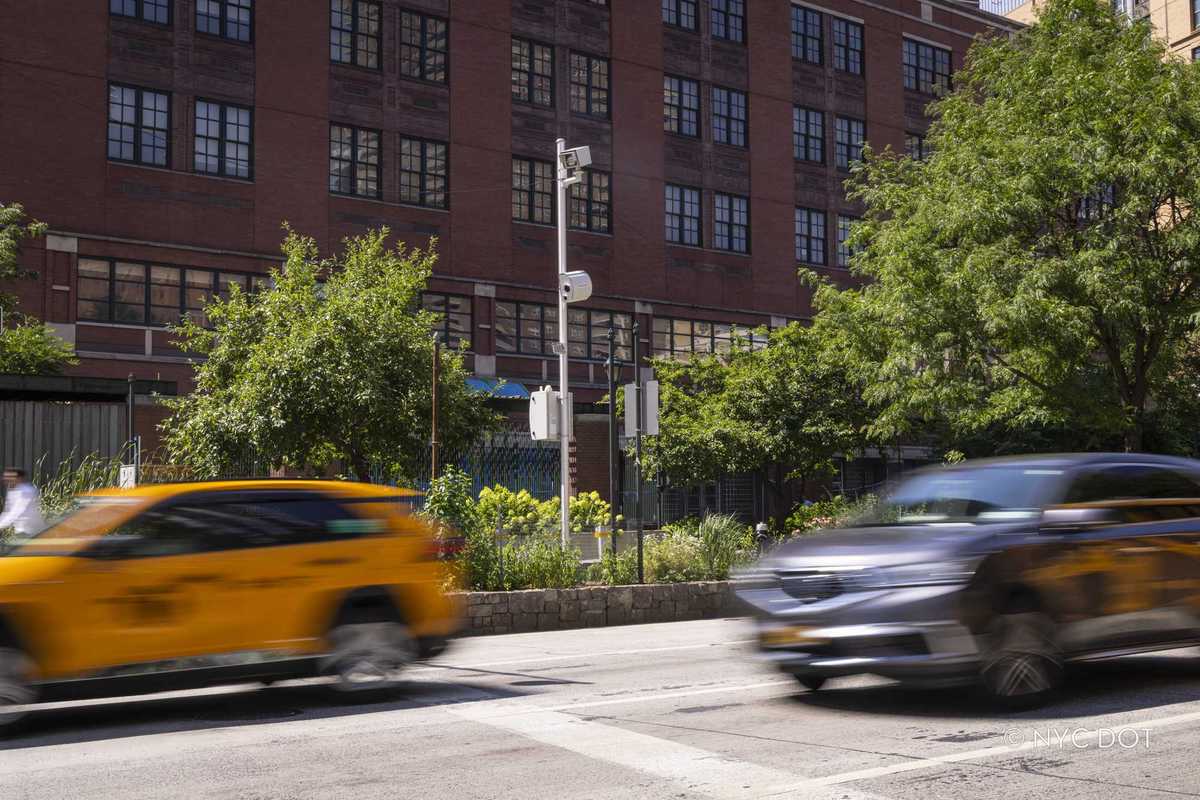
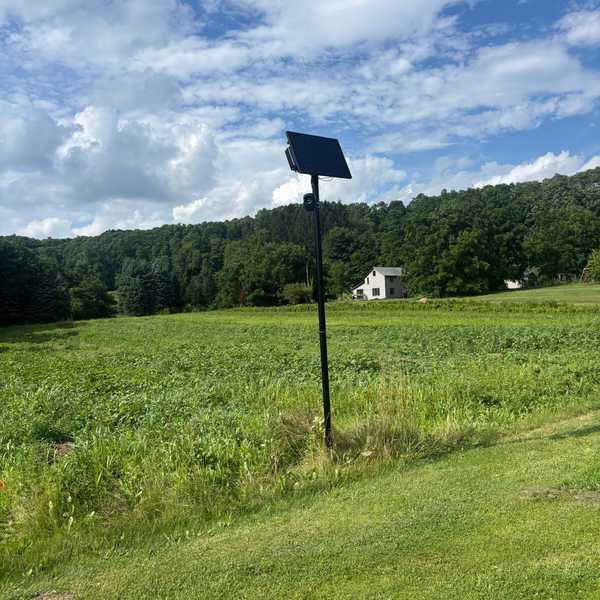
A license plate reader camera manufactured by Flock Safety captures images of drivers on Route 22 in the Town of North East.
Photo by Nathan Miller


A license plate reader camera manufactured by Flock Safety captures images of drivers on Route 22 in the Town of North East.
The discovery of site markings suggesting surveillance cameras were being installed in Pine Plains prompted town officials to call an emergency meeting last week to clarify their position on the controversial technology.
The meeting, held Monday, Feb. 9, followed public outcry. Officials explained that the proposed cameras — license plate readers — were set to be installed on local roads.
In response to the criticism, Town Supervisor Brian Walsh said in a prepared statement that a member of the Pine Plains Police Department signed a contract in February 2025 with Atlanta-based surveillance company Flock Safety. He said the Town Board was not consulted and did not authorize the agreement.
Town officials said the project will not move forward and that the planned installation of the cameras has been halted.
The controversy also spilled over into neighboring Millerton, where residents questioned the Village Board of Trustees about potential surveillance efforts. Board members and Village Mayor Jenn Najdek said neither county officials nor representatives from Flock Safety have contacted the village about installing cameras.
License plate readers manufactured by Flock Safety started proliferating across Dutchess County after District Attorney Anthony Parisi and the Dutchess County Sheriff’s Office secured funding for a unified surveillance system known as the Analysis and Real Time Crime Intelligence Center at the end of 2024.
The network comprises 371 cameras across the county, according to transparency.flocksafety.com/dutchess-county-ny-so, which serves as the county’s “transparency portal” for the Flock network. That network includes a camera in the Town of North East on Route 22 across from Silamar Farms and several temporary cameras in a neighborhood in the village of Millbrook.
Town of North East officials said they had no knowledge of the camera located on Route 22 near Harney & Sons Fine Teas Headquarters.
Najdek said she also was unaware and noted that the village has no jurisdiction over that location.
Millbrook Village Clerk Sarah J. Witt said she was unaware of the temporary cameras in the village located on light poles along Reservoir Drive and Maple Avenue.
Town of Washington officials in Town Hall on Reservoir Drive said they had noticed the cameras, but didn’t know why they were there, saying most of the traffic in the area is churchgoers, children and residents.
Village Mayor Peter Doro said he became aware of the cameras after Millbrook residents began asking questions, at which point Parisi told Doro the cameras were related to a covert, targeted surveillance operation and asked him not to share the information publicly.
In an email, Parisi said four cameras were installed in Millbrook after threats were made against a judge who lives in the village. He described the operation as temporary and said the cameras are set to be removed.
However, Parisi said the village had been notified before installation. “Prior to installation, the Village of Millbrook was advised,” he wrote.
The camera in North East, Parisi said, is permanent and part of a decade-old perimeter surveillance strategy that places license plate readers on major roads entering and leaving the county.
He said the camera is located on private property and is part of a broader effort to link private and public systems into a “professionally staffed, centralized intelligence center.”
Millerton News
Dutchess County Sheriff's Report — Thursday, July 9
Dutchess County Sheriff’s Office Harlem Valley activity report June 29 to July 4
June 30 — Deputies DeRosa arrested Joseph Salbino Depina, age 39, in the Town of Pine Plains after it was discovered that he was wanted by the City of Poughkeepsie Police Department who held an active warrant for his arrest. Depina was turned over to the City of Poughkeepsie Police Department.
June 30 — Deputies responded to the Pawling train station for a found bicycle that had been in the area for 2 weeks. Bicycle stored at the Pawling substation. Contact 845-486-3800 with more information.
July 1 — Deputies responded to 66 Sharon Road in the Town of North East for a report of a trespasser at that location. Jesse E. Harvey, age 40, was cited for trespass and is to appear in the Town of North East Court at a later date.
July 2 — Deputies to Route 22 in Amenia to investigate a domestic dispute between a mother and a daughter. Matter resolved without further police intervention
July 3 — Deputies investigated a report of aggravated harassment in the Town of Dover. Caller reported they are receiving threats of bodily harm via e-mail after denying payment to send a face photo to the suspect via a fetish website. Investigation on-going.
July 4 — Deputies reports the arrest of Courtland E. Molineaux, age 44, for Driving While Intoxicated subsequent to a traffic stop on Route 22 in the Town of Pawling. Molineaux to appear in the Town of Pawling Court at a later date.
PLEASE NOTE: All subjects arrested and charged are alleged to have committed the crime and are presumed innocent until proven guilty and are to appear in local courts later.
If you have any information relative to the aforementioned criminal cases, or any other suspected criminal activity please contact the Dutchess County Sheriff’s Office tip line at 845-605-CLUE (2583) or email dcsotips@gmail.com. All information will be kept confidential.
Graham Corrigan
North East Town Hall will be open on Thursday, July 2, for people who need a cool place to sit and sip water. The Town Hall is located at 19 N. Maple Ave. in Millerton.
Community cooling centers are opening across Dutchess County as extreme heat brings temperatures into the high 90s.
Many libraries, town halls and community facilities are serving as cooling centers, offering air-conditioned spaces, drinking water and restrooms. Temperatures are expected to reach triple digits in some areas of the county this week.
The centers will not be open this weekend. All locations will be closed on Saturday, July 4, and Sunday, July 5, for the holiday weekend.
Northeast-Millerton Library, located at 28 Century Blvd., will be open and air-conditioned during its normal business hours — 11 a.m. to 6 p.m. — Wednesday, July 1, to Friday, July 3. The North East Town Hall, at 19 N. Maple Ave., will be available as a cooling center Wednesday, July 1, and Thursday, July 2, between 9 a.m. and 5 p.m.
The Pine Plains Community Center, located at 7775 S. Main St. above the Pine Plains Free Library, will be open 24 hours a day from Wednesday through Friday. The Free Library downstairs is open noon to 6 p.m Friday, and Town Hall, at 3284 Route 199, is open 8 a.m. to 3 p.m. on Wednesday and Thursday.
The Stanford Free Library, located at 6035 Route 82, will be open Monday through Friday from 9 a.m. to 7 p.m., and Stanford’s Town Hall at 26 Town Hall Rd is available from 8 a.m. to 1 p.m. on Monday through Friday.
Extreme heat can cause dehydration and heat stroke. Residents are encouraged to remain inside or under shade whenever possible and drink plenty of water.

Want more of our stories on Google? Click here to make us a Preferred Source.
D.H. Callahan
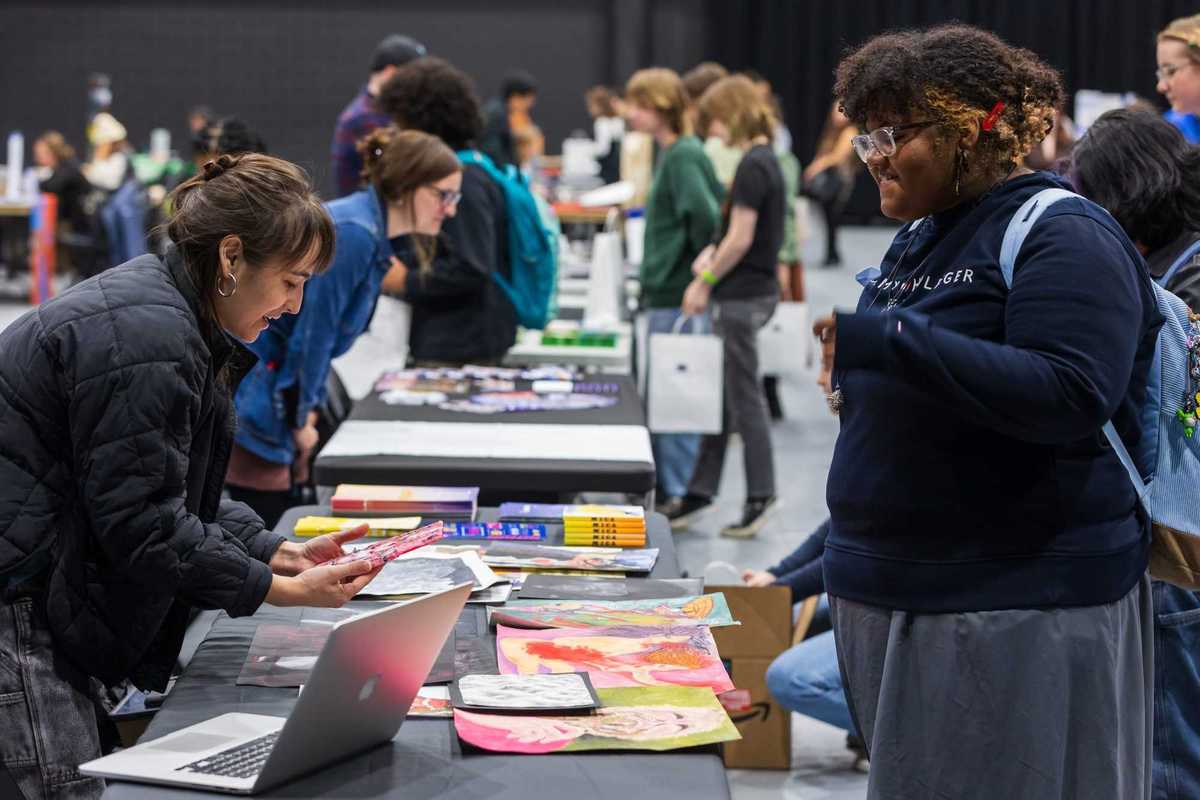
On Thursday, June 25, a collection of eager art enthusiasts gathered at Olana State Historic Estate in Hudson to kick off the seventh annual Upstate Art Weekend (UAW).
Helen Toomer, founder, was joined by sculptors Ellen Harvey, Jean Shin and Gabriela Salazar to discuss their work and the legacy of painter Frederic Church. Church, whose 200th birthday is being celebrated this year, is widely credited as one of the founding members of the Hudson River School of painting. The discussion took place at Olana, Church’s grand estate, where the three artists’ installations are on view.
Church’s status as an early environmentalist was mentioned repeatedly during the conversation. Shin’s sculpture “Fallen,” which graced the lawn next to the estate’s main house during last year’s event, featured a fallen hemlock tree trunk planted by Church over 150 years earlier which had been wrapped in tanned leather. She described the work as a direct reference to Church’s experience witnessing the eradication of the area’s hemlocks as the leather tanning industry wreaked havoc on the natural environment of the Hudson Valley in the mid-19th century.
The relationship between art and the environment wasn’t isolated at Church’s former home. Instead, it seemed to be found all over UAW.
Now in its seventh year, UAW works to take the art world out of the city. At its best, the weekend gives artists and curators the opportunity to interact with unfamiliar environments. Just as often, however, it serves as a literal escape, allowing New York City galleries to bring works to pop-up spaces assembled for the express purpose of displaying fine art. The “Loading…” group show in Hudson did just this.
Transplanting six New York City galleries into an intimate event space, “Loading…” featured a wide variety of artists from around the globe. Sheroanawe Hakihiiwe, an Indigenous artist from Venezuela, takes ancient practices and translates his observations of the Amazon into minimalist works. Michael Assif’s “Plant a Weed” highlights the human impact on a natural landscape while feeling like a marshmallow dream. And Margaret Curtis’ “ ‘S ” uses the backdrop of a Hudson River School-style sunset to highlight the chaos of today’s state of the American dream.
The flip side of this art-world field trip is the variety of makeshift galleries in the garages and barns of the Hudson Valley. Places like Ugly Mud Studios and Ten Barn Farm, both in Ghent, along with Foxtrot Farm and Flowers in Stanfordville, housed unexpectedly refined exhibitions. These venues all integrate sustainable practices into their business: Foxtrot is a regenerative flower farm, Ugly Mud uses locally sourced clay, and Ten Barn Farm operates a farm-to-table restaurant called The Kitchen.
But at the end of the day, UAW is about getting the art world into the wild. So it was no surprise to see a panoply of eye-catching outfits, and out-of-this-world works at Art Omi, the sculpture and architecture park in Ghent, on Saturday evening. Complete with avant-garde ambient operatic metal, the Summer Kickoff event served as a testament to the continued growth of UAW. It seems the seeds that Toomer and her collaborators planted seven years ago are flourishing, with no signs of slowing down.
Jennifer Almquist
Benjamin Reynaert
Creating a home is, at its core, an act of love.
— Benjamin Reynaert
Benjamin Reynaert is focused on creative direction and interior styling. He is market director at Elle Décor, a design consultant, and author of “The Layered Home: Inspiration for Crafting Cozy, Collected Rooms,” published this year by Clarkson Potter. He co-founded Ticking Tent, a market featuring antiques, luxury items and vintage treasures. The biannual event is held in New Preston, Connecticut, and Bedford, New York.
Adopted from South Korea at 3 months old, Reynaert grew up in Bloomfield Hills, Michigan. He always knew he wanted to be an artist. “I just loved drawing. I loved making things with clay,” he said. “Remembering what it felt like to be creative as kids and applying that to our creativity as adults is essential.” A graduate of the Rhode Island School of Design (RISD), where he earned a BFA and a degree in architecture, Reynaert also studied bookbinding in Rome. His attention to detail and aesthetic sense reflect years of training and a finely tuned eye for objects. “Attending RISD nurtured my creativity and taught me how to problem-solve,” he said.
His career began at Martha Stewart Living. A contributor to Architectural Digest, Elle Decor, House Beautiful and Veranda, Reynaert has also served as style director at Domino. He has worked with Farrow & Ball, Chairish, Neiman Marcus, Sunbrella, Anthropologie, Gap, Bunny Williams Home and Stella Artois. He shares his work on Instagram via @aspoonfulofbenjamin.
“I’ve been fortunate to travel the country and abroad for Elle Decor, covering design fairs and trade shows like Deco Off in Paris, London Design Week in England, Cersaie Tile Show in Bologna, Italy, High Point in North Carolina and the Kitchen and Bath Industry Show in Las Vegas,” he said. He is drawn to unique objects and textiles. “As a market editor, the pieces that stick with me are not the newest. They are the ones I stumble upon and imagine living with.”
Reynaert is also co-founder of Ticking Tent with Christina Juarez, president of Christina Juarez & Company. The biannual event has become a destination for collectors and designers seeking curated antiques and design objects.
“I met Ben about 15 years ago when he was a young design editor and I was early into my career as a design communications strategist having switched gears from the fashion world," Juarez said. “We immediately clicked. I was impressed by his multidisciplinary creative talents — styling, writing, vision and impeccable eye — and his passion for the thrill of the hunt. I could not ask for a better partner and friend — my brother from another mother — and a yin to my yang. Two creatively minded people with a love of old and new beautiful things, and the ability to curate what the luxury shopper doesn’t know they need and most definitely wants.”
Reynaert described the most recent Ticking Tent as the largest yet. “We hosted over 2,000 guests and transacted our most sales to date with 75 vendors,” he said. “The most exciting part is seeing friends and watching new connections being made. I’m excited for the next event, Nov. 13–14, in Bedford, N.Y.”

For Reynaert, objects are defined as much by narrative as by design. “An object is about the story — whether it’s passed down in your family, something you worked hard for, bought on a trip, or a friend gave you,” he said. “With that added narrative, it doesn’t need to be the most aesthetically pleasing thing. The memory attached makes it beautiful. I like the idea of simple, seemingly insignificant items having a ton of meaning. Treat a thrift store painting as you would a Picasso.”
Greg Domres and Peter Nichols’ residence in Litchfield, which they share with their miniature schnauzer, Bunny, is one of 15 homes featured in Reynaert’s book, “The Layered Home.” The couple hosted a book signing at George Home in Washington Depot. “I first met Ben at press events during my time at John Derian,” Domres said. “We became friends and stayed connected professionally over the years.”
The book spans interiors from Eric Goujou’s shop The Wolf Tile in Paris’ 5th arrondissement to textile designer Schuyler Samperton’s Litchfield farmhouse. “Sharing the stories of talented, stylish people I’ve met during my tenure in magazines has been a privilege,” Reynaert said. “The most inspiring interiors are layered — with personality, patina and the poetry of a life lived. This book is my love letter to that idea.”
Reynaert said he would like to travel to Japan and Australia and hopes to develop his own product line in the future. “Balancing work and life is a challenge,” he said. He spends downtime with his husband, Luis Illades, in Delaware, where they are renovating a Victorian home.
“I feel incredibly fortunate to blend my work and my life in the home I share,” he said. “Creating a home is, at its core, an act of love.”
Natalia Zukerman
Mickalene Thomas and Delano Dunn at Wassaic Project.
Before “Echoes in the Margin,” Delano Dunn’s new solo exhibition at Troutbeck in Amenia opened, the artist sat down with curator and artist Mickalene Thomas for a conversation at the Wassaic Project on Wednesday, June 24. Their wide-ranging discussion offered an intimate look into Dunn’s practice while situating the work within broader questions of history, memory and representation.
Presented by the Wassaic Project, the exhibition brings Dunn’s richly layered paintings into conversation with Troutbeck itself, the historic estate long associated with artists, writers and civil rights leaders, including W.E.B. Du Bois, Langston Hughes and many more.
Thomas, an artist whose multidisciplinary practice spans painting, collage and installation, first met Dunn when she was his graduate adviser at the School of Visual Arts. “I think your work needs to be out there more,” she said, noting the urgency of this collection in the current socio-political moment.
Dunn’s layered collages often begin with an image unearthed from flea markets, used bookstores and forgotten archives.
“I go to secondhand shops, old bookstores, any place that looks like it has history in it,” he said.
Sometimes, he explained, an image becomes the centerpiece of a work. Other times it simply sparks an idea.
“There’ll be an idea that pops into my head. I’ll read something or hear music or a lyric, and then I’ll think, ‘I’ve got to find an image that matches that.’”
His color palette also carries its own history.
“I grew up in L.A. during the L.A. riots,” Dunn said. “I would sit on my porch as a kid. I was watching the neighborhood burn, but the sky was beautiful.”
He still paints with those saturated blues, reds and oranges.
“Color can transport you. Color can make you feel safe, or happy or scared,” he said. “Those colors made me feel safe.”
For Dunn, Troutbeck’s own layered history became an active part of the work. Learning that the estate had hosted W.E.B. Du Bois, Langston Hughes, Ida B. Wells and generations of civil rights leaders informed his direction.
Dunn was given access to Troutbeck’s archives and found handwritten notes by Langston Hughes, and writings by Du Bois and Wells that found their way into the exhibition.
“There was a letter between Amy Spingarn and Martin Luther King Jr.,” Dunn recalled. “To be in its presence and hold it... you don’t see communication like that every day.”

Much of Dunn’s work invites viewers to dig deeper into history rather than accept simplified narratives.
“I want them to look at it and go, ‘Wow, this is really amazing and interesting and colorful and beautiful,’” he said. “And then I want them to be terrified shortly after that.” He accomplishes this through bold, colorful, and often playful compositions that draw the viewer in before revealing their more complex historical underpinnings. As Thomas wrote, “Dunn’s compositions invite viewers to sit within that tension and take it in.” That impulse toward deeper investigation extends to Dunn’s own children, who are often his first audience.
“They’ll ask, ‘What is this? Why does this person look the way they look? Why are you using that color? Why are you using glitter?’”
Those conversations, he said, become lessons in looking beyond appearances.
Thomas framed collage itself as a kind of storytelling practice —“the gathering of information… piecing things together”—and praised Dunn’s ability to translate research, memory and visual pleasure into a unified language. She also underscored the importance of creative joy in the process. “If you’re going to your studio and you’re not having fun,” she said, “you shouldn’t be doing it.”
Dunn said one of the biggest misconceptions he hopes to challenge is the idea that there is a monolithic Black experience.
“There are so many different perspectives out there. This is just one of them,” he said. In the same breath, Dunn said he adopts the label “Black artist” because “it would make my Grandpa proud.”
The nearly two-hour conversation shifted seamlessly between humor and history, studio practice and social commentary, ultimately returning to what both artists believe art can accomplish: encouraging curiosity, complicating familiar stories and inviting viewers to question what they see.
As Dunn put it, “History is so much more nuanced than what we’re taught. There’s so much more going on below the surface.”

Want more of our stories on Google? Click here to make us a Preferred Source.

Want more of our stories on Google? Click here to make us a Preferred Source.