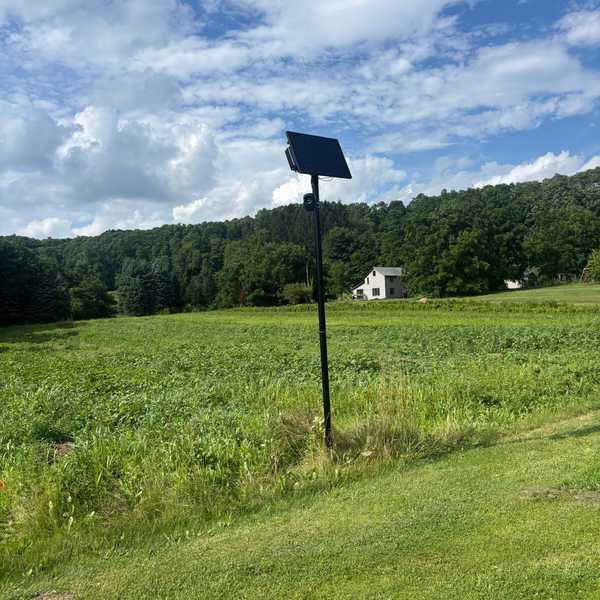
Speed cameras remain a tough sell across northwest Connecticut — and are still absent from local roads in neighboring Dutchess County.
Town leaders across northwest Connecticut are moving cautiously on speed cameras, despite a state law passed in 2023 that allows municipalities to install them. In contrast, no towns or villages in Dutchess County currently operate local automated speed-camera programs, even as New York City has relied on the technology for years.
In both states, officials say speeding remains a concern on local roads — particularly on through roads and in residential areas — but questions about cost, enforcement and public support have slowed momentum outside large cities.
For border communities in northeast Dutchess County, where traffic crosses state lines daily, the Connecticut debate hits close to home.
Supporters of speed cameras argue the technology can slow traffic and improve safety, particularly in communities with limited police coverage. Critics worry cameras could turn small towns into “speed traps,” and raise concerns about surveillance.
That caution mirrors the picture statewide in Connecticut. Since the law took effect, only 11 of the state’s 169 municipalities have implemented speed cameras.
In New York, automated speed cameras are widespread in New York City, where hundreds operate year-round in school zones under authority granted by the state Legislature.
However, unlike Connecticut’s opt-in law, New York requires separate legislative approval at the state level for each municipality to install local speed cameras. That authority has not been granted to towns or villages in Dutchess County.
Limited authorization has been extended by the state legislature to a small number of municipalities, including White Plains, Kingston, Schenectady and Albany.
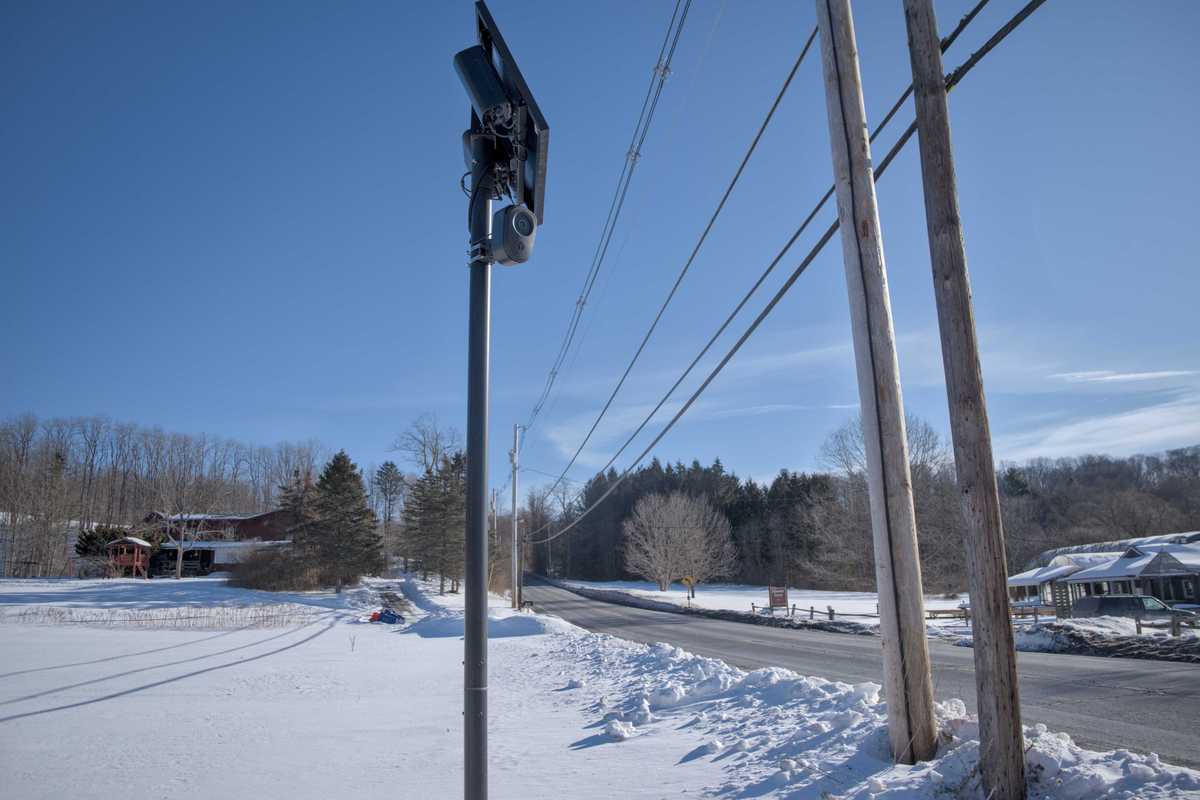
As a result, automated enforcement in Dutchess County is currently limited to state-run work-zone speed cameras — temporary devices installed by the New York State Department of Transportation in active highway construction or maintenance areas that ticket drivers who exceed posted speed limits.
Connecticut towns can opt in, but few have
Washington is the only town in western Connecticut to adopt speed cameras so far, and officials there say the program is already changing driver behavior.
“Speeds are coming down,” said Washington First Selectman Jim Brinton, noting cameras were installed in May 2025. “We had tried everything — speed bumps, education. This is the only option that’s showing positive results.”
Elsewhere in the region, the response has been far more skeptical.
In Kent, voters overwhelmingly rejected a proposed speed-camera ordinance by a 391–100 margin in January 2025.
“I’m concerned about the atmosphere cameras create,” resident Lianna Gantt said during a public hearing. “Are we turning our town into a speed trap?”
Interviews with first selectmen in North Canaan, Falls Village, Sharon and Kent — along with responses from officials in Salisbury and Cornwall — show a shared concern about speeding but hesitancy to move forward with cameras.
A new law, but a complicated path
Connecticut’s process for implementing speed cameras is extensive. Towns must adopt a local ordinance, present a traffic enforcement plan at a public hearing and secure voter approval at a town meeting or referendum. Any approved plan must then be reviewed by the Connecticut Department of Transportation.
Towns must also install camera equipment and complete a mandatory public awareness period of at least 30 days before issuing citations.
After that warning phase, drivers may be fined $50 for a first violation and $75 for subsequent offenses if they exceed the speed limit by more than 10 miles per hour. Camera systems are operated by third-party vendors, which provide images of alleged violations for municipal review.
Each violation must be approved by a qualified municipal employee, contracted agent or law enforcement officer before a citation is mailed — a requirement many small towns say strains limited staff, particularly those without resident state troopers.
Sharon studies cameras after traffic analysis
With Kent having voted down the program, Sharon appears furthest along in northwest Connecticut in considering speed cameras.
First Selectman Casey Flanagan said the town began studying the option after a traffic analysis found widespread speeding on several local roads.
The study, conducted by Dacra Tech, examined six locations, including Route 41 southbound, Rhymus Road, Calkinstown Road and Williams Road.
“When they averaged it out, it came to almost 33,000 citable events a month on just six roads,” Flanagan said. “Some of these numbers are quite staggering.”
Sharon does not have a resident state trooper, meaning review of potential violations would likely fall to town staff.
“We need to figure out who is going to review the pictures and determine whether a citation gets mailed out,” Flanagan said, noting that the town is still studying the concept. “That could be me, or we could hire someone.”
While vendors have told town officials that citation volumes typically decline as driver behavior changes, Flanagan said Sharon is not rushing a decision.
“There really isn’t a clock on me right now,” he said.
Other towns opt for softer measures
North Canaan is expanding its use of digital speed feedback signs rather than pursuing cameras.
“No one has been asking for it,” First Selectman Jesse Bunce said.
The town is installing additional speed feedback signs along Route 44 and Sand Road through the state-supported Connecticut Speed Management Program, which also provides detailed speed data.
“Once we have that data, we can evaluate what to do next,” Bunce said.
Falls Village tested a temporary speed-monitoring camera about 18 months ago but ultimately pulled back.
“We found out the speed was not as great as we thought it was,” First Selectman David Barger said. “It was more perception than reality.”
Barger said the town relies on speed feedback signs and remains cautious about cameras, citing cost estimates of $26,000 to $28,000 per two-way unit and the lack of staff to review violations.
“The only reason we would want speed cameras is for safety,” he said. “It would not be a revenue generator.”
Salisbury and Cornwall also have no immediate plans to pursue speed cameras, though Salisbury First Selectman Curtis Rand has said he is not opposed to “a mechanical way of lowering speed.”
Washington offers a nearby example
Washington approved a speed-camera ordinance unanimously in December 2024 and began issuing citations in May after years of resident complaints.
Since then, the town has issued 13,748 citations totaling about $696,000 in fines, with roughly $525,000 collected as of late January, according to Brinton.
A town constable reviews images in-house, a process that now takes about 10 hours a week.
“It was pretty overwhelming at first,” Brinton said. “The volume initially caused a lot of struggles.”
Brinton stopped short of recommending cameras for every community but said Washington’s experience shows the technology can work when tailored to local conditions.
“Every town is different,” he said. “But it has worked for us.”









 Justine and Victor Valla in their studio with a painting of Victor’s,”Jonah and the Whale.” Robin Roraback

 A ceramic vase by Kathleen Heidemann.Provided
  Joy Brown’s delightful ceramic sculptures.Provided