BOICEVILLE, N.Y. — When we last checked in with Gary, he was getting used to his new life of austerity.
See, he’d made the mistake of going to the doctor for a once-over, and the medico brought in a couple of colleagues and gave Gary’s system the gang gong.
So he was a little tetchy as we prowled around the Beaverkill and Willowemoc back in June.
But he was the picture of health and fitness when we coordinated on the Esopus last week, at the new Rail Trail and angler’s access area below Five Arches Bridge.
The bridge is being rebuilt, and the dulcet tones of heavy machinery filled the air in the first few hundred yards.
We clambered around below the Chimney Hole, where the Esopus officially ends and the Ashokan Reservoir begins.
Because of the drought, areas that would normally be covered with water are easily traversed banks.
So we went further downstream than I have ever gone, to where the Ashokan starts to look like a lake.
Gary has attained his high school weight, and is in danger of disappearing behind saplings. He set a blistering pace and I felt distinctly lumpy trying to keep up.
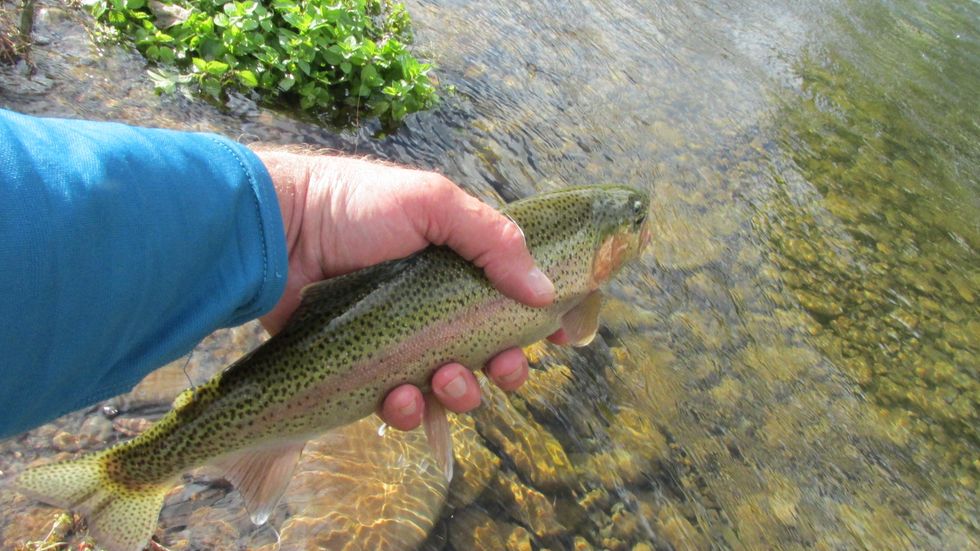
But never mind that. I caught half a dozen wild rainbows, all on a silvery Surveyor nymph, tied on a barbless jig hook and adorned with a tungsten bead head.
This thing sinks.
Because the Esopus regulations have changed and New York is no longer stocking it with browns, the wild rainbows (aka “silver bullets” of Esopus lore) are bigger than they used to be.
We also encountered smallmouth bass, which is to be expected that close to the reservoir, and zero brown trout preparing to head upstream for spawning purposes.
Gary had to beat it around 2 p.m.. I had the roofers at the cabin, so a mid-afternoon nap was out.
So I went to the Esopus upstream in Shandaken, where it is a medium-sized, freestone trout stream.(as opposed to a big tailwater).
At the spot I entered there are four long, deep pools bracketed by rip rap on one side and a sandy, rocky bank on my side.
Stealth was key, as the water was gin clear and the sun behind me, casting a long shadow on the water.
But my back didn’t cooperate with the crouching and creeping, so I stood up anyway.
It didn’t matter, as it turned out.
Using a new Tenkara rod from Dragontail (fishes at 8 and 9 feet and change), and a #3.5 fluorocarbon level line, I deployed the Surveyor again, and only succeeded in getting it stuck on the bottom.
After I rescued it, in the process scaring everything with fins into next week, I took a breather.
A whacking big wild cat appeared on the rip rap opposite. It sat and looked at me.
I looked back, thinking it looked like a standard house cat except for the fact it was the size of a dog.
I spent 15 minutes watching the cat messing around. Then I rigged up a two wet fly rig on the Tenkara rod: A size 10 Leadwing Coachman, which is an Esopus standard, and a size 16 Light Cahill on the point.
I drifted this combo into the maelstrom at the top of the sequence of pools and was thrilled when what I initially thought was a hang up turned out to be a fat rainbow of about 15 inches, which put up a serious fuss.
A few minutes later, I hooked and then lost the rainbow’s cousin from the same place.
These all-day excursions are no longer routine. The roofers were gone when I staggered back into camp, and I fell asleep on the couch almost immediately.
I woke up feeling like something that crawls out of dead trees after a rainstorm, ate a ham and cheese sandwich and went to bed, tired, sore and very happy.





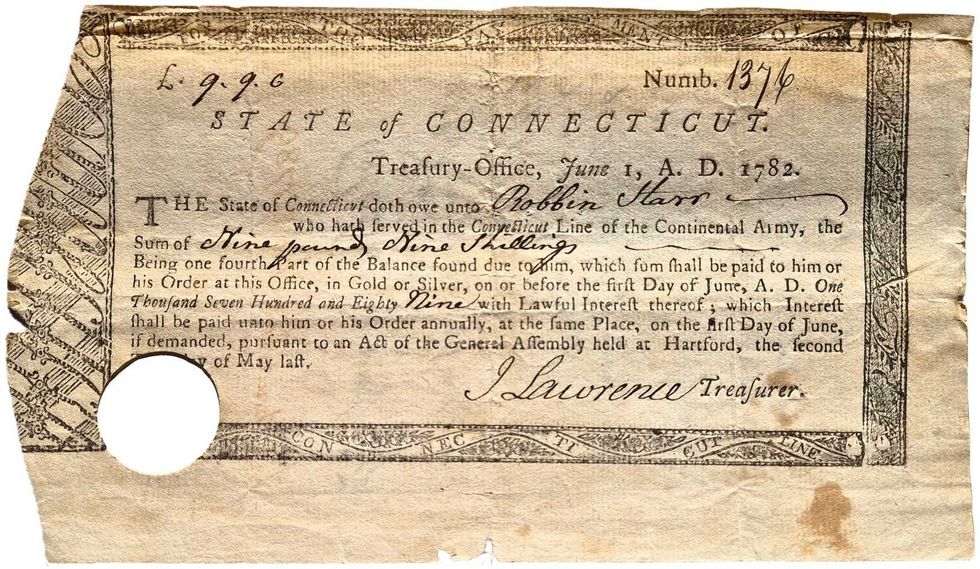 Pay Bill for Robin Starr’s service in the Continental Army.Courtesy the Alex Breanne Corporation
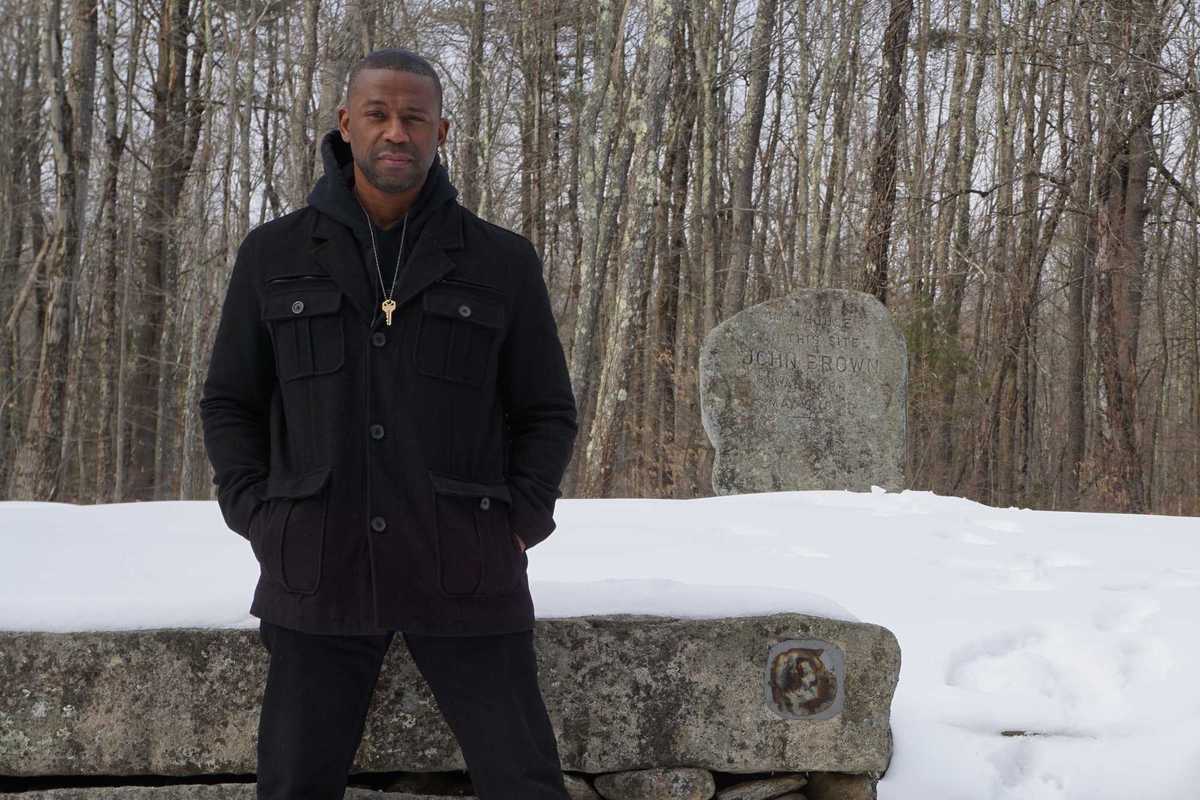
 John Mills speaking at Quinnipiac University.Courtesy the Alex Breanne Corporation
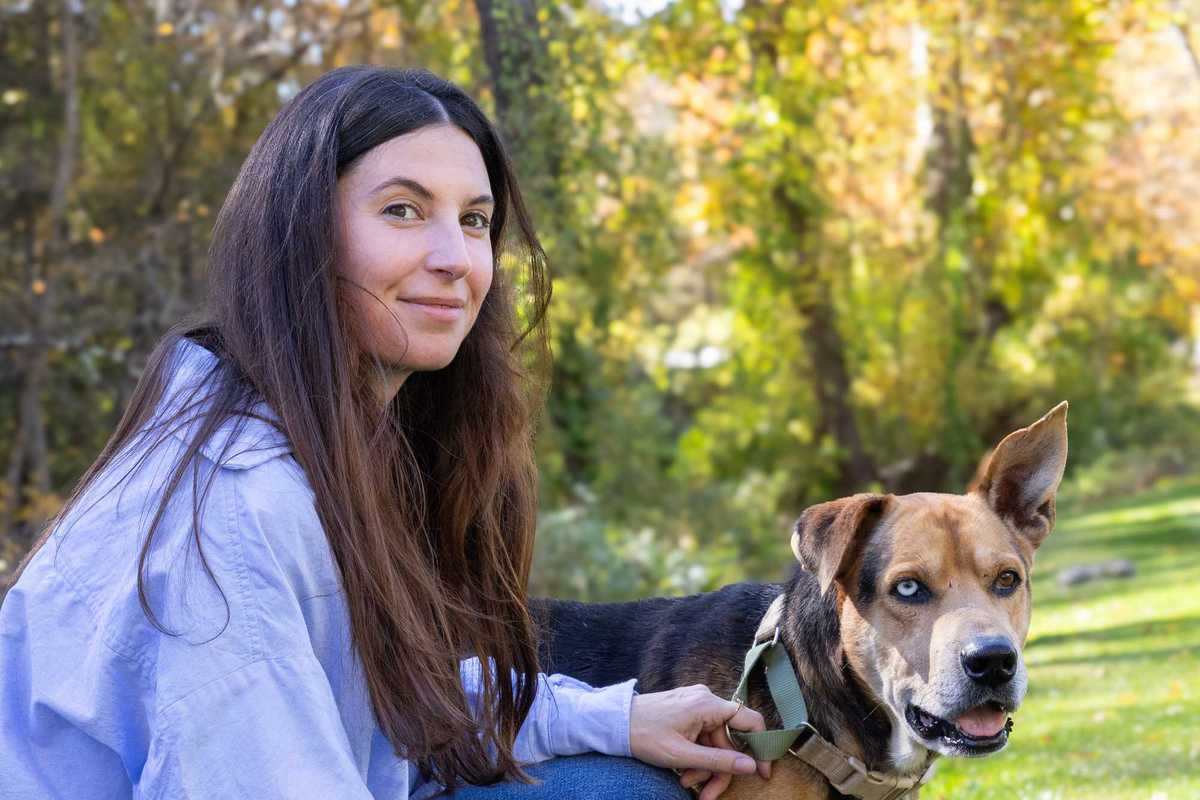
 Stephanie Saetta,with her rescue dog George and Blue (left), a shepherd mix awaiting his forever home.Madi Long