Students curate Katro Storm portraits at HVRHS
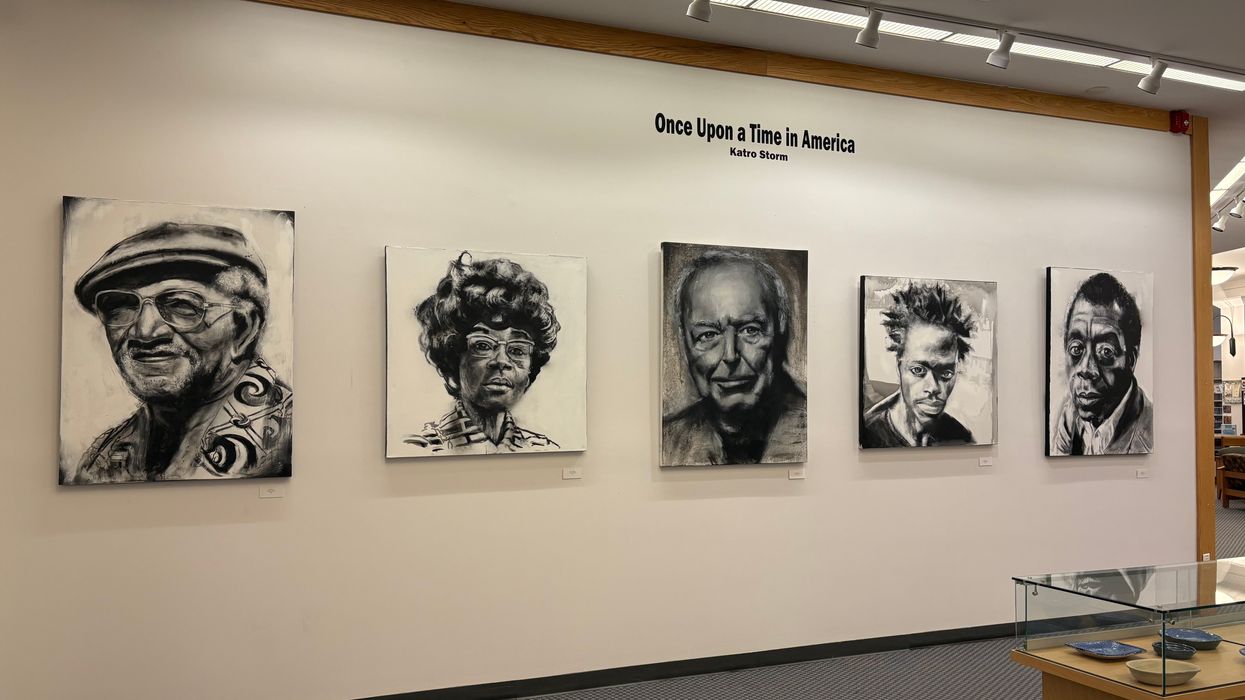
“Once Upon a Time in America” features ten portraits by artist Katro Storm.
Natalia Zukerman


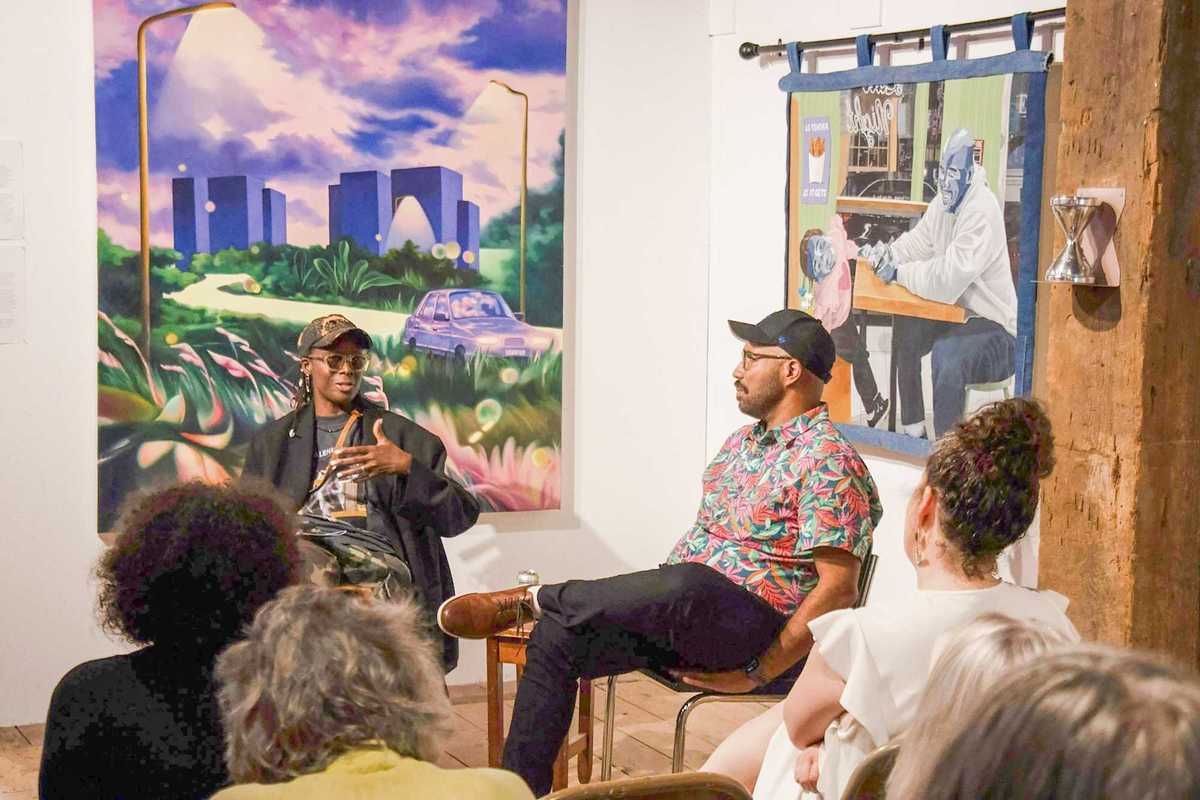
The Kearcher-Monsell Gallery at Housatonic Valley Regional High School in Falls Village is once again host to a wonderful student-curated exhibition. “Once Upon a Time in America,” ten portraits by New Haven artist Katro Storm, opened on Nov. 20 and will run through the end of the year.
“This is our first show of the year,” said senior student Alex Wilbur, the current head intern who oversees the student-run gallery. “I inherited the position last year from Elinor Wolgemuth. It’s been really amazing to take charge and see this through.”
Part of what became a capstone project for Wolgemuth, she left behind a comprehensive guide to help future student interns manage the gallery effectively. “Everything from who we should contact, the steps to take for everything, our donors,” Wilbur said. “It’s really extensive and it’s been a huge help.”
Art teacher Lilly Rand Barnett first met Storm a few years ago through his ICEHOUSE Project Space exhibition in Sharon, “Will It Grow in Sharon?” in which he planted cotton and tobacco as part of an exploration of ancestral heritage.
“And the plants did grow,” said Barnett. She asked Storm if her students could use them, and the resulting work became a project for that year’s Troutbeck Symposium, the annual student-led event in Amenia that uncovers little-known or under-told histories of marginalized communities, particularly BIPOC histories.
Last spring, Rand emailed to ask if Storm would consider a solo show at HVRHS. He agreed.
And just a few weeks ago, he arrived — paints, brushes and canvases in tow.
“When Katro came to start hanging everything, he took up a mini art residency in Ms. Rand’s room,” Wilbur said. “All her students were able to see his process and talk to him. It was great working with him.”
Perhaps more unexpected was his openness. “He really trusted us as curators and visionaries,” Wilbur said. “He said, ‘Do with it what you will.’”
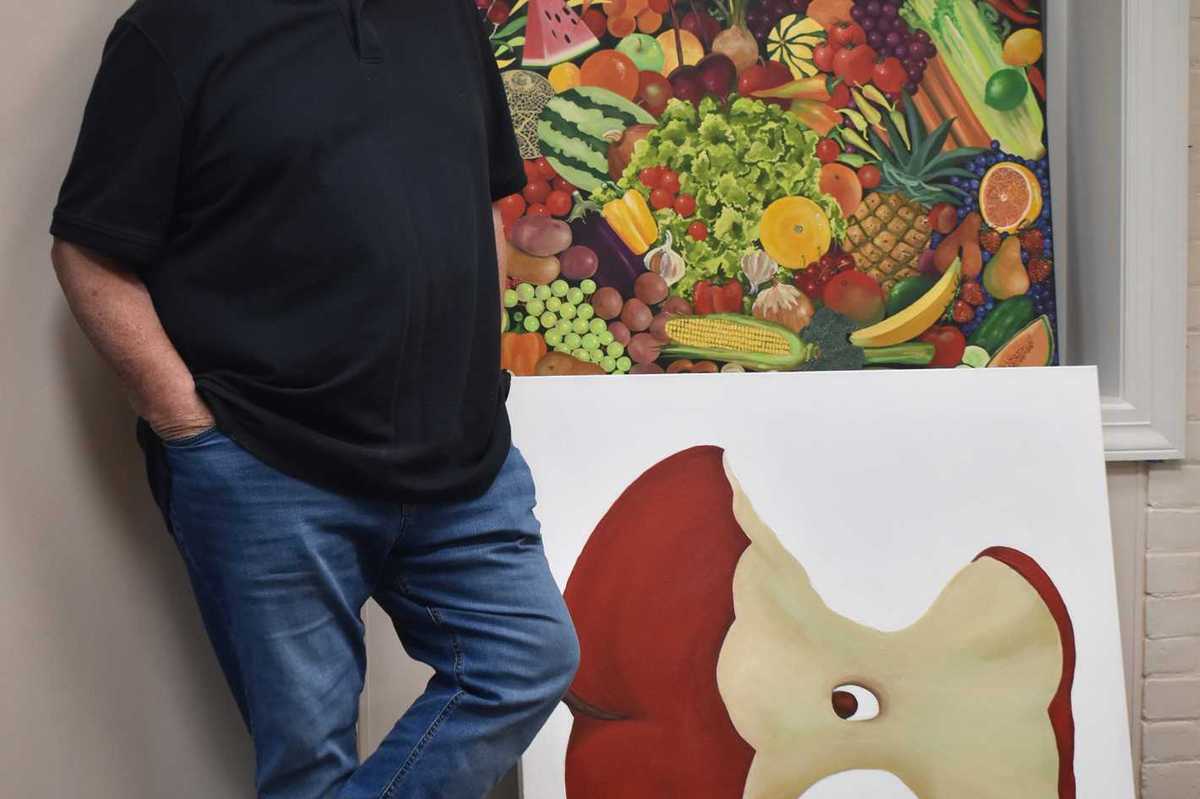
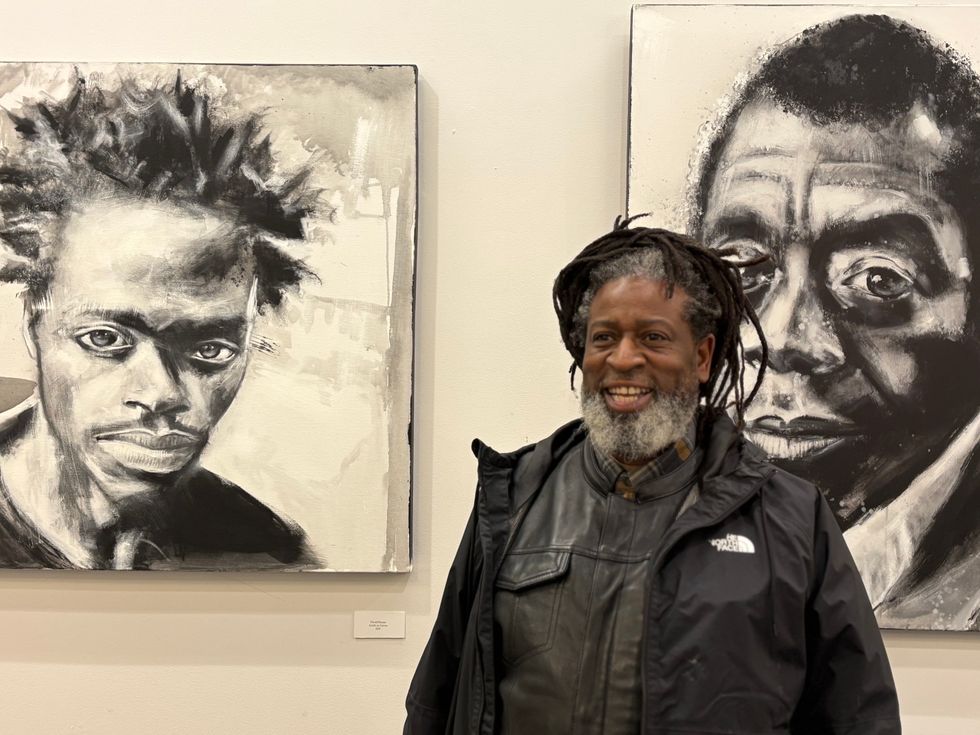 Artist Katro StormNatalia Zukerman
Storm’s artistic training began at New Haven’s Educational Center for the Arts. His talent earned him a full scholarship to the Arts Institute of Boston, then Boston’s Museum School, where he painted seven oversized portraits of influential Black figures — in seven days — for his final project. Those works became the backbone of his early exhibitions, including at Howard University’s National Council for the Arts.
Storm has created several community murals like the 2009 READ Mural featuring local heroes, and several literacy and wellness murals at the Stetson Branch Library in New Haven. Today, he teaches and works, he said, “wherever I set up shop. Sometimes I go outside. Sometimes I’m on top of roofs. Wherever it is, I get the job done.”
His deep ties to education made a high school gallery an especially meaningful stop. “No one really knew who these people were except maybe John Lennon,” Storm said of the portraits in the show. “It’s really important for them to know James Baldwin and Shirley Chisholm. And now they do.”
The exhibition includes a wide list of subjects: James Baldwin, Shirley Chisholm, Redd Foxx, Jasper Johns, Marilyn Manson, William F. Buckley, Harold Hunter, John Lennon, as well as two deeply personal works — a portrait of Tracy Sherrod (“She’s a friend of mine… She had an interesting hairdo”) and a tribute to his late friend Nes Rivera. “Most of the time I choose my subjects because there are things I want to see,” Storm said.
Storm’s paintings, which he describes as “full frontal figuratism,” rely on drips, tonal shifts, and what feels like emerging depth. His process moves quickly. “It depends on how fast it needs to get done,” he said. “Sometimes I like to take the long way up the mountain. Instead of doing an outline, I just start coloring, blocking things off with light and dark until it starts to take shape.”
He’s currently in a black-and-white phase. “Right now, I’m inspired by black and white, the way I can really get contrast and depth.”
Work happens on multiple canvases at once. “Sometimes I’ll have five paintings going on at one time because I go through different moods, and then there’s the way the light hits,” he said. “It’s kind of like cooking. You’ve got a couple things going at once, a couple things cooking, and you just try to reach that deadline.”
For Wilbur, who has studied studio arts “ever since I was really young” and recently applied early decision to Vassar, the experience has been transformative. For Storm — an artist who built an early career painting seven portraits in seven days and has turned New York’s subway corridors into a makeshift museum — it has been another chance to merge artmaking with education, and to pass a torch to a new generation of curators.
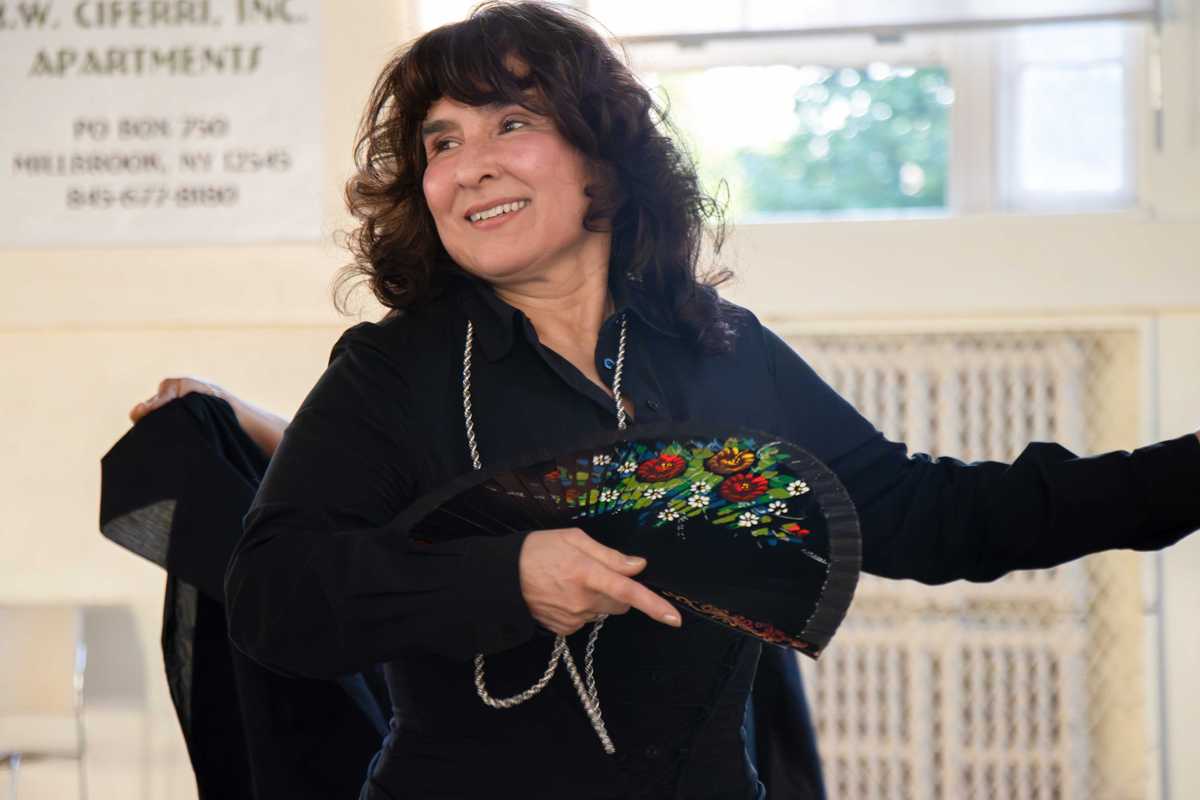
Karina Powers teaches traditional dances from Mexico in Millbrook.
Powers received a master’s degree in Mexican folklore dance from Escuela de la Danza in Baja California, Mexico. Since moving to the United States, she has built a career in performance and teaching. She has not only served as a dance director and performed as a professional vernacular music singer in California, but she has also worked towards her Doctorate, which she will receive in October.
As the founder of her company, Powers works tirelessly to make sure her dancers have everything they need, including costumes, proper flooring, music and a space to practice. Her husband built wooden panels, called tarimas, for students to dance on with their folklórico shoes. Millbrook Mayor Peter F. Doro allows Powers and her group to practice in Millbrook Hall, where she brings the tarimas to every practice along with costumes and proper footwear.
Powers dreams of owning her own studio where she can practice with her group, offer more classes, store costumes and create a space for her dancers to do their hair and makeup before performances. She said she hopes people learn about her classes so her company can grow and she can teach dances from a wider range of Mexican states while having greater access to traditional dress.
As a single mother and professor, Powers’ mother, Carmen Méndez, put her children in dance classes and signed them up for track and field, always keeping them goal- and career-oriented. She helped Powers with her company by creating all of the costumes her dancers wear in their performances. After her mother’s death in 2021, Powers said she has dedicated herself to carrying forward the passion, work ethic and love of dance her mother instilled in her.
“I miss her terribly, and I’m here because of her,” Powers said. “That’s why I want to do this, because of her. She gave me a lot, with the costumes, with her support. I do it for my mom.”
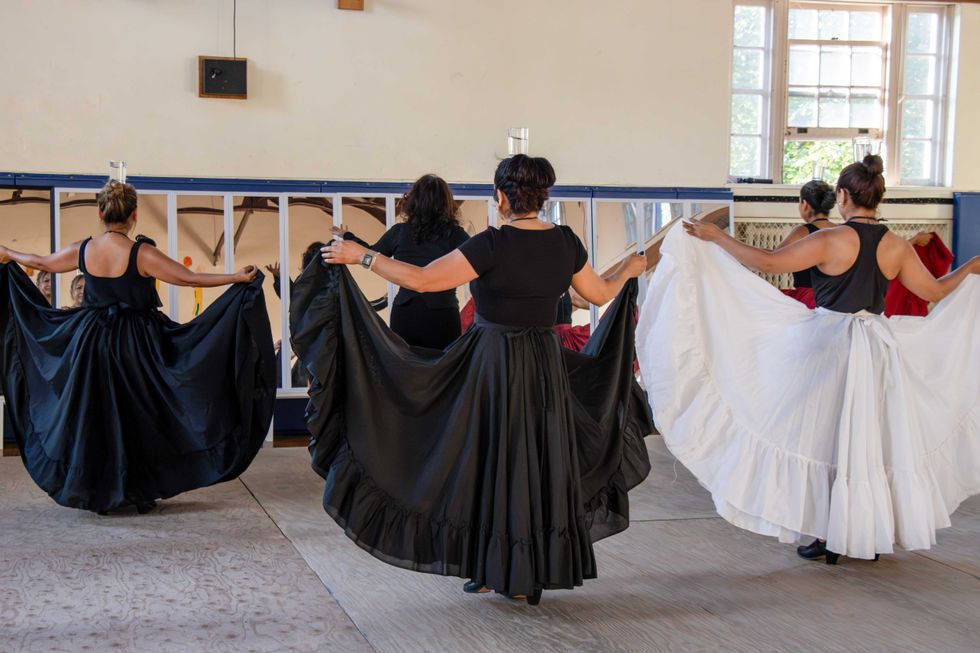 Karina Powers and her students practice in Millbrook Hall.Lucia Iandolo
Dancers in Powers’ group are dedicated to learning the art of dance from different states in Mexico on Tuesday and Friday nights at Millbrook Hall. They travel from many different places in New York to participate, with some dancers traveling more than an hour to make it to rehearsal each week.
“It’s a lot of work, but they learn it. I believe they love it, and it’s a way to come together, to do something good, to do something healthy, and to have people around you who appreciate this kind of art,“ Powers said.
Powers has studied with professor Eloy Jiménez Figueroa since childhood and said his mentorship inspired her to become the teacher she is today. She added that while she may not be the best teacher, she learned from the best.
While living in California, Powers taught elementary, high school and college students, as well as adults. She was recruited to teach traditional Mexican folkloric dance because of the region’s large Mexican community. Today, she encourages people of all backgrounds to explore the rich traditions of Mexican dance.
“This type of dance is not only for people from Mexico,” Powers said. “This is an art and the arts unite nations.”
Powers hopes to continue sharing that art in Millbrook and one day teach in the Millbrook Central School District. Powers and her group will perform at the Millbrook Library on Nov. 21, presenting traditional Mexican dances and inviting audience members to participate.
As a professor, dancer and singer, Powers stays grounded by believing in something greater than herself. She says that praying and putting herself in the hands of God has helped anchor her. She hopes to teach and dance for as long as her body allows.
“My mom, for me, is an angel. I put myself in her hands, and I have faith,” Powers said. “I have faith that God, or something good, is going to be there for the group and for myself.”

Want more of our stories on Google? Click here to make us a Preferred Source.