The pig behind Millerton’s downtown farm-to-table restaurant

Willa the Pig lies on a bed of blankets and pillows in her home in Millerton.
Photo by Aly Morrissey

Willa the Pig lies on a bed of blankets and pillows in her home in Millerton.
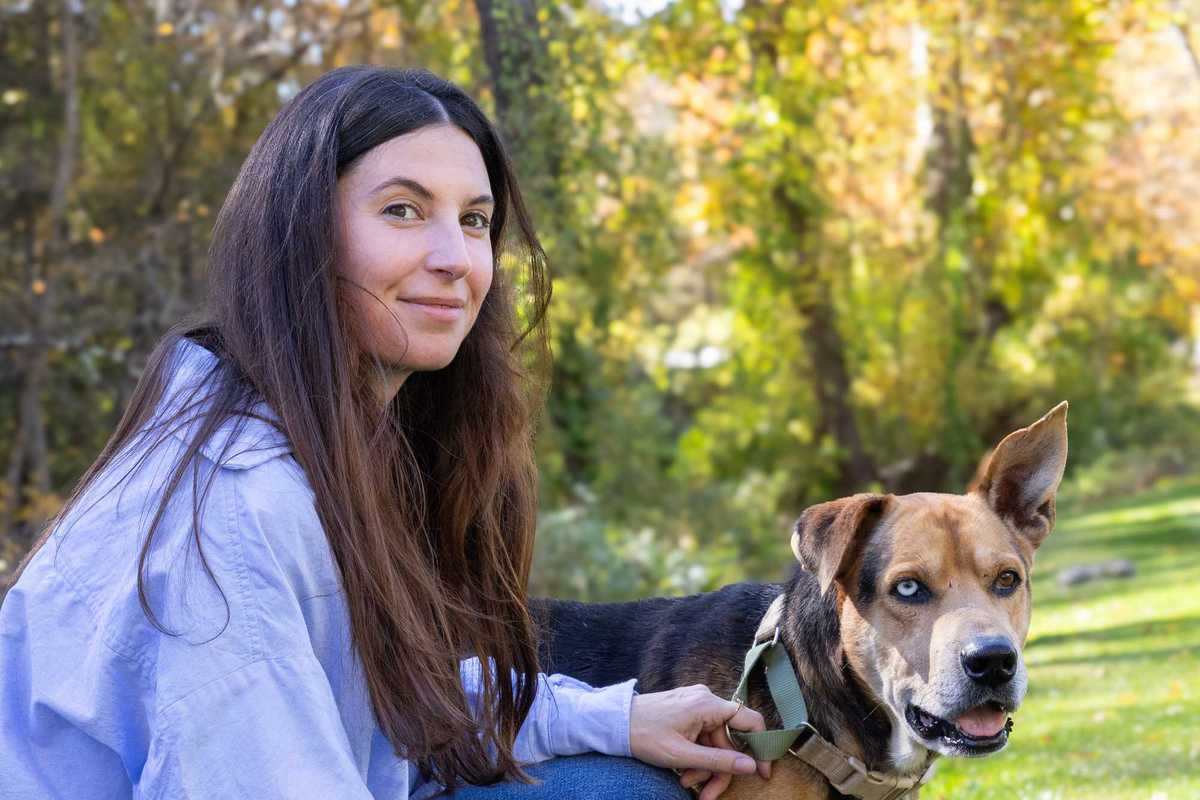
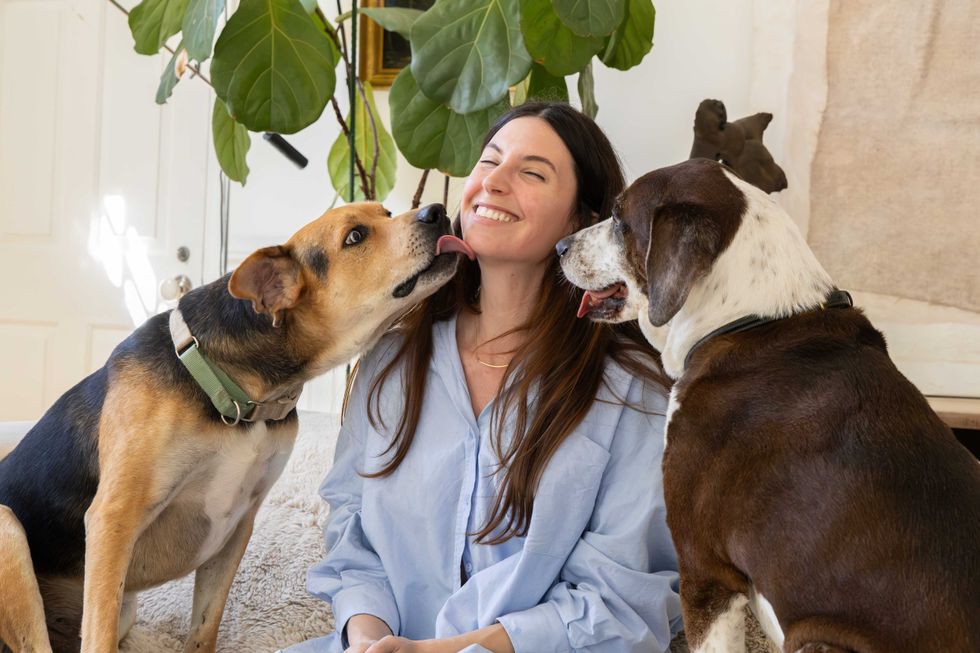
MILLERTON — Alanna Broesler didn’t always know she wanted a pet pig. But between watching the movie Babe on repeat as a child and working on a pig farm, the co-owner of Millerton’s farm-to-table restaurant Willa, joked, “there were signs.”
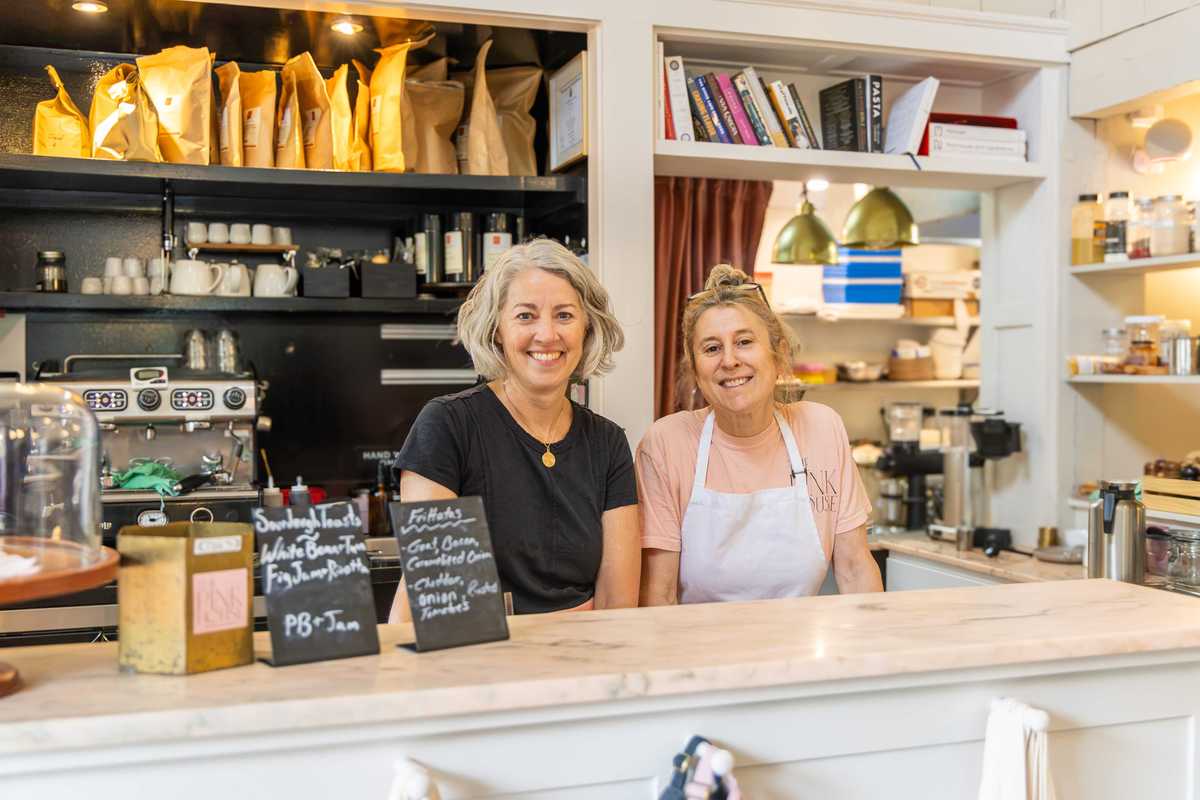
Willa is the restaurant’s namesake — a 130-pound house pig who loves smoothies, snuggling and sassing her family. She is a potbellied and Juliana cross with big spots and a big personality to match.
“Willa has always been a very dominant, kind of cheeky pig,” Broesler said with a laugh. “She’s very vocal.” Willa walks around her Millerton house with confidence and lots of opinions, especially when smoothies are involved. The first rumble of ice, or even the mention of the word “smoothie,” will cause Willa to jolt up from her cozy bed of pillows to investigate the scene. Her favorite blend is oat milk, yogurt and banana.
Broesler brought the pig home in 2017 and named her after legendary country singer Willie Nelson. Broesler said she was young at the time, unsure where she would be living, and uneducated about keeping pigs in a house. But after meeting Willa she knew that she wanted to give her a home.
“Looking back, it was irresponsible,” said Broesler — not necessarily because of the circumstances, but because she acquired Willa through a breeder. As she immersed herself in the pig community, Broesler learned about the demand for pig adoption. “Potbellied pigs are constantly getting rehomed and they need stable placements,” she said.
Enter Milo – Willa’s new baby brother. Milo is all black with a bottle-brush tail. His nose is flatter than Willa’s, and he has tusks. Broeslder adopted Milo and rescued him from a “horrible situation,” she said. He was kept in a crate and lacked proper care and affection.
Today, Milo’s favorite activity is grazing in the fenced-in section of Broesler’s yard. Quieter than his older sister — who runs the show, which also includes three cats and two chinchillas —Milo is getting used to home life with free space and loving caretakers.
Broesler didn’t come from a farming background. Her family owns a traditional Irish pub in New York State where she developed a strong work ethic and firsthand knowledge of the service industry. “I’ve been scrubbing potatoes and sweeping sidewalks for as long as I can remember,” Broesler said with a laugh.
But when it came time to apply for college, Broesler knew exactly what her future looked like.
“I always knew I wanted to work outside and with animals,” Broesler said. She sought out as much experience as she could. She milked goats, worked on cattle farms, and grew vegetables and flowers. What stands out vividly is working with pigs. Ultimately, all of her experience led to a farm-to-table restaurant.
But as the restaurant becomes more established a new dream is beginning to take shape. Broesler has just completed paperwork to establish her own pig sanctuary — Willa’s Way — a 501(c)(3) nonprofit.
Though in the preliminary stages, Broesler excitedly describes an elaborate vision. As a destination spot, the sanctuary would add value to the community in myriad ways, incorporating farm-fresh eggs, native flowers, in-season vegetables and educational opportunities related to sustainability.
At its core, the pig sanctuary would be in service of the animals. It would support rehabilitation, rehoming or placement, public education, and simply letting older pigs live out their remaining days with love and care.
“The most common question I get is, ‘Where would we be rescuing the pigs from,’” said Broesler. “People don’t often realize how huge the need is because of bad breeders, hoarding cases, or bad characters who lie about micropigs or teacup pigs, claiming they’ll remain 25 pounds.”
She adds that adopting Milo lit the fire for the sanctuary idea. “To watch him come to me as a sick, malnourished, really sad pig and come out of his shell with a funny personality – and he’s getting healthy and feeling good – it’s just been the best thing.”
The next steps for the sanctuary are to identify investors, apply for grants, and acquire 30 to 50 acres of land. No small feat, but Broesler is up for the challenge.
Halloween marked the two-year anniversary since Willa opened its doors on Main Street. With a menu that is, of course, pork free, Executive Chef Daniel Meissner has created imaginative farm-to-table offerings that change with the seasons.
“He has such a passion for cooking locally and supporting farmers,” said Broesler. “And he shows people that you can eat seasonally and it can taste amazing.”
The restaurant now works with approximately 20 local farms and vendors, including Thistle Pass, Kinderhook Farm, Harlem Valley Homestead and Off the Shelf Farm, to name a few. Menu items often include nods to farmers by name – a subtle way to spark conversations and celebrate the region’s producers, Broesler said.
When customers come into the restaurant, they often mistake Broesler for “Willa.” She corrects them with a laugh. “No, Willa is a very spoiled potbellied housepig.”
The following excerpts from The Millerton News were compiled by Kathleen Spahn and Rhiannon Leo-Jameson of the North East-Millerton Library.
January 24, 1935
About Millerton
Mayor and Mrs. William J. Brewer and Mr. and Mrs. Miles Jenks left on Monday for a month’s vacation in Florida.
Mr. Roy Ganung and daughter, Jane, spent Tuesday afternoon In Poughkeepsie.
Jean Silvernale is confined to home by illness.
Miss Blanche Bates is spending several weeks at the home of her brother, Edward Bates, at Pittsfield, Mass.
George Wooding of Thornewood spent Sunday at the home of his sister, Mrs. Harry Card.
Mr. and Mrs. Lewis Decker and family moved to Lakeville on Sunday.
January 22, 1976
Snowmobiles Tresspassing[sic], Officer Says
Trespassing and riding on public roads are the major offenses committed by area snowmobilers this winter, New York State Conservation Officer Harry Wheeler stated this week.
He asserted that a number of snowmobile riders have been sighted traveling on public roads and soaring across private property without permission, both illegal acts.
January 18, 2001
Local Homes Added to Historic Register
COLEMAN STATION — Three houses in the town of North East were recently added to the National Register of Historic Places.
The Oliver Barrett House, the Dakin-Coleman Farm and the Thomas Wheeler Farm, all located in the Coleman Station area, were selected by the New York state Office of Parks, Recreation and Historic Preservation to be listed individually on the register, though the entire Coleman Station Valley was considered for the recognition in 1993.
Millerton Sees Some Business Changes; Shops Move, Expand
MILLERTON- Two stores on Main Street in Millerton have interior changes in the works.
Leslie Hoss Flood has recently relocated her Amenia-based store to the basement of the Millerton Antiques Center. Ms. Flood’s shop had been in Amenia for about 15 years, where, in addition to selling used and antique furniture, Ms. Flood also ran an upholstery shop.
After removing several partitions and installing new lights, the basement store looks entirely new. Ms. Flood is pleased with the space, which offers more room in which to showcase her wares. She is also taking advantage of the additional area by creating a separate reupholstery room and a section to display in-stock fabrics.
Pasta-At-Large Expands
After acquiring the empty space, owner Sofia Okołowicz has expanded her business to provide “a little more elbow room inside.”
The front portion has been open since late November and, in recent days, Ms. Okolowicz has removed a wall and had electricity installed in the new area.
The college-age generation is grappling with inflation, increasing housing prices, climate change, and now mass corporate layoffs. In a world where geopolitical turmoil is increasing, the ground beneath their feet is shifting. Many believe their future is bleak.
My nephew, Joey, just got married. His wife lives with her parents, and he lives with his. While he makes good money as a pharmacy manager at a national chain drugstore, neither he nor his wife can afford even a down payment on a house in Long Island. They are moving in with the wife’s parents. Joey’s sister is also married with two children. They also live with their parents. Welcome to the American dream turned nightmare for almost 70 million young Americans.
The typical age range of Gen Z is 1997 to 2012. They are the demographic cohort succeeding Millennials and preceding Generation Alpha. They are the most racially and ethnically diverse generation in America, with 48% being non-white.
Almost all of this generation is highly active on social media. Almost 60% are planning to pursue a college education. They are just as likely to identify as Republicans, Democrats, or Independents. As such, the present populist upheaval the U.S. is undergoing takes an inordinate toll on them. It may be why 91% of Gen Zers report experiencing symptoms of stress and anxiety.
While Wall Street opened the year celebrating the promise of a bright future, thanks to AI. Opinion leaders predict that artificial intelligence, robots, and space, among other technological breakthroughs, will dramatically reshape the way the world works. For college grads, all they see is a no-fire, no-hire labor market where unemployment among workers ages 20 to 24 continues to rise. It is now to 5.3% and even worse for those younger than that.
The National Association of Colleges and Employers predict the entry-level hiring crisis will worsen this year, rating job prospects as poor or at best fair. At a recent gathering of employers at the Yale School of Management, 66% admitted they planned to cut jobs or freeze hiring.
With an economy that is expected to grow by 3% in 2026, one would have expected the opposite reaction, but then you would not be reckoning with the impact of artificial intelligence on the job market. Potential employers are concerned and uncertain about how AI might reshape the workforce over the next few years, and rightfully so.
Most analysts believe that many white-collar positions, especially at the entry level, will be replaced by technological advancement. Underscoring that concern, many corporate giants, including Amazon, UPS, Target, and Google, announced layoffs affecting more than 60,000 jobs. And to many, that is just the tip of the iceberg.
Faced with taking fast-food jobs at minimum wage and lacking work experience in their hoped-for professions, 3 in 5 Gen Z workers are looking elsewhere for a job with some kind of reasonable future. Almost half of these young workers believe the blue-collar jobs may offer better long-term security than corporate work in the technology fields. The top sectors pursued by Gen Z include plumbing, automotive repair, construction, and electrical work.
I happen to agree with that belief, but unfortunately, Gen Z applicants face the same barrier to entry in their white-collar arena—lack of experience. Many job applicants, regardless of industry, are now required to have at least 3 years of experience and up to 5 years before being considered.
The lure of six-figure salaries in the blue-collar area is attracting more Gen Zs to vocational schools. However, what many conveniently forget is that earning that kind of take-home pay requires years of experience, a substantial investment in personal tools and equipment, and serious wear and tear on the body.
As I write this, in the next room, a 65-year-old builder I’ll call Scott, who is going in for his second knee replacement next month, is building another room in our condo. Assisting him is a young GenZer. There is a constant stream of chatter as Scott talks through his drywalling process. His helper listens intently. They seem eager to learn and ask questions as they work. He did the same when he placed the struts and erected the wall.
For several years, Scott has been involved in a local high school program that teaches vocational school grads his business, while they gain on-the-job experience and a paycheck. Scott and others like him are providing a solution one day at a time. He is one answer to the dilemma facing this struggling generation. This country needs more Scotts to hire and teach a young workforce in need.
Next week, I will highlight one area where many Gen Xers have found an alternative to home ownership. It holds risks but doesn’t cost an arm and a leg to get involved.
Bill Schmick is a founding partner of Onota Partners, Inc., in the Berkshires.Bill’s forecasts and opinions are purely his own and do not necessarily represent the views of Onota Partners, Inc. (OPI).
The North East Community Center’s Early Learning Program shuttered abruptly last December after nonprofit leadership announced that significant financial strain required the program’s termination. NECC Executive Director Christine Sergent said the organization remains open to reconsidering childcare in the future.
Dutchess County is one of three counties selected to receive significant state funding as part of a new childcare pilot program announced by Gov. Kathy Hochul last week — an initiative that could expand childcare options in rural communities like Millerton.
The announcement follows Hochul’s State of the State address in which she proposed a landmark $4.5 billion investment toward universal childcare in New York. Hochul visited a childcare center in Queens on Thursday, Jan. 15, to outline her vision for the rollout of the pilot program, which would include a total of $60 million in state funding, along with additional funding from each of the three counties — Dutchess, Monroe and Broome — with a particular focus on serving newborns to three-year-olds.
“When we invest in our kids, we’re investing not just in their future, but the future of our state,” Hochul said. She called her plan aggressive, bold and ambitious with a focus on access and cost.
While the proposal must still be approved by the State Legislature as part of the 2026 budget process, Dutchess County’s Department of Community and Family Services is expected to work with the state on developing ideas to address Dutchess-specific needs. The state budget is due April 1.
Filling a local gap
The pilot would support community-based programming, a move that could fill the gap left in Millerton by the recent abrupt closure of North East Community Center’s Early Learning Program (ELP).
NECC officially closed the program on Dec. 19, 2025, after determining that the financial burden of operating a daycare had become unsustainable. The decision followed months of quiet internal deliberation and came as a shock to families and staff. NECC leadership cited rising operating costs, declining enrollment and the loss of grant funding as driving factors in the closure.
Christine Sergent, Executive Director of NECC, said the organization remains open to reconsidering childcare in the future, though no timeline has been announced.
“We are monitoring the governor’s actions as they clearly relate to the needs of the people we serve,” Sergent said. She added that she is hopeful that potential state resources could eventually bring more childcare options back to Millerton and surrounding communities, whether before or after NECC moves to a new facility.
Dutchess County Legislator Chris Drago, D-District-19, said the closure of the ELP has intensified the childcare challenges in the region. Drago, who had been working to raise awareness about the issue even before the pilot program was announced, said cuts to federal funding will be felt in rural Dutchess County.
“Childcare is a must-have,” Drago said. “Families need childcare if they’re going to work, and this is something we need to be fighting for.”
While he said Hochul’s proposal is a step in the right direction, Drago described the funding as a “drop in the bucket.” He hopes to organize a public forum to discuss the issue and better inform state representatives about the urgent childcare needs in northern Dutchess County.
Still, the news signals hope for local parents like Kim Yarnell, whose family was affected by the ELP closure.
“As a parent, I have struggled for years trying to source reliable and affordable care for my kids just so I could go to work,” Yarnell said, adding that she is thrilled about the pilot program.
Yarnell said it will be crucial that those overseeing the pilot rollout involve parent advocates upfront as part of the process to ensure that funding and support are allocated to not just county-run childcare facilities, but also private and in-home care – especially in rural communities like Millerton.