Thank you!
Your support is sustaining the future of local news in our communities.

In search of ambitious fish

In search of ambitious fish

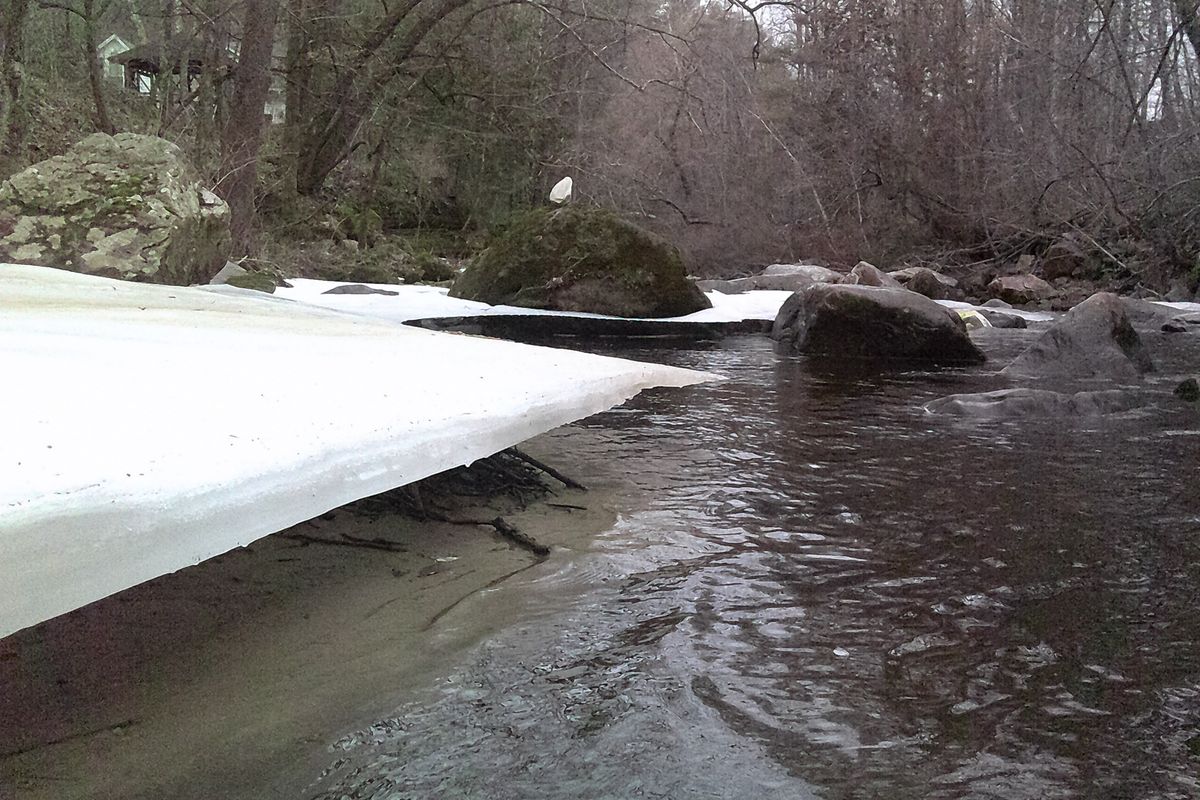
A recently-stocked brook trout was willing to play on the Blackberry River.

Patrick L. Sullivan

SOMEWHERE IN NORTHWEST CONNECTICUT — It took a while but I’m finally on the board for 2025.

The state stocked the Blackberry onMarch 13. The stream is typically stocked in the spring at least once more, and usually twice.

Statewide all trout fishing is catch and release until “Opening Day,” which is Saturday, April 12.

This is the most ignored law since Prohibition. On Saturday, March 15, I saw anglers taking fish. They weren’t trying to be sneaky, either. Maybe they just don’t realize the regs have changed. And maybe announcing on social media where stocking has occurred isn’t such a great idea.

I feel bad for these fish, frankly. Imagine being a hatchery trout and enjoying ideal temps in your tank, which is the only home you’ve ever known.

Then suddenly you’re shoved in a much smaller, much darker tank and bounced around, only to be dumped into a stream or lake that’s also dark and weird and has things living in it and is about 20 degrees colder than the home you’ll never see again.

And then you bite something that looks edible and next thing you know you’re in the frying pan.

It’s a depressing prospect for an ambitious fish.

On that SaturdayI had time before and after the 2 p.m. performance of “Urinetown” at Housatonic Valley Regional High School. So with the Blackberry mobbed I tippy-toed up a little blue line and got the first fish of 2025, a ferocious eight inch wild brook trout that came up for a size 10 Stimulator after ignoring half a dozen nymphs that would have been much less work.

Then I had to beat it down to Housy for the show.

Afterwards at 5 p.m. or so, the weather had given up even pretending to be pleasant. The Blackberry was deserted.

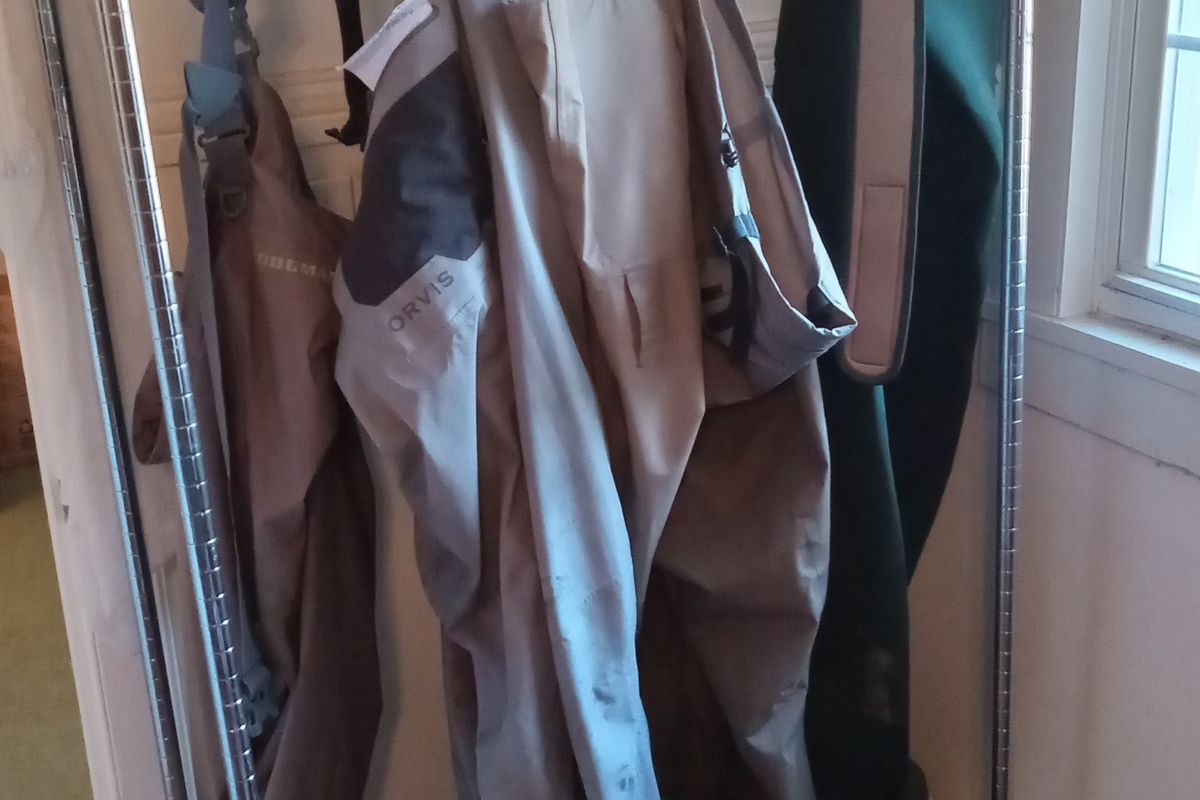
So I suited up again and found a pod of recent stockers willing to play. I tested out an experiment, a Chinese-made bamboo rod, seven feet long for a No. 4 line.

I wasn’t expecting much, and that’s what I got. It’s a serviceable rod, but nothing to get worked up about. At about $160 shipped from China it’s a way for the budget-conscious angler to get into bamboo, but I advise saving your money and buying something better from somebody stateside.

I dutifully took photos of fish in hand and in the net,but let us now reflect on just how useless and unexciting they are.

Here’s how I imagine a dialogue between me and the reader.

Q: How big is the net?

A: Not very.

Q: Where is this?

A: Could be anywhere, and you think I’m gonna tell you?

Q: Did you release the fish unharmed?

A: No, I stuck it in my pants.

You see? Unedifying, at best.

On the medical front, I am pleased to report that I did just about everything I usually do when fishing that involves my right shoulder and rotator cuff, with minimal pain and agony. So the physical therapy and long layoff worked.

Now about my right knee…

Latest News

‘So Little to Do,’ so much to discover at James Barron Art

Curator Deborah Goodman Davis reads the Emily Dickinson poem “The Grass So Little Has to Do.” Spencer Finch’s “Following Three Bees (Zinnias)” buzzes in the background.

Photo by Natalia Zukerman

“The Grass Has So Little to Do,” on view at James Barron Art in Kent, takes its title from Emily Dickinson’s poem “The Grass So Little Has to Do,” written in 1862:

“The Grass so little has to do—
A Sphere of simple Green—
With only Butterflies to brood
And Bees to entertain—”

Keep ReadingShow less

Marina Kotchoubey is not a woodworker

Marina Kotchoubey is not a woodworker

Marina Kotchoubey at the Ian Ingersoll Cabinetmakers showroom in West Cornwall.

Photo by D.H. Callahan

After 40-something years navigating the world of custom fine furniture, Ian Ingersoll was getting ready to retire. Starting off with a little dovetail stool that he sold at a shop in West Cornwall in the 1970s, he’d grown his skill and his business into something he — and the whole town — could be proud of. Shutting down that business was not an option.

Ingersoll built Ian Ingersoll Cabinetmakers, which produced mainly classical Shaker furniture, on passion: the passion he had to make a living through creative challenges and the passion of his employees, who all seem deeply in love with their craft.

Keep ReadingShow less
A legacy of giving at Norfolk Chamber Music Festival

One hundred and twenty years ago, Carl and Ellen Stoeckel commissioned New York architect E.K. Rossiter to design The Music Shed in Norfolk, Connecticut. After nearly a decade of entertaining their friends and neighbors with the finest music of the day, they built a permanent home for their beloved Litchfield County Choral Union.

The commission and full funding of the construction was not unheard of in an era when great fortunes led to public enrichment. Railroad tycoon John D. Rockefeller was instrumental in funding institutes of higher education. Steel baron Andrew Carnegie was building libraries all over the country, and famously said that a man who dies rich is a disgrace, challenging his peers to give their fortunes back to the people.

Keep ReadingShow less
google preferred source

Want more of our stories on Google? Click here to make us a Preferred Source.

Two unique exhibitions at Geary Gallery

Henry Klimowicz with his sculpture, “Partial Pillar 1”

Photo by D.H. Callahan

On Saturday, Aug. 1, Geary Gallery opened its doors in Salisbury for two unique shows in its first- and second-floor gallery spaces. Art lovers flooded both floors over the course of the afternoon, giving the events a vibrant feeling that enhanced the importance of the art.

On the first floor is a show by Chicago-born, Colorado-based photographer Summers Moore, titled “Lobitos: Pueblo Fantasma,” or “Lobitos: Ghost Town.” The work centers around her daughter’s current hometown in Peru. Moore herself found a home away from home in Colorado in the mid-1980s and encouraged her children to seek out new places outside of their comfort zones.

Keep ReadingShow less

Writer’s retreat in the woods

Writer’s retreat in the woods

Participants in a 2024 Great Mountain Forest Woodland Academy workshop at Yale Camp.

Photo by Mike Zarfos

Great Mountain Forest (GMF) will host its first Nature Writing Retreat at the historic Yale Camp in Falls Village from Aug. 7-9, 2026. Writers of all levels are invited to draw inspiration from one of New England’s most notable forest landscapes. GMF envisions the retreat becoming an annual event celebrating writing, conservation and the relationship between people and forests.

This immersive three-day retreat reflects on the legacy of Hal Borland, the American writer and New York Times nature columnist whose work was deeply connected to this landscape. The retreat explores how wilderness shapes language, strengthens close observation and fosters environmental consciousness.

Keep ReadingShow less
From Cornwall to Rome, Adam Van Doren at Berkshire Botanical Garden

Artist Adam Van Doren and curator Donna Hassler talk to a group of visitors at the Berkshire Botanical Garden. A Stephen Proctor vessel sits to their left.

Photo by Natalia Zukerman

This summer, the Berkshire Botanical Garden in Stockbridge has hosted “Grounded in Nature: Paintings by Adam Van Doren,” an exhibition exploring the intimate relationship between architecture and the natural world.

On view for only a few more weeks in the Leonhardt Galleries, the exhibition features more than 35 watercolor and oil paintings by the New York-based artist, architect, author and Yale professor, curated by art historian Donna Hassler, director emerita of Chesterwood. The works span three distinct places that have shaped Van Doren’s artistic practice: New York City, Cornwall, Connecticut, and his travels throughout Europe.

Keep ReadingShow less
google preferred source

Want more of our stories on Google? Click here to make us a Preferred Source.

google preferred source

Want more of our stories on Google? Click here to make us a Preferred Source.