Autumn angling through lunar mud

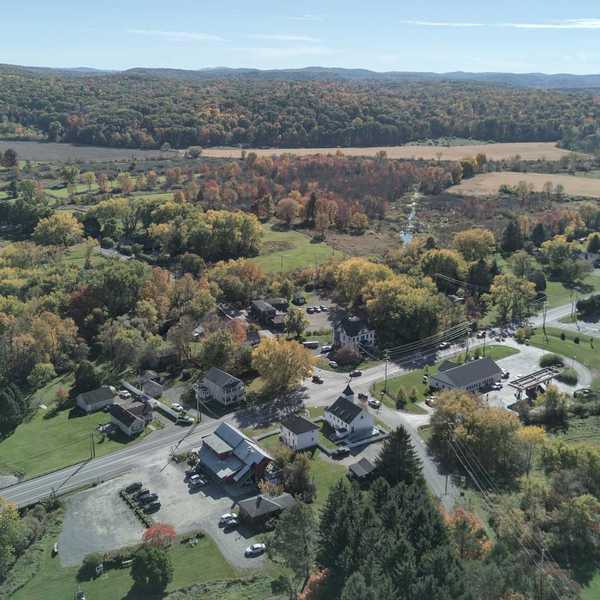
The lunar mud was thick on the banks of the Esopus in Boiceville, New York, near where the stream enters the Ashokan Reservoir.
Patrick L. Sullivan

The lunar mud was thick on the banks of the Esopus in Boiceville, New York, near where the stream enters the Ashokan Reservoir.
I spent a couple days two weeks ago in Ulster County, New York, prowling the Esopus, around and below the Rail Trail pedestrian bridge in Boiceville.
The water temps were acceptable but on the sunny days approached the danger zone by mid-afternoon.
Water clarity was decent. Where it was murky, it was green murky, which is good, as opposed to brown murky, which means mud.
The flows were decent but definitely on the low side. We need rain badly, in the Hudson Valley and in the Northwest Corner.
And the area where I was had a decidedly lunar feel to the landscape, if the Moon has mud.
What worked: Junk flies.
What didn’t: Woolies, Tequilleys, unweighted streamers, Leadwing Coachmen, soft hackle wets in darker colors, orange-y caddis dries.
There were stonefly and isonychia casings on the rocks, but not a lot of them.
I was hoping for fat brown trout moving up into the river from the Ashokan Reservoir to spawn. Failing that, I was hoping for greedy rainbows looking to eat the brown trout eggs. It’s a little early for that sort of thing, but hey, I don’t make the rules.
No trout were disturbed, by me anyway.
Moment of triumph: Way down by where the stream enters the reservoir proper, and the lunar mud figures into the equation, I latched into three excellent smallies and one junior partner in a boom-boom space of about 45 minutes. What made this especially pleasant was that I had ventured forth with an 11 foot 4 weight single hand rod intending to either tight line nymphs or play with unweighted streamers such as Mickey Finns and Grey Ghosts.

At the last moment I stuck a small box containing mops and squirmy worms in the pack. This was a very good move and almost made up for the Dr. Boing-Boing moment when I realized I forgot the lanyard with the trout-sized tippet, forceps and clippers.
Reluctant to perform the Walk of Shame the half mile or so back to the car, I improvised. I had heavy tippet material, 0X through 2X, on a separate holder attached to my pack, and I found that with a little juju the cigar cutter worked as a clipper. What I could not approximate was the forceps, for squashing barbs, so I was limited to flies I had used before.
That turned out to be a two-fly rig, with the squirmy worm on a dropper up top and a green mop tied on a jig hook and with a bead head on point. Three of the smallies, including the fair-to-middling one, opted for the worm, and one bold soul took a flyer on the mop.
The commotion was such that an angler using spinning gear upstream wandered down to see what was up when I took a break. He then directed me to his companion, who was working a riffle further up with a fly rod.
Not wanting to hog the hot spot, and keenly aware that my wonky shoulder was sending out mild but unmistakable distress signals, I ceded my spot to angler number one and made my way upstream to angler number two.
He turned out to be from Millerton, N.Y. and had read Tangled Lines in the Millerton News.
He didn’t specifically say he was a fan but I assumed he was.. If he wasn’t then he was after I gave him a squirmy and a mop to try.
Note: As I peck this out on Sunday, Oct. 6, the 10-day forecast doesn’t look good for rain. If you take a shot at the very low Housatonic or Farmington rivers, your best bet is dawn to noon, long rods and longer leaders, clothing that blends into the background, and a high tolerance for frustration and agony of spirit.
Stanford locals utilize the snow covered hill below Stanford Town Hall on Route 82 on Friday, Jan. 23, before the weekend's snow storm deposited up to 18 inches across northeast Dutchess County.
Heavy snow blanketed Dutchess County on Sunday, Jan. 25, triggering a county-wide travel ban and a state of emergency.
Parts of the northeast corner of the county saw as many as 18 inches of snow. Temperatures are projected to remain below freezing well into next week.
Gov. Kathy Hochul declared a state of emergency leading up to the storm, as did Dutchess County Executive Sue Serino.
Snowfall totals exceeded forecasts across northeast Dutchess County, with heavy, persistent bands producing more than a foot and a half of accumulation. Schools, municipal offices, churches and numerous community events were canceled or postponed through Monday as plowing operations continued and temperatures dropped into the single digits overnight.

Road crews across the region said they felt prepared heading into the storm. While storms of this magnitude are relatively rare, crews expressed confidence that the cold temperatures would keep the snow lighter and easier to manage.
Visits to North East, Amenia, Washington, Stanford and Pine Plains found salt supplies well stocked and equipment in good working order ahead of the snowfall.
In Stanford, Highway Superintendent Jim Myers and his crew were strapping plows to trucks in the town garage on Friday morning, Jan. 23. Myers said the town was as ready as it could be — a sentiment echoed by highway departments throughout the region.
"You just got to stay on top of it," Myers said. "Keep going."
Labor shortages remain a concern during major storms, crew members said, noting that county and state resources can be stretched thin in more remote areas. In many towns, local road crews are only responsible for town-owned roads, with county and state crews often responsible for the numbered highways and routes.

Some weather models are predicting that another winter storm may hit the Northeast on Sunday, Feb. 1, and Monday, Feb. 2. Predictions are still early, but they suggest more snow is coming.
Dutchess County operates a warming center assistance program through its Department of Child and Family Services. Residents in need of a safe, warm place to stay may call 845-486-3300 from 9 a.m. to 5 p.m. Monday through Friday or 211 after 5 p.m. for assistance in finding shelter.
Additional reporting by Christian Murray
Route 44/82 west of Millbrook, near Cornell Cooperative Extension, was clear as of 2 p.m. Monday, Jan. 26, following the snowstorm.
Dutchess County officials lifted the county-wide travel at noon Monday, Jan. 26.
The announcement came Monday morning at 9:30 after heavy snowfall Sunday blanketed the county with up to 18 inches in some places, according to totals reported on the National Weather Service's website.
The county is still under a Winter Storm Warning until 7 p.m. Monday, Jan. 26. Dutchess County Executive Sue Serino said in a statement that residents should continue to stay home unless traveling is necessary while cleanup efforts continue.
Snow covered Route 44/22 near the Maplebrook School campus in Amenia at 10:30 a.m. Sunday, Jan. 25.
Dutchess County officials issued a travel ban on all public roads from 5 a.m. Sunday, Jan. 25, to 5 p.m. Monday, Jan. 26.
The National Weather Service issued a Winter Storm Warning for much of upstate New York on Friday. Forecasts call for between 10 and 20 inches of snow across northeast Dutchess County.
Road crews across the region told The News that they are feeling prepared.
Visits to North East, Amenia, Washington, Stanford and Pine Plains revealed the salt is in good supply and the equipment is in good working order ahead of the storm.
Stanford Highway Superintendent Jim Myers and his crew were strapping plows to a truck in the town garage on Friday morning, Jan. 23. He said the Stanford road crew was as prepared as it can be, echoing a common sentiment among crews in the region.
"You just got to stay on top of it," Myers said. "Keep going."
County Executive Sue Serino said in a post on FaceBook that all non-emergency and non-essential travel is forbidden until 5 p.m. Monday. Only emergency personnel, road crew members, employees deemed essential for facility operation and news media covering the storm are permitted to travel during the ban.
All others are required to stay home. Pine Plains Highway Superintendent Carl Baden said that's the safest course of action during the storm.
"Just stay home," he said. "We can make it a lot safer for you if you wait."
Protesters gather during a weekly anti-Trump demonstration in Fountain Square in Amenia on Saturday, Jan. 24, holding signs opposing Immigration and Customs Enforcement.
AMENIA – A group of protesters braved 9-degree temperatures for their weekly anti-Trump demonstration in Fountain Square on Saturday, Jan. 24, as news broke of another alleged fatal shooting of a U.S. citizen in Minnesota involving federal agents – developments that organizers said reflected the urgency of their message.
The group, which described itself as “small but mighty,” drew seven people who stood along the road holding signs expressing opposition to Immigration and Customs Enforcement (ICE), including slogans likening the agency to Nazis and messages in support of immigrants.
Protest organizer Kimberley Travis, who began the regular demonstrations last June with signs bearing the anti-Trump slogan “No Kings,” has remained among the fluctuating number of protesters each week.
Travis said her garage is full of handmade signs – a reflection of the rapidly-changing news cycle and her need to keep up with current events. On Saturday, many of the signs focused on what protesters described as the increasingly extreme actions associated with ICE.
Large, simple signs planted in the snow read, “ICE Out for Good,” a phrase inspired, Travis said, by the recent killing of a Minneapolis mother by a federal agent.

“We're here today – and every Saturday – because we’re tired of what's happening to our democracy,” Travis said, who believes that the Constitution is being “demolished on a daily basis.”
Gesturing toward the other protesters, Travis said, “We, the people, must stand for our democracy, our constitutional freedoms, and we need to stop the murder in the streets and the kidnapping.”
Millerton resident Greg Swinehart said he has attended the Fountain Square protests between eight and 10 times, motivated by what he described as the growing militarization of the country and the violence committed by ICE.
“We need to resist that in a peaceful, nonviolent way,” Swinehart said. “We’re trying to raise awareness in our local community by helping people see messages they might encounter in the national media through the voices of their own friends and neighbors.”
While most passing drivers either honked and waved in support – or simply drove past – a few showed disapproval. One man slowed his vehicle to hurl a string of expletives at the protesters, telling the group to go home.
Still, neither the occasional hostility nor the bitterly cold weather deterred the group, which gathers each Saturday from noon to 1 p.m. “Every car honk feels like another drop of hope,” one demonstrator said.

When asked if they were afraid to protest so publicly after reports of lethal shootings in Minnesota, the residents generally shared the same response.
“I probably should be,” Travis said. “But they will not intimidate me, and they will not stop me.”
Since beginning the protests last summer, Travis said she has experienced threats and intimidation and has, on one occasion, had to call the police. Even so, she said the encouragement she receives far outweighs the hostility.
A longtime activist, Travis said she has been protesting for causes she believes in since she was a young teenager during the Vietnam War and doesn’t plan on stopping anytime soon.
Swinehart said he has not felt threatened and hopes the gatherings will continue to grow.
“I hope that more citizens join us,” he said. “I hope more people will speak out for what they think is right, and to enjoy the camaraderie of standing alongside people who care deeply about America.”