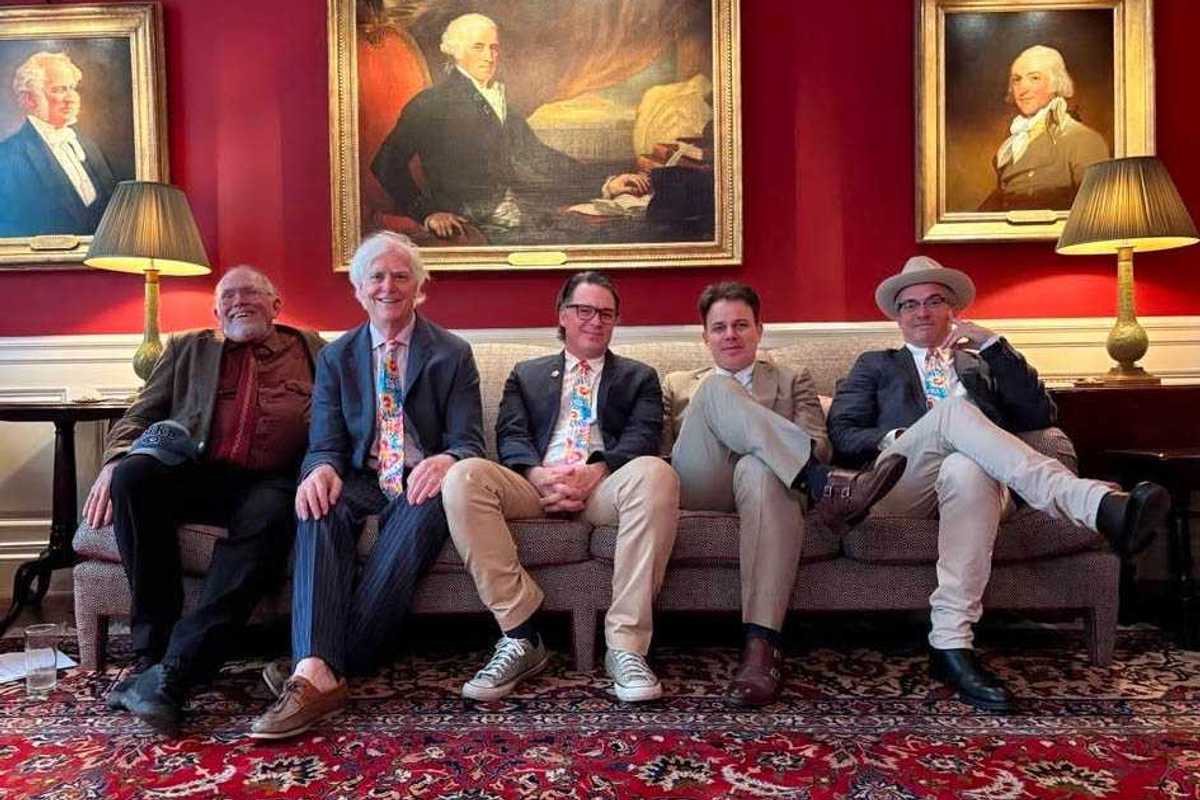
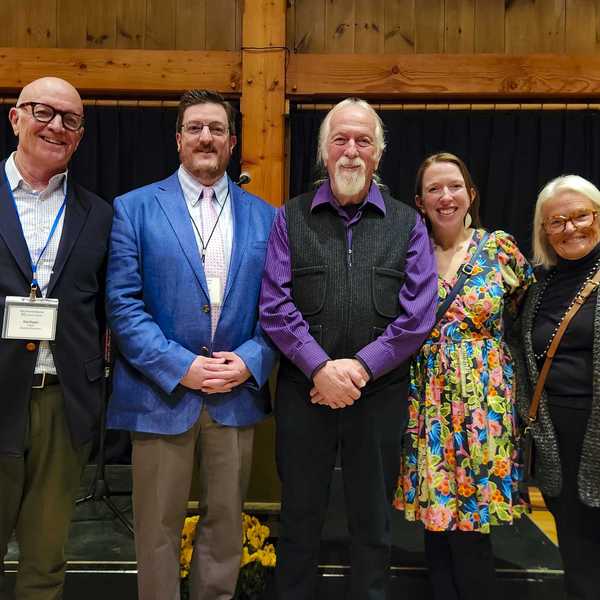
Bob Meyers, President and Publisher of the Cornwall Chronicle, kicked off the 5th annual Cornwall Reads Cornwall event at the UCC in Cornwall on Nov. 30 with a warm welcome and a gentle reminder to silence cell phones. Over the next hour, the audience was transported back in time as local writers, editors, luminaries, and students brought the Chronicle’s archives to life.
“This reading has become an annual event,” said Meyers, “as well as a welcome distraction from Thanksgiving leftovers.” He then noted that the event “was the original brainchild of Roxana Robinson.” Meyers added, “She also arranged to have this take place on the day of her birth,” at which point the audience wished the celebrated local author a happy birthday.
Before inviting Robinson to be the first reader, Meyers spoke a bit about the Chronicle’s history. The Cornwall Chronicle is a monthly, nonpartisan, nonprofit newspaper run by volunteers and funded entirely by reader donations. Founded in 1991 by Tom and Margaret Bevans, it was born out of Tom’s frustration with Cornwall’s lack of local press coverage. A graphic artist and former design head at Simon & Schuster, Tom shaped the paper’s timeless format and mission: fostering community understanding and civic engagement.
Over the years, leadership transitioned to Spencer and Bobby Klaw, retired editors from major publications, and later to an editorial board supported by a network of volunteer writers and artists. For 22 years, the Chronicle has been published without missing an issue, drawing contributions from both seasoned journalists and local voices like farmers and social workers. Delivered free to Cornwall residents and out-of-town subscribers, the ad-free paper relies solely on donations.
Robinson read the first piece, an article about snow plowing from December 1994. She was followed by Emmy Award-winning journalist and Cornwall resident Richard Schlesinger, who read a piece about grandmothers from a June 1992 edition. Robinson held the mic for local activist Nita Colgate as she read from a July 1998 issue of the Chronicle. Other readers included Gillian Blake, senior vice president, publisher, and editor-in-chief at Crown, a division of Penguin Random House.
Local students Willow Berry and Willa Lesch took turns reading a piece together, and recent Vassar graduate Gloria Trevor read a piece about snakes. Martin Chalk, board member of the Cornwall Conservation Trust and long-time Cornwall resident, read from a June 2017 edition of the Chronicle. Author Leigh Newman read a recent piece from August 2024, and CEO and founder of Five Acre Farms, Daniel Horan, read a piece from April 2024.
With each reading, the room was filled with the spirit of shared history, as tales of local lore, humor, and heartache unfolded. The event was a reminder of a simpler time and a celebration of Cornwall’s enduring love for its stories and the people who tell them.

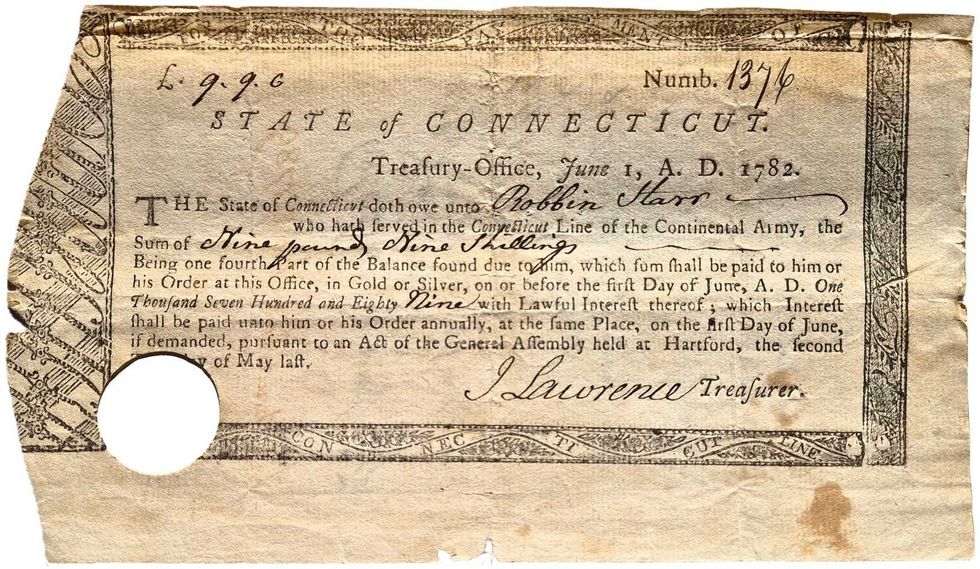 Pay Bill for Robin Starr’s service in the Continental Army.Courtesy the Alex Breanne Corporation
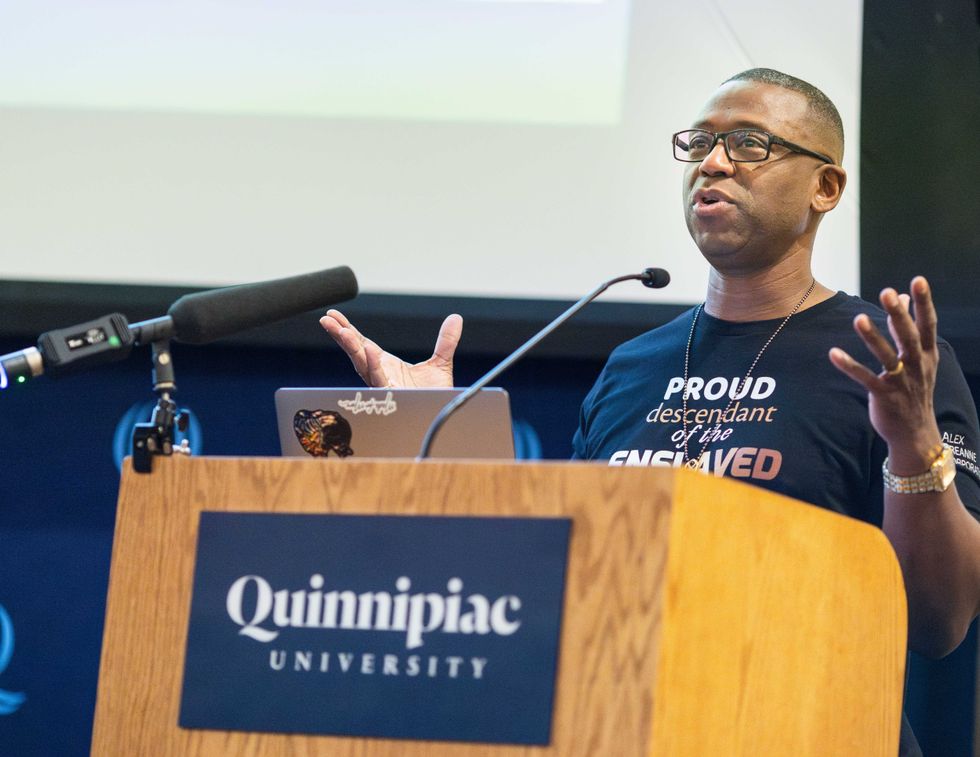 John Mills speaking at Quinnipiac University.Courtesy the Alex Breanne Corporation
 Stephanie Saetta,with her rescue dog George and Blue (left), a shepherd mix awaiting his forever home.Madi Long