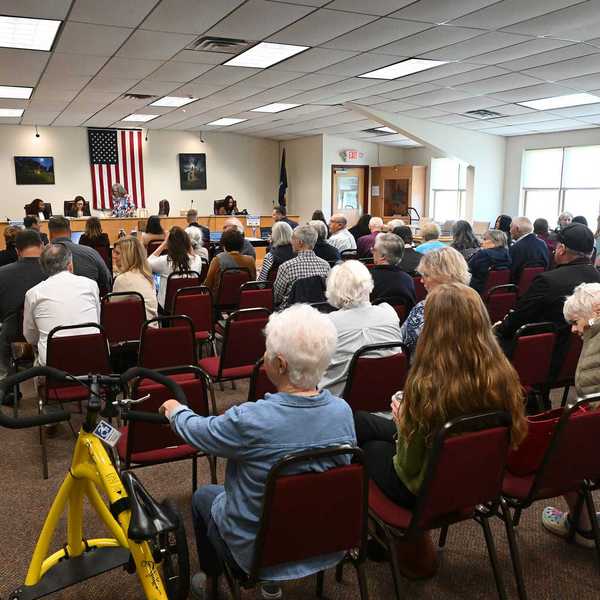
MILLERTON — A group called “Save Millerton” has sparked debate over the Town of North East’s proposed zoning overhaul, circulating disputed claims about transparency, enforcement, and the town’s long-term direction.
The group recently published two half-page ads in The News that have drawn wide attention — and criticism from town officials and volunteers — as residents try to understand the 181-page rewrite currently under review. The ads raised concerns about the new zoning code and the process behind its creation.
The claims raised by Save Millerton have prompted many residents to scrutinize the draft code, released Nov. 18, while leaving others confused as they navigate competing interpretations of what the zoning overhaul would permit.
Town officials, meanwhile, say they are finalizing the product — a process that has already taken several years — to modernize an outdated zoning code adopted in 1977, with the goals of supporting local business and creating new housing options. However, Save Millerton organizer Tyler Graham argues the process has lacked transparency and the draft raises questions that have not been adequately explained.
To understand the debate, The News spoke with Graham, who lives on Cooper Road, and Town Supervisor Chris Kennan about the issues at stake, the origins of Save Millerton, and the group’s goals.
What is ‘Save Millerton’?
Graham described Save Millerton as an informal effort made up of a small number of residents concerned about the zoning rewrite and future enforcement. The News could not independently confirm the number of participants.
Graham said he has been speaking with other residents and collecting email addresses through his website, www.savemillerton.org, where he plans to post documents and commentary related to the zoning process.
He said the campaign’s purpose is to call attention to gaps in enforcement, demand greater transparency, and question the speed at which the rewrite is moving toward adoption. The effort stems partly from a long dispute on Cooper Road, where Graham and several neighbors allege that an illegally constructed dwelling has gone unenforced for years.
Graham said requests for information about the case were “stonewalled,” leaving residents frustrated. Kennan declined to discuss the issue, calling it decades-old and complicated, and said the Town has retained outside counsel.
Graham said that experience fuels his skepticism about the zoning overhaul.
What are Save Millerton’s claims?
One of Save Millerton’s claims is that the proposed update of accessory dwelling units (ADUs) could accelerate residential density in ways that change the town’s character. Graham said allowing accessory units could have major consequences.
Town officials disagree. Kennan disputes that view, noting that strict septic requirements significantly limit where ADUs can be built. He emphasizes that accessory apartments already exist in the current code and that most homeowners will not have the capacity to add a unit even under a more permissive framework.
A second concern Save Millerton highlights is the possibility of “big-box stores” or large-scale commercial development entering North East. Graham said most residents he’s spoken with prefer driving to Poughkeepsie or Great Barrington for large retail and want Millerton to retain its small-town character.
Kennan counters that such fears are unrealistic, given the parcel sizes in the commercial districts and the area’s low population density. He noted that the commercial parcels in North East are far too small for stores on the scale of a Walmart or Costco.
However, he noted that “many residents would welcome new shopping options.”
The Town’s view
Town officials maintain that the overhaul stems from recommendations in the 2019 Comprehensive Plan and years of work by the Zoning Review Committee, which has held nearly 100 meetings. Kennan said the code is intended to support business growth and expand housing opportunities — not transform Millerton into something unrecognizable.
“I hope those who took the time to follow the process will appreciate the effort and attention to detail that went into the revisions,” Kennan said. While acknowledging that residents have “every right to express their views,” Kennan said the Save Millerton ads contained “misinformation and errors,” citing, for example, a reference to a “new Village Hall” rather than a new Town Hall.
Bill Kish, a volunteer and member of the Planning Board and Zoning Review Committee, also expressed frustration with the advertisements. “As somebody who spent five years working as a volunteer to try to develop the best possible commercial zoning, I’m taking into account as many points of view as possible,” he said. “However, I find it disturbing that this series of advertisements appeared at the very last minute, seemingly designed to throw a hand grenade at the whole process.”
Next steps and enforcement going forward
Kennan acknowledged longstanding concerns over the town’s reputation of lackluster zoning enforcement. “Zoning enforcement is a repeatedly mentioned concern, and has been for decades,” he said. “The Town intends to address this and continue to make improvements.”
The first public hearing on the zoning overhaul is scheduled for Jan. 8, 2026, at North East Town Hall at 19 North Maple Ave. Kennan has emphasized that additional public hearings will be scheduled as necessary. Residents are encouraged to read the zoning draft online at townofnortheastny.gov/zoning-review-committee/ or in person at Town Hall. Digital and hard copies are available.




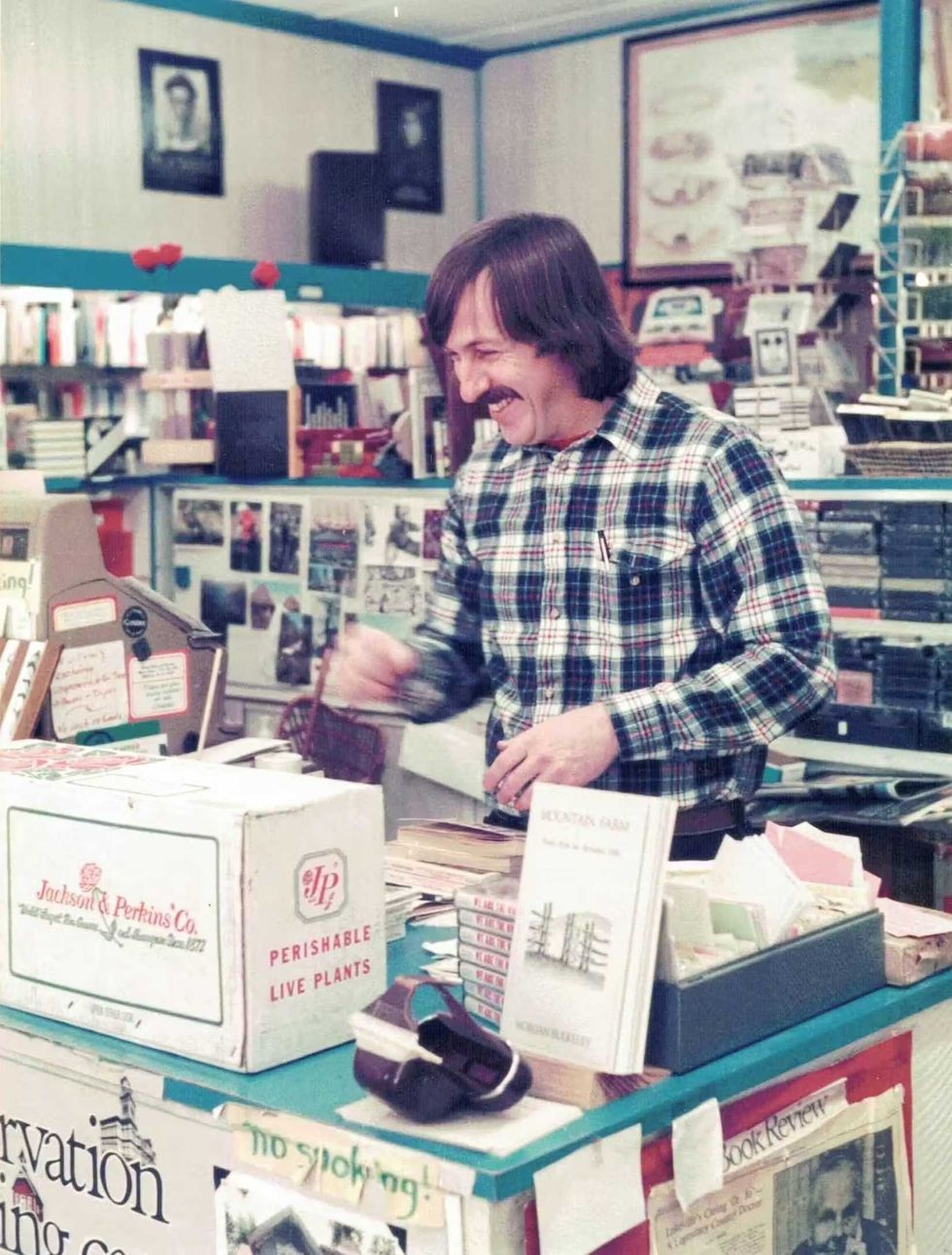 Dick Hermans in the Oblong Bookstore on Millerton’s Main Street in 1985.Provided



 Fall storage crop harvests amid soil building cover crops at Adamah Farm in Falls Village. Janna Siller