MILLERTON — Planning Board members raised a mix of broad and detailed concerns about the Town of North East’s proposed zoning plan during a special meeting on Wednesday, Dec. 3 — their final discussion before the public hearing set for Jan. 8.
The 181-page draft plan represents a rewrite of the town’s decades-old zoning code, updating definitions, commercial use rules, and standards for parking, lighting and design. Town officials say the overhaul is meant to eliminate inconsistencies and give applicants and reviewers a clearer, more functional set of rules.
At Wednesday’s meeting, Planning Board members offered comments that ranged from line-by-line concerns to questions about how cohesively the document functions as a whole.
Planning Board member Dan Sternberg offered the widest critique. “I think as a whole, this draft is not well drafted. I think as a legal document — as a piece of legislation — it’s got a lot of problems. It reads like something drafted by committee.”
Sternberg suggested the document should be considered more holistically, and the language of the proposed draft should be more consistent and clear.
He said lifting examples of codes from other towns likely contributed to the disjointedness of the draft. “The language used in it may not be consistent with some of the language of the rest of our code,” Sternberg said. “I’ve read lots and lots of agreements, lots and lots of legislation over the years, and seeing the drafting process, I can tell that this was kind of stitched together.”
Board members appeared reluctant to scrap the draft outright, arguing that doing so would dismiss several years of work by volunteers and consultants. Instead, they expect to recommend that the Town Board focus on clarifying sections where the language is not clear.
Planning Board member Bill Kish, who served on the Zoning Review Commission that drafted the commercial zoning overhaul, offered a defense of the draft.
Kish emphasized that nothing in the draft was borrowed casually. He said that anything that was borrowed was the subject of at least one full meeting and it was discussed again. “This is about as good as you can get using the process that we had,” Kish said. “That’s all I can say.”
Nevertheless, Planning Board Chair Dale Culver said he agreed with Sternberg's criticism. "I'm never in favor of lifting other towns' codes that are a long ways from our town," Culver said. "Because we tend to get their slant of their view for their code for their town. And our town may be different. It quite often is."
It remained unclear at the close of the meeting whether Sternberg’s broader criticism would be included in the Planning Board’s formal memo to the Town Board. The implications are significant: if the critique is included, it signals that the full board believes the draft needs broader revision. If it is not included, the Town Board receives a narrower set of recommendations, and Sternberg’s concerns will arrive only through his individual memo.
Board members did have consensus on other comments that will be included in the board's memo. Board member Leslie Farhangi requested that the phrase "cage-type poultry" be removed from the draft entirely.
Farhangi also recommended — and the board agreed — that approvals should include an expiration date. Board members noted that a plan could be approved and then remain unbuilt for years, while the town changes.
The Planning Board's memo has not yet been drafted as of press time. Planning Board members were also encouraged to submit individual letters to the Town Board expressing any concerns that the board didn't have consensus on.
"We can't have it be all unanimous consent," Culver said. "Because if that's the case, are we all thinking or are we just listening and agreeing?"






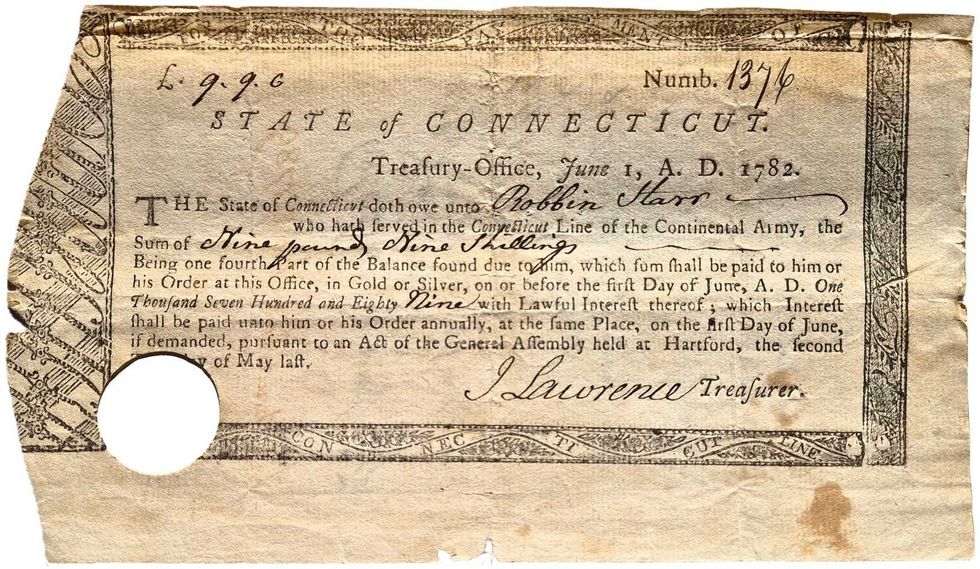 Pay Bill for Robin Starr’s service in the Continental Army.Courtesy the Alex Breanne Corporation
 John Mills speaking at Quinnipiac University.Courtesy the Alex Breanne Corporation

 Stephanie Saetta,with her rescue dog George and Blue (left), a shepherd mix awaiting his forever home.Madi Long