Whole milk returns to schools after federal act passes

Ronnybrook farm operates a dairy in Pine Plains.
Photo provided

Ronnybrook farm operates a dairy in Pine Plains.
Whole milk will return to school cafeterias across the U.S. following President Donald Trump’s signing on Jan. 14 of the Whole Milk for Healthy Kids Act, a bipartisan measure that allows schools participating in the National School Lunch Program to serve whole and reduced-fat milk alongside low-fat and fat-free options.
“Milk in any of its forms is beneficial to consumers,” said Rick Osofsky of Ronnie Brook Farm. “Full fat is only 3.5% fat and it’s unfortunate it developed a bad rap. This will reintroduce milk to kids.”
Among the bill’s 118 House co-sponsors were Democrats from rural and dairy-producing regions, including Rep. Pat Ryan of New York, whose 18th Congressional District includes parts of Dutchess County, and Rep. Jahana Hayes of Connecticut, who represents the state’s 5th Congressional District. Both lawmakers joined the bipartisan coalition backing the measure, which was led by Republican sponsors but drew Democratic support. Supporters from both parties said the change would support student nutrition and benefit the nation’s dairy industry.
Decade-old policy reversed
The new law undoes part of the nutrition standards that had restricted schools to serving only low-fat or fat-free milk dating back to updates of the Healthy, Hunger-Free Kids Actfrom 2012 in an attempt to reduce saturated fat and calories in school meals to combat childhood obesity.
Critics of the old policy argued that the absence of whole milk contributed to declining milk consumption among students, saying many children did not like low-fat options. Supporters of the new law contend that offering whole and reduced-fat milk will increase participation in school meal programs and reduce waste.
AMENIA — Habitat for Humanity is planning to build a workforce housing unit in Amenia after the Town Board approved the sale of a portion of a town-owned parcel of land.
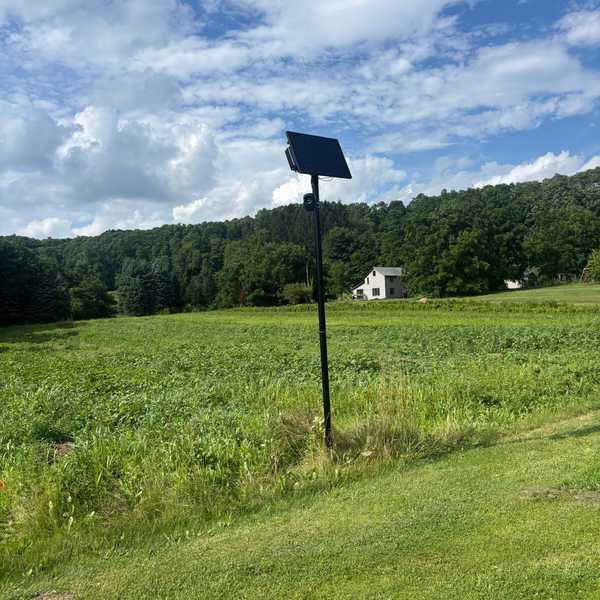
The 0.71-acre parcel is currently vacant, except for a new electric vehicle charging station currently being installed along its northern edge, where the property abuts the Harlem Valley Rail Trail parking lot located where Mechanic Street becomes Depot Hill Road.
The Town Board approved a resolution at its Thursday, Feb. 5, meeting to sell the empty half-acre portion of the parcel to Habitat for Humanity of Dutchess County for $30,000.
Town Board attorney Ian Lindars noted that the sale is conditional and requires a subdivision to carve out the land occupied by the new EV charging station before the approval process can proceed.
The resolution approval is subject to a “permissive referendum,” meaning that if no citizen petitions are submitted, then the sale can proceed.
Councilmember Vicki Doyle said she was pleased that the EV charging station project is nearing completion.
“Once it’s up and running, we’ll need to have someone monitor it to be sure that no one is parking there beyond the time needed to accomplish the vehicle charging process,” Doyle said.
Doyle added that the EV charging station will be free to use for the first two years of operation.
The Town Board, joined by councilmember Walter Dietrich, also reminded residents of the annual winter street parking ban, which runs from Nov. 1 through April 1. Under town code, no parking is permitted on any roads, streets or highways between the hours of 11 p.m. and 7 a.m. He also noted the one-hour parking limit for the parking spaces in front of the post office.
In other action the Town Board scheduled a public hearing for the Northern Red Oak Recreational Trail project on Old Route 22 in Wassaic. Plans for the 450-acre parcel will create 10 to 12 miles of recreational mountain biking and hiking trails. The hearing will be held on Thursday, Feb. 19, at 7 p.m.
Beginning this week, readers will see a redesigned Compass section, focused on arts and lifestyle coverage from across the region. This update marks the first step in an expanded approach to arts and lifestyle reporting.
Compass covers the creative, cultural, and everyday activity that shapes life here — the work people make, the places they gather and the ways communities express themselves. Arts and lifestyle reporting is part of the broader story of this area and an essential record of how people live.
New this week is the introduction of a regular community profile highlighting individuals who contribute to the region’s cultural life through creative work, long-standing involvement in local institutions, or by simply making life here more interesting.
Arts and lifestyle coverage is not only about documenting what has already happened. Compass will continue to emphasize reporting on events and activities readers can take part in — performances, exhibitions, talks, festivals and outdoor activities.
We’re also seeking new voices. We welcome story ideas, tips and pitches, and we’re interested in working with writers and photographers who want to contribute thoughtful, independent arts and lifestyle coverage. Send inquiries to nataliaz@lakevillejournal.com.
We look forward to your feedback.
The assertion by Tyler Graham — who says he wants to “Save Millerton” — that the Town of North East should not follow, or copy, the lighting code from the wealthy town of Southampton has no merit.
The members of the Zoning Review Committee have held nearly 100 meetings, according to Town Supervisor Chris Kennan, who notes that the new code is intended “to support business growth and expand housing opportunities — not transform Millerton into something unrecognizable.”
That sounds good to us. In the case of lighting, this hard-working group of our neighbors did extensive research, and relying on their expertise and knowledge, decided that, in the case of lighting, this was the best proposed language for our Town to adopt.
Of course villages and towns use each other’s language — there is nothing fishy about this. In fact, this is the job of the Zoning Review Committee. Let’s thank the members for doing such a thoughtful and thorough job.
Also, there will be ample opportunities for residents to be involved. Suggesting otherwise is counterproductive.
Ellen & Moshe Adler
Millerton
Congratulations to Quest grant recipients. Quest is a fund at BTCF started by the late Rhoda Lubalin, a longtime Amenia resident.
Per her wishes, Quest’s goal is to add cultural, artistic, scholastic enrichment opportunities and equipment for students that would not otherwise be available, given the limits of Webutuck’s annual budget.
Grant awards for 2026 were announced at the Webutuck School Board meeting on Monday.
Thus far, $144k has been awarded, over approximately 14 years, to teachers, and non- profits, including Cary Institute, North East Community Center and the Wassaic Project. This year, a Webutuck student was also granted an award!
Many thanks to all who submitted thoughtful grant requests on behalf of Webutuck students.
Vicki Doyle
Amenia Town Councilwoman