Correction: A previous version of this article mistakenly reported the Planning Board voted to require a full environmental impact analysis of the proposed 28-unit workforce housing subdivision in Amenia. In fact, the board will further discuss the issue at its March meeting. On Wednesday, Feb. 11, board members voted 4-2 to prepare a draft positive declaration under the State Environmental Quality Review Act, which could delay the subdivision six to twelve months if board members adopt it.
AMENIA — The Planning Board signaled support on Wednesday, Feb. 11, for a full environmental impact review of the proposed 28-unit Cascade Creek workforce housing subdivision.
Board members voted 4-2 to prepare a draft statement to be discussed further in March, identifying concerns over impacts to local schools, water supply and visual impacts.
Under the New York State Environmental Quality Review Act, the statement — known as a positive declaration — means the board determined the project may have significant environmental impacts that require further study before it can proceed.
Developer Hudson River Housing, a Poughkeepsie-based nonprofit, would be required to prepare a full environmental impact statement for the subdivision planned on 24.13 acres across Route 44/Route 22 from Freshtown Plaza if board members vote to adopt the draft.
“The positive declaration is a procedural vote to set the board on a path to create a full impact analysis, including completing a scoping process,” Planning Board attorney Victoria Polidoro said.
Board members identified four areas of potential impact, reflecting concerns raised by residents: a possible rise in local school enrollment, adequacy of water supply for firefighting, increased traffic, and visual impacts that may be inconsistent with community character.
The developers of the Cascade Creek subdivision have appeared before the Planning Board for more than a year, drawing a mixed reception from board members and the public.
Detailed site plans cannot be prepared until the environmental review process is completed.
Residents provided input most recently during an informal public comment session at a Planning Board meeting on Wednesday, Jan. 14, expressing concerns over impacts on groundwater supply and other issues. George Bistransin presented a petition opposing the development with 204 signatures.
Project Engineer Peter Sander of Rennia Engineering reported that all concerns from the January meeting had been considered and responded to in reports to the planning board. Changes had been incorporated into the plans based on comments voiced, he said.
Cascade Creek is classified as a conservation subdivision. Sander said 59% of the acreage would be set aside for open space.
Sander said that since November, he has submitted additional data on construction phasing and timelines, completed a second traffic study in addition to one conducted in September 2025, and met with fire officials to incorporate their suggestions, including increased spacing between homes and the use of fire-retardant materials.
“We feel we have provided sufficient information,” Sander said, asking that steps be taken to complete requirements for the conservation analysis phase, allowing the project to reach the design process when actual plans can be presented.
Sander projected that an estimated seven to 15 students might be added to the Webutuck School District as a result of the development, noting that he had difficulty in receiving a response to questions about Webutuck School District’s capacity for students.
Board members discussed how best to estimate potential enrollment increases and the difficulty of predicting how many school-age children might live in the homes.
“We are not school district predictors,” said Mary Linge, HRH vice-president for Real Estate Development, reasoning that other sources should be able to provide reliable data.
Adequacy of water supply to combat a home fire was a focus of board discussion, particularly a suggestion from local fire officials that a 180,000-gallon water tank would be needed for the purpose. Planning Board members debated how the matter could be resolved through compromise and the difficulty of reaching a decision without expertise in water supply standards.
“We’re just here for SEQRA impact now,” Sander said. “We’ve responded to fire department and citizen input. We’re going to work with you. We need your guidance.”
Planning Board member Nina Peek said the board should continue the process and move toward a public hearing once the impact statement is prepared.






 Tiffany Lemelin, shelter manager, brushing Marsala upon arrival.Provided
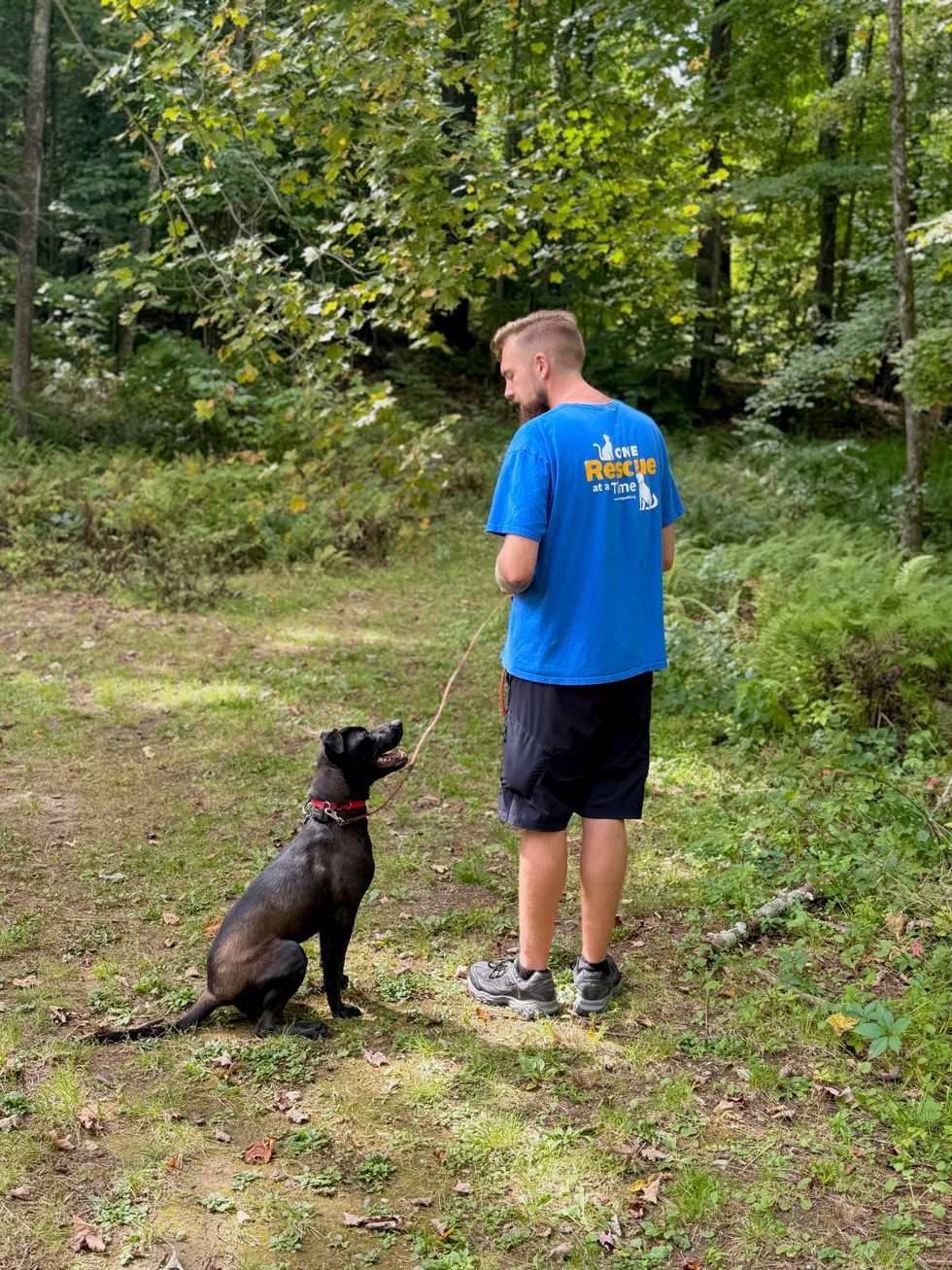 Michael DeBarba, certified dog trainer working with Marsala.Jennifer Almquist
 Marsala wins a heart.Jennifer Almquist
 Sadie, center, a Carolina dog, plays with her friend Negra, a terrier mix. Bella Linda, the small poodle, has since been adopted.L. Tomaino
 Wesley, a young, exuberant mix, is looking for an active home.L. Tomaino
 Bonnie and Clyde, an affectionate terrier pair.L. Tomaino