Thank you!
Your support is sustaining the future of local news in our communities.

North East Historical Society showcases Terni family’s legacy with library exhibition

North East Historical Society showcases Terni family’s legacy with library exhibition
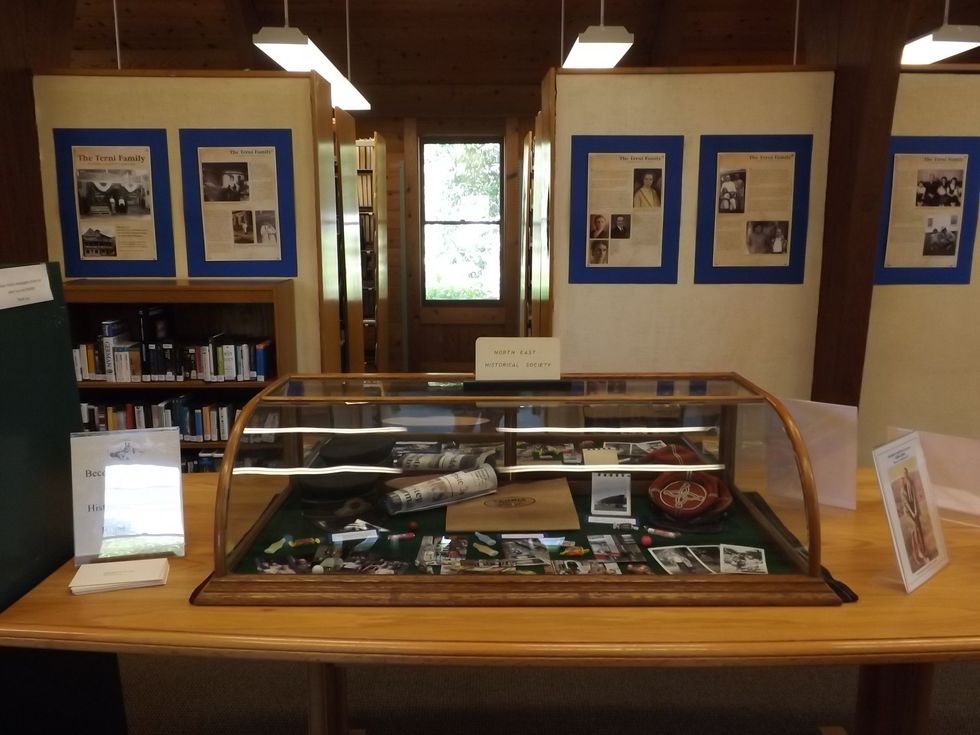
As a way to further illustrate the Terni family’s story through images and objects, a third element of the Terni family exhibition at the NorthEast-Millerton Library entails a collection of artifacts from the multi-generation family that moved from Italy to Millerton.
Photo by Kaitlin Lyle

MILLERTON — Paying tribute to a family that’s had a lasting impression on the village during the past century, the North East Historical Society partnered with several local entities to arrange an exhibition of the Terni family’s legacy at the NorthEast-Millerton Library.

“It’s an interesting story on many levels,” said North East Historical Society President Ed Downey in regard to the Terni history. “First of all, it’s unusual to have a family in the same business throughout three generations in the community. It’s a story of immigrants who came here — first lived in other parts of New York south of us — but came to this community in 1919 and created a business, and the business itself is unique and this has survived through three generations.”

Downey touched on how each member of the Terni clan, in their own way, made important contributions to the community.

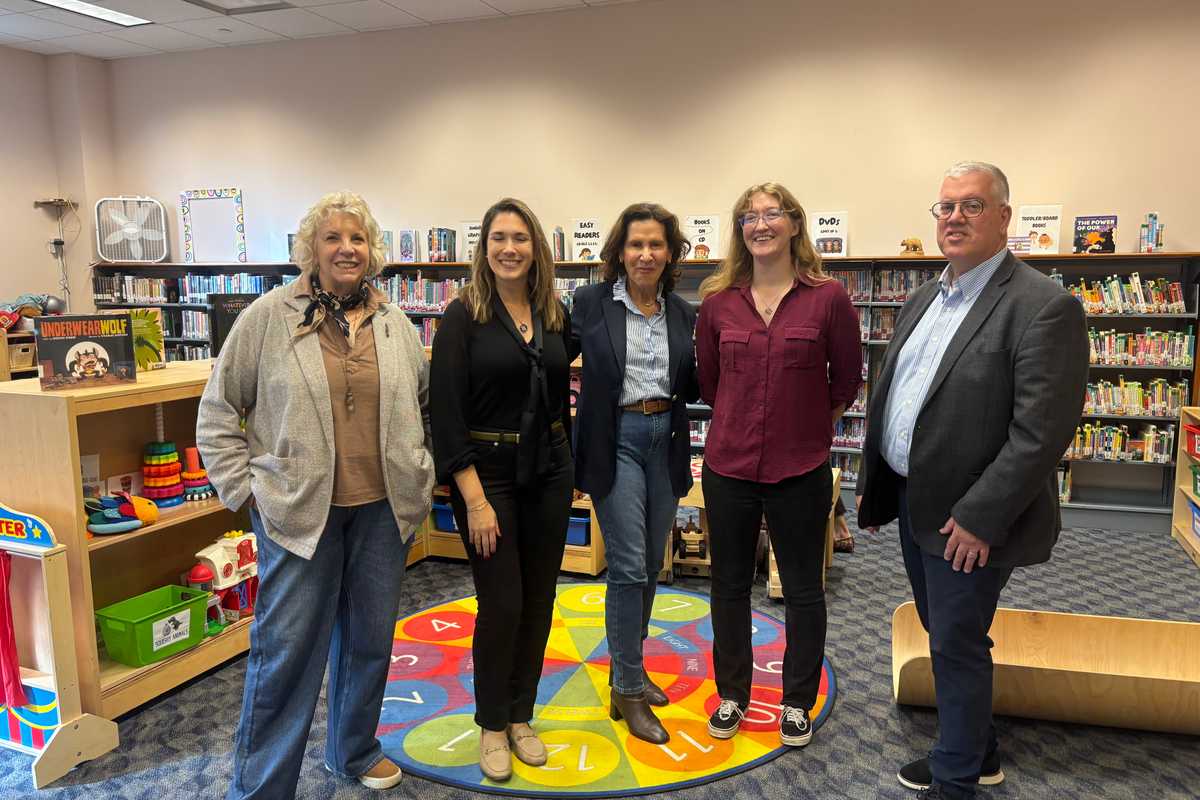
Bringing this exhibition to life, Downey said, was a partnership among several different entities, including the NorthEast-Millerton Library whom Downey said was gracious enough to offer space for the exhibit.

“It couldn’t happen to a nicer family,” said Library Director Rhiannon Leo-Jameson. “I’ve known Ellen [Terni] fairly well over the last couple of years and they’re just lovely people and it’s so interesting.”

Though she didn’t grow up in the village, Leo-Jameson has heard stories of the Terni family and was touched when looking through photos of the three generations now on display.

“It’s also wonderful for the library to work with the Historical Society because it’s important to recognize our local families, especially one that has such an impact on the community,” she said.

Other partners for the exhibition include Main Street Magazine — which assisted the Historical Society with accessing information about the family — and Thorunn Kristjansdottir of Thorunn Designs and Main Street, whom the Historical Society retained to create poster boards for the exhibit. The Terni family was especially vital in the collaboration by providing an abundance of information and background for the exhibition.

As they make their way around the library, visitors will find the exhibition divided into three main sections. The first element entails a series of about a dozen poster boards featuring different components of the family’s legacy. Told as a “chronological, biographical narrative to give people a sense of each generation,” Downey explained the boards are based on research that was done in collaboration with the Terni family with members of the Historical Society, accompanied by images collected from the Historical Society’s own collection and the Terni family.

As a digital element to the display, the second part of the exhibition includes a video-recorded interview told in three parts featuring the recollections of Don Hastings, an actor, writer and close personal friend of the late Phil Terni. Recorded on Thursday, May 6, Downey said Hastings’ family was kind enough to let the Historical Society do the interview, adding that Hastings also delivered the eulogy at the memorial service for Phil, who passed away this March.

The last element features a collection of artifacts from the Terni family that shares their story through images, objects and elements of the family’s history, including (among other tokens) candies and photos taken inside the now closed Terni’s Store on 42 Main St. in Millerton; Phil Terni’s hats; a photograph taken in 1953 to commemorate Assunta Terni’s return visit to Italy with her granddaughter, Stephanie; and photographs of the family.

The Terni exhibit will be available for viewing until Saturday, June 29.
Latest News

Doug Tallamy’s work in progress: saving the planet one backyard at a time

Windacre, a 25-acre property in Millerton will be the site of “Work in Progress,” an afternoon with acclaimed entomologist, New York Times bestselling author and Homegrown National Park co-founder Doug Tallamy.

Provided

For nearly three decades, Doug Tallamy, a professor at the University of Delaware and co-founder of Homegrown National Park, has studied the intricate relationships between native plants, insects, birds and the ecosystems that sustain them. His books, including “Bringing Nature Home” and “Nature’s Best Hope,” have helped shift the conversation about conservation from something that happens primarily in parks and preserves to something ordinary people can practice on the land around them.

On Sunday, Oct. 4, Tallamy will bring that conversation to Windacre in Millerton for “Work in Progress: Toward Native Fields,” an outdoor gathering exploring both the possibilities and the complications of restoring private land for biodiversity.

Keep ReadingShow less
Celebrating Dick Hermans’ life built around community

Dick Hermans in the Oblong Bookstore on Millerton\u2019s Main Street in 1985.

Provided
No matter what I’ve done, I’m trying to be useful to the communities I’m associated with.
— Dick Hermans

When Dick Hermans receives the Estabrook Community Leadership Award on Oct. 11, he will accept it for a lifetime of work that has taken many forms: bookseller, radio host, school board member, advocate for the Harlem Valley Rail Trail, business owner, volunteer and, perhaps most importantly, a person who has consistently looked for ways to be useful to the communities around him.

The Lakeville Journal and The Millerton News will present Hermans with the 2026 award at the annual Jubilee celebration at the Sharon Playhouse. The award honors outstanding leadership in community service and was inspired by Mary Lou and Robert Estabrook, former owners of the newspapers who believed that strengthening a community extended well beyond the work of publishing a newspaper.

Keep ReadingShow less
google preferred source

Want more of our stories on Google? Click here to make us a Preferred Source.

Tending the Fire: Homelands PowWow brings Mohican culture home to the Berkshires

Members of the Stockbridge-Munsee tribe at Homelands PowWow in 2025.

Joeseph Plante New Media Storytellers
Our goal is to continue building an annual gathering that honors the history, culture and traditions of the Stockbridge-Munsee Band of Mohicans in their original Homelands.


For the Stockbridge-Munsee Mohican people, the Berkshires are not simply a place to visit. They are ancestral homelands.

Keep ReadingShow less
Ancram Center’s “A Number” doubles questions of identity

How would you feel if you found out you weren’t the only you — if there was an exact replica of you? What if you found out that you’d been cloned? Would you believe that you’re the real you? Would you suspect you might be a copy of the original? How could you be sure anything about your life was real? These are some of the questions posed in Caryl Churchill’s play “A Number,” opening at the Ancram Center for the Artson Oct. 1.

Churchill was born in London in 1938 and has been hailed by the theaterl world as one of the strongest voices of her time to take on sexual politics and feminist themes. Her works garner pointedly considered analysis from the highest levels of theatrical intellectualism. Basically, it’s about as far from “The Lion King” as you can get. While she’s experimented with dance theater in the past, “A Number” is much more stripped down, highlighting Churchill’s chosen themes and the skills of both actors on stage.

Keep ReadingShow less

Dispatches from the Farm

Dispatches from the Farm

Adamah Farm crew members planning out the day’s tasks on a late September day.

Janna Siller

“Dispatches from the farm” is a new, periodic column offering a firsthand look at the rhythms, challenges and rewards of farming through the eyes of a local farmer.

The thing about plants is that they can’t get up and move. When a storm like last weekend’s nor’easter threatens to roll through, you can’t just round everybody up and settle them safely on the sofa for movie night.

Keep ReadingShow less
google preferred source

Want more of our stories on Google? Click here to make us a Preferred Source.

google preferred source

Want more of our stories on Google? Click here to make us a Preferred Source.