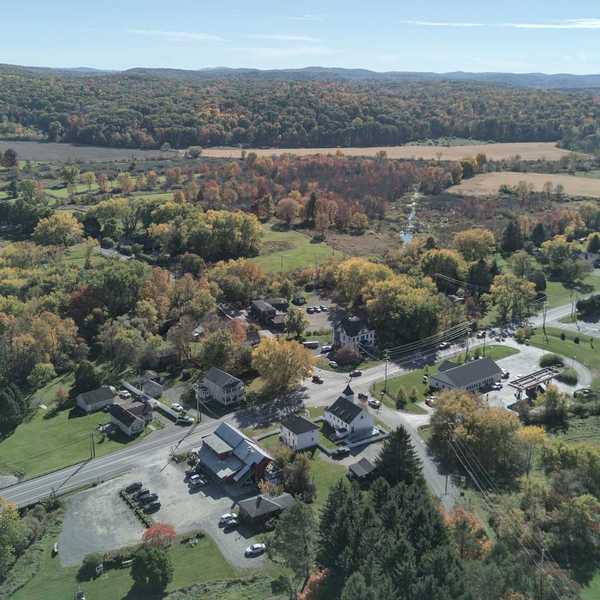
SOMEWHERE IN THE CATSKILLS — I shifted operations to the western command post in Phoenicia, N.Y. for a couple of days last week.
The first order of business was to check out what I think of as The Place. This is a medium-sized trout stream that runs into one of the New York City reservoirs. For most of its length the stream is tightly posted and aggressively monitored by a fishing club, but there is stretch of about 250 yards from a bridge and culvert on the main road that winds down to the reservoir proper, and another quarter mile or so upstream of the road before the private water starts.
I am a trained observer, and I detected the start of the private water because they strung a cable across the stream with a NO TRESPASSING sign on it.
I am not going to get any more informative about The Place. If you have a good map and lots of gas money, you’ll figure it out.
There is a lovely deep pool on the downstream side of the bridge and culvert. There’s plenty of room and it’s nice and deep and usually clear.
The only problem is the fish can see you coming a mile away. So far in my limited experience with The Place, you get to catch one fish per trip in this pool. Once you’ve connected, the inhabitants go under the nearest rock and stay put.
On the plus side, whatever you do connect with is probably worth the extra mileage to the super-secret location that I am not telling you about.
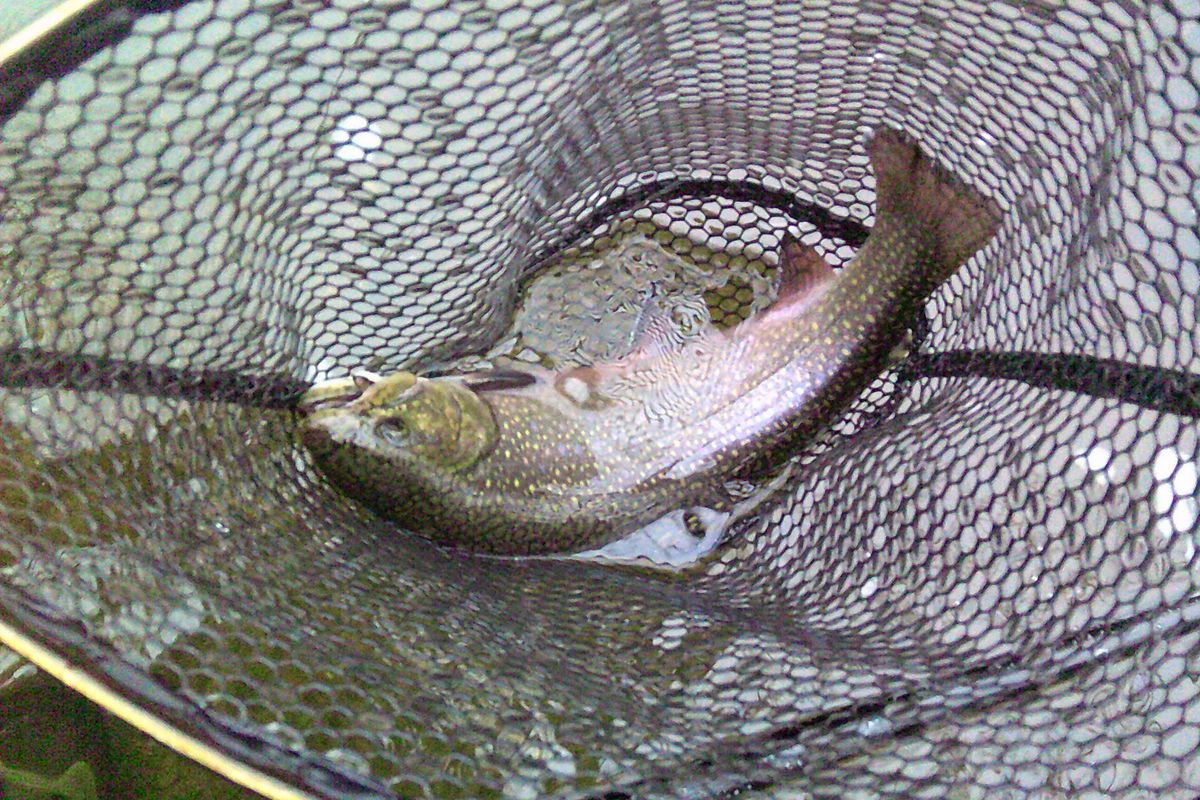
In half a dozen sessions at The Place, the pool has yielded browns of 16 inches and up; rainbows ditto; and an honest-to-God 14 inch brook trout, which is my personal best for this species (not counting hatchery products).
I’m used to chasing our little wild brookies, where an eight-incher is a Leviathan.
Now, these fish might well be stocked by the snooty people upstream, but I am pretending they are not.
Downstream the channel widens considerably as it blends into the reservoir. In July this stretch contained smallmouth bass and rainbows. This time around brown trout came to the surface as darkness fell.
They wouldn’t take the first gazillion things I tossed at them. I took a break and contented myself by admiring the Winslow Homer-esque scenery, with the evening sun shining briefly through the gathering storm clouds and illuminating the mountains beyond blah blah blah.
After the art lesson ended I tied on a size 18 blue-wing olive spinner, which is an alleged dry fly that tends to sink the moment it hits the water and is impossible to see.
For me, anyway. A brown trout that had been busy refusing my previous offerings was of the opinion that this was just what the doctor ordered. It was not a particularly large fish at 15 inches or so, but what it lacked in heft it made up for in spirit, leaping twice and scurrying around and generally resisting capture.
Also on this trip I explored Birch Creek, a tiny little brook that has a brook trout pond of sorts at the end. Of course the only fish I caught was a wild brown, and I was menaced briefly by a great Hound of the Baskervilles type of dog who came charging out of nowhere with mayhem in his eyes and froth around the mouth, only to be called back by an elderly lady who was about four feet six inches tall. The simplest syllable from this woman caused the Hound to stop in his tracks and trot back to base, wagging its tail. Probably an amiable beast once you get to know him.
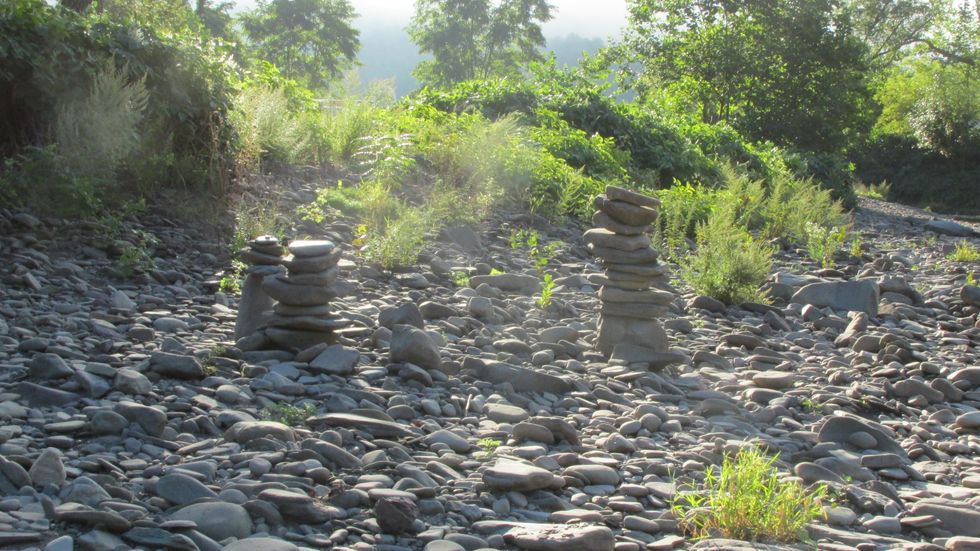
I went up to the Schoharie, behind the ballfield in Prattsville, where I beheld Trouthenge, where someone had stacked big rocks three or four feet up in the air. I am pretty sure this activity has something to do with legal marijuana.
On the home front there was a note on the front door when I arrived, from someone named Abigail, inviting me to sell the house.
It’s a seasonal house, not winterized, with 28 mostly unbuildable acres.
So I think I will call Abigail and inform her that I am willing to entertain a reasonable offer, say $50 million.
And after we have a nice laugh about that we can start the bidding at $25 million.
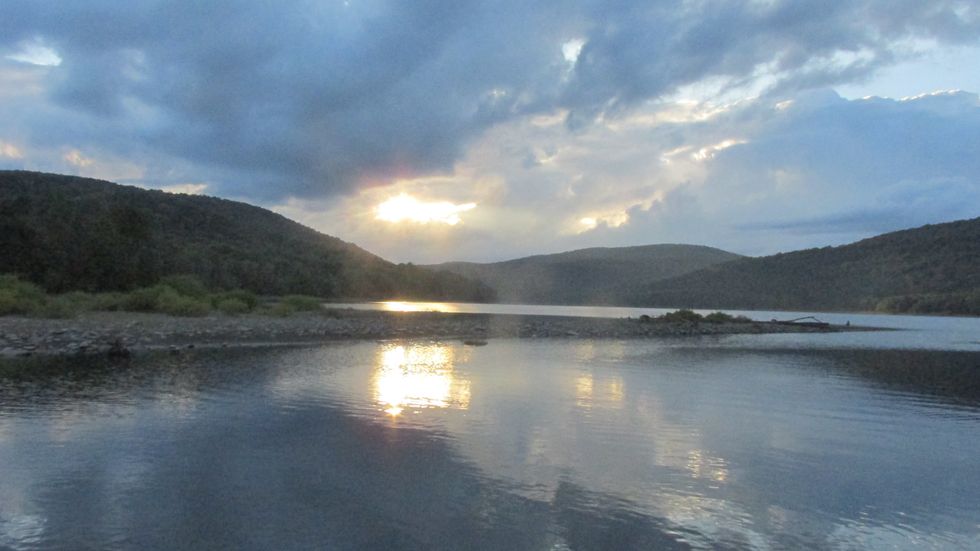
Photo by Patrick L. Sullivan
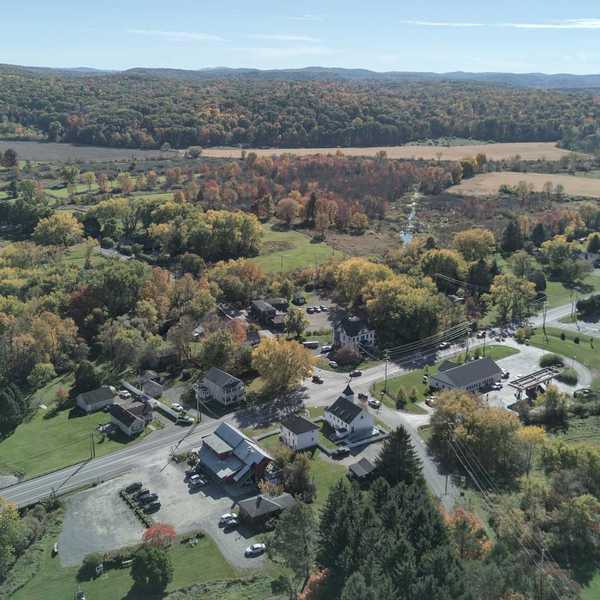
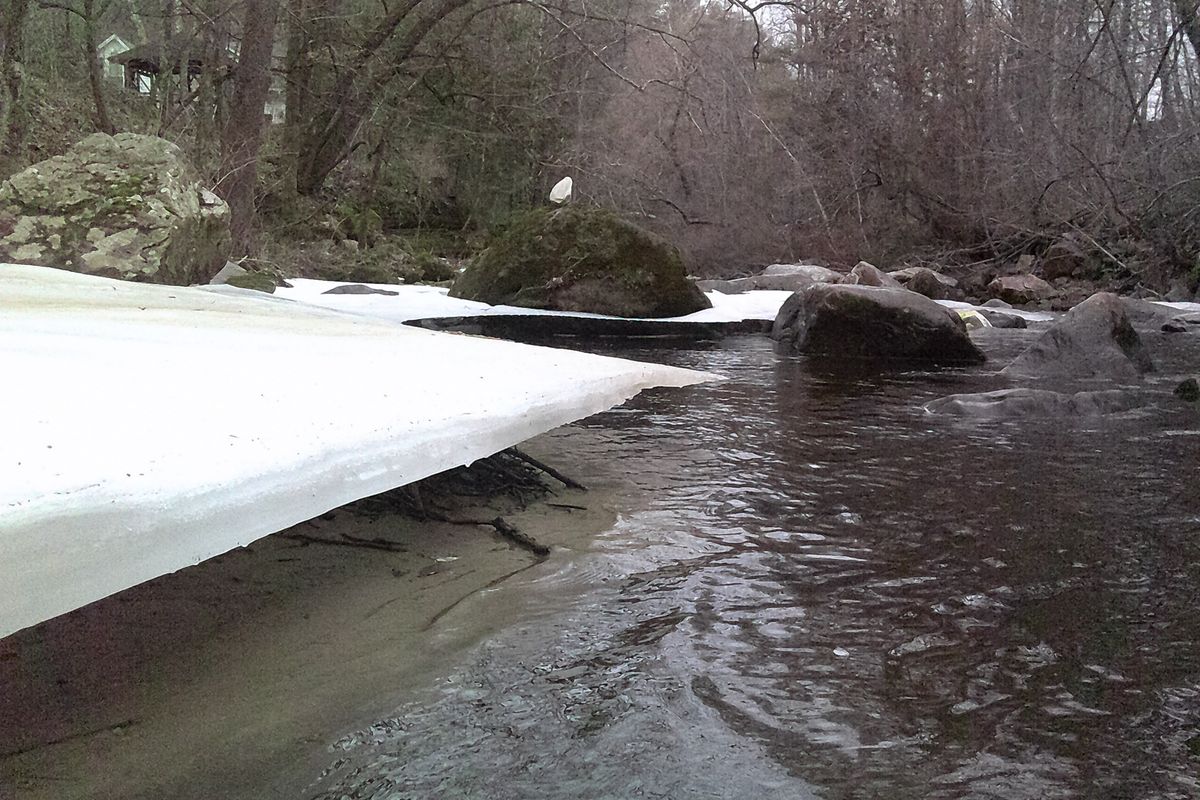
When the fish aren’t cooperating, the Catskill angler can take in the scenery.



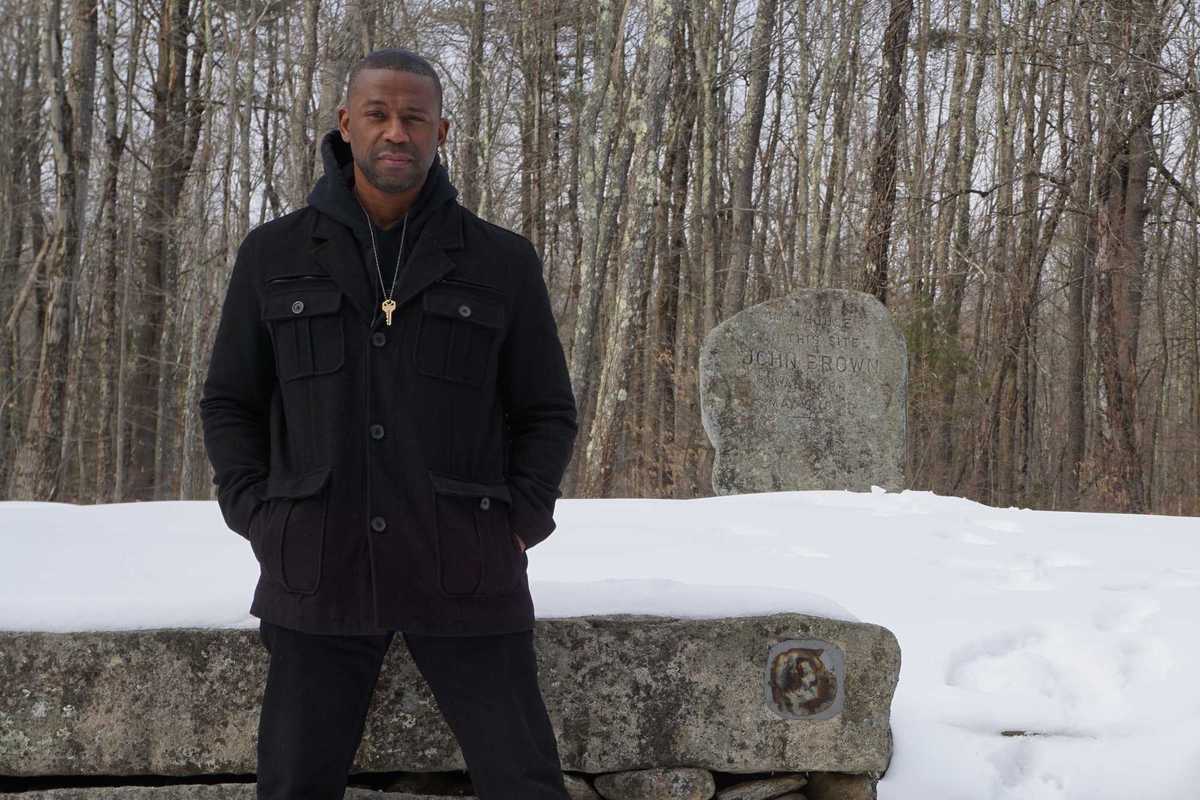
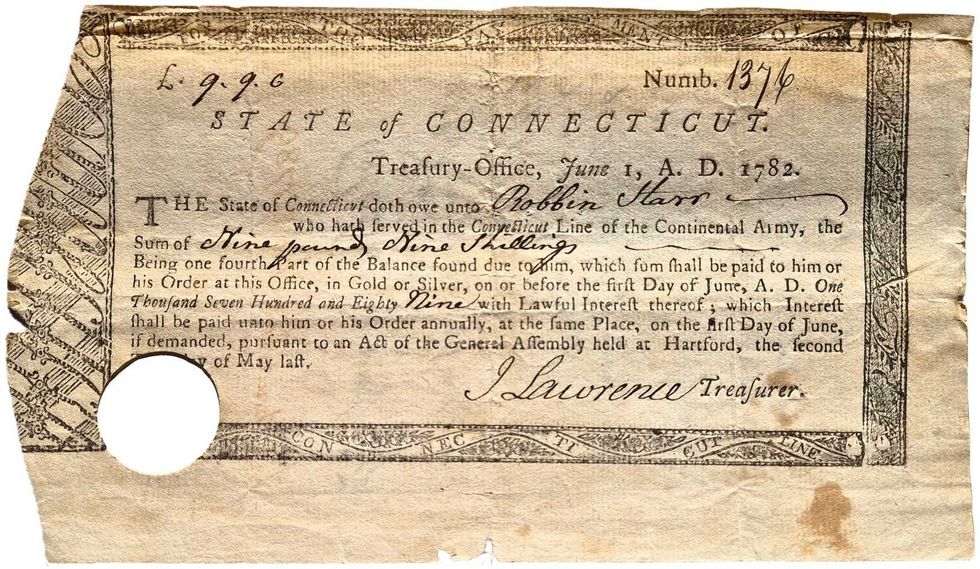 Pay Bill for Robin Starr’s service in the Continental Army.Courtesy the Alex Breanne Corporation
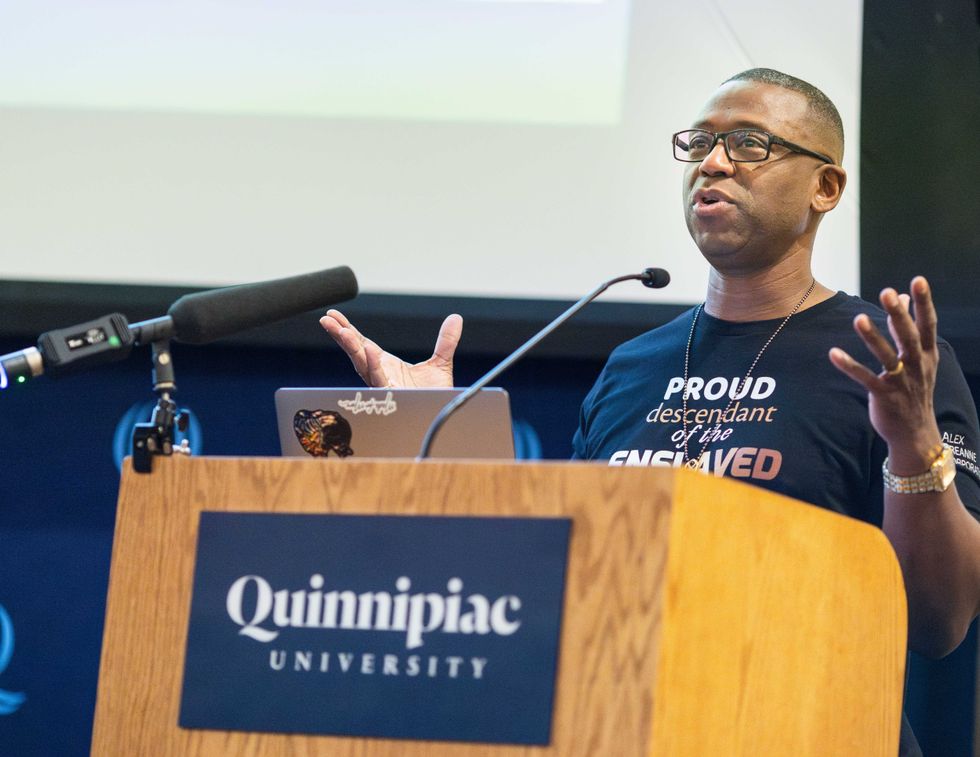 John Mills speaking at Quinnipiac University.Courtesy the Alex Breanne Corporation
 Stephanie Saetta,with her rescue dog George and Blue (left), a shepherd mix awaiting his forever home.Madi Long