Tangled specks: tiny flies, big ambitions

Tangled specks: tiny flies, big ambitions

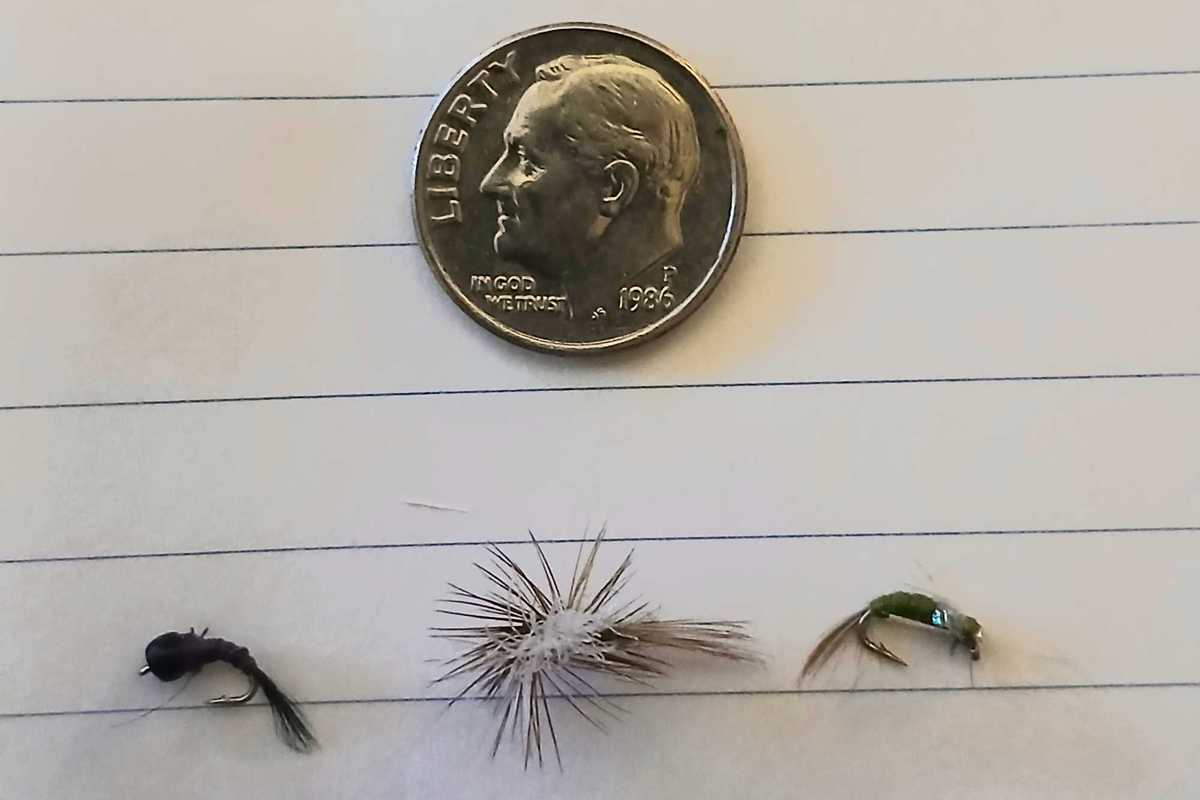
Here is a sample from a recently purchased assortment of specks. From left: Black speck, Parachute Adams dry fly speck, greenish sparkly speck.

Patrick L. Sullivan

I need to get my glasses checked

My fingers fumbling like heck

I have become a nervous wreck

Must be the season of the speck…

(With copious apologies to Donovan).

I’m still on the injured reserve list following replacement right hip surgery. Right now the plan is to come off the IR June 1, but I’m going to ask if we can’t shave something off that.

And yes, the rehab is going very well, thank you for asking.

What this means in practical terms is I am scheming and plotting like nobody’s business about all the fishly things I am going to do once Ye Doctor blows the all-clear.

I have glaring weaknesses in my angling game. I stink at roll casting. I’m hopeless with 12-foot leaders.

And I am really lousy at fishing with the kind of tiny little flies I refer to as “specks.”

I define a speck as anything smaller than size 20. Speck experts will disagree, as they think a size 20 is huge. Maybe I will think so too some day.

One of the perils of sitting around after surgery is scrolling through social media and buying things. For preference, things I don’t need.

I got some weird t-shirts. One sports the logo of the Shenandoah (Pa.) Hungarian Rioters, a 19th century minor league baseball team. Another reads “Surely Not Everyone Was Kung Fu Fighting.”

Among these idiotic acquisitions was an offer of 72 specks for about $50. This was a rock-bottom price, and it wasn’t coming from a fly-by-night outfit either, but from an online company, The Catch and the Hatch, who provided me with some very good perdigon nymphs a few years back.

So the specks arrived, and they are everything I feared.

Tiny. Hard to see. Did I say tiny? Infinitesimal. You know.

SPECKS!

Here’s why an angler needs to know how to use specks. In between the nice hatches of large, easily identifiable bugs, which is most of the time, trout eat little bugs.

If it’s a cloudy day, chances are there will be blue-wing olives on the water. Then there is a category called midges which contains multitudes.

I look at the river for five minutes, see nothing happening bug-wise, and I start trying to provoke a reaction somehow.

What I am missing is the trout happily eating specks beneath the surface.

So how am I going to do this?

What little speck success I’ve had has been with a dry-dropper rig. I use a big Stimulator or Chubby Chernobyl, a large, very visible, very buoyant dry fly, and tie a piece of fluorocarbon tippet to the bend of the dry fly’s hook with an improved clinch knot and attach the speck to that. A bass or panfish popper works as the dry fly too.

Here’s the problem. The speck hook eyes require a very fine tippet material — 6x, 7x, even 8x.

I dislike fine tippets even more than specks. The stuff is devilish. It curls up. It refuses to knot. It’s just awful to work with.

Some years back I discovered one brand of fluoro tippet with a 5x tippet that was somehow able to get through the eye of a size 22 hook. That made a difference.

But this moderately successful method is very one-dimensional. I need to be able to construct a leader with a dropper or two and get my specks down in the water column.

That’s going to mean 6x or worse, probably. I might have to add some weight, another thing I dislike and am not good at.

But that is the plan. I hope to report great things as I master the speck this season.

Or until my left hip goes out.
Latest News

To save birds, plant for caterpillars

Fireweed attracts the fabulous hummingbird sphinx moth.

Photo provided by Wild Seed Project

You must figure that, as rough as the cold weather has been for us, it’s worse for wildlife. Here, by the banks of the Housatonic, flocks of dark-eyed juncos, song sparrows, tufted titmice and black-capped chickadees have taken up residence in the boxwood — presumably because of its proximity to the breakfast bar. I no longer have a bird feeder after bears destroyed two versions and simply throw chili-flavored birdseed onto the snow twice a day. The tiny creatures from the boxwood are joined by blue jays, cardinals and a solitary flicker.

These birds will soon enough be nesting, and their babies will require a nonstop diet of caterpillars. This source of soft-bodied protein makes up more than 90 percent of native bird chicks’ diets, with each clutch consuming between 6,000 and 9,000 caterpillars before they fledge. That means we need a lot of caterpillars if we want our bird population to survive.

Keep ReadingShow less
Stephanie Haboush Plunkett and the home for American illustration

Stephanie Haboush Plunkett

L. Tomaino
"The field of illustration is very close to my heart"
— Stephanie Plunkett

For more than three decades, Stephanie Haboush Plunkett has worked to elevate illustration as a serious art form. As chief curator and Rockwell Center director at the Norman Rockwell Museum in Stockbridge, Massachusetts, she has helped bring national and international attention to an art form long dismissed as merely commercial.

Her commitment to illustration is deeply personal. Plunkett grew up watching her father, Joseph Haboush, an illustrator and graphic designer, work late into the night in his home studio creating art and hand-lettered logos for package designs, toys and licensed-character products for the Walt Disney Co. and other clients.

Keep ReadingShow less
Free film screening and talk on end-of-life care
‘Come See Me in the Good Light’ is nominated for best documentary at this year’s Academy Awards.
Provided

Craig Davis, co-founder and board chair of East Mountain House, an end-of-life care facility in Lakeville, will sponsor a March 5 screening of the documentary “Come See Me in the Good Light” at The Moviehouse in Millerton, followed by a discussion with attendees.

The film, which is nominated for best documentary at this year’s Academy Awards, follows the poet Andrea Gibson and their partner Megan Falley as they are suddenly and unimaginably forced to navigate a terminal illness. The free screening invites audiences to gather not just for a film but for reflection on mortality, healing, connection and the ways communities support one another through difficult life transitions.

Keep ReadingShow less
google preferred source

Want more of our stories on Google? Click here to make us a Preferred Source.

The power of one tray

The power of one tray

A tray can help group items in a way that looks and feels thoughtful and intentional.

Kerri-Lee Mayland

Winter is a season that invites us to notice our surroundings more closely and crave small, comforting changes rather than big projects.

That’s often when clients ask what they can do to make their homes feel finished or fresh again — without redecorating, renovating or shopping endlessly. My answer: start with one tray.

Keep ReadingShow less
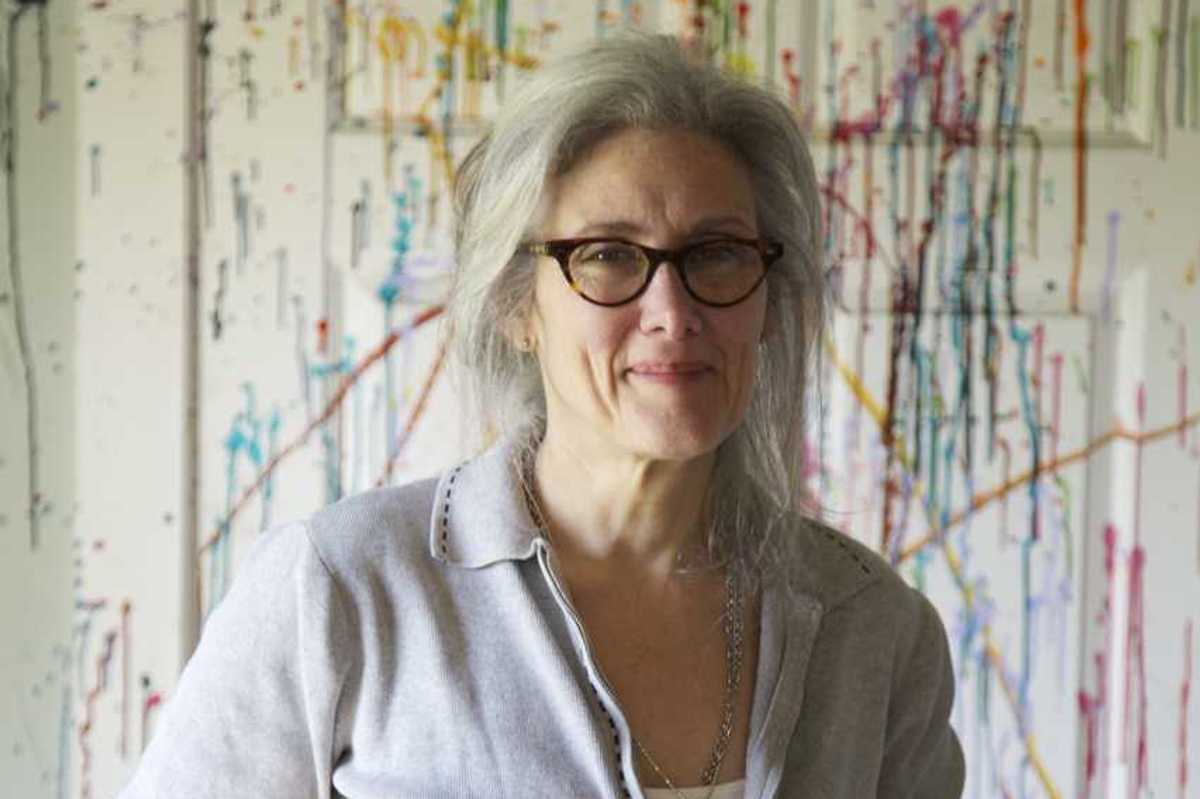
Suzan Scott sees every detail in ‘This Beautiful Place’

Torrington artist Suzan Scott talked with visitors at a reception for her show “A Beautiful Place” at the David M. Hunt Library Saturday, Feb. 21.

Patrick L. Sullivan

Landscape painter Suzan Scott said, “I see every leaf on every tree, every blade of grass,” when she assesses a particular view. Her paintings are her effort to “distill it to the essence.”

Scott said she has been painting for 30 years, and she moved from central Connecticut to Torrington a few years ago to be closer to the landscapes she prefers. “I just get in the car and drive.”

Keep ReadingShow less

Chair making and wood carving

Chair making and wood carving

Andrew Jack, chair maker, will host an open shop on March 1 from 10 a.m. to 4 p.m., at the Magic Fluke Building (292 S. Main St., Sheffield). Jack will demonstrate Windsor chair making and green-wood carving. Email andrewjackchairs@gmail.com with questions about the open shop event, for commissions or to register for an upcoming chair making course.

google preferred source

Want more of our stories on Google? Click here to make us a Preferred Source.

google preferred source

Want more of our stories on Google? Click here to make us a Preferred Source.