Low water, bad hip, no fish

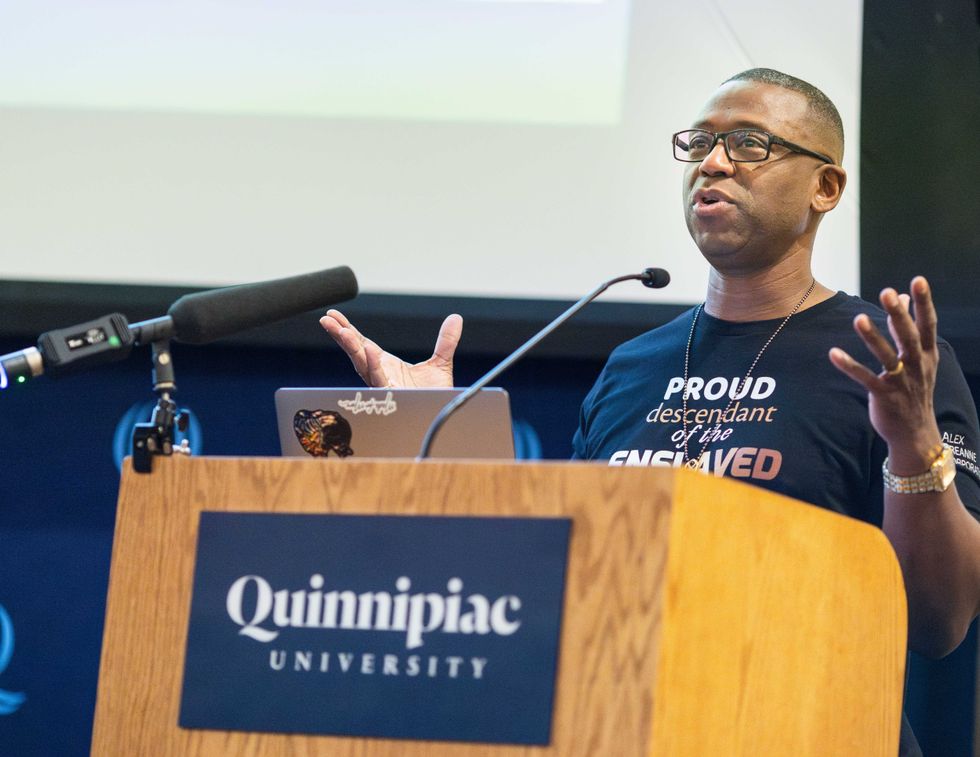
Gary Dodson managed this Coho salmon in the Salmon River in western New York two weeks ago despite low flows in that watershed.
Patrick L. Sullivan

Gary Dodson managed this Coho salmon in the Salmon River in western New York two weeks ago despite low flows in that watershed.
This is the autumn of my discontent.
There are two problems disrupting my fall fishing. The first is the drought. I’m not sure it’s been officially declared but I have eyes. My main stomping grounds, the Housatonic and Esopus watersheds, are super low and have been for weeks. These main rivers are just barely fishable, and forget the tributaries.
This is disappointing because fall fishing is my favorite time. Trout put on the nosebag in anticipation of the long, bleak winter, and the chiller temps chase off the more casual anglers.
Not that I’d be able to fish much right now, which brings me to the second problem. Fate has given my right hip the gang gong.In early September I could hardly walk. With the aid of a steroid shot about a month ago, I slid back into the convalescent class and could do a bit of controlled hobbling, but surgery seems inevitable.
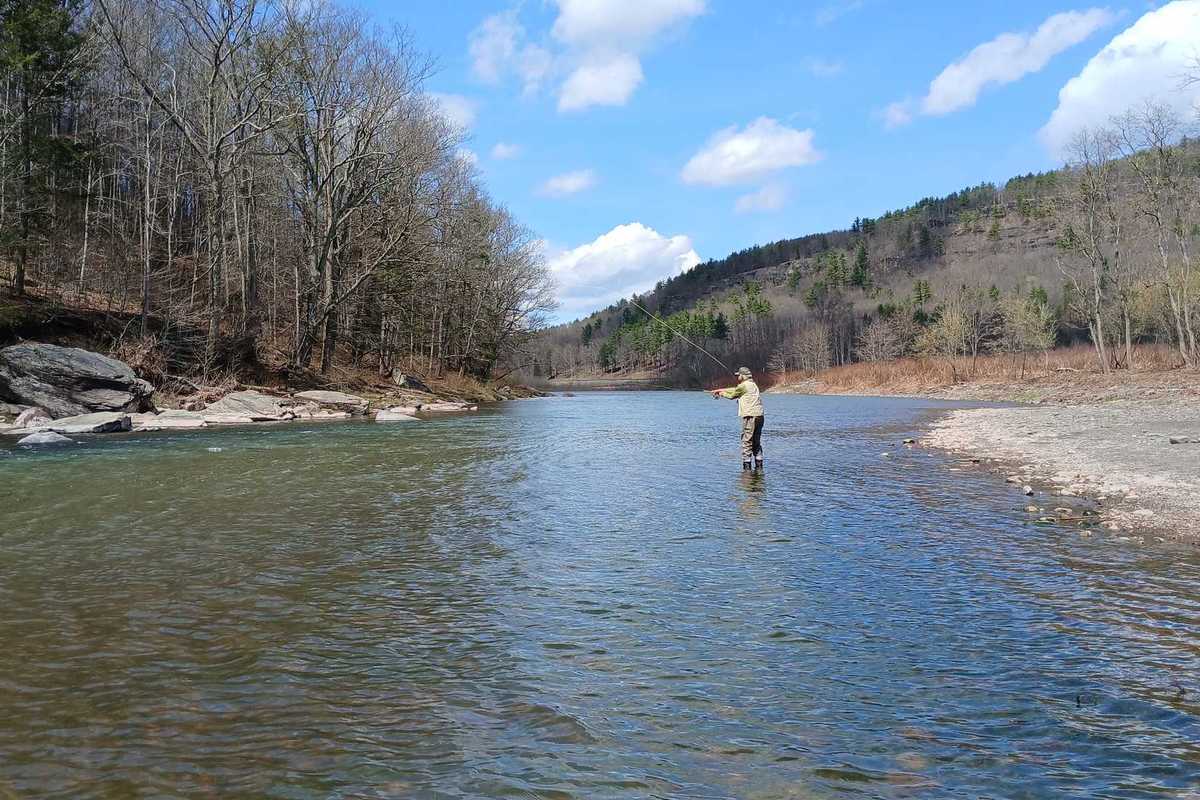
A few weeks back I took a week off in the Catskills and on day one limped out into the Esopus, where I played with the switch rod rig my main Catskill fishing buddy Gary Dodson assembled for me and managed one small rainbow before declaring victory and making my painful and awkward way out. I spent the rest of the week chopping firewood, which doesn’t involve the hip much, and watching bad cinema, which doesn’t involve the hip at all.
So I am in the unenviable position of getting my fishing kicks vicariously.
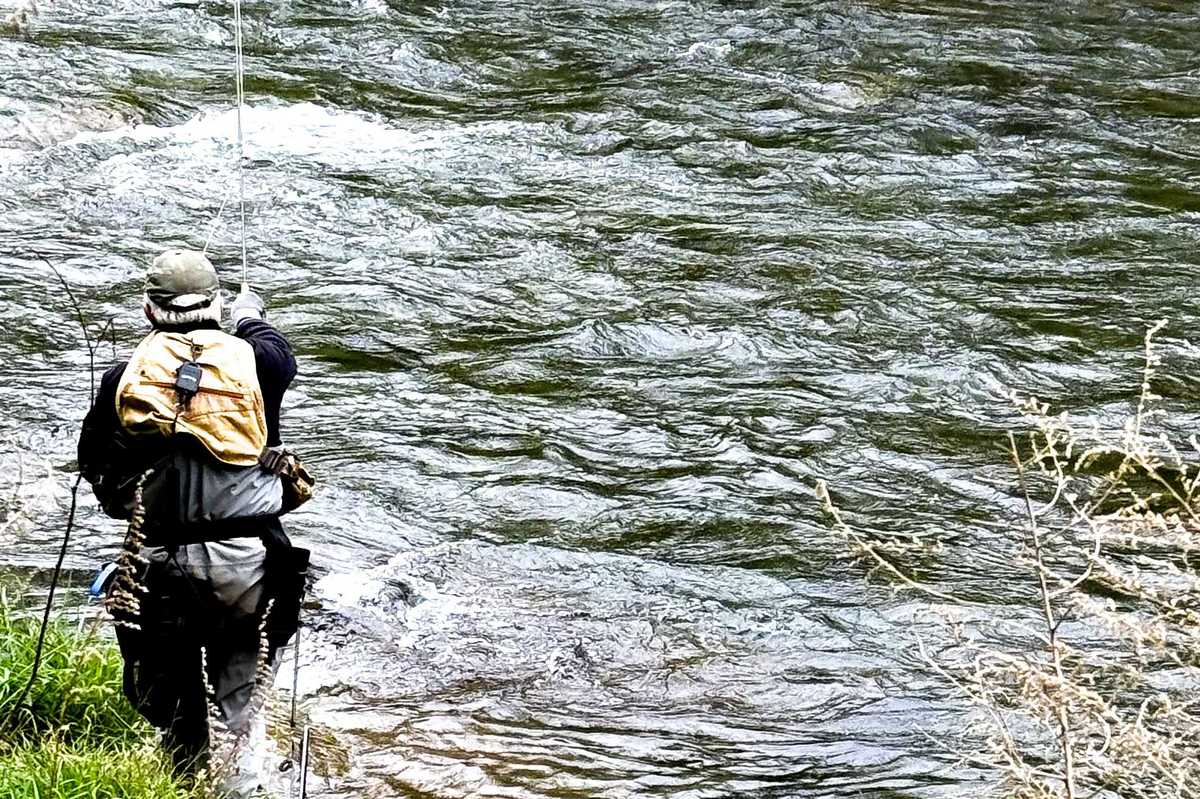
Gary has been out in Pulaski chasing salmon in similarly low flows. As per usual on the Salmon River, it’s hit or miss. Lately more hitting than missing, and he keeps me updated with photos and cryptic text messages such as “Had a good one come unbuttoned last second. Nick said it was at least 25 pounds.” Nick is Gary’s favorite guide, because he is a fearless wader and gets Gary’s salmon in the net.
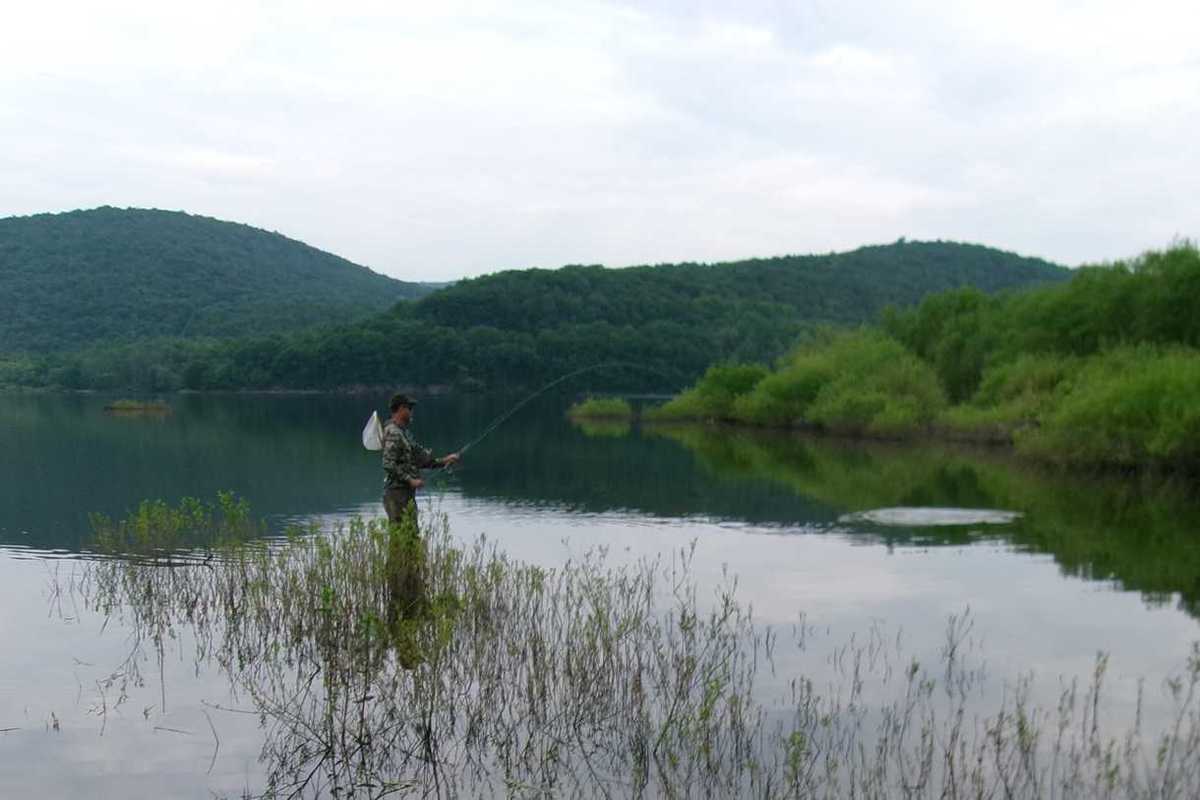
He also went all the way down to where the Esopus empties into the Ashokan Reservoir with the idea of throwing streamers for big browns. He got smallmouth instead.
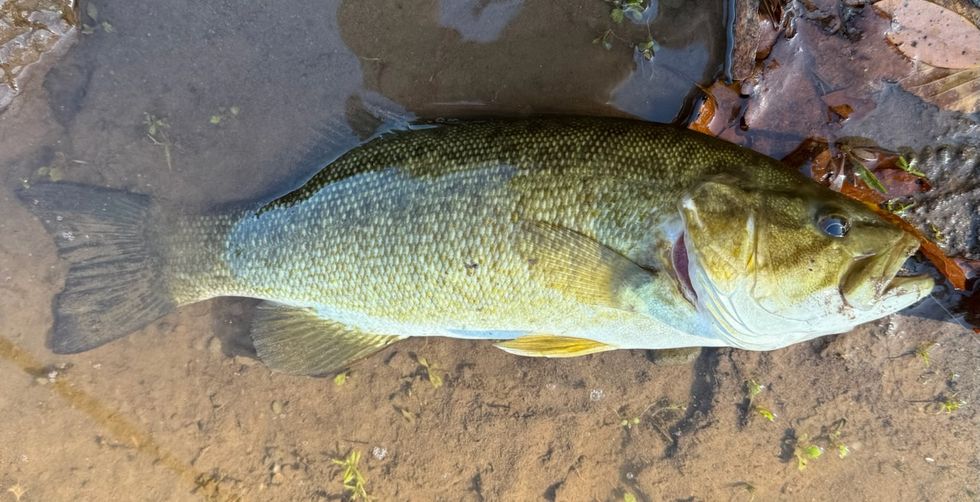
Still, it’s better than a poke in the eye with a sharp stick.
On the other hand, what would be worse than a poke in the eye with a sharp stick? Leprosy?
Meanwhile, the Connecticut Department of Energy and Environmental Protection stocked the two Trout Management Areas of the Housatonic recently, and with the flow low but water temperatures acceptable this is the time to get out there and practice stuff with willing participants.
I would be doing two things.
The first is playing around with dry-dropper rigs. This is when you attach a nymph on a dropper tied to the bend of the hook of a very visible dry fly. It is very similar to indicator nymphing except the fish might hit the dry fly instead of the nymph. It also appeals to my inner traditionalist in a way a bright orange bobber most decidedly does not.
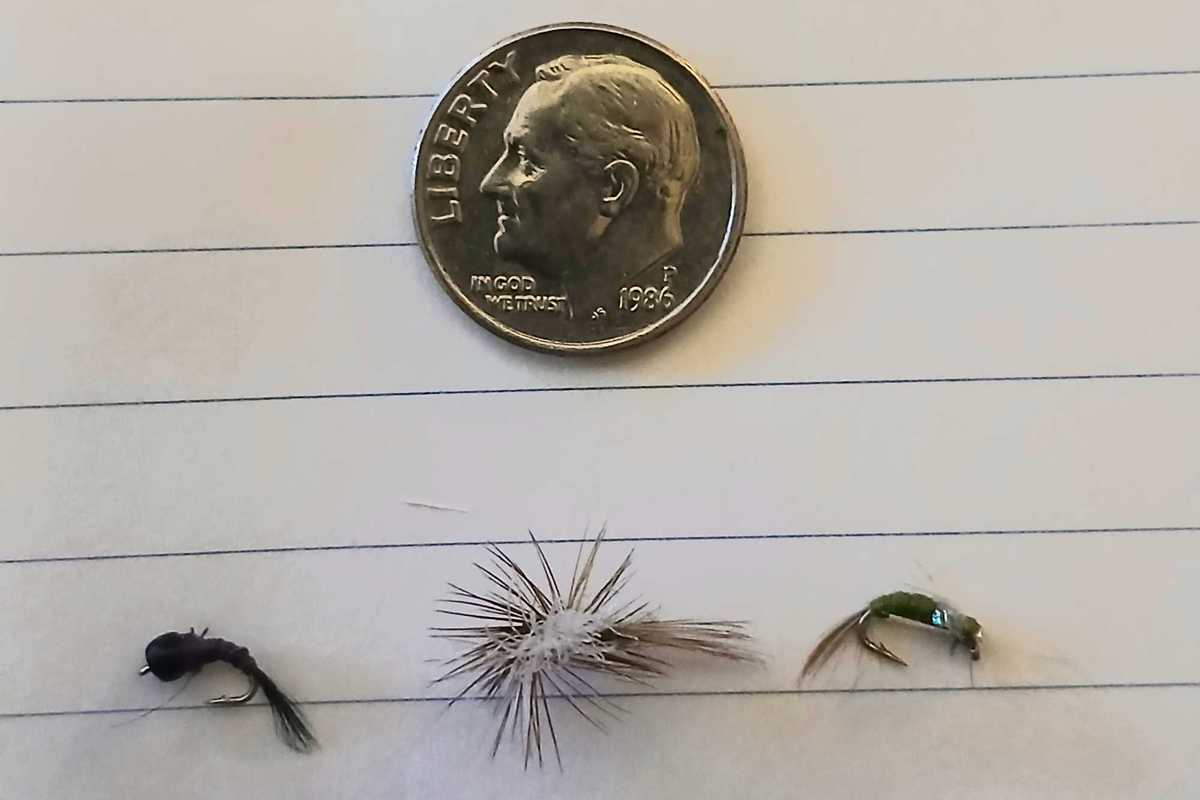
I usually go with short droppers, no more than two feet, but I got to thinking about maybe adding a foot or two more and using an unweighted nymph or a wet fly. The idea is the extra length would allow the thing to sink a bit more and wiggle around in a way that suggests it is not in fact tied to that bug bushy thing that just floated by.
Suggestions: Stimulator for the dry, and a leadwing coachman wet fly on the dropper, thus imitating the stone fly and isonychia. Or the almost unsinkable Chubby Chernobyl for the dry, and an unweighted Prince or Zug Bug trailing behind. In deeper runs, assuming you can find any, I might go with a beadhead nymph, but probably not a tungsten head or Perdigon, as I think they’d just get hung up.
The other thing I want to try is using the switch rod rig and a slow-sinking leader to chuck out teams of three wet flies, swinging them downstream. The 11 foot rod and the elaborate combination of running line, shooting head and long leader (15-18 feet once it’s all assembled) requires at a minimum a well-controlled roll cast, a high stick, and a lot of mending.
But it also allows the angler to cover a lot of water without moving around much, which suits my present state. And it would allow me to work on my roll cast, not the strongest part of my game.
As I peck this out on Sunday, Oct. 5, I’ve had three straight days of walking almost normally, indicating the steroid shot has finally kicked in. So if you see someone on one of the more easily-accessed sections of the Housatonic making bad roll casts and cussing profusely, pull over and say hello.
When longtime arts administrator Amy Wynn became the first executive director of the American Mural Project (AMP) in 2018, the nonprofit was part visionary art endeavor, part construction site and part experiment in collaboration.
Today, AMP stands as a fully realized arts destination, home to the world’s largest indoor collaborative artwork and a thriving hub for community engagement. Wynn’s departure, marked by her final day Oct. 31, closes a significant chapter in the organization’s evolution. Staff and supporters gathered the afternoon before to celebrate her tenure with stories, laughter and warm tributes.
“We had such a fun party for her,” said AMP founder and artistic director Ellen Griesedieck. “I am excited for what is next for Amy and grateful for every moment she has invested in her work at AMP.”
Wynn, who previously led the Northwest Connecticut Arts Council, said her decision to step down came after careful reflection.
“It’s time for me to shift into the next phase of my career, which will call upon my 40-plus years of nonprofit experience to do project work,” she said. “I’ve absolutely loved my time at AMP.”

Under Wynn’s leadership, AMP expanded education programs, deepened community partnerships and oversaw key milestones in the creation of its monumental centerpiece — a three-dimensional mural stretching 120 feet long and five stories high — celebrating American ingenuity, industry and collaboration.
“Through all these years, Amy has worked with tireless enthusiasm for AMP, running day-to-day operations and guiding the overall direction of our mission,” Griesedieck said.
During Wynn’s tenure, AMP evolved from a concept into a dynamic cultural campus. She helped professionalize its structure, solidify its funding base and develop programs that drew visitors from across the state and beyond.
“The work she has accomplished, the hours of overtime she has logged, the mountains we have climbed together since that moment are many and miraculous,” Griesedieck said.
AMP also weathered challenging times, including the pandemic, which forced arts organizations to rethink audience engagement. Wynn guided the team during that uncertain period with a steady hand.
To ensure a smooth transition, AMP has brought on Renee Chatelain of RMCreative Solutions, LLC, an experienced consultant, attorney and arts administrator who previously worked with AMP on its capital expansion planning.
Chatelain will serve as interim executive director while a national search is conducted for AMP’s next leader.
“A longtime friend, Renee comes to us with a depth of knowledge on executive transition,” said Griesedieck. “As an attorney, a leader of several arts organizations and a classically trained dancer, she is particularly well-suited for this interim role.”
Though stepping down, Wynn said she will continue her work in the nonprofit field in a more flexible, project-based capacity.
“I’ll be seeking consulting projects with other nonprofits, assisting with grant work and strategic planning,” she said. “What I enjoy most is leading a collaborative effort and finding solutions to challenging problems.”

Even as AMP bids farewell to Wynn, its focus remains on the future. The next phase of development will focus on converting a second mill building into expanded programming and community space.
“The next step has got to happen,” Griesedieck said. “It’s absolutely what the Northwest Corner needs — a place for the community to congregate.”
The proposed expansion would create flexible areas for performances, workshops and public events, further establishing AMP as a cornerstone of the regional arts scene.
With community support and grants, AMP hopes to carry forward Wynn’s momentum into a new era.
“She is not leaving,” Griesedieck said. “Amy will always be here for us.”
Founded in 2001, the American Mural Project was conceived as a tribute to the American worker — a celebration of skill, creativity and perseverance. The mural, the largest indoor collaborative artwork in the world, was created with contributions from thousands of children, artists, teachers, tradespeople and volunteers nationwide.
Today, AMP offers tours, workshops, lectures and performances, all rooted in its mission: to inspire, invite collaboration and reveal the contributions people of all ages can make to American culture.
As Wynn turns the page, her legacy — from her calm, strategic leadership to the collaborative spirit she fostered — remains woven into the fabric of AMP’s story.
The Norfolk Library will screen the acclaimed documentary “Kings of Pastry” on Friday, Nov. 14, at 7 p.m. The film will be introduced by its producer, Salisbury resident Flora Lazar, who will also take part in a Q&A following the screening.
Directed by legendary documentarians D.A. Pennebaker (“Don’t Look Back,” “Monterey Pop”) and Chris Hegedus (“The War Room”), “Kings of Pastry” offers a rare, behind-the-scenes look at the prestigious Meilleurs Ouvriers de France (Best Craftsmen of France) competition, a prestigious national award recognizing mastery across dozens of trades, from pastry to high technology. Pennebaker, who attended The Salisbury School, was a pioneer of cinéma vérité and received an honorary Academy Award for lifetime achievement.
Established in 1924 and overseen by the French Ministry of Labor, the competition challenges professionals to create a “masterpiece” that demonstrates skill, precision and artistry. Winners receive a lifelong title and medal, presented at a ceremony in Paris attended by the president of France.
In this documentary, 16 pastry chefs spend three grueling days in Lyon crafting delicate chocolates, towering sugar sculptures and exquisite pastries, all in pursuit of perfection — and the honor of being recognized by then-President Nicolas Sarkozy, as one of France’s best craftsmen. The filmmakers were granted exclusive access to capture this intense, emotional and visually stunning event.
Producer Flora Lazar came to filmmaking via an unexpected route. Trained as a historian and psychotherapist, she has had a lifelong love of French pastry, a passion she eventually pursued through formal training at a pastry school in Chicago.
“It was run like a military operation,” she recalled of the school. “You could eat off the floor. Everything had to be meticulous, precise.”
Lazar’s father, a first-generation Harvard graduate who grew up in the Borscht Belt, pushed his children toward high achievements in academia and “looked down on the trades,” Lazar admitted. “I loved French pastry my whole life,” she said. “But my dad wasn’t going to send me to pastry school.”
After her father’s passing — with her children grown and financial responsibilities eased — Lazar finally returned to that early passion.
At the pastry school in Chicago, Lazar met two chefs, one who had won and one competing for the Meilleurs Ouvriers title. Lazar set out to write an article about the competition and what it could mean for American education and industry.
Lazar, who knew Pennebaker and Hegedus from her years in New York, invited them to Chicago to meet the chefs. That meeting sparked the idea of “Kings of Pastry,” which was born.
For Lazar, though, the meaning has always been personal.
“The purpose of the film wasn’t just to show the high level of craftsmanship in French pastry but to illuminate a larger political, economic and educational issue.”
The screening will also serve as a promotion for the Norfolk Historical Society’s 11th Annual Cake Auction, to be held Dec. 6 at 5:30 p.m. Historical Society president Barry Webber will give a brief introduction to the auction before the film.
And yes, there will be cake.
Register for the event at norfolklibrary.org/events/documentary-
film-kings-of-pastry.
On Saturday, Nov. 15, the Stissing Center in Pine Plains will be host to the Hudson Valley premiere of the award-winning music documentary “Coming Home: The Guggenheim Grotto Back in Ireland.” The screening will be followed by an intimate acoustic set from Mick Lynch, one half of the beloved Irish folk duo The Guggenheim Grotto.
The film’s director, Will Chase, is an accomplished and recognizable actor with leading and supporting roles in “Law & Order,” “The Good Wife,” “Rescue Me,” “Nashville,” “The Deuce,” “Stranger Things” and “Dopesick.” After decades of acting on television and on Broadway, Chase decided to take the plunge into directing his own short films and documentaries.
In “Coming Home,” Chase follows one of his favorite bands, The Guggenheim Grotto, on a reunion tour in Ireland. Founding members Mick Lynch and Kevin May have not played together in more than a decade, and the reunion may also serve as a farewell tour for the band. The film captures not just the music, but the friendship and shared history between Lynch and May, set against the homeland that shaped their songs.
“I’m just a huge fan,” Chase said. “It’s a big 45-minute love letter to the guys. They really dive into why they didn’t make it as a band, whatever that means,” noting that many acclaimed musicians struggle to find mainstream recognition. “I look at them and they’re very successful. They were on television shows, they won some awards, but it also makes people go ‘Oh, right. There are other bands out there other than the ones that I just read about.’ There are all these wonderful artists that we don’t necessarily know about.”
Over the years, The Guggenheim Grotto earned major critical acclaim. Their 2005 debut album “Waltzing Alone” was hailed as “one of the most beautiful records of the year” by LA’s KCRW. An Independent Music Award followed in 2007 for best folk song/songwriting. The band grew quite popular in their native Ireland, but Lynch eventually moved to New York while May remained in Ireland. Though the band’s future seemed uncertain, there was always hope for a reunion of some kind.
Reflecting on his collaboration with the band, Chase said, “I was very fortunate and thanked them profusely for being so open and honest in the documentary. No one had done this with them before, and thank God they’re just affable, funny, great guys. They really love the piece. I think it touched them in very different ways.”
Immediately following the screening, Mick Lynch — one half of The Guggenheim Grotto and current Hudson Valley resident — will take the stage for an intimate acoustic set. The documentary, coupled with the live performance, offers a rare chance to see and hear what goes into the making of great music, art, and film.
Tickets are available at thestissingcenter.org