Thank you!
Your support is sustaining the future of local news in our communities.

Tangled Lines vs. big bugs, hot weather and the Hound of the Baskervilles

Tangled Lines vs. big bugs, hot weather and the Hound of the Baskervilles

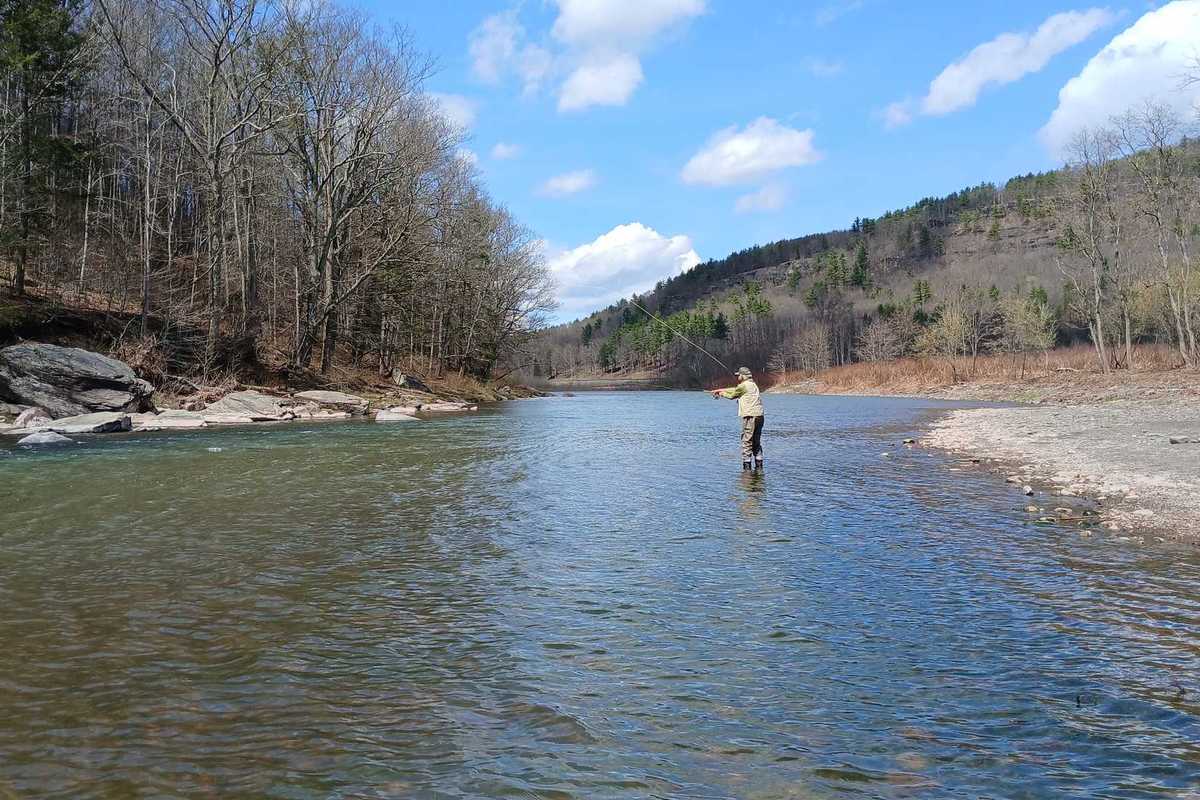
A cold mountain brook that enters one of the New York City reservoirs.

Patrick L. Sullivan

PHOENICIA, New York My annual week off in the Catskills in early June got off to a satisfactory start. The first week or so of June usually means a lot of different bugs hatching, which in turn means the angler can sling three or four patterns with a fair bit of confidence.

This time around the isonychia were dominant. This is a big reddish-brown mayfly, sometimes known as a Slate Drake and most frequently imitated on the Esopus Creek with a traditional winged wet fly, the Leadwing Coachman.

I remember as a callow youth of 12 being instructed by an impossibly ancient codger -- hell, he was probably 65 -- that a Leadwing Coachman wet fly, size 10-14, would produce on the Esopus when nothing else would. In the intervening half century I have put this proposition to the test and found it accurate.

What was different this year was the isos were flying around. Usually we see their casings on the rocks, but not the adult mayflies in the air.
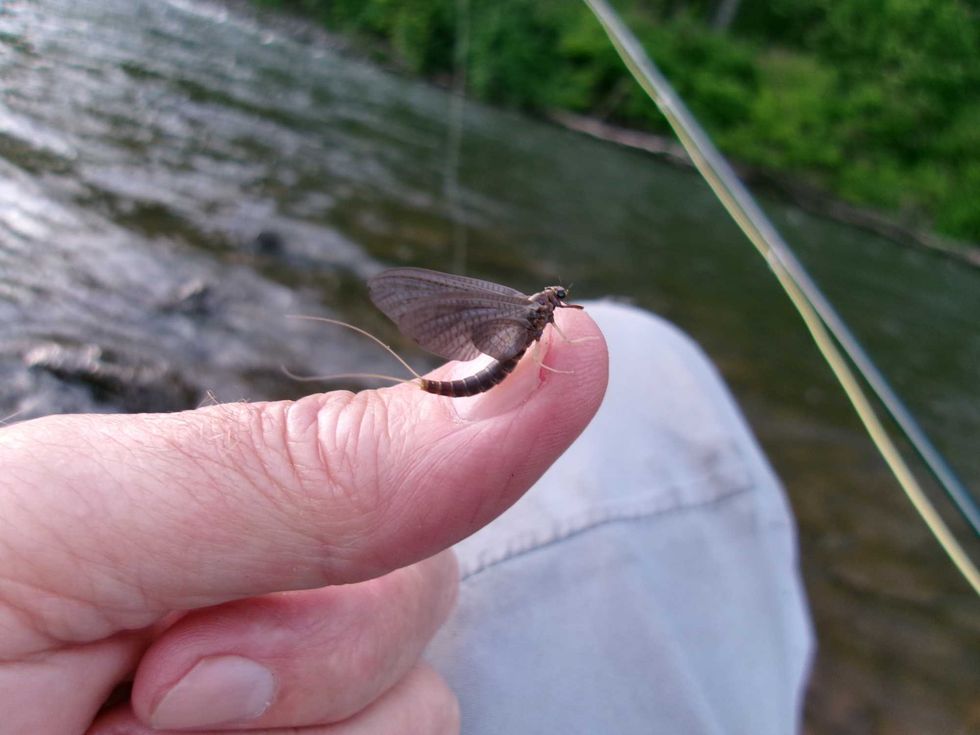
Adult mayfly.Patrick L. Sullivan

The first night it was all browns in the 14-18 range. The second night it was all rainbows in the 10-14 range.

That was early in the trip. Three days in, things warmed up considerably, and without any mitigating rain.

So the range of options was limited, and the preferred time of day was just before dawn. Note I said “preferred.” The actual start time varied depending on how late my attorney, Thos., and I stayed up watching Fu Manchu movies.

I low-crawled up a mountain brook at dawn with a Tenkara rod and did okay with wild browns. On the scramble out I had a brief and alarming encounter with a descendant of the Hound of the Baskervilles, whose owner helpfully said “Don’t make any sudden moves.”

“Any chance of a leash here?” I said in what I hoped was a cheerful, non-threatening tone of voice.

So there’s that.

Gary Dodson alerted us that the Spot That Must Not Be Named was in play. This is a cold mountain brook that enters one of the New York City reservoirs and depending on how full the latter is, forms a channel of cold water that mixes in with the warmer reservoir water. If the timing is right, the angler can latch into some decent trout and whatever else has fins and an inquisitive nature.

So one morning, while the boys worked the big deep cold pool by the bridge, I made my way downstream, deploying the stream thermometer frequently to try and figure out the magic spot where trout would be comfortable enough to hang out and nosh.

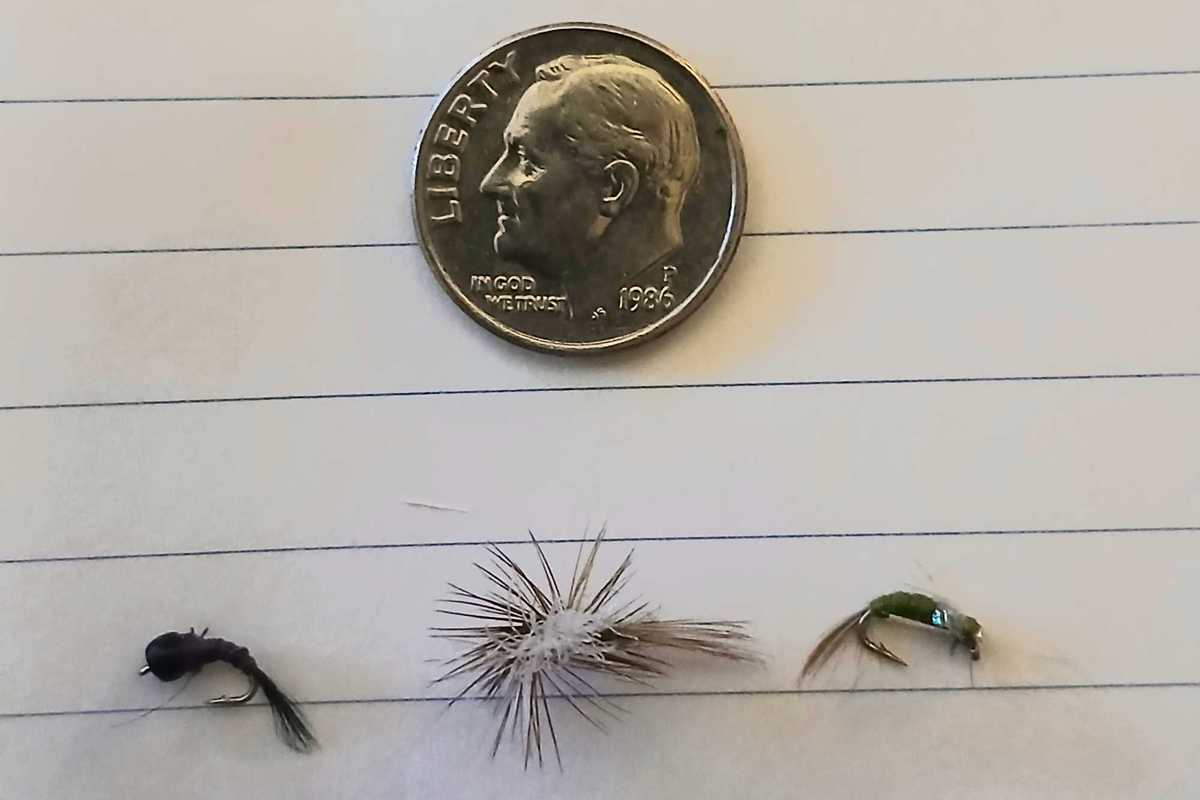
I used a favorite tactic: a dry/dropper rig, with a Chubby Chernobyl as the top fly and de facto bobber, and a series of nymphs and wet flies on an 18-24 inch fluorocarbon tipper dropper, 4X or 5X, tied directly to the bend of the Chubby’s hook.

This worked immediately, with good browns in the 16-18 inch range hitting the nymphs and a Jerry Shillcock isonychia wet fly pattern.

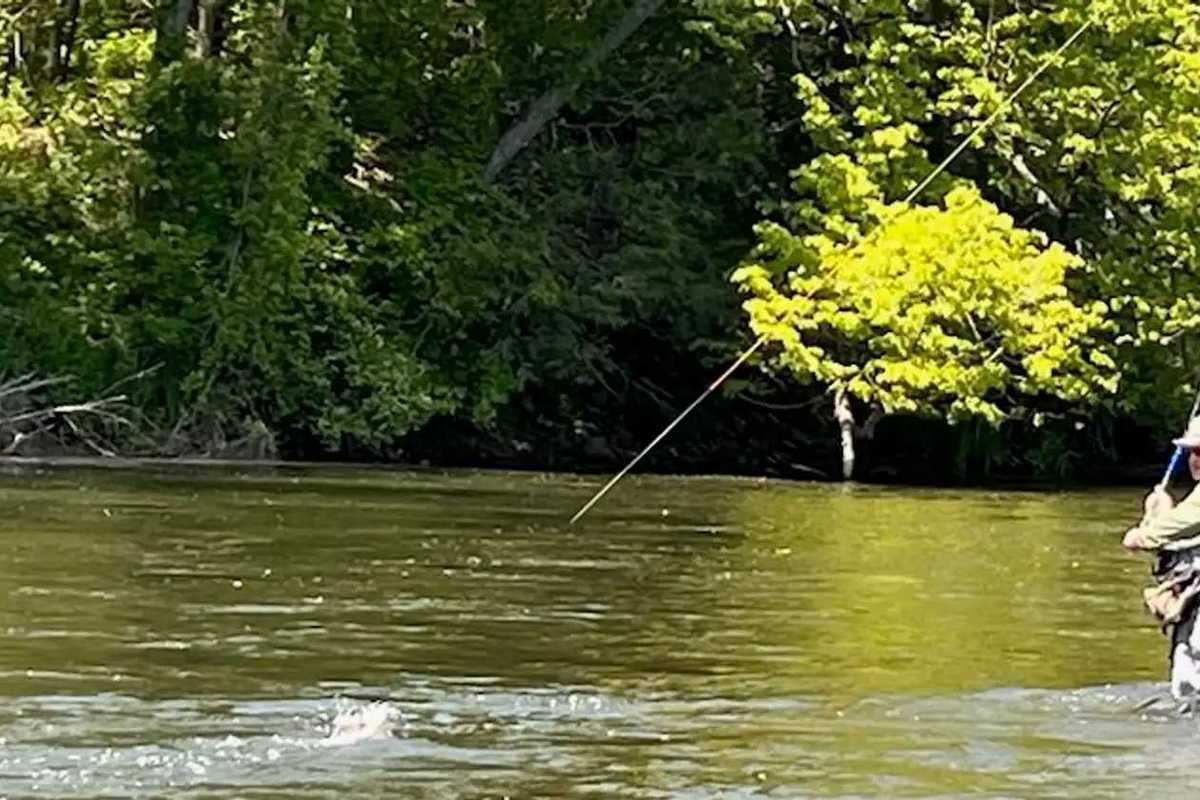
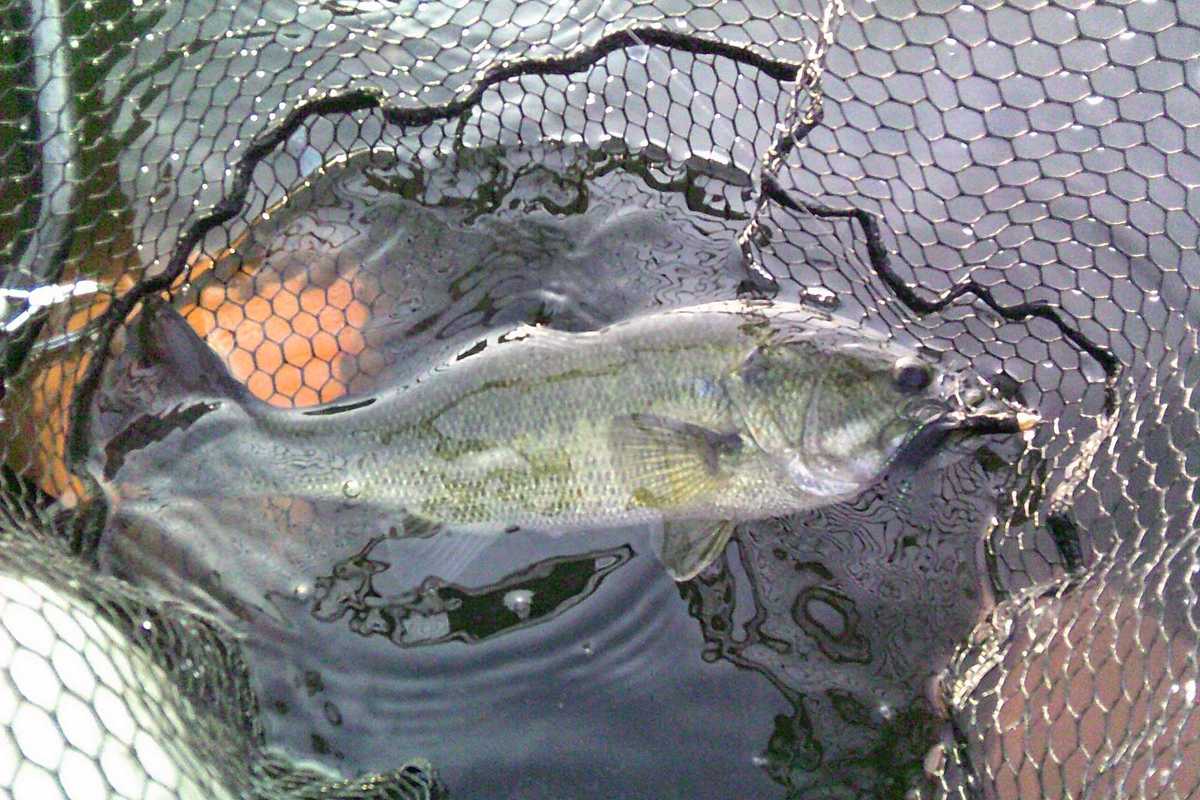
Trout.Patrick L. Sullivan

In a nod to tradition, I used one of my late father’s Orvis Battenkill bamboo rods for the purpose. It is eight feet long in three sections and weighs about 100 pounds. At least that’s how it feels after using graphite rods.

On the last morning the cold to warm water ratio was getting less favorable at the Spot. It was now or never.

Thos. was chucking dries up the big pool.

I waved him down, rerigged him with the dry-dropper combo and gave highly technical instructions.

“Walk around the left of that clump of vegetation, slowly so you don’t make a huge wake, and when the waves die down heave this in there and let it sit, and count to 30. Then twitch it a bit.”

Lo and behold, it worked.

On the medical front, my new right hip didn’t give me any trouble. I didn’t push it either.
Latest News

Search for missing former Dover Town Supervisor continues after sudden disappearance

Police drone operators take flight from the parking lot of J.H. Ketcham Hose Co.'s Wingdale station, near the search area for 49-year-old Ryan Courtien on Wednesday, July 15. Courtien has been missing since Sunday morning when we left his house to work in his front yard.

Photo by Lucia Iandolo

DOVER PLAINS — The search for former Dover Town Supervisor Ryan Courtien entered its third full day Wednesday, July 15, drawing emergency responders from across northeast Dutchess County and western Connecticut after the longtime public official disappeared from his property Sunday morning.

Courtien — a 49-year-old Wingdale resident, former Dover Town Supervisor, current Planning Board chair and volunteer firefighter — went outside at 9:30 a.m. on Sunday, July 12, to do yard work at his home on Waldo Road and never returned. New York State Police have led a search and rescue effort since Sunday afternoon, mobilizing up to 80 people per day to search the woods surrounding Courtien's home.

Keep ReadingShow less
Millerton owes its name to a transient engineer
Photo Courtesy North East Historical SocietySidney G. Miller, the engineer that helped build the railroad through Millerton, is the village’s namesake but never lived there.

The arrival of the railroad in the Town of North East in 1851 is heralded as the moment Millerton came into being — ushering in a boom period for the area that transformed it from a sparsely populated farming community into a hub of commerce.

That moment was brought about by Sidney Greene Miller and his associate civil engineers in their work as contractors for the New York and Harlem Railroad. After his work, Millerton quickly grew from an insignificant hamlet in North East to the center of the town’s activity within just 25 years.

Keep ReadingShow less
Millerton’s fire department marks 134 years of battling blazes

Millerton Fire Co. members monitor a fire at the Brown Cup Diner on Route 22. The diner would later be completely destroyed by the fire.

Archive photo

Millerton’s volunteer fire department has spent more than 130 years protecting the village, a legacy that began after a fire ravaged and destroyed a prominent hotel in 1891.

North East Fire District Commissioner Dave Vandebogart, who serves as the fire company’s historian, is himself a third-generation member of the Millerton Fire Company. He said Millerton’s rapid growth after the arrival of the railroad spurred the need for an organized fire department.

Keep ReadingShow less
google preferred source

Want more of our stories on Google? Click here to make us a Preferred Source.

New pool and poolhouse expected to open next year

A rendering of the planned pool and poolhouse shows a shallow, ramped entrance allowing access for people with disabilities.

Illustration Provided

Plans for the long-awaited community pool and poolhouse at Eddie Collins Memorial Park are moving into the construction phase, with village officials aiming to open the facility by summer 2027.

The Village Board of Trustees hopes to hold a ceremonial groundbreaking in July as part of Millerton’s 175th anniversary celebration. With contracts for electrical, plumbing and mechanical work now approved, construction is expected to begin in August.

Keep ReadingShow less
Documentary film about railroad resurfaces after 40 years

Filmmaker Philip Milano of Dover Plains holds the Scotch U-matic cassette containing his original 1970s documentary about the Harlem Valley Transportation Association.

Aly Morrissey

Long before the bustling Harlem Valley Rail Trail hosted runners, walkers and cyclists, a historic railroad ran through Millerton, connecting rural towns to New York City. The eventual dismantling of the railroad was met with criticism and pushback from residents.

That chapter of local history comes alive in a resurfaced documentary film that had been tucked away in an attic in Dover Plains for more than 40 years.

Keep ReadingShow less
Millerton’s early days brought huge change to the community
Courtesy U.S. Library of Congress

The Village of Millerton was founded a decade before the Civil War during a time when railroads were transforming rural economies, the nation was expanding westward and tensions over slavery were mounting.

The first 25 years of Millerton reflected that era of rapid change, characterized by an almost overnight transformation from farmland to being a railroad hub.

Keep ReadingShow less
google preferred source

Want more of our stories on Google? Click here to make us a Preferred Source.

google preferred source

Want more of our stories on Google? Click here to make us a Preferred Source.