

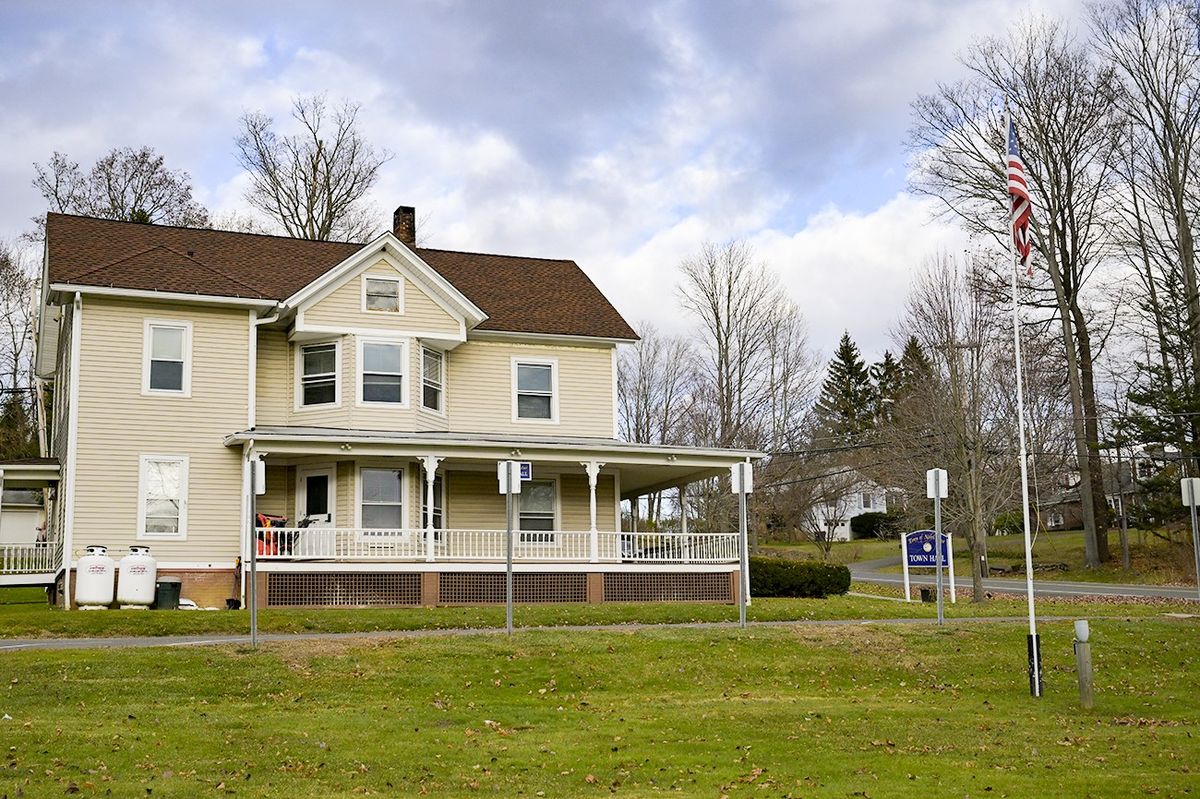
PINE PLAINS — More than 50 residents packed Town Hall on Thursday, Feb. 19, as Town Supervisor Brian Walsh sought to address continuing controversy over a proposed license plate reader surveillance system.
At issue is a February 2025 contract with Atlanta-based surveillance company Flock Safety. Residents questioned when the agreement was signed, who authorized it, and whether it was reviewed by the Town Board or Town Attorney Warren Replansky, as required under town procurement procedures.
Walsh addressed the matter about 15 minutes into the meeting, following a hearing on an unrelated local law. Before opening public comment, he read a prepared statement, asserting once again that he had no knowledge of a contract with Flock Safety and addressed specific comments from a phone call he held with company officials that were recently revealed in a report by The New Pine Plains Herald.
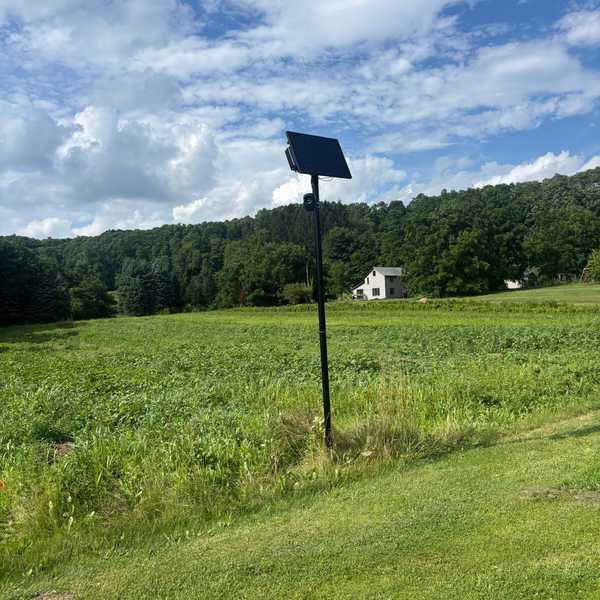
The contract in question came to light two weeks ago on Feb. 9 during an emergency meeting of the Pine Plains Town Board following the discovery of markers for surveillance cameras across town. The New Pine Plains Herald reported Sgt. Michael Belliveau, who resigned from the town's police force last year, signed the $80,000 contract with Flock on Feb. 25, 2025.
Under New York State Law, town funds can only be spent with Town Board approval. In Pine Plains, police department equipment is jointly owned with the town government.
"At no time was it ever stated to me that a contract had been executed," Walsh said. "I contacted Flock, instructed them to halt all activities, and stated I had no idea that mark-outs were being performed."
Walsh said Flock Safety representatives had approached him and the town's police department about a nine camera system in February 2025, but Walsh told the company at that time the town could not afford such a system and declined the cameras. Walsh said company officials then offered a limited trial including four cameras at no cost to the town, at which point Walsh agreed. He said he had no contact with the company between July 2025 and February 2026 when markings appeared across Pine Plains for what appeared to be permanent camera installations.
Reports in the New Pine Plains Herald revealed Walsh told Flock Safety officials during a phone call on Feb. 5 that camera installations were "going to get done." At Thursday’s meeting, he addressed the remark in his prepared statement, saying he was referring to the county.
"If the county wanted to place cameras in the Town of Pine Plains it would be done, but the town is not."
Walsh and Town Board members declined to answer questions regarding Flock Safety at the board meeting.
The statement did not immediately put residents' minds at ease. Matthew Lebaron, of Pine Plains, voiced concern over procedure, asking questions about town and police department officials' capacity to pursue demonstrations–or enter into contracts–without first consulting the town board.
"If equipment was installed, marked, tested or contracted without a formal public vote or proper procurement process, that raises serious questions about compliance with town law and fiduciary responsibilities," Lebaron said. "My request is simple — any agreements, any communications made to the public about these agreements, all be given to us with good warning over multiple communication streams."
Keary Hanan voiced further concerns about procedures, asking during public comment whether the town's counsel, Warren Replansky, had read or provided advice on the contract. Hanan expressed broken trust with the town's officials, asking "how does this town board plan on restoring the trust of this community after this egregious breach of honesty and trust with its constituents?"
Michael Cooper, who serves with the Pine Plains Volunteer Fire Department alongside Walsh, offered a defense of the town's supervisor, saying he believed Walsh's comments were being misunderstood.
"I have personally known Brian for 10 years since joining the fire company," Cooper said. "Knowing Brian and how he communicates, I believe his words are being misrepresented, and I would encourage anyone who has problems with what he has to say to examine what he has in fact done."
Cooper said he does not support surveillance systems in Pine Plains, citing abuses of surveillance technology by bad actors, but praised the Town Board and Supervisor Walsh for swift action regarding the controversy.
"I hope the Town Board and community can move past this and continue to maintain Pine Plains as a wonderful place to live," Cooper said.
Pine Plains resident Alice Nuccio objected to what she described as the politicization of the issue, referencing a comment Walsh made to Flock Safety officials in which he said, “I think we’re a decent blue area right now, unfortunately.”
"This is not a red or a blue issue," Nuccio said. "This is a humanitarian issue. We need to stop dividing everyone between this and that and really try to do the best for the town."






 Justine and Victor Valla in their studio with a painting of Victor’s,”Jonah and the Whale.” Robin Roraback


Supervisor Walsh defends role in Flock surveillance contract
A standing-room-only crowd listens as Supervisor Brian Walsh reads a statement addressing controversy over an unauthorized contract with Atlanta-based Flock Safety at the Feb. 19 Pine Plains Town Board meeting. Walsh said he did not sign the contract and believed Flock was providing a demonstration of camera hardware at no cost to the town.