Residents comment on Wassaic trails proposal

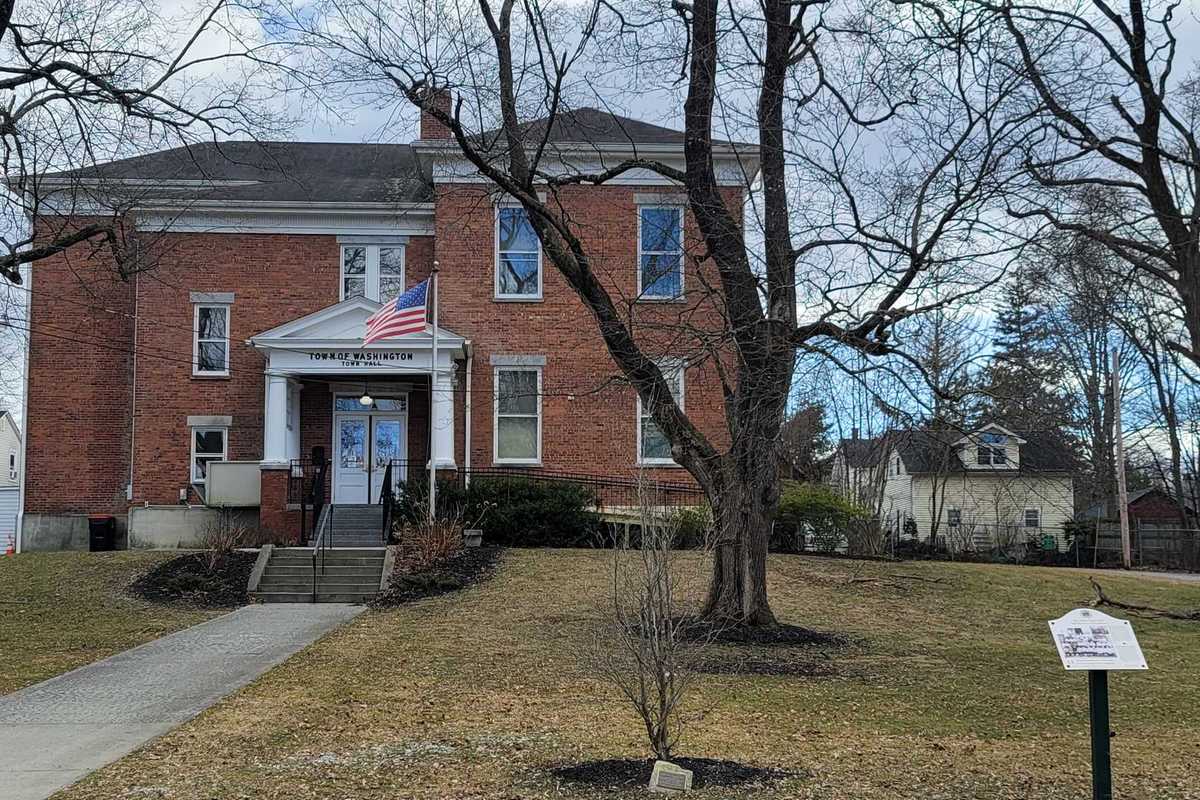
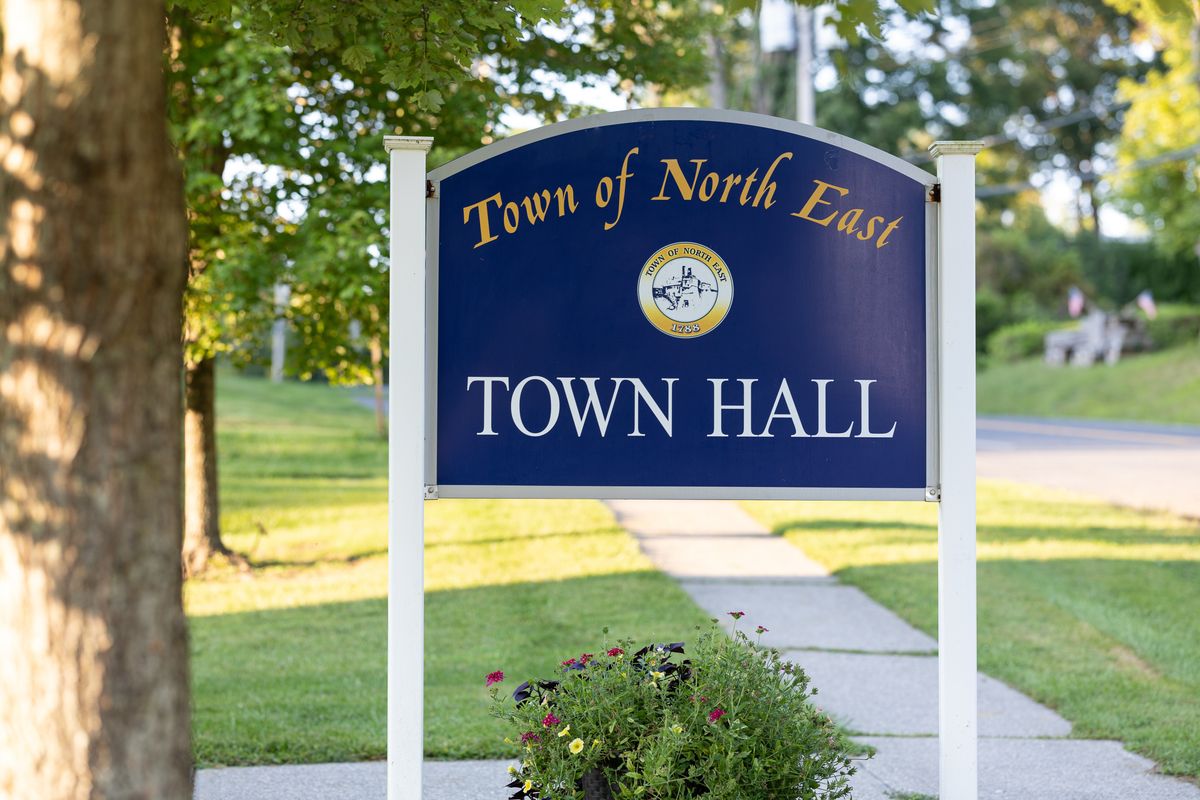
Amenia Town Hall on Route 22.
Photo by Nathan Miller

Amenia Town Hall on Route 22.
AMENIA — The Town Board is weighing whether to approve a special use permit and site plan for a proposed hiking and mountain biking trail system in Wassaic, following a public hearing Thursday that drew mostly supportive comments from residents.
First proposed in July 2025, the Northern Red Oak Trails Project calls for 12 miles of hiking and mountain biking trails on 470 acres distributed over three connected parcels of land. Trails would be three feet wide, with minimal land disturbance, and boardwalks installed only where necessary.
“I’m a neighbor, and I hope it happens,” resident Josh Frankel said, noting his pleasure at learning that the planned hiking trails do not share space with the mountain bikes.
“The area is small, but the experience is big,” Frankel said, citing the advantage of being in nature and exercising, and the prospect of more things for kids to do. He also noted the economic benefit for the town at large.
Although comments were generally supportive, abutting residents voiced concerns about insufficient setbacks and the possibility that people using the trails might be visible and perhaps wander outside of the site’s perimeter onto neighboring properties. Wire fencing for the perimeter was suggested.
Others feared that trails along the steeper slopes on Rattlesnake Mountain might erode and impact wetlands below. The emergency vehicle access along Amenia Union Road was of concern, with residents suggesting a gate to keep recreational users from entering there.
Noise from trail maintenance equipment was a concern voiced by another resident.
Town Clerk Dawn Klingner reported that she had received 12 written comments from residents, including 10 that were supportive.
The Planning Board and Zoning Board of Appeals have reviewed the proposal at multiple meetings since July 2025 and submitted comments to the Town Board.
An existing home on the property would be razed to accommodate a parking area. Existing forestry access roads on the property, six feet in width, would remain to create passage for emergency vehicles.
At a January meeting of the Planning Board, town engineer John Andrews noted that the fire department had indicated that concerns about access by emergency vehicles had been accommodated. He added that the project complies with endangered species regulations and includes a rattlesnake education program for hikers and bikers.
Kerri-Lee Mayland
A tray can help group items in a way that looks and feels thoughtful and intentional.
Winter is a season that invites us to notice our surroundings more closely and crave small, comforting changes rather than big projects.
That’s often when clients ask what they can do to make their homes feel finished or fresh again — without redecorating, renovating or shopping endlessly. My answer: start with one tray.
A tray creates a moment. It gives the eye a place to land and turns everyday objects into something intentional. More importantly, it’s approachable. There’s no measuring, no commitment, no pressure to get it “right.” It’s a small, easy project — affordable, functional and even a little fun — that can be tailored entirely to you.
One of the things I love most about styling trays is that your cozy “moment” becomes mobile. Everything you love is gathered in one place and can be easily moved from room to room as your day unfolds. A tray that starts on an entry table can later migrate to a coffee table or kitchen counter, adapting to how you’re actually living in your home.
In one client’s entryway, we styled a tray that sets the tone the moment you walk in. A simple pair of brass candlesticks adds warmth, a blue-and-white chinoiserie vase brings character, and two vintage books ground the arrangement. It’s not decorative for decoration’s sake — it feels collected, welcoming and personal, all while keeping the surface from becoming cluttered.
In another home, a coffee table tray became the quiet anchor of the living room. We included a strand of wooden beads for texture, the TV remote tucked neatly into a small vintage box, and a plant nestled in a pottery bowl. The tray keeps everyday necessities close at hand while making the space feel relaxed and lived-in rather than chaotic.

Kitchens may be where trays work hardest, especially in winter when we’re cooking inside more and gathering more casually. For one client, we styled a tray with a pepper mill; a shallow bowl for garlic, shallots and onions; and a white Italian ceramic container filled with olive oil. It’s practical and beautiful, and it makes cooking feel intentional instead of rushed. The tray warms up the counter while keeping essentials within reach.
Another version I often create is the cocktail, mocktail or tea-and-coffee tray — endlessly useful for friends popping over to say hello. A few cups, a teapot or carafe, honey or sugar, and a candle create an inviting setup that’s ready at a moment’s notice. It says, “Stay a while,” without any fuss.
What makes trays so effective this time of year is that they respond to winter’s quieter rhythm. Winter decorating isn’t about bold color or dramatic statements — it’s about texture, warmth and restraint: wood, stone, ceramic, linen, candlelight. A tray helps you edit rather than add, grouping items so they feel thoughtful instead of scattered.
When the seasons shift, the same tray evolves with you. Heavier elements can be swapped for lighter ones — fresh flowers, glass, pale ceramics — without starting over. One tray, styled seasonally, becomes a constant that gently changes rather than something that has to be replaced.
Remember, good design doesn’t have to come from big gestures. Often it comes from small moments done well — a surface that feels intentional, a corner that feels cared for. In winter’s stillness, creating a simple tray may be just enough to make your home feel calm, personal and complete.
Patrick L. Sullivan
Here is a sample from a recently purchased assortment of specks. From left: Black speck, Parachute Adams dry fly speck, greenish sparkly speck.
I need to get my glasses checked
My fingers fumbling like heck
I have become a nervous wreck
Must be the season of the speck…
(With copious apologies to Donovan).
I’m still on the injured reserve list following replacement right hip surgery. Right now the plan is to come off the IR June 1, but I’m going to ask if we can’t shave something off that.
And yes, the rehab is going very well, thank you for asking.
What this means in practical terms is I am scheming and plotting like nobody’s business about all the fishly things I am going to do once Ye Doctor blows the all-clear.
I have glaring weaknesses in my angling game. I stink at roll casting. I’m hopeless with 12-foot leaders.
And I am really lousy at fishing with the kind of tiny little flies I refer to as “specks.”
I define a speck as anything smaller than size 20. Speck experts will disagree, as they think a size 20 is huge. Maybe I will think so too some day.
One of the perils of sitting around after surgery is scrolling through social media and buying things. For preference, things I don’t need.
I got some weird t-shirts. One sports the logo of the Shenandoah (Pa.) Hungarian Rioters, a 19th century minor league baseball team. Another reads “Surely Not Everyone Was Kung Fu Fighting.”
Among these idiotic acquisitions was an offer of 72 specks for about $50. This was a rock-bottom price, and it wasn’t coming from a fly-by-night outfit either, but from an online company, The Catch and the Hatch, who provided me with some very good perdigon nymphs a few years back.
So the specks arrived, and they are everything I feared.
Tiny. Hard to see. Did I say tiny? Infinitesimal. You know.
SPECKS!
Here’s why an angler needs to know how to use specks. In between the nice hatches of large, easily identifiable bugs, which is most of the time, trout eat little bugs.
If it’s a cloudy day, chances are there will be blue-wing olives on the water. Then there is a category called midges which contains multitudes.
I look at the river for five minutes, see nothing happening bug-wise, and I start trying to provoke a reaction somehow.
What I am missing is the trout happily eating specks beneath the surface.
So how am I going to do this?
What little speck success I’ve had has been with a dry-dropper rig. I use a big Stimulator or Chubby Chernobyl, a large, very visible, very buoyant dry fly, and tie a piece of fluorocarbon tippet to the bend of the dry fly’s hook with an improved clinch knot and attach the speck to that. A bass or panfish popper works as the dry fly too.
Here’s the problem. The speck hook eyes require a very fine tippet material — 6x, 7x, even 8x.
I dislike fine tippets even more than specks. The stuff is devilish. It curls up. It refuses to knot. It’s just awful to work with.
Some years back I discovered one brand of fluoro tippet with a 5x tippet that was somehow able to get through the eye of a size 22 hook. That made a difference.
But this moderately successful method is very one-dimensional. I need to be able to construct a leader with a dropper or two and get my specks down in the water column.
That’s going to mean 6x or worse, probably. I might have to add some weight, another thing I dislike and am not good at.
But that is the plan. I hope to report great things as I master the speck this season.
Or until my left hip goes out.
Patrick L. Sullivan
Torrington artist Suzan Scott talked with visitors at a reception for her show “A Beautiful Place” at the David M. Hunt Library Saturday, Feb. 21.
Landscape painter Suzan Scott said, “I see every leaf on every tree, every blade of grass,” when she assesses a particular view. Her paintings are her effort to “distill it to the essence.”
Scott said she has been painting for 30 years, and she moved from central Connecticut to Torrington a few years ago to be closer to the landscapes she prefers. “I just get in the car and drive.”
One painting, with dramatic clouds and light, was the result of a group project. The leader suggested a protest theme, and Scott was not initially enthused. But that was the summer of 2023, when smoke from wildfires in Canada drifted into the Northeast U.S. The phenomenon yielded spectacular sunsets, among other things. So Scott was able to comment on the situation in a subtle manner without taking an overtly political stand.
Scott’s paintings are on display at the David M. Hunt Library in Falls Village through Friday, March 13. She will give a talk at the library on Thursday, March 12, at 5:30 p.m.

Want more of our stories on Google? Click here to make us a Preferred Source.
Millerton News
Andrew Jack, chair maker, will host an open shop on March 1 from 10 a.m. to 4 p.m., at the Magic Fluke Building (292 S. Main St., Sheffield). Jack will demonstrate Windsor chair making and green-wood carving. Email andrewjackchairs@gmail.com with questions about the open shop event, for commissions or to register for an upcoming chair making course.
Aly Morrissey
Tim Watson sits in the front room of a home he and his family are temporarily occupying. Watson and his family evacuated their apartment at 7-9 Main St. in Millerton after a carbon monoxide leak.
MILLERTON —Nearly four weeks after a furnace fire sent deadly levels of carbon monoxide inside 7-9 Main Street and forced as many as 18 residents to evacuate, a dispute between displaced tenants and the building’s owner has raised questions about safety, management and whether the property will reopen.
As of press time, the village had posted a notice on the building declaring it an “Unsafe Structure,” barring residents from returning until required repairs are completed. Village officials said required repairs include installing a new furnace, carbon monoxide and smoke detectors, and an ADA-compliant ramp. However, the owner said he is hesitant to undertake those upgrades after years of challenges with the village and some tenants.
Several tenants described their displacement as the latest failure of the owner, Kastriot “Chris” Rrapi, to properly maintain the 126-year-old building, an argument that Rrapi disputes.
“Our entire world got flipped upside down in a matter of hours,” said Brittney Watson, 22, who said she woke to the smell of smoke and felt dizzy as alarms sounded. Her family — including her father, Tim Watson, who uses a wheelchair after losing both legs — was among those forced to evacuate.
The property now appears unoccupied. Village officials said they shut off water to the building as an additional measure to prevent anyone from living there.
The Watson family is currently staying in temporary housing with assistance from the American Red Cross — an arrangement that is set to expire in early March, around 30 days after they first moved into the temporary home. The family said their future living situation is now uncertain.

Tim Watson said he and his family moved into a first-floor apartment in the building about three years ago — though Rrapi describes it as less than two — and did not sign a written lease. Watson said his family was asked to pay rent in cash under a verbal agreement that would allow for weekly payments based on their fixed-income financial situation. Rent was $1,650 per month for a two-bedroom apartment.
“There was no lease,” Watson said. “It was always cash.”
The Watson family described long-standing problems, including pests, unreliable heat, and water leaks. The family said they repeatedly raised concerns about maintenance issues that went ignored. In the weeks leading up to the fire, Watson said the apartment went days without heat or hot water, forcing the family to rely on a space heater.
Jason Wendover, who is married to one of Watson’s daughters, described similar issues during his time in the building in 2025 in a second-floor apartment, including concerns about whether utilities were properly separated by unit and what he said was a severe cockroach infestation.
“They got into everything,” Wendover said of the cockroaches. “I’d wake up in the morning and, if I forgot to change the coffee, there would be roaches floating in the coffee pot.”
Rrapi disputes many of the Watsons’ claims and said they stopped paying rent months ago, leaving their unit in disarray after the evacuation.
“The building is old, I understand that,” Rrapi said. “It needs work. But the drama this family puts landlords through — it’s unacceptable.”
He said the family destroyed the apartment and caused tension for other tenants, noting complaints about loud arguments and smoking indoors.
Rrapi disputes allegations that he required cash-only payments, saying all of his tenants are welcome to pay by cash, check or Zelle — a cellphone banking app that allows for electronic payments. He also said a professional exterminator was sent to the building and that the Watson family refused to allow them into their apartment.
“I submitted the receipt to the Dutchess County Department of Health,” Rrapi said.
Rrapi said the Watsons owe him nearly $22,000 in back rent and damages, and eviction proceedings are underway. He said they were provided with notice in the months leading up to the fire. He described the apartment left behind by the family as severely damaged, saying they did not maintain the interior of the apartment.
“It’s a wreck to the point that it has to be gutted,” Rrapi said. “It’s my fault that I rented to them, but I felt sorry for them.”
Tim Watson denied ever receiving an eviction notice and rejected claims that his family caused damage to the apartment. He said he withheld as much as $15,000 in rent in the months leading up to the fire, describing the decision as a protest against what he called “slum-like” conditions in the building.

Rrapi said the building’s future remains uncertain amid foreclosure proceedings that began in 2023 after a commercial loan went into default, which he attributed largely to a discrepancy he said he discovered after purchasing the property with his father, Zef Rapaj.
With 12 electrical meters on the building, the pair believed it was configured for 12 units, but they later learned it is legally zoned for six, which complicated the property’s finances and prompted him to pursue a variance through the village’s Zoning Board of Appeals.
He described the property as “the biggest headache I ever bought,” citing years of zoning roadblocks and financial strain that have left him uncertain how much more he is willing to invest in the property. Rrapi purchased the Millerton property along with two residential properties in Amenia and a vacant lot in Dover Plains from Christine Lilley of Brewster in 2021.
“I’m not going to put that kind of money into it if I’m not allowed to use the building the way it’s set up,” he said.
While he said he plans to replace the furnace, Rrapi said renovation plans have stalled amid what he described as shifting standards and mixed signals from the village.
With his legal team and architect Ray Nelson of Earthwise Architecture, Rrapi sought to scale back a proposal from 12 units to nine, which the ZBA rejected in June 2025.
The variance request was denied in part due to parking requirements, which mandate 1.5 spaces per unit — a standard that village officials have acknowledged has been difficult to meet in Millerton’s dense downtown.
Rrapi said he considered demolishing the building out of frustration, though he said he still has hope that there is a path forward to rehabilitate the building.
No timeline has been set for repairs or occupancy. Village officials said residents may not return until all safety requirements are met. Rrapi said he will complete the required work but remains undecided about whether he will continue renting the building long-term.
Nathan Miller
Douglas Broughton, left, and Glenn Hilliard of Newtown, Connecticut, package cannabis flower for wholesale to dispensaries at Broughton’s home in Wassaic on Dec. 19, 2025.
WASSAIC — Tucked into the hills just off Old Route 22, Douglas Broughton operates an indoor cannabis farm — and this spring, he plans to open a dispensary in downtown Millerton.
The Wassaic-based grower signed a lease Dec. 1 for the former Demitasse storefront at 32 Main St. He plans to reopen the space as the Black Rabbit Farms cannabis dispensary following modest renovations.
The work will include cosmetic updates and the installation of freestanding, custom-made display cabinets.
Broughton said he hopes to open in April, but red tape at the New York Office of Cannabis Management could delay the opening.
The Millerton storefront will mark another milestone for the 63-year-old farmer, who has been cultivating cannabis since the 1990s, when the plant was still illegal.

“I just loved the plant and how it grew,” Broughton said. “It’s a very alien plant — it seems like it came from a different planet.”
In the early 1990s, Broughton was bartending in Brooklyn and couch-surfing after becoming disenchanted with the television broadcast industry. As an Asian American, he said his dreams of becoming a leading man or primetime news anchor were dashed by what he described as discrimination in the industry.
Broughton, who was raised in Washington state, initially moved to New York City in the late 1980s, when a series of internships brought him out east. Rather than return home to complete his degree, he opted to stay and try to make it on his own.
By 1995, Broughton was regularly growing multiple plants on the roof of an apartment building in Williamsburg, Brooklyn, selling small quantities of the plant on the black market to customers at the bar where he worked.
“Bartending in the city is pretty good,” Broughton said. “It was just that I didn’t want to bartend.”
His chance to leave bartending came in 2000, when he met Joe Murray, known in New York City’s cannabis scene as “AJ Sour Diesel” for pioneering the Sour Diesel strain, prized for its strong effects and pungent odor.
Broughton said Murray helped expand the operation, allowing him to rely on cannabis cultivation as his primary source of income beginning in 2000.
Broughton moved to his home in Wassaic in 2016, where he operated a black market farm until New York state legalized cannabis and began accepting license applications in 2021.

He said his age was a factor in deciding to get a license and form a legitimate enterprise. Broughton, nearly 60 at the time New York legalized cannabis for recreational use, had been running illicit grow operations for decades and said the anxiety of avoiding law enforcement had worn him down.
“Every aspect of what you did had to be hidden,” Broughton said. “You couldn’t tell anybody.”
After legalization, however, he said he faces a different set of challenges brought on by bureaucracy and corporatism in New York’s cannabis industry.
Broughton said New York’s tax scheme hits small growers the hardest. He said he has to pay taxes on each plant he grows, and then again when he sells to retailers or, eventually, directly to consumers.
Despite those hurdles, Broughton said he is eager to bring a high-quality product to consumers in Millerton.
Over the past 30 years, he has developed a growing technique that relies entirely on artificial light and strict control of nutrients and moisture. He said he maintains a level of oversight that borders on obstinance.
“I’m more of a purist when it comes to this stuff,” Broughton said. “I’m not very forgiving.”
That rigidity pays off with better product, he said, even when it means destroying an entire harvest.
“We cut down an entire crop of amazing Sour Diesel like two years ago because we got mites,” Broughton said.

Want more of our stories on Google? Click here to make us a Preferred Source.

Want more of our stories on Google? Click here to make us a Preferred Source.
Amenia Town Board divided on filling vacant seat