Federal grant completes financing for Millerton’s wastewater project

A map prepared by engineering firm Tighe & Bond shows the parcels within the village included in the wastewater service area.
Illustration provided

A map prepared by engineering firm Tighe & Bond shows the parcels within the village included in the wastewater service area.
MILLERTON — Millerton now has the funding to build its long-planned $13.8 million wastewater system following the award of a $3.5 million federal grant announced Friday, Feb. 27.
The Congressionally Directed Spending (CDS) grant solidifies the project’s financing plan and clears the way for the village board to authorize final design at its March 9 meeting. Officials anticipate bidding in 2027, with construction potentially completed by spring 2028. The project is a joint effort between the village and the town.
The project, which would serve the core of the Village of Millerton and a commercial stretch of the Town of North East along U.S. Route 44, represents one of the largest infrastructure investments in the community in decades. Officials say the system will safeguard local waterways while creating a foundation for long-term economic stability.
Village officials say the new funding will keep the project on track to authorize final design at the March 9 village board meeting, with bidding anticipated in 2027 and potential construction completion by spring 2028.
The preliminary engineering report from Tighe and Bond describes a wastewater treatment system that would collect liquid waste and return the treated water to the Webatuck Creek. Solid septic waste would still require tanks, but emptying those tanks will become the sewer district’s responsibility.
The $13.8 million project calls for the village to cover about 79% of capital costs, with the town responsible for roughly 21%.
Current projections from engineering firm Tighe and Bond estimate residential users would pay approximately $57.89 per month, including capital and operating costs. Commercial properties are projected to pay about $144.33 per month. Officials say the newly secured grant could reduce those figures slightly once the final financing details are confirmed.
Taxpayers outside of the service area will not be charged for project costs, according to village officials.
Millerton trustee Matt Soleau, who has been working closely on the wastewater project and also operates a local full-service custom building firm, said both residents and businesses are constrained by outdated septic systems, particularly on smaller lots where upgrades cannot meet modern health standards.
The proposed wastewater district would serve the core of the village, including its business district, as well as the commercial section of the town along Route 44 extending from Cumberland Farms to the New York-Connecticut border. Properties within the proposed service area currently rely on individual septic systems, including tanks with leach fields, and outdated systems like seepage pits, cesspools and holding tanks.
Village officials said many properties are limited not by zoning alone, but by septic constraints.
“As a result, many homes cannot legally add bedrooms, create accessory dwelling units or convert existing structures,” Soleau said.
Under the proposed system, most properties would retain their existing septic tanks if they are code-compliant and in good working condition. If a tank does not meet current standards, a new one would be installed as part of the project.
Existing leach fields would be taken out of service and left in place, allowing property owners to reclaim that land for landscaping, driveways or ADUs.
For businesses, many commercial properties rely on old septic systems that are already maxed out, which makes it difficult or impossible to open water-heavy businesses like restaurants, cafes, salons or fitness studios. With the new wastewater system, village officials say a path will be open for those types of businesses moving forward.
Officials also emphasize the environmental benefits of a new wastewater system. A modern, up-to-date system will protect the natural environment, including the Webatuck Creek that flows right through the village.
Discharge from the treatment plant into Webatuck Creek will be regulated under a State Pollutant Discharge Elimination System permit issued by New York State, which sets strict treatment, monitoring and reporting standards. The facility would be operated by a state-licensed wastewater professional, with required testing and monthly reports submitted to the New York State Department of Environmental Conservation and made publicly available.
In addition to state oversight, Soleau said, the village will maintain its own logistics to ensure the facility is performing as designed.
“Together, this regulatory framework, professional operation, and transparency in reporting provide multiple layers of accountability for protecting Webatuck Creek,” Soleau said.
Village officials say the construction phase will aim to limit disruption throughout the village and town, proceeding in targeted segments, with defined areas opened for installation, restored, and then closed before crews move on. The goal, Soleau said, is to allow normal activity to continue as much as possible throughout the process.
“Protecting the safety of our residents and visitors, preserving continuity of local businesses, maintaining access, and retaining residents’ quality of life throughout construction are non-negotiable priorities,” Soleau added.
The mayor’s office and village board will take an active oversight role as phasing and logistics plans are developed to ensure disruption is minimized and the project is executed in a manner consistent with the community’s expectations.
Millerton Mayor Jenn Najdek called the award a transformative step forward for the community, crediting U.S. Sen. Kirsten Gillibrand, U.S. Rep. Pat Ryan and the town leaders for their collaboration.
“This funding moves us significantly closer to a transformative investment in Millerton’s future,” Najdek said.
Town Supervisor Chris Kennan emphasized the importance of federal backing for rural communities like Millerton.
“I have long advocated for Federal funding for this project, as it is almost impossible to imagine it being successful without it,” Kennan said.
Aly Morrissey
State Line Beer and Grocery, set to open April 1, will offer farm-fresh eggs, frozen local meats and household essentials.
MILLERTON – A new beer and grocery store is set to open in Millerton on April 1, aiming to help fill a gap in the village’s grocery options.
Kristen Watson and her husband, Billy, will open State Line Beer and Grocery, offering farm-fresh eggs, frozen local meats, nonperishable foods and household essentials.
With no visible movement on the proposed grocery store in the former Trotta Plaza, State Line Beer and Grocery is poised to join Tri-Corner Feed in serving as a smaller-scale option for local residents seeking basic groceries and everyday necessities.
Watson, who will serve as general manager, said the idea grew out of repeated community requests and a desire to fill a void.
“I needed rice the other night when my dog got sick, and I couldn’t find it easily in town,” Watson said, adding that she had to drive to CVS just before closing time. “It will be nice to have something right here.”
A longtime local, Watson grew up in Dover and worked as a licensed veterinary technician at Millerton Veterinary Practice for 19 years before stepping away last year to focus on family. Now, she said, the business has quickly become a family effort.
“This is now my baby,” Watson joked. “Everyone’s helped – my kids, my parents, my husband.” Watson said her kids helped paint floors and stock shelves, which were built by her brother.
The store will emphasize local sourcing whenever possible, with Watson already in conversations with nearby farms and producers. She said she hopes to carry items such as local meats and her own farm-fresh eggs.
“Happy chickens equals a happy wife, so I call it the Happy Blended Homestead,” she said of her 53 chickens and home garden.\

Watson also said she plans to remain flexible based on customer demand and suggestions. She will manage a Facebook page and keep a suggestion box in the store.
“We’re listening to people,” she said. “If people want something, we’ll try to carry it. If it’s not working, we’ll adjust.”
Much of the meat will be sold frozen, supplemented by refrigerated items and pantry staples. The store will also stock household goods such as paper products, cleaning supplies and everyday necessities – items Watson said are often difficult to find locally without traveling outside the area or waiting to shop online.
In addition to groceries, the store will sell beer and hard seltzers, along with a limited selection of convenience items geared toward residents and visitors, including campers passing through the area.
Watson said attention to detail and community responsiveness will set the store apart.
“Being a smaller store, that personal touch will be huge,” she said. “We’re not here to make a million dollars – we’re here to make people happy and have what they need.
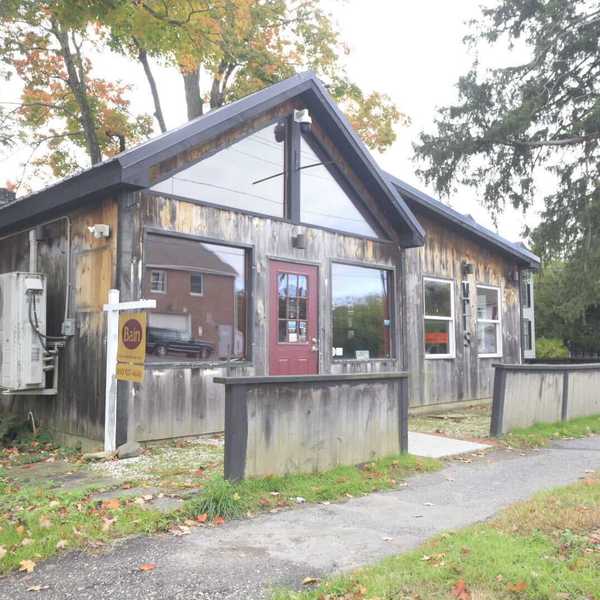
Located at 208 US-44 in Millerton – the same building that once housed Kids Time – State Line Beer and Grocery is expected to be open from 10 a.m. to 9 p.m., seven days a week. 
Nathan Miller
Diana Woolis, right, delivers criticism of Pine Plains Town Supervisor Brian Walsh during a regular meeting of the Town Board on Thursday, March 19. Woolis said she was saddened by recorded statements Walsh made where he suggested library budget funds could pay for surveillance cameras in the town.
PINE PLAINS — Residents called for Town Supervisor Brian Walsh's resignation after released records revealed he communicated with surveillance company Flock Safety multiple times about installing cameras in Pine Plains.
Town Board members offered a contrasting message, emphasizing a desire to move forward to work on other projects at their regular meeting on Thursday, March 19. Walsh responded by saying he would share information freely with board members, but otherwise did not offer a detailed statement.
Board members proposed and approved a resolution formally limiting license plate reading cameras and other "public safety" cameras without prior Town Board approval in response to the controversy. Town attorney Warren Replansky prepared the resolution prior to the meeting at the request of board members.
Critics said during public comment that Walsh's actions and statements in light of the recent revelations have eroded trust in his leadership. Walsh has faced scrutiny since Feb. 3 when Flock Safety representatives began marking locations for license-plate reading cameras at three locations across town. Those markings revealed an $80,000 contract with the Atlanta-based company signed by former Pine Plains Police Sergeant Michael Beliveau and Walsh's multiple emails and phone calls with representatives of the company.
Walsh said in statements to the New Pine Plains Herald after the markers for new cameras went up this February that he hadn't spoken to Flock Safety since June 2025. He said he was aware of a six-month trial that Beliveau had arranged with Flock Safety, and that the town was not engaged in a contract. Released records revealed Walsh had communicated with Flock Safety as recently as November 2025, and that the trial agreement that Beliveau signed would automatically roll into an $80,000, two-year contract with the surveillance company.
Public comment drew numerous calls for Walsh's resignation, alleging he lied about his involvement and awareness of the proposed trial and contract. Conservation Advisory Council Chair Gail Mellow issued a sharp rebuke of Walsh's actions.
She said Walsh repeatedly lied about his role in procuring the cameras and accused him of deflecting blame to Beliveau.
"Walsh lied to our community," Mellow said. "And I think, in doing so, smeared dirt on the honor of serving the town."

"We have lost so much ground in four years," Nuccio said. She recalled working as a secretary for Walsh's predecessor, Darrah Cloud, saying the town government accomplished more under Cloud's leadership. "We were doing things in a progressive way."
Some called for sympathy for Walsh, describing his actions as a mistake that the community should move on from. Supporters included law enforcement personnel describing the benefits of license plate reading cameras in solving crimes and avoiding dangerous situations.
Town Board members gave their own statements prior to residents' public comments that centered around accountability and moving forward. Councilwoman Jeanine Sisco offered the first statement on the controversy of the night.
Sisco said the board found it difficult to get answers from Walsh and Flock Safety during the recent controversy, but it was clear that proper procedures were not followed. She said board members received emails and recorded telephone conversations between Walsh and Flock Safety on March 9 — over a month after the stakes brought the agreement to light.
"Information was withheld," she said. "There were serious missteps."
The councilwoman then clarified that the Town Board is prohibited from disciplining or dismissing an elected official under New York law. She said board members plan to move forward and work with Walsh to follow proper protocol.
"I hope you can appreciate how much time and energy has been spent trying to understand what has occurred," Sisco said. "Now it's time to move forward."
Councilman Kevin Walsh took a harder stance, calling out a lack of written confirmation from Flock Safety that all agreements had been cancelled and what he described as obfuscation from the Supervisor.
He said Brian Walsh misled the board and documents have come to light showing the Supervisor communicated with Flock Safety representatives on multiple occasions between November 2024 and July 2025 and again this February after the cameras came to light.
Kevin Walsh nonetheless acknowledged the board has no power to remove Brian Walsh from office.
"Some are calling for us to do things we are not in power to do," Kevin Walsh said. "We will continue to do our best to bring the situation which has caused much consternation to a conclusion."
Aly Morrissey
The Irondale district, currently known as Highway Business District III, is comprised of just six parcels along Route 22 that are currently occupied by light industrial businesses.
MILLERTON — Though the Irondale District lies just outside of the Village of Millerton, it has become the center of a divisive conversation as the Town of North East continues to review a significant overhaul of its commercial zoning code.
Irondale, officially known as the Highway Business district under current town code, is a small stretch along Route 22 south of the village that some officials and residents believe could support additional businesses, while others argue development there could undermine efforts to boost Millerton’s existing downtown.
The issue emerged during the public hearing on the commercial zoning code overhaul, which has remained open since Jan. 8.
During the Jan. 8 public comment period, Kathy Chow, a North East resident and chair of the Millerton Climate Smart Task Force, urged the town to encourage artisan workshops and food-based businesses in the Irondale area, suggesting it could become a hub for small industry and capture Route 22 traffic.
Since then, board members from the town and the village have weighed in, discussing possible types of permitted businesses in Irondale and the potential impacts.
Irondale is currently zoned for highway-oriented commercial uses rather than village-style retail or restaurants. Permitted businesses include auto body shops, building materials sales such as lumberyards, construction equipment sales and rentals, mobile home and farm machinery sales, transportation terminals, warehouses and wholesale operations.
Councilwoman Meg Winkler has advocated expanding those uses to include restaurants, bakeries and small retail businesses, arguing the area already functions as a natural extension of the village, citing the existing Agway and Napa Auto Parts along the Route 22 corridor north of Millerton’s downtown.
Winkler said the town’s 2019 Comprehensive Plan encourages expanding commercial opportunities and believes allowing small-scale businesses there could strengthen the local economy.
“I stand firm on my decision and it’s not out of disrespect to the ZRC, and it’s not personal,” Winkler said. “It’s rooted in my belief as a businesswoman – and after talking to residents and business owners who want the flexibility in this district – that it would boost the economic vitality to the village and town.”
Others on the board, however, said expanding retail uses outside the village could weaken Main Street by diverting customers away from Main Street.
Town Supervisor Chris Kennan said the ZRC intentionally designed the district to support larger highway-oriented businesses while concentrating retail and restaurant activity in the village center.
“The goal of the ZRC was to support the village as in Main Street and not to provide shopping opportunities on Route 22 where people could just keep driving down 22 and not turn into the village,” Kennan said.
He added that protecting the village’s commercial core is part of what makes Millerton distinct from other communities.
Deputy Supervisor Chris Mayville said he has mixed feelings about the proposal and wants to better understand its long-term implications for planning and development in Irondale.
“If we’re working to expand the boulevard in the village,” Mayville asked, “why would we think mirroring development in the other direction would help that?”
Edie Greenwood, who chaired the ZRC throughout the process, said the group intentionally left the Irondale district unchanged in order to keep the process manageable.
“My approach was to simplify and not get into boundary changes,” Greenwood said, noting that broader conversations about commercial development along Route 22 will likely occur during the next phase of zoning work.
Councilwoman Rachele Grieco Cole said the debate seems like a chicken and egg dilemma.
“There’s tension between wanting the downtown to look and function a certain way and attract enough customers,” Cole said, adding that there is a risk of being too restrictive rather than drawing in as much business as possible.
Kennan ultimately attempted to pass a resolution to maintain the existing ZRC language, which would keep the current limitations in Irondale. The board did not adopt the resolution and will instead pick up the conversation during a regular meeting of the Town Board on Friday, March 20.
Village board members weigh in
Village officials also raised concerns about the proposal during a March 9 village board meeting, where Mayor Jenn Najdek warned that expanding retail and restaurant uses in the nearby Irondale district could create what she referred to as a “fly-by” scenario, diverting traffic and customers away from Main Street.
Trustees agreed the change could undermine long-standing efforts to concentrate commercial activity in the village center, particularly as plans move forward for the expensive wastewater infrastructure project intended to support future development in the Boulevard District.
The board said it plans to collectively draft a formal letter to the Town of North East board outlining their concerns.

Want more of our stories on Google? Click here to make us a Preferred Source.
Aly Morrissey
Robin Wall Kimmerer inspired the audience with her grassroots initiative “Plant, Baby, Plant,” encouraging restoration, native planting and care for ecosystems.
Robin Wall Kimmerer, the bestselling author of “Braiding Sweetgrass” and a member of the Citizen Potawatomi Nation, urged a sold-out audience at the Cary Institute of Ecosystem Studies on Friday, March 13, to rethink humanity’s relationship with the natural world through gratitude, reciprocity and responsibility.
Introduced by Cary Institute President Joshua Ginsberg, Kimmerer opened the evening by greeting the audience in Potawatomi, the native language of her ancestors, and grounding the talk in a practice of gratitude.
“Gratitude is the doorway to reciprocity,” Kimmerer said.
Kimmerer, also a mother, botanist and professor, said that Indigenous wisdom does not have to be at odds with Western science, but rather it can help humans reframe the way they understand the Earth.
She also reflected on the personal journey that led to her lifelong commitment to promoting a lens of Indigenous wisdom in Western science. As a young woman entering the field of botany — then largely dominated by men — she said her path in academia was not always welcoming as a female Native scientist.
“It has been a lifelong journey,” she said. “I was born a botanist.”
Throughout the lecture, Kimmerer described how Indigenous ecological knowledge — rooted in observation, experience and ethical responsibility — can complement scientific inquiry and help solve today’s environmental crises.
She pointed to global data showing that about 80 percent of the planet’s remaining biodiversity is found on lands stewarded by Indigenous peoples, many of whom remain under threat from continued colonization and development.
A central theme of the evening was the concept of the “Honorable Harvest,” a code of practical ethics that governs what humans take from the natural world. Its principles include never taking the first one, always asking permission, taking only what is needed, minimizing harm and giving something back.
“Science is a great way to listen for the answer,” Kimmerer said, referring to the practice of asking permission of the natural world and paying attention to ecological limits.
By the end of the talk, Kimmerer turned to the question she said she hears most often: “What can I do?”
Her answer included a call to reciprocity and action. She urged audience members to consider their own “human gifts” and how those gifts might be used in service of the Earth. For example, Kimmerer said she uses her own gift of storytelling to distill complex information and inspire people to think differently about the living world.
“The Earth asks us to change,” she said.
Kimmerer left the audience with a call to action through her latest initiative. In contrast to the slogan “drill, baby, drill,” she said she has helped launch “plant, baby, plant,” a grassroots initiative that encourages people to support the living world through restoration, native planting and care for ecosystems.
D.H. Callahan
"There is no better feeling than working through something with your own brain and your own hands." —Melissa Gamwell
In an age of automation, Melissa Gamwell is keeping the human hand alive.
The Cornwall, Connecticut-based calligrapher is practicing an art form that’s been under attack by machines for nearly 400 years, and people are noticing. For proof, look no further than the line leading to her candle-lit table at the Stissing House Craft Feast each winter. In her first year there, she scribed around 1,200 gift tags, cards, and hand drawn ornaments.
Each piece makes a gift, a note or even a Christmas tree seem more personal, more considered, and more connected to humanity. Since then, demand for her personalized, hand-lettered tags, ornaments and cards has only grown, appearing in mailboxes across the region and at shops like the Cornwall Whale and Marton & Davis in Chatham, New York. Her precision is remarkable, and to watch her create these one-of-a-kind pieces is an art all unto itself.
In recent months, we’ve seen a deluge of stories on digital replacement. Data managers, bankers and even therapists are being replaced by computer programs in mass waves of layoffs. But what many still find surprising about the proliferation of nonhuman competitors in the job market is how it’s affecting the arts. Illustrators, animators, photographers, musicians and even on-screen actors are being supplanted by bots touted as “artificial intelligence agents.”
But calligraphy — and handwriting in general — has been in the crosshairs of mechanical progress for centuries. There was a time, if you can believe it, when writing anything required ink, paper and sometimes even a living, breathing human scribe. No typewriters, no word processors, no voice-to-text programs.
Then came Gutenberg’s printing press. Sure, it changed the world for the better, ensuring a greater distribution of ideas, and helping spark some of the most important political movements in history. But it also marked one of the first moments when technology replaced the artistic work of the human hand. Over the centuries, printers, designers and technologists have continued to innovate. Today, with Photoshop or Illustrator, an entire universe of alphabets exists, from ornate and embellished to precise and futuristic — all designed to replace the human hand.

Yet, despite this centuries-long assault from technology, Gamwell has found her own way to thrive. Largely self-taught, she combines her drawing and industrial design background with an old-school New England childhood in Maine that involved “very tangible, hands-on, creative problem-solving using many materials.” Raised by “parents who loved antiquarian books, often filled with hand-written dedications,” hers was the kind of upbringing in which “traditional practices were cherished and flaunted” — a time and place with “hand-painted lettering on churches, street signage, the stones in beautiful churchyard cemeteries, and log books.”
Those early impressions have stayed with her, heightening her appreciation of sometimes overlooked details.
“There’s so much ephemera floating around with traces of beautiful handwriting to see everywhere, even now in Connecticut,” she said.
Even in a digital age, she keeps technology at a distance.
“You will not find ChatGPT on my phone, and you will usually not find my phone on me,” she said. Instead, she opts for a notebook, a scrap of paper or the back of a receipt. Sometimes, she goes even further, gathering black walnuts from trees on her property to make the specialized ink for her practice.
Gamwell’s approach to her craft is also philosophical. “There is no better feeling than working through something with your own brain and your own hands, even if you find it less exemplary than you would hope. And it only uses the water you’re already consuming. Do you need to convey an idea? Draw it, however horrific or childish. Write it, even if you never learned proper grammar — because you’ve always had programs do it,” she said.
“Sometimes I think that everything I like is ‘historic’ but it’s really that I just find more value in the traditional methods, which are still alive and well, and desperately in need of stewards for the future.”
After nearly 400 years of pressure, it’s encouraging to see handwriting — an art form that once seemed destined for obsolescence — still thriving, one careful stroke at a time. And thanks to Gamwell, perhaps there’s a new generation of observers, collectors and future calligraphers ready to carry it forward.
D.H. Callahan is a voice actor, creative director and trail steward. He lives with his wife, artist Lane Arthur, in West Cornwall, Connecticut.
Natalia Zukerman
The cast of “The Addams Family” from Northwest Regional School District No. 7 with Principal Kelly Carroll from Ann Antolini Elementary School in New Hartford.
Nearly 50 students from across the region are helping bring the delightfully macabre world of “The Addams Family” to life in Northwestern Regional School District No. 7’s upcoming production. The student cast and crew, representing the towns of Barkhamsted, Colebrook, New Hartford and Norfolk, will stage the musical March 27 and 28 at 7 p.m., with a 2 p.m. matinee on March 29 in the school’s auditorium in Winsted.
Based on the iconic characters created by Charles Addams, the musical follows Wednesday Addams, who shocks her famously eccentric family by falling in love with a perfectly “normal” young man. When his parents come to dinner at the Addams’ mansion, two very different families collide, leading to an evening of secrets, surprises and unexpected revelations about love and belonging.
For director Ann DeCerbo, the show’s mix of humor, spectacle and heart made it an ideal choice for a high school production.
“It’s funny and a little spooky, but underneath that it’s really about family, acceptance and learning to embrace what makes us unique,” she said.
The large cast and crew also made the musical a good fit for the school’s thriving theater program.
“What’s impressed me most is the level of commitment,” DeCerbo said. “These students are balancing school, sports, work, family, lessons, driver’s ed. The list goes on and on. But they show up ready to work and to support each other.”
Senior Gustavo Zurita stars as Gomez Addams opposite Ivy Wallace as Morticia. The cast also includes Kaileigh Grant as Wednesday and Domonic Salz as her love interest Lucas Beineke, along with Maribelle Roach as Uncle Fester, Violet Swanson as Alice Beineke, Levi Swanson as Mal Beineke, Krystal Janak as Grandma Addams, Lorelai DeCerbo as Pugsley Addams and Juan Pablo Urbina Labarrere as Lurch.
Behind the scenes, students are also responsible for set construction, lighting, sound, costumes and stage management, essential elements in creating the Addams family’s famously eerie home.
“We started by really embracing the color palette for the show,” said DeCerbo. “Black and white with very purposeful pops of color. This is the biggest set we’ve had on the NWR7 stage in as long as I can remember.”
While the story is packed with humor and gothic charm, DeCerbo said its message resonates strongly with teenagers.
“High school can be a time when people feel pressure to fit in and meet external expectations,” she said. “This show does a great job of showcasing how much we all have in common while also celebrating individuality.”
That spirit, she added, is part of what makes theater such an important space for students.
“One of the things I appreciate most about theater is that it offers a really welcoming environment where students feel comfortable being exactly who they are,” she said.
Ultimately, DeCerbo hopes audiences come ready to laugh and leave with a reminder that every family has its quirks.
“First and foremost, I hope they have fun,” she said. “But beyond that, I hope audiences leave with a reminder that families and communities don’t have to look the same to work. There’s a lot of joy in celebrating what makes people unique.”

Want more of our stories on Google? Click here to make us a Preferred Source.

Want more of our stories on Google? Click here to make us a Preferred Source.
Public hearing on Silo Ridge recreational facility extended amid lighting debate