Our visit to the Borscht Belt Museum

Dancers at the Raleigh Hotel's teen club, 1950s-early 1960s.
Provided

Dancers at the Raleigh Hotel's teen club, 1950s-early 1960s.
Our trip to the Borscht Belt Museum at 90 Canal St., Ellenville, New York, was a delight.
The museum brings the Catskills’ golden age to life through many great displays — photos, articles, videos, items, and even entire rooms recreated to resemble those in the hotels and bungalows that once dotted the area.
We learned a great deal about the many resorts in Ulster and Sullivan counties that sprang up during the 20th century. The history is truly fascinating. In the 1920s, many Jewish New Yorkers sought to escape city life and found cheap land in Sullivan County. Eventually, about 1,200 families established farms there.
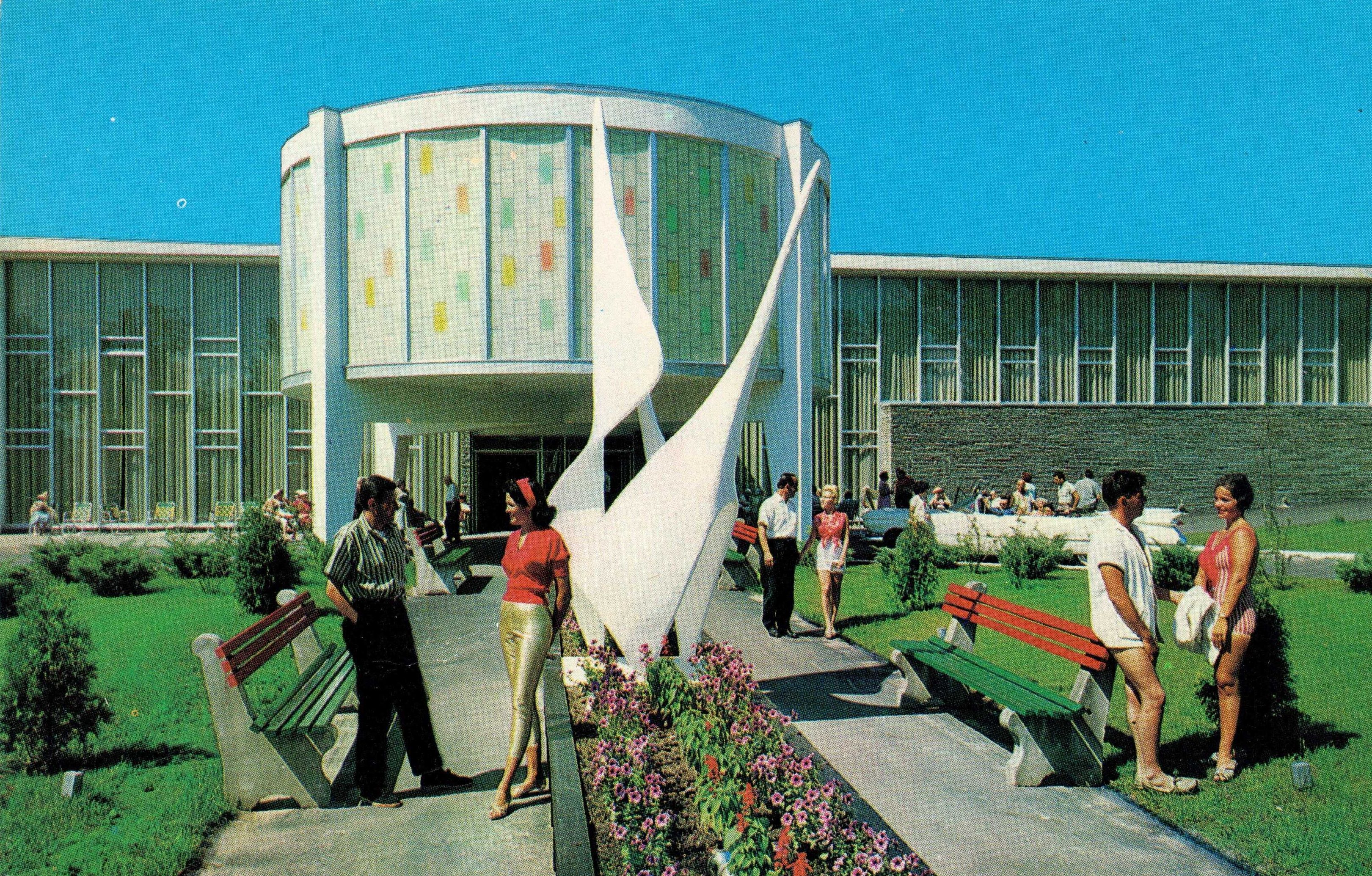
They raised dairy cows and meat animals — such as chickens, beef cattle, lambs and veal — but not pigs. They also grew vegetables. However, farming was difficult due to the area’s poor soil and the physical and financial challenges involved. Middlemen often cut into profits, so many farmers began renting out rooms and outbuildings, and feeding their guests.
These guests were treated like family and served wholesome food in generous portions, what they called “a full hand.” The farms had an abundance of meat, vegetables, milk and cream, and they made butter, sour cream and cheeses on-site. If a guest wanted another potato, they got one.
Soon, the farmers realized it was more profitable to grow hospitality than potatoes. The resorts emerged — organically, you might say. It was one of the earliest “farm-to-table” hospitality movements in the region.

Eventually, some resorts added entertainment like music, dancing, comedy acts and the famous Simon Says game. They even offered childcare using local teenage counselors. It all worked remarkably well.
These resorts became springboards for musicians and comedians who went on to build careers and perform in larger venues, including Las Vegas.
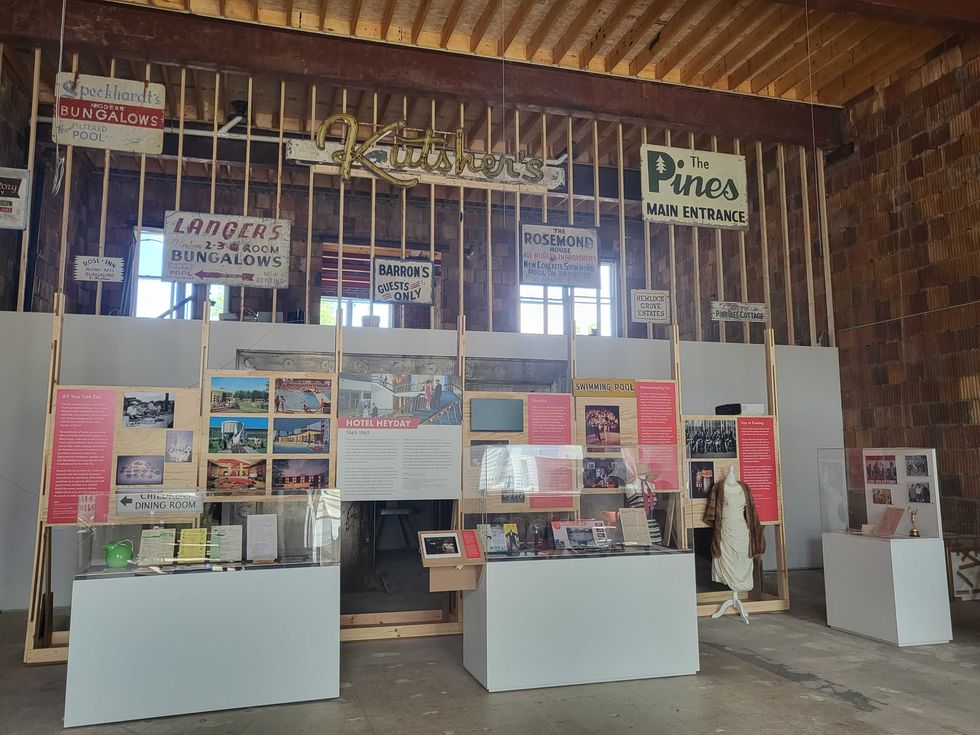
It’s all laid out wonderfully in a charming brick building for visitors to explore and enjoy. Plans are underway to open a restaurant there — tentatively named “Fort Lox” — featuring Jewish delicacies such as borscht, knishes, blintzes, and bagels with lox. Both indoor and outdoor seating will be available.
The addition of food will make the experience even more enriching, and we plan to return. But don’t wait — check it out now and relive the memories.

The Thorne Building on Franklin Avenue in Millbrook, built in the 1890s and vacant for decades, is slated for renovation into a community arts and cultural center.
MILLBROOK – Plans to renovate the historic Thorne Building on Franklin Avenue, built in the 1890s, into a community center moved forward Monday, Dec. 8, as the Millbrook Planning Board accepted an application for the project, which is scheduled for review early next year.
“The Thorne Building has been a landmark building,” said architect Michael Sloan of Millbrook, describing its history as a school for the Village of Millbrook. After the village constructed a new elementary and high school, use of the building declined, and by the mid-1990s it had fallen into disrepair. Sloan said the building has been vacant for roughly 20 years.
Plans call for transforming the building at the top of Franklin Avenue into the Thorne Center, a community arts and cultural hub. The center would offer film and theater programs, a technology center, co-working space, culinary programs, gallery space, a computer gaming room, music and art studios, and facilities for public meetings, events and seminars.
The proposal includes restoration of the building’s exterior while maintaining its overall architectural character. Modifications are planned for the carriage arch on the east side of the structure. Plans also call for construction of improved access, adding a room to accommodate a loading platform. The existing auditorium would be converted into a full performance space.
The basement level is planned to house an education center with a kitchen that could support cooking classes, as well as an arts lab, digital instruction space, music practice rooms and a small recording studio.
The first floor would feature exhibit space for local artists, offices and studio workspaces. Flexible classroom space planned for the third floor would be designed to be divided into three smaller classrooms using movable partitions. That level would also house the director’s office, fine arts programming and the control room for the performance space below.
“The whole building is for the community,” Sloan said.
Site improvements include upgrades to the parking lot shared with Lyall Community Church. Sloan said a new subsurface would be installed to address an ongoing problem with ponding, followed by paving with permeable asphalt. Lighting would be dark-sky compliant, limited to 12 feet in height and directed downward at minimal brightness for safety.
Plans also call for a perennial garden at the front of the property. Traffic access would be one-way from Franklin Avenue, with vehicles exiting onto Maple Avenue.
Planning Board Chairman Frank Redl said the board will want to review whether any easement exists that allows traffic to flow through the church’s parking lot.
Oakleigh Thorne, president of the nonprofit Millbrook Community Partnership, said $26 million has been raised toward the project’s estimated $30 million cost. The organization owns two limited liability companies — one overseeing development of the 32-acre Bennett Park and another, Thorne Memorial Building LLC, overseeing the Thorne Center project.
Sloan said the team hopes to begin the bidding process in late spring, with construction expected to take about a year once work begins.
Thorne added that the Tribute Garden organization will provide maintenance for the Thorne Center, at least during its early years of operation.
“I think it’s exciting for the village,” Redl said, as the Planning Board accepted the application.
Millerton Village Hall, where the Zoning Board of Appeals has begun laying the groundwork for a zoning overhaul aimed at modernizing the village’s code.
MILLERTON – The village Zoning Board of Appeals (ZBA) met on Tuesday night to begin laying the groundwork for a long-anticipated update to its zoning code — a process officials say is necessary to replace regulations they repeatedly describe as “outdated.” The discussion comes as the Town of North East faces public scrutiny over its November release of a years-long zoning rewrite of its commercial district.
To better understand the rewrite process — and avoid replicating challenges the town has encountered — ZBA Chair Kelly Kilmer invited two members of the North East Zoning Review Committee (ZRC), Edie Greenwood and David Sherman, to share insight.
Kilmer emphasized that the village has no intention of embarking on a years-long rewrite like North East’s, noting that the town’s zoning update has already stretched over four years. “Some of our terms [in office] will be up by then,” she joked.
Instead, Kilmer said the village intends to begin by zeroing in on the parts of the code that most often appear before the ZBA and Planning Board.
“We need to look at the zoning laws that come up the most when people come to us for variances,” Kilmer said. “The ones that are really holding people up.” She added that she doesn’t want to over-complicate the process.
Parking is one issue that continually comes up at Village Hall. It is already under review and will be discussed at a Dec. 15 public hearing, where a proposed zoning change will be presented. The revision would ease off-street parking requirements in the business district and lower barriers to entry for new businesses.
Greenwood offered two key suggestions for the village’s early stages. First, she recommended becoming fluent in the 2019 Comprehensive Plan, which she said guided the town’s zoning process and served as a blueprint. Second, she urged the village to hire a consultant, pointing out that zoning code is generally “too technical” to interpret and rewrite without professional support.
Greenwood said she pursued a grant through Hudson River Valley Greenway to help the town pay for its consultant. However, the September deadline has already passed for the upcoming year, meaning the village would need to wait until next year to apply
She also advised beginning the process with a clear purpose. “Whether you call it ‘legislative intent’ or ‘purpose,’ that’s the brainstorming of what you want to happen in that district,” Greenwood said.
Village board member and ZRC volunteer David Sherman echoed the sentiment: “Begin with the vision you’d like to see in the district.”
With the help of Greenwood and Sherman, Kilmer outlined four immediate next steps for the village.
Greenwood recommended additional in-person and online training, including programs through Cornell Cooperative Extension (CCE) and the New York Conference of Mayors (NYCOM). While ZBA members are only required to complete four hours of training annually, officials said they intend to do more.
Even as the zoning conversation moves ahead, board members stressed that the village’s long-running wastewater constraints will ultimately shape what any zoning changes can accomplish.
“We can dream all we want,” said ZBA member Delora Brooks, “but if the wastewater doesn’t get addressed, everything else we do will be shaped around that.”
Cathy Fenn, who has served in multiple village and town roles over the decades, questioned why the Planning Board was not at the table, noting that it led the last major zoning change in the village.
The meeting took place as the Village Board weighs whether to consolidate or potentially eliminate the Planning Board in favor of a different structure. Kilmer said there was value in keeping the initial zoning conversations small and focused while the village works through those broader governance questions.
Looking ahead, Kilmer said that transparency will be central to the process, noting that she intends to use the public as a sounding board and help demystify the steps ahead.
Correction: The Amenia Planning Board does not have another meeting scheduled prior to the end of the year. It is currently unclear if the board will schedule another meeting to make up for the cancelled meeting on Dec. 10.
A snowstorm that dropped about an inch across northeast Dutchess County forced the cancellation of municipal board meetings in the Village of Millerton, Amenia and Pine Plains on Wednesday, Dec. 10.
Planning Boards for all three municipalities were meant to meet on Wednesday night.
The Village of Millerton's Planning Board was meant to discuss a site plan for Caffeine Academy — a proposed education center for children and young adults with developmental disabilities.
Caffeine Academy founder Alex That purchased Millerton's former Presbyterian church at 58 Main St. in April, with plans to convert it into the second location of his West Babylon, New York-based music and video production learning center.
The site plan hearing has been rescheduled for Tuesday, Dec. 16, at village hall, 5933 N. Elm Ave., starting at 7 p.m.
The Town of Amenia's Planning Board postponed two public hearings due to the snow.
The first on the agenda is a small subdivision proposing to split a single lot with a farm into two parcels on Kent Road.
The second public hearing on the agenda concerned a modification to site plans for two condo buildings in the Silo Ridge luxury housing development.
The board also had several discussion items on the agenda, including a special use permit to convert the former bank in the Freshtown Plaza parking lot into a drive-thru coffee shop.
Board members were also expected to discuss improvements to the septic system at Cumberland Farms on Main Street, as well as continue discussions on the proposed Cascade Creek workforce housing development and the proposed Keane Stud luxury estate subdivision.
Pine Plains Planning Board members were expected to review and approve resolutions for three applications, including the proposed Upstate Pines retail cannabis dispensary that has been the subject of months of public hearings.
That meeting has been rescheduled for Wednesday, Dec. 17, at 7:30 p.m. The Planning Board is expected to approve a solar ground mount at a residential parcel, the proposed cannabis dispensary on Main Street and a six-month extension for site plan approval for hardwood manufacturer The Hudson Company's proposed mill and showroom.
Exterior of Lakeville Books & Stationery in Great Barrington.
Fresh off the successful opening of Lakeville Books & Stationery in April 2025, Lakeville residents Darryl and Anne Peck have expanded their business by opening their second store in the former Bookloft space at 63 State St. (Route 7) in Great Barrington.
“We have been part of the community since 1990,” said Darryl Peck. “The addition of Great Barrington, a town I have been visiting since I was a kid, is special. And obviously we are thrilled to ensure that Great Barrington once again has a new bookstore.”
The second Lakeville Books & Stationery is slightly larger than the first store. It offers more than 10,000 books and follows the same model: a general-interest store with a curated mix of current bestsellers, children’s and young readers’ sections; and robust collections for adults ranging from arts and architecture, cooking and gardening, and home design to literature and memoirs. Anne reads more than 150 new titles every year (as many as a Booker Prize judge) and is a great resource to help customers find the perfect pick.
A real-time inventory system helps the store track what’s on hand, and staff can order items that aren’t currently available. There is also a selection of writing and paper goods, including notecards, journals, pens and notebooks, as well as art supplies, board games, jigsaw puzzles and more. The owners scour the stationery trade shows twice a year and, Darryl says, “like to tailor what we offer to suit the interest of our customers in each market.”
The Pecks know what it takes to run a successful local enterprise. Darryl has a 53-year background in retail and has launched several successful businesses. He and Anne owned and operated a bookstore on St. Simons Island, Georgia, from 2019 to 2025. They are tapping into their local roots with both stores. They raised their family in Sharon, and their daughter Alice, a native of the Northwest Corner, manages the Lakeville store.

The family values the role that a retail store plays as a supporting partner in the community, and they prioritize great management in both locations, hiring and training talent from local communities. Their 10 team members across both stores are from the area, and two of the Great Barrington employees previously worked at Bookloft.
Darryl and Anne’s attention to customer service is everywhere apparent and adds to the enjoyable and irreplaceable in-store shopping experience. The books are in pristine condition, eliminating the risk of damage that sometimes occurs during shipping. This is especially important for books that will live on people’s shelves and coffee tables for years.
Darryl says, “People love the in-store discovery — you find books you didn’t know existed, which is very difficult to do on a website. Also, many customers depend on our recommendations when visiting. There is a saying about bookstores versus online ordering: We may not have exactly what you were looking for, but we have what you want.”
Lakeville Books & Stationery’s Great Barrington store is open 7 days a week, Monday-Saturday, 10 a.m. to 6 p.m., and Sunday, 11 a.m. to 5 p.m. Parking is available in the lot behind the building and in the parking lot behind the firehouse. The entrance to the store is accessible from the store parking lot.
For more information, go to lakevillebooks.com., and sign-up for the Lakeville Books newsletter.
Richard Feiner and Annette Stover have worked and taught in the arts, communications, and philanthropy in Berlin, Paris, Tokyo and New York. Passionate supporters of the arts, they live in Salisbury and Greenwich Village.