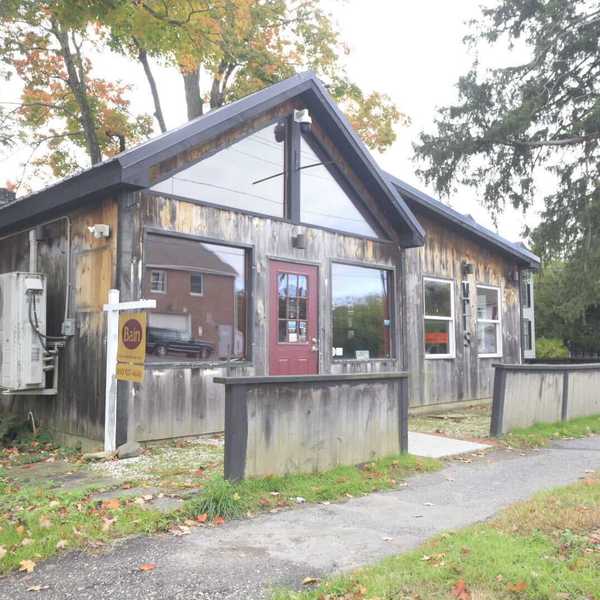
North East winery stalls amid zoning review

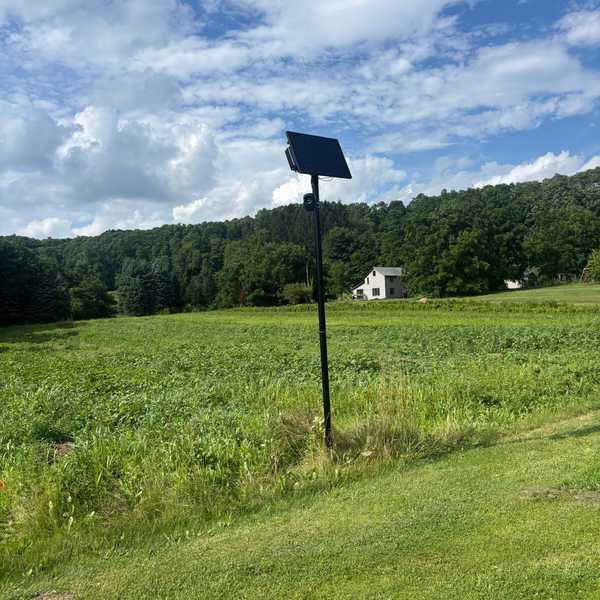
John King stands at the site of his would-be winery and event space, which has stalled amid the Town’s years-long zoning review
Photo by Aly Morrissey

John King stands at the site of his would-be winery and event space, which has stalled amid the Town’s years-long zoning review
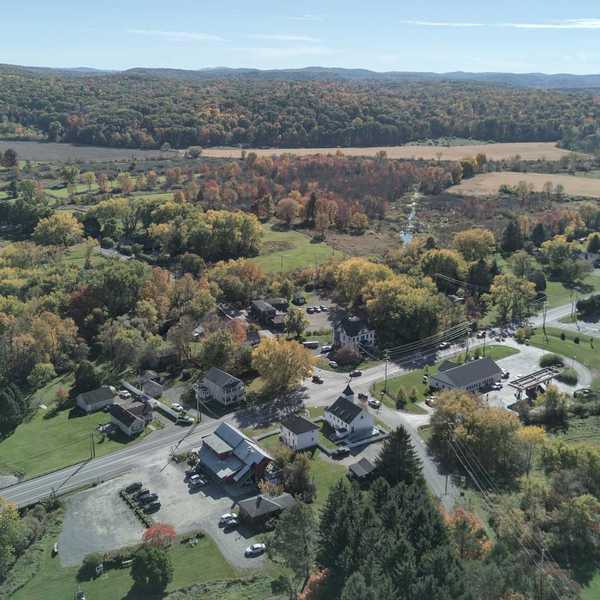
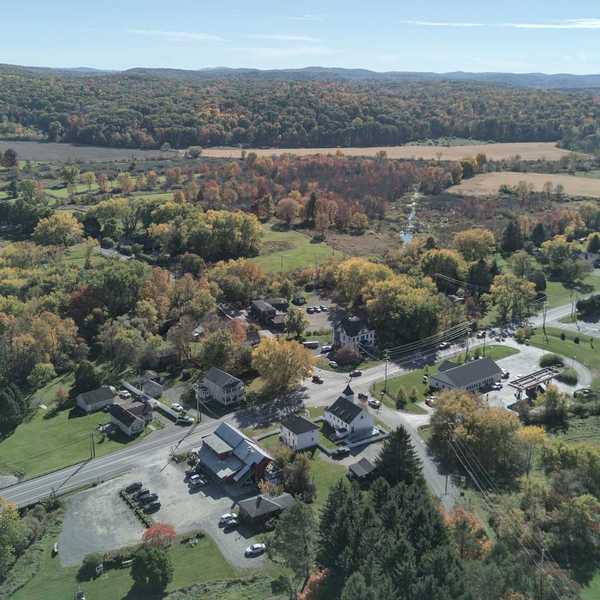
NORTH EAST — For John and Kristen King, moving to the countryside and raising their children on a vineyard was the ultimate dream. But after purchasing a 36-acre property in Millerton and trying to make their vision financially sustainable, that dream now hangs in the balance amid a years-long zoning review in a town that’s prioritizing a thorough process over expedition.
One family’s vision
In 2023, John King began touring dozens of agricultural properties on the market in the region, but kept coming back to Millerton. The deal was sealed when he drove his wife up the hill to a 36-acre parcel on Route 44/22 and Smithfield Road and the couple took in its sprawling, bucolic view.
“That was it for her,” King said with a smile. “My wife didn’t want to look at another property.”
The pair, who live in Harlem with their 3- and 4-year-old, have been coming upstate for 20 years and say they’ve always had a soft spot for Millerton. “It was always our favorite Main Street to hang out on.”
While the idea of “King’s Winery & Vineyard” began to take shape in 2023, the official process with the Town of North East began this spring when the Kings submitted a petition to amend section 180-40 of the zoning code. The change would expand “Country Inn” permissions in the A5A and R3A districts — where their property sits — to accommodate uses such as weddings and small events that could provide supplemental income to sustain the vineyard.
While existing zoning regulations in the district allow for “repurposing an existing structure” for overnight accommodations, King hoped to amend the code to allow for new structures. His ideal winery would feature 24 rooms for overnight guests and work force housing that would provide a number of local jobs.
On a tour of the property, King pointed out where grapes would be grown and where lodging might be tucked into the treeline in order to blend with the natural charm of the land.
“The goal, first and foremost, is to build a vineyard and winery,” King said. “My family would be living there so we have no interest in hosting frequent, weekly weddings,” he said, addressing rumored concerns about local traffic and noise.
King also noted his commitment to hiring locally and boosting the economy. “Everyone we’ve brought on is local — architects, engineers, excavators — because we want to be part of the community, not just some city people coming in.”
Early encouragement
When the Kings’ petition first came before the Town Board in April, it was met with cautious optimism. The Board accepted the application for review, but warned that zoning amendments could take time.
In a July meeting, Town Attorney Warren Replansky called the proposal “reasonable” and “likely to benefit the community.” He added that it was consistent with the rural character of the area. Replansky said the applicant established an escrow account to cover the town’s legal costs — a gesture of good faith that signaled cooperation.
Supervisor Chris Kennan also sounded supportive, telling King that he would attempt to move the process forward quickly and solicit necessary feedback from experts including the town’s Planning Board, the Conservation Advisory Council and Nan Stolzenburg, a zoning consultant with decades of experience.
Deferred dreams
At the September Town Board meeting, the tone had shifted and the Board backed away from the idea of treating the petition as a standalone amendment. Instead, the group agreed to address the request during the broader second phase of the town’s zoning overhaul, which will review residential and agricultural districts. This move would honor the hard work that went into the commercial review, said Kennan, and put safeguards in place for the residential and agricultural districts.
Councilwoman Meg Winkler described the winery application as “putting the cart before the horse.” Fellow Councilman Chris Mayville said the Town had “learned a lot” about how complex zoning work can be. Kennan, once optimistic, now stressed caution. “Things can sound wonderful, and this application in particular sounds like a wonderful thing, but I realize it applies to a lot of other parcels and there are reasons to spend time making sure this is what we want to do.”
The CAC raised environmental concerns, particularly about noise from outdoor events. Stolzenburg pointed to state guidance that “incidental uses” must clearly support — not overshadow — agriculture. Universal feedback recommended more careful language and new definitions to avoid future loopholes.
The shift left King disillusioned. “We’ve tried to align with everything the Town wants so there isn’t friction. And yet here we are,” he said.
While Bill Kish, a member of the Planning Board, suggested the applicant prove his agricultural commitment by planting vines before seeking broader permissions, King insists that model isn’t financially viable.
“I’ve run the numbers every which way,” he said. “Without events and additional revenue, we’ll fail in the first year. We’re at the point of deciding whether or not to pull the plug.”
The town’s perspective
For Kennan, the answer lies in process. The town has spent years — and more than 100 meetings — modernizing its commercial zoning code in response to the 2019 Comprehensive Plan. That work is nearing completion, with residential and agricultural zoning next on the docket. Kennan hopes to assemble that review team before the end of the calendar year and move forward more efficiently.
At the end of the day, the petition represents not just one project but the precedent it could set. The Board’s caution highlights the tension between supporting economic growth and protecting the character of North East.
“I appreciate Mr. King’s interest and we welcome people who want to come and start a business and invest in our town,” Kennan said. “We want to make sure it’s done in a way that keeps the nature of the town consistent with what we know.”
The former Presbyterian church on Main Street in Millerton, which Millerton resident Alex That has proposed converting into a private education center
MILLERTON — Millerton resident Alex That presented plans for the former Presbyterian church on Main Street to the Millerton Planning Board at a rescheduled meeting Tuesday, Dec. 16.
That is proposing to convert the church into a private education center offering classes in music, video production and DJing for people of all abilities.
The Millerton site would be the second location for Caffeine Academy, which opened its first location in West Babylon, N.Y., in 2013.
The meeting was marked by confusion over the village’s application approval process, with That and his architect repeatedly asking board members to clarify what steps were required and in what order they would occur.
During public comment, Zoning Board of Appeals Chair Kelly Kilmer explained there are two potential paths forward for the application.
One option would require That to apply to the Zoning Board of Appeals for a parking variance, a process that would involve a full environmental review and public hearings separate from those required by the Planning Board.
The second option would be to wait for a recently passed local law to take effect. The law exempts buildings in the village’s General Business District from additional parking requirements, which would eliminate the need for a parking variance.
“The Village of Millerton Board passed a local law amending the village code for the General Business District and parking variances, which, in all honesty, Alex, works in your favor,” Kilmer said.
Kilmer said Local Law C must be stamped and filed by the New York Secretary of State before it officially goes into effect. The process typically takes between 30 and 60 days and could be further delayed by the holiday season.
Until that approval is finalized, the Caffeine Academy proposal would require parking variances from the Zoning Board of Appeals.
“If you want to move forward, you would fill out an application,” Kilmer said. “I’ll make sure that we get a meeting together.”
Planning Board members recommended that the application move to the Zoning Board of Appeals for a parking variance. However, it remained unclear at the end of the meeting whether That would proceed with that option or wait until Local Law C is officially on the books.
The former agricultural weigh station at 7723 S. Main St. in Pine Plains, where the Planning Board approved plans for the proposed Upstate Pines cannabis dispensary.
PINE PLAINS — Planning Board members granted final approval Wednesday, Dec. 17, for two major commercial projects: the proposed Upstate Pines cannabis dispensary and a large lumber mill and showroom.
The site plan for the dispensary was approved by a 6–0 vote.
The proposed cannabis dispensary will be the second location of Red Hook-based dispensary business Upstate Pines, founded by Brian Seiler, Ben Abrahams and Ben Abrahams in 2024. Planning board members approved site plans that propose to utilize the former historic weigh station building at 7723 S. Main St. across from the Pine Plains Post Office.
The proposal, designed by architect Kristina Dousharm, underwent a lengthy approval process that included public comment earlier in the fall. Residents urged the board to be mindful of the building’s historic character — as the community’s former agricultural weighing station — and raised concerns about its proximity to the Pine Plains Firehouse on an adjacent parcel and the Post Office.
Although Pine Plains’ local law prohibits dispensaries within 300 feet of the firehouse or the Post Office, state law supersedes those restrictions. Planning Board members ruled in October that the local provisions are unenforceable, eliminating the need for a waiver.
Board members also approved the site plan and granted necessary waivers to The Hudson Co., which plans to build a 50,000-square-foot lumber mill, office building and showroom just south of Stewart's Shops gas station on Route 82 at the southern entrance to downtown Pine Plains.
Approval was unanimous with a 7-0 vote and no abstentions.
The lumber mill will produce wood beams, flooring and paneling.
Hudson Co. representatives proposed the large mill and expanded campus because the operation had outgrown a manufacturing facility it currently occupies at 2290 Route 199 in Pine Plains. LaBella Associates engineers designed the expanded campus.
The Upstate Pines cannabis dispensary first went before the board in August, and the Hudson Co. mill and showroom has been under review since May.
Ralph Fedele sits at a desk in the historic Irondale Schoolhouse, which he led the effort to relocate to downtown Millerton.
MILLERTON — After serving for 12 years on the North East Town Board, Ralph Fedele says he has only one regret.
“I wish I could be called a ‘local,’” he joked with a warm, booming laugh.
Fedele moved to Millerton from New York City 37 years ago, in 1988, and has since worn many hats — volunteer, historian, advocate, elected official — yet he still doesn’t believe he’s earned that title.
“I’m a transplant,” he said matter of factly. “I’m from the city.”
Before settling in Millerton, Fedele spent 25 years working in merchandising at JCPenney.
His roots, however, trace back to Rhinebeck, where he grew up on a 97-acre farm and enjoyed what he describes as an idyllic childhood.
“It was marvelous,” he said, with a twinkle of nostalgia in his eyes. As a boy, he climbed apple trees, spent hours in the family barn’s hayloft, played with neighbors until sunset, and helped his Sicilian grandmother — his nonna — in the garden. Today, Fedele wears her ring. “Any time I’m a little depressed or I want to remember,” he said, “I can talk to her.”
Growing up with an Italian grandmother sparked a lifelong love of history and culture. That curiosity eventually took Fedele to Italy, where he visited the church in which his grandmother was baptized. “Because I love history so much, I wanted to know where my grandmother was from, so I traveled to her village in Sicily.”
Along the way, he uncovered another piece of family history. His great-grandfather, Giovanni Nicolini, was a noted Italian sculptor whose work still stands outside Palermo’s Teatro Massimo, the largest opera house in Italy. Fedele later made a pilgrimage there and photographed his ancestor’s name on the bronze plaque outside of the theater.

The Irondale Schoolhouse
Years after settling in Millerton full time, Fedele was driving north on Route 22 when he spotted an old, classic building and couldn’t stop thinking about it.
“It was in dire straits,” he recalled. “Right on the road, but beautiful. I remember thinking, ‘Wouldn’t that be a great building to move into the village?’”
That moment would eventually turn into Fedele’s lasting legacy.
He left his post at the North East Historical Society to found Friends of the Irondale Schoolhouse, leading an eight-year effort to “move, restore, and repurpose the building.”
Supervisor Chris Kennan said the project remains inseparable from Fedele’s name. “Every time I pass by the Schoolhouse, I think of Ralph,” Kennan said. “It was his vision and persistence that enabled this dream to become a reality.”
Fedele joked that people may have thought he was crazy during the lengthy restoration. “I was a tyrant,” he said with a laugh. “I really made sure that we were able to get it done.” The effort required coordination with the state, the county, village and town officials, and his newly assembled nonprofit board.
As a self-proclaimed history buff, Fedele didn’t stop at the restoration. He found a list of students in old records and did what any determined historian would do. He opened the telephone book and started making calls.
Eventually, he tracked down one of the schoolhouse’s original students — Mary (Mechare) Leitch — who, at the age of 101, returned to the building after renovations were complete.
“It was a marvelous time,” smiled Fedele. “I was so happy to see her.”
‘Trust is earned’
Today, even though he won’t call himself a local, Fedele is a familiar fixture in town. You can find him each week enjoying conversation and a cup of coffee at Talk of the Town Deli, or getting stopped in town by neighbors and friends for a chat.
“I have gained the trust and confidence of a lot of people,” Fedele said. “It comes a little bit at a time. Trust is earned.”
Not only has Fedele served as a town board member, he has volunteered for Townscape and served as the president of the North East Historical Society. He was also one of the first advocates of preserving history by fixing toppled gravestones at the Spencer’s Corners Burying Ground.
His service was formally recognized at his final Town Board meeting through a resolution commending his three four-year terms as councilman, citing his “good humor, kindness to all and deep concern for the community’s senior citizens and for those living on fixed incomes.”
An emotional Fedele addressed the room with a mantra he often repeats. “When you leave, leave this place a little bit better than you found it,” he said. “That’s what I have always tried to do.”
Neighbors react
During the public comment, several residents stood to thank Fedele.
Claire Goodman, a member of the village Zoning Board of Appeals and Townscape volunteer, said Fedele was among the first to welcome her to Millerton.
“Whether we’re standing out in the cold, scrubbing tombstones at Spencer’s Corners, or ringing the bell at the schoolhouse, you always have such grace and you’re such a gentleman.” She added, “The way you laugh, it opens my heart.”
Kathy Chow, who serves on the Conservation Advisory Council and the Climate Smart Task Force, referred to Fedele as a “pitbull,” adding, “We all have hard things that we do, and we keep pushing at it, but you’re the one who makes me think I can keep going.”
Fedele describes his retirement from the town board as bittersweet. “I’m going to miss this,” he said. “I really am.”
Mad Rose Gallery on Route 44 in the Village of Millerton is decked out with lights and decorations to celebrate the holiday season.
MILLERTON — The Village of Millerton is inviting residents and businesses to enter its annual house decorating contest, with judging now underway through Dec. 28.
Awards will be presented in several categories, including Best Lights, Most Creative, Best Overall and Best Commercial Front.
Entries will be evaluated by a panel of judges using established criteria. Creativity will be judged based on originality, variety of materials used and the use of homemade vs. commercially made decorations. Appearance will consider color coordination, balance and overall attractiveness, while effort will reflect the time and energy put into preparation and presentation.
Judging will be conducted by drive-by observation between 6 p.m. and 11 p.m., and displays must be clearly visible from the street side of the house at night. People and pets may not be included as part of the design.
Winners in each category will receive a gift basket, gift certificates and recognition in The Millerton News. Awards will be distributed on Friday, Jan. 9, 2026.
The contest is open to residents and businesses in the Village of Millerton and the Town of North East. Entry forms can be obtained from Village Hall or at villageofmillerton-ny.gov.