MILLERTON — More than eight months before construction is set to begin, several colorful, museum-quality panels that will be installed along the Harlem Valley Rail Trail as part of its new 27-panel outdoor classroom were previewed this week.
The immersive learning space, expected to be completed this summer, will feature vibrant, educational displays exploring water ecology, natural and social history, birds, insects and other elements of the local landscape. Designed to engage visitors of all ages, the outdoor classroom aims to transform a stretch of trail near Millerton into an inviting place for discovery and reflection.
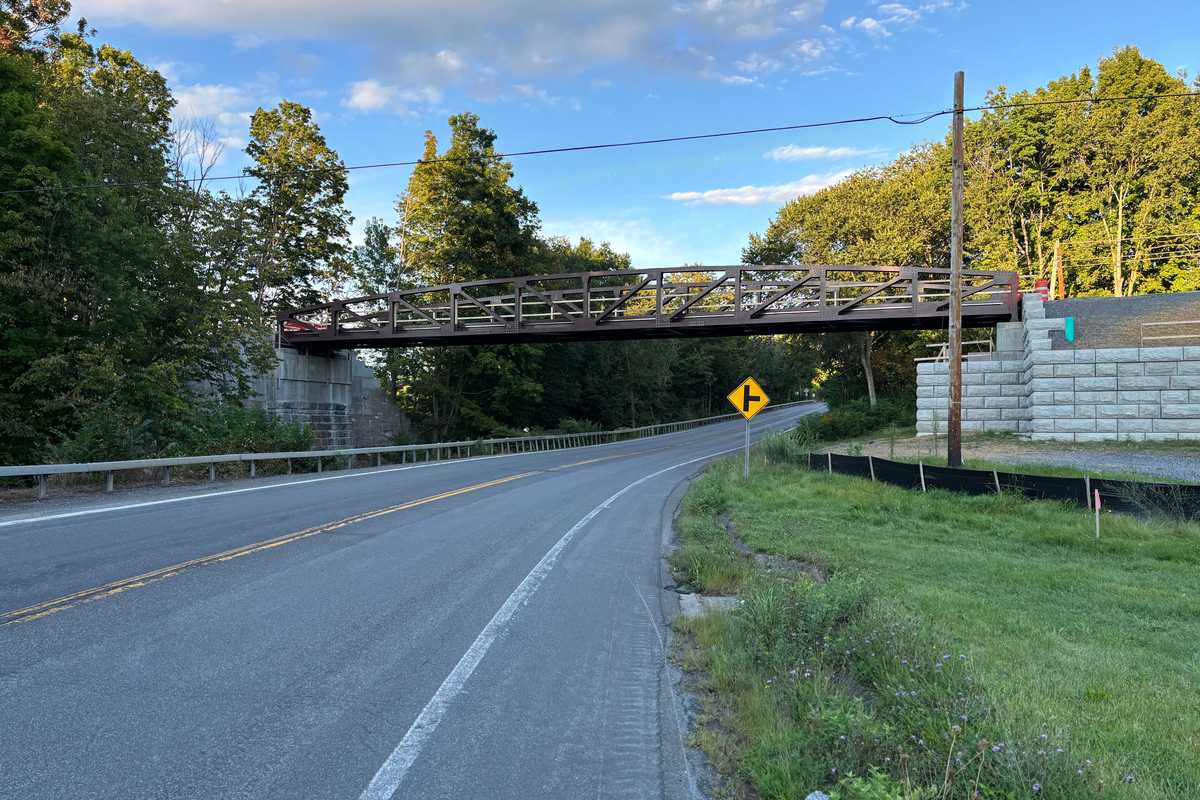
The project has been more than a decade in the making. The original concept came from Dick Hermans, a member of the HVRTA Board of Directors, who envisioned the bridge over Webatuck Creek near Millerton as a center for education and gathering. Hermans also serves on the board for the Lakeville Journal and Millerton News.
“I hope people who’ve never been on the trail before stop and think, ‘Oh, that’s pretty cool — I didn’t know that,’” said Hermans. “Those mountains you see off in the distance are the Taconics, and they actually stretch all the way into Vermont. Most people don’t realize it’s one of the oldest mountain ranges in the country — once more than 10,000 feet tall.”
According to one of the panels on geology, “The Taconic Mountains are the result of a very slow yet powerful collision between what is now North America and a series of volcanic islands about 460 million years ago.”
Hermans said that history is what gives the area its rich soil and distinctive terrain. Even after all these years, he said, he has learned a lot working on the project, especially about the region’s geology.
The 27 panels will make up five different educational stations that will be set slightly off the trail for safety but easily accessible to anyone who wants to stop and learn.
With designs now complete, the HVRTA will conduct a final round of edits before having the signs manufactured. Through a combination of grants and community fundraising, the organization partnered with Dutchess County Parks and the New York State Office of Parks, Recreation and Historic Preservation to ensure signage meets all state standards. One requirement calls for the text to be written at roughly an eighth-grade reading level to keep the material accessible to visitors.
“It’s called a classroom, but it’s not a course,” said Hermans. “It’s something to intrigue people – to make them stop and think, ‘I wonder what that tree is,’ or ‘what happens underground?’ We’re very excited about it.”
The panels will mark the latest milestone in a project nearly four decades in the making. The long-running effort has so far preserved 26 miles of scenic trail, with approximately 20 additional miles to go from Hillsdale to Chatham.







 Tiffany Lemelin, shelter manager, brushing Marsala upon arrival.Provided
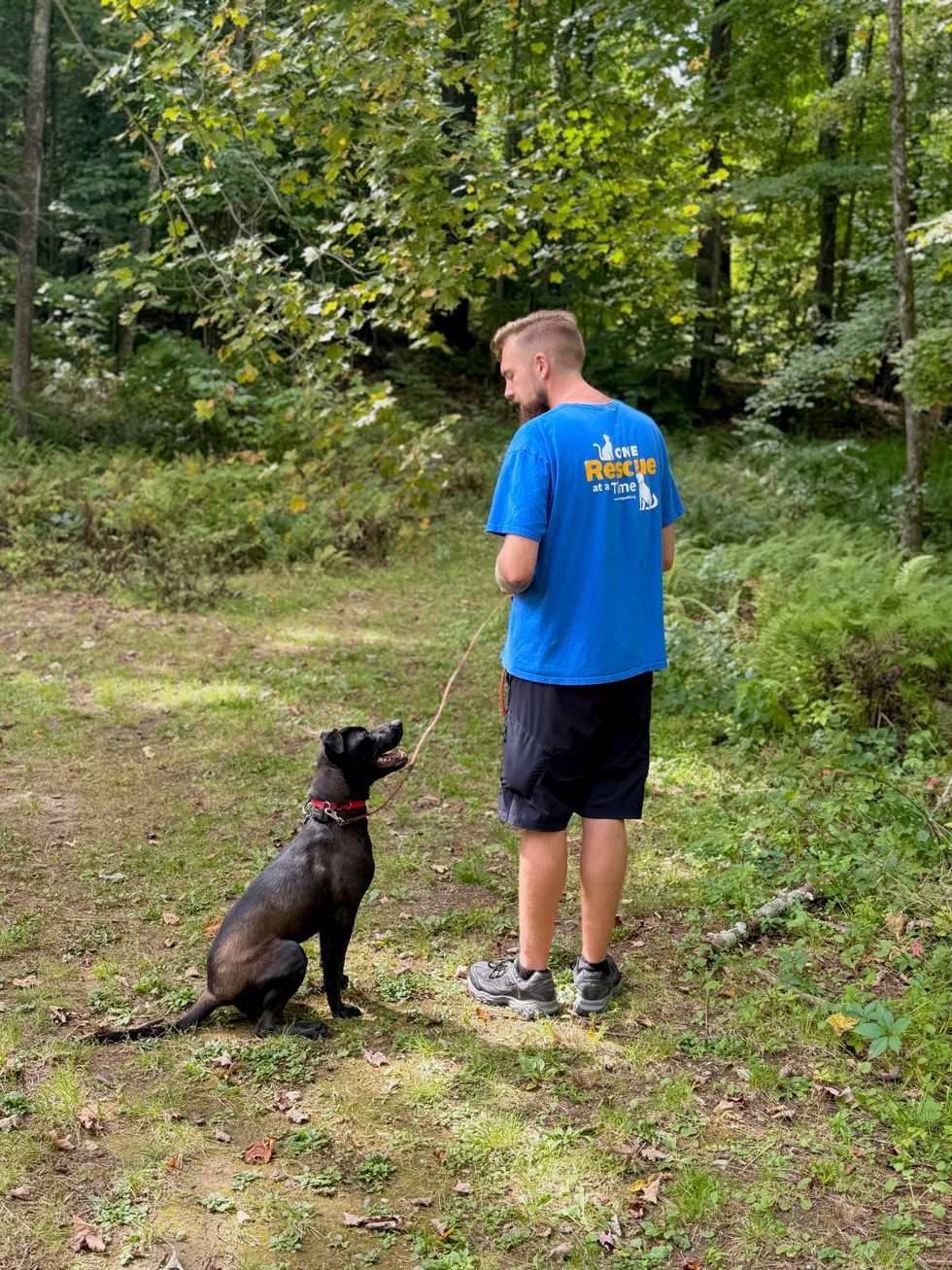 Michael DeBarba, certified dog trainer working with Marsala.Jennifer Almquist
 Marsala wins a heart.Jennifer Almquist
 Sadie, center, a Carolina dog, plays with her friend Negra, a terrier mix. Bella Linda, the small poodle, has since been adopted.L. Tomaino
 Wesley, a young, exuberant mix, is looking for an active home.L. Tomaino
 Bonnie and Clyde, an affectionate terrier pair.L. Tomaino