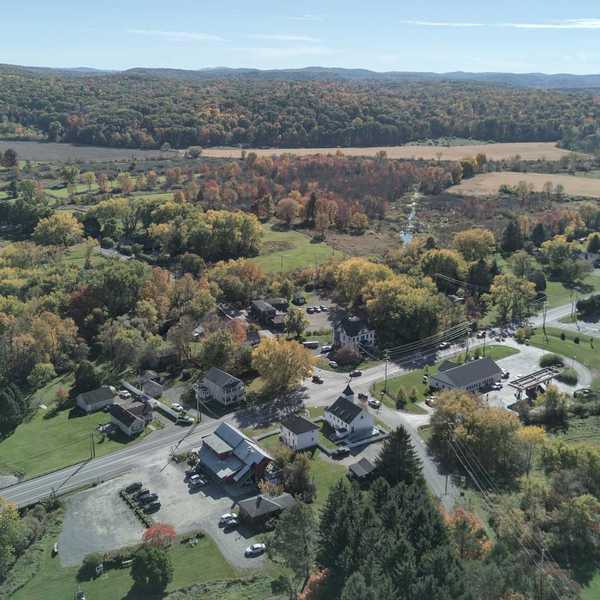
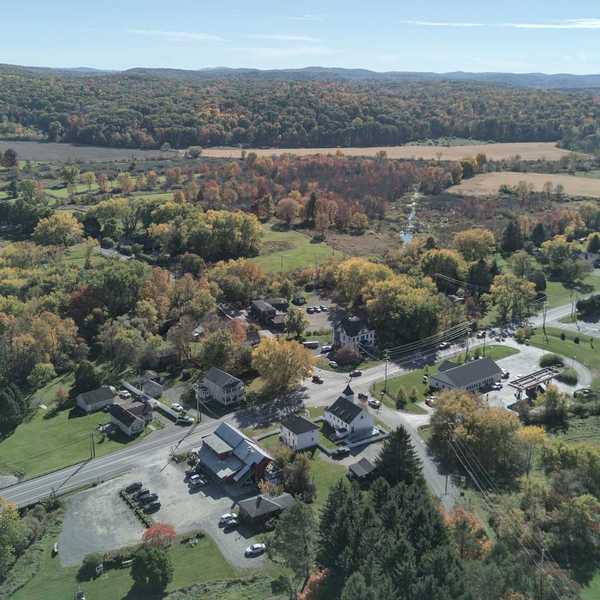
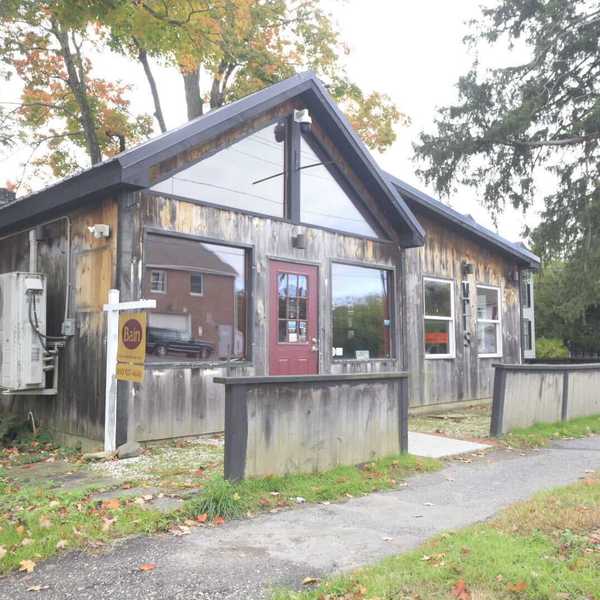
DOVER PLAINS — A decision by New York Supreme Court Judge Thomas Davis in late August denied New York Transco permission to construct and run a power substation on a former auto wrecking site on Route 22 near Cricket Hill Road that borders on an important wetland.
The Dover Planning Board had granted permission to the company in February, but a coalition of local environmental groups and residents argued that in planning this project, there was insufficient attention paid to the New York State Environmental Quality Review Act (SEQR).
The judge remanded the matter to the Town of Dover Planning Board to take a “hard look” at the areas of environmental concern. The Town of Dover filed an appeal but withdrew its appeal several days later.
Transco’s communications director Shannon Baxevanis, said, “We’re internally considering our options and the timing. We can keep you updated as we execute next steps.”
Transco’s request for permission from the Planning Board began in April 2021, when it was leasing and in contract to purchase the site, which is “…adjacent and to the north of the Cricket Hill Preserve, (also locally known as the Great Swamp), which is a National Historic Landmark, a New York State-designated Critical Environmental Area, and a Class I wetland,” according to the decision.
The company’s formal application followed in October 2021, after a meeting and various correspondence with the Planning Board, which declared itself a lead agency in conducting the review.
The project’s intention is to install a Phase Angle Regulator (PAR), which is a specialized form of transformer used to control the flow of real power on three-phase electric transmission. Over the next year, Transco appeared at the Planning Board’s meetings to discuss it and retained experts to address questions from the board and the board’s own experts, attorney Victoria Polidoro, planner Aaron Werner, and engineer Joe Berger.
In a July 2022 letter, Transco, having submitted numerous documents to bolster its case, maintained that “there are no reported spills at the Site…and it was not listed on DEC’s Environmental Site Remediation database.”
In sum, it concluded, “The planned area of disturbance on the Site is small, relative to the scale of the overall system which feeds water into the Great Swamp.” Public hearing on the project was from September 2022 to Feb. 1, 2023.
The coalition of environmental and conservation groups—Friends of the Great Swamp (FrOGS), Concerned Citizens of Dover (CCD) and the Oblong Land Conservancy—attended Planning Board meetings and voiced their concerns and supplied counterarguments.
FrOGS’ James Utter, who is its board chair, faulted Transco’s soil and groundwater testing as “inadequate and unclear, in that only very few samples were taken, the locations of the samples were not in areas where many of the junkyard vehicles had historically been stored and, though dozens of contaminants (some known carcinogens) were listed as having been detected in the samples, none of the actual data from the testing results was supplied by Transco.”
In referring to a graph that Transco submitted as proof of lack of current and potential damage, the judge’s decision read: “In the three-column graph that had been submitted as above, (Analyte/substance, Applicable Use Standard” and ‘Exceedance of...standard, respectively) there was no underlying data, i.e., numerical concentration for each analyte, which would have revealed “how close the testing came to exceeding the limits.”
Both the Planning Board and the coalition members requested that Transco reveal the relevant data, but the graph and other documents were admitted as sufficient by five out of the seven Planning Board members, which granted Transco the permission to continue. One board member voted against the project, and one was absent when Chair Ryan Courtien announced the Feb. 6, 2023, approval of Transco’s plan.
Coalition members followed with a Notice of Petition on March 8, 2023, to annul the decision and to prevent any further “site disturbance,” which culminated in the Aug. 28 decision by Judge Davis. Named as petitioners were FrOGS, the Oblong Land Conservancy, CCD, and Charles A. Quimby, with the Town of Dover, Transco LLC, and Consolidated Edison Company of New York Inc. as respondents.
For its part, the coalition of environmentalists and other residents is quietly optimistic. “We came together with a shared goal: to protect the land, water, and biodiversity that sustain us,” said Quimby, a founding member of CCD. “We believe in responsible progress and have hope that [this] court ruling will impact future development decisions in our town.”



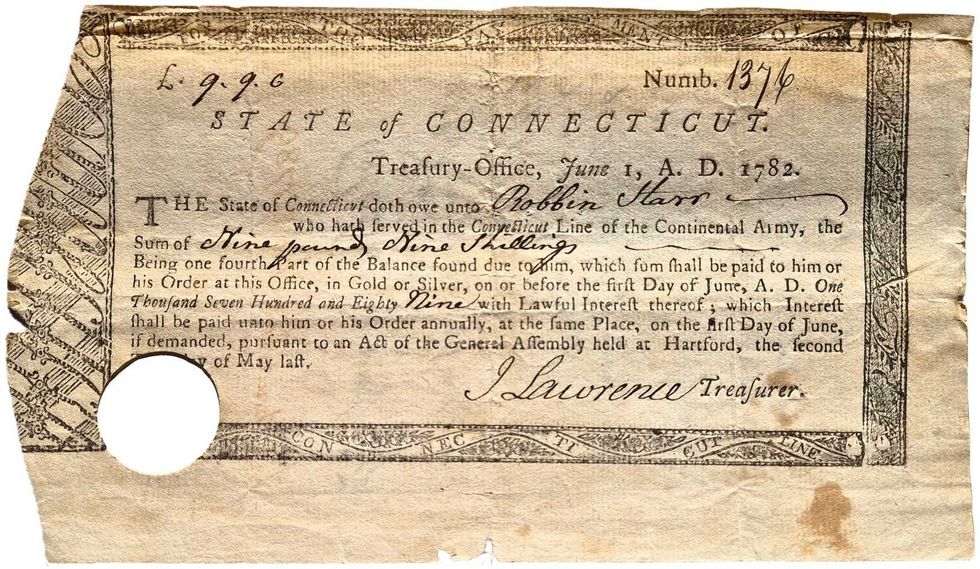 Pay Bill for Robin Starr’s service in the Continental Army.Courtesy the Alex Breanne Corporation
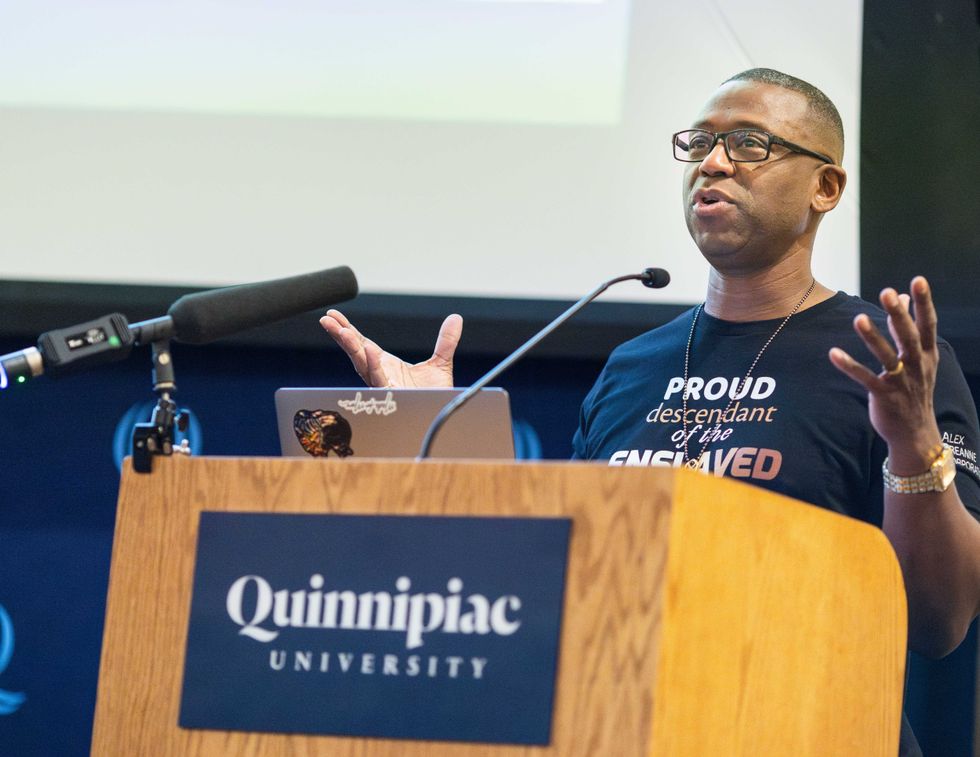 John Mills speaking at Quinnipiac University.Courtesy the Alex Breanne Corporation
 Stephanie Saetta,with her rescue dog George and Blue (left), a shepherd mix awaiting his forever home.Madi Long