Mary Ann Marschat

CANAAN — Mary Ann Marschat, age 88, a lifelong resident of Canaan, Connecticut, passed away on Thanksgiving morning, Nov. 27, 2025. Born in New York City on July 19, 1937, Mary Ann came to live with her grandparents at about 6 months old. Canaan offered a country life and a large extended family. She became a sibling to her youngest aunts and uncles.
While educated in the local schools, her career path was set at an early age. Mary Ann learned about business riding along with her grandfather in his cattle truck. She listened to his stories and learned “the ways of business.” She prided herself on being an independent businesswoman. She maintained her farm in Canaan on her own for many years and later worked with other local farmers to keep the land and farm structures in use. She also had rental properties and at one time had a small collectable business in Sheffield, Massachusetts.
While she never married or had children, Mary Ann was a lifeline for her older aunts and uncles as they grew older. She checked in on them, shopped for them and took them to doctor’s appointments.
She had a love of nature. She loved her animals, especially her cats. She often had several whom she babied with special food and care.
She had many friends in the Canaan and Sheffield area. She had an infectious laugh. You would recognize her New York birth with the “Queensisms” in her speech. She was a fixture at the local breakfast restaurants where she would share stories and her strong opinions. Her strong views sometimes masked her warm and kind heart.
She was predeceased by her grandparents, Mary Ann Weirauch Marschat and Stanley Marschat, her parents William Howard Marschat and Rose Keiser, her brothers William Howard Jr. and Lawrence, her uncles, Albert (Mildred, Mary), Stanley (Jean), and Raymond (Sylvia)and her aunts, Harriet Brewer (Pete), Gertrude Rohr (James), Audrey Beaupre (Tracy), Ruthe Martin ( Donald) and several cousins, June Marschat Kelly, Mary Lou Brewer, Stanley Marschat Jr., and William Rohr.She is survived by her cousins, James Rohr, Irene Edison, Robert Beaupre, Barbara Martin, Chris Martin and Anne Martin. She will be missed by her friends and family. Daisy Hill Farm will never be the same.
She was a parishioner at St Martin of Tours Parish. The funeral is planned for early next week. Funeral arrangements can be found at the website for Montano-Shea Funeral Home in Winsted, CT. https://www.montano-shea.com
Graham Corrigan
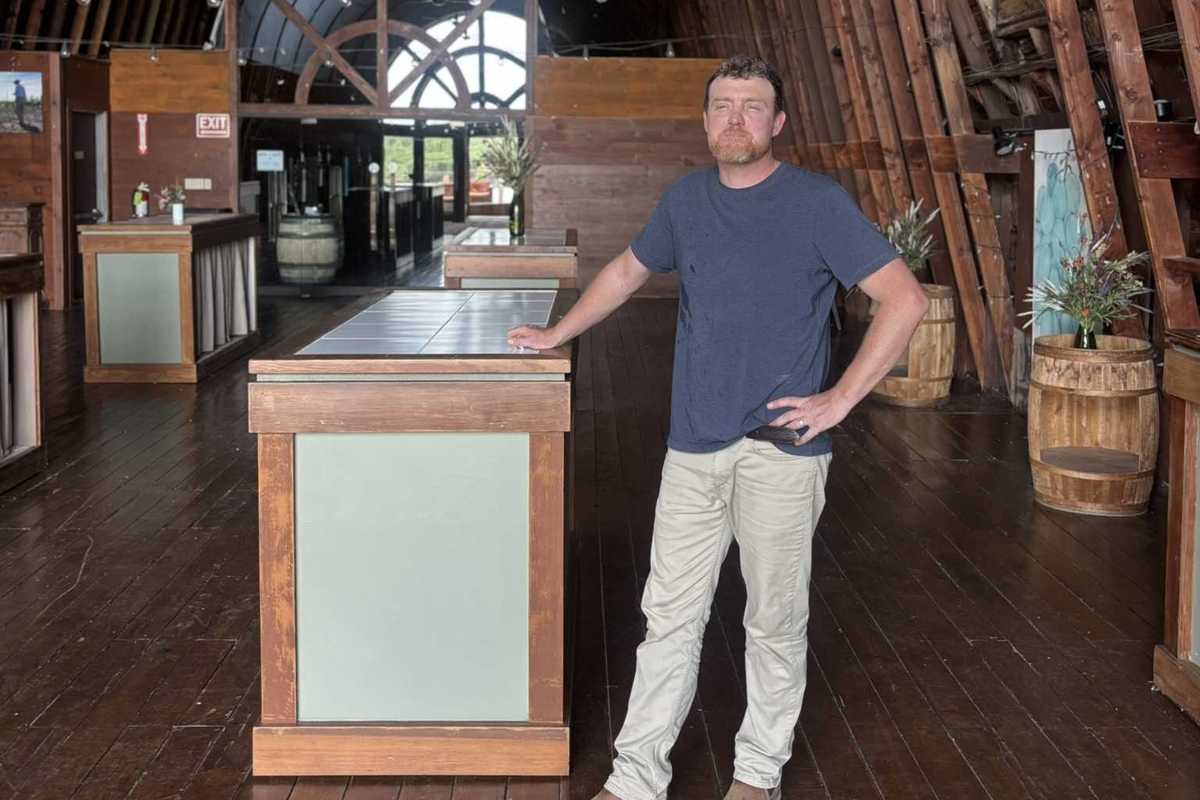
Millbrook Vineyards & Winery’s winemaker Ian Bearup surveys ongoing landscaping work from the wedding loft on Monday, May 18.
MILLBROOK — The owners of Millbrook Vineyards & Winery are changing how visitors may use their property, ending a longtime policy that allowed guests to bring their own food, beverages and lawn chairs onto the vineyard grounds.
The changes come as the winery introduces new seating areas, expanded food offerings and updated visitor accommodations ahead of the summer season.
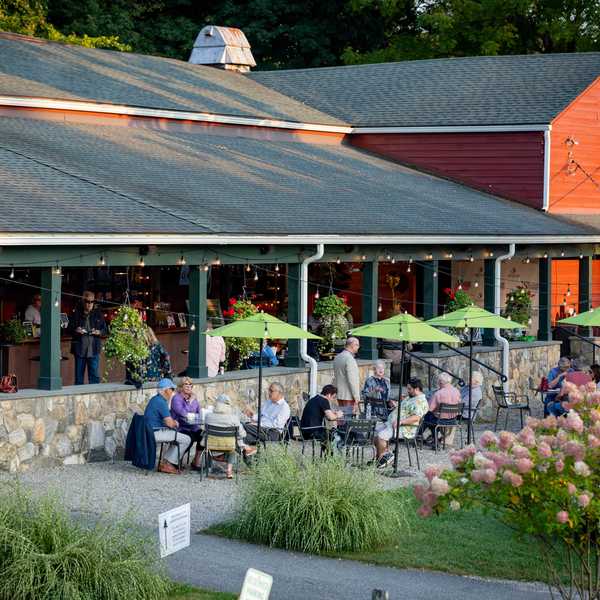
To support the shift away from open lawn-style seating, the winery is installing several designated seating areas across the property. A newly created adults-only patio will feature Adirondack chairs, private tables and sofa seating available for a small table fee that has not yet been finalized. Guests will also be able to reserve tables in advance, though walk-ins will still be welcome.
Additional picnic tables are also being added to the winery’s existing all-ages seating area.
Weekend food trucks are scheduled to return beginning June 1, but they will now be supplemented by expanded local food offerings inside the winery’s renovated tap room space, now renamed The Overlook. Local producers, including Millbrook Beef & Dairy and Chaseholm Farm, will offer cheese, charcuterie and prepared foods.
“We want to reinvigorate the brand,” said Ian Bearup, a winemaker at the vineyards.
The changes come during a period of broader transition for the wine industry, which has seen declining consumption levels following a pandemic-era surge, according to the International Organisation of Vine and Wine. Owner John Dyson recently reduced his stake in a California winery to refocus on Millbrook.
Millbrook’s winemaker Bearup said the renewed focus on Millbrook Vineyards & Winery exemplifies Dyson’s commitment to his hometown. “We take a lot of pride in still keeping agriculture in Dutchess County,” Bearup said. “This pullback has forced us to ask, how can we change things? And how can we still stay authentic to who we are, which is really just a family farm winery.”
Bearup acknowledged some visitors may be unhappy with the changes, but said growing crowds have made it increasingly difficult to manage the property during busy weekends.
“It’s gotten difficult for us to oversee the grounds during busy weekends,” Bearup said. “There’s a lot of liability. There’s a lot of garbage, and the grounds get quite beat up.”
The winery said visitors will still have access to the property’s ponds, trails and vineyard views, but the new seating arrangements are intended to better organize crowds and reduce wear on the grounds.
“We’re already hearing from a lot of upset people, which I completely understand,” Bearup said. “But we can’t operate this business as a park anymore, unfortunately.”
Graham Corrigan
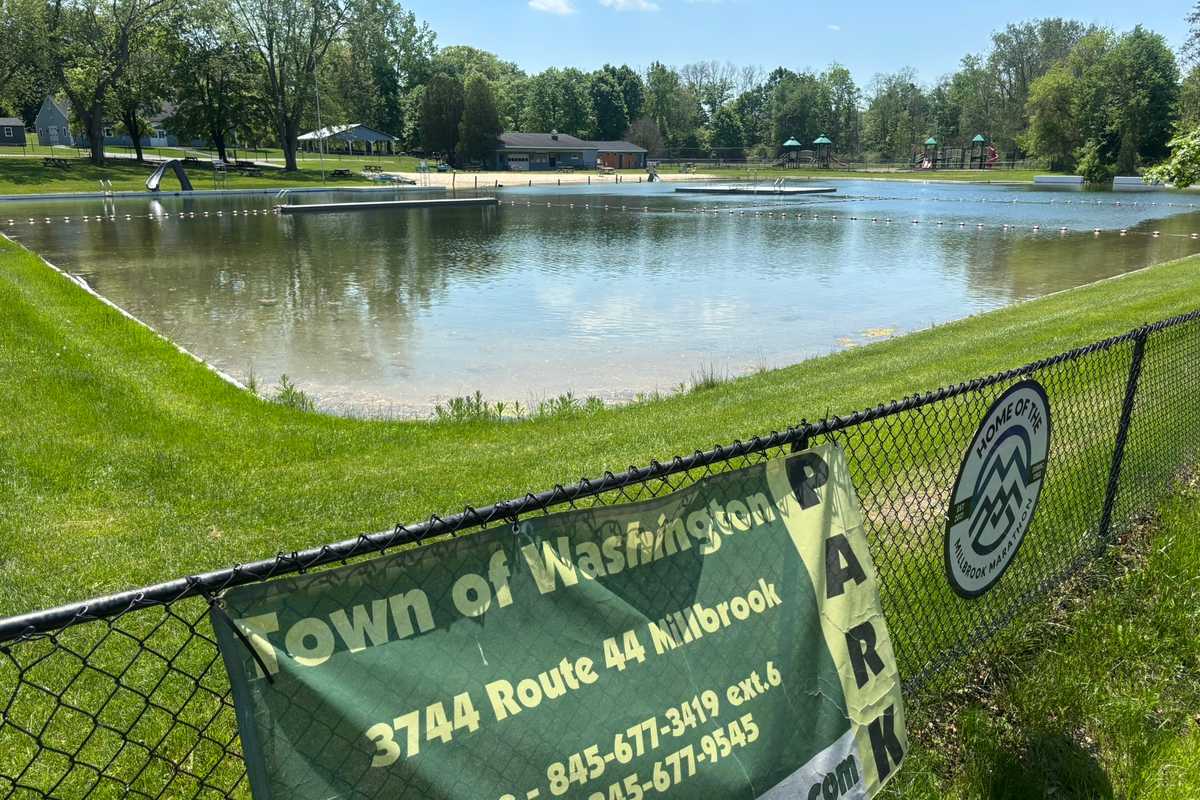
The Washington town pool in the hamlet of Mabbetsville along Route 44 sits ready for the start of the 2026 season.
MILLBROOK — Members of the Washington Town Board are calling for upgrades to the town’s recreation area in Mabbetsville along Route 44, saying the park’s roughly 80-year-old pool is outdated and increasingly difficult to maintain.
Former Washington Councilmember Mike Murphy presented a new report to the Town Board during its regular meeting on Wednesday, May 13, detailing the needed updates to the park.
His report is part of a larger Washington project called the Recreation Area Strategic Planning Committee. Starting in 2024, Murphy and a committee of 11 community members undertook a comprehensive evaluation of the property, focusing on the town pool and its facilities. “It’s nobody’s fault,” Murphy said. “But over the years, it’s just aged out.”
The committee was made up of various community experts including contractors and environmentalists. The group used last year’s Community Day to field suggestions from local residents, asking what changes they’d like to see at the park.
An online survey followed, and the committee compiled those suggestions for the town board. Suggestions included indoor facilities, a children’s playground, a dog park and pool improvements.
The Town Park consists of the pool and several athletic fields. The town bought the lower part of the property in 1946 for $16,000, and it became a municipal pool soon after. The athletic fields were added in 2006.
The 29 acres “are a jewel within the town,” Murphy said. “We need to figure out how to get people to use it.” But the pool’s aging infrastructure has made maintenance and upkeep unwieldy. It also lacks modern amenities popular in other municipal pools, like splash pads or fountains. Millerton and Newburgh, Murphy noted, both included those elements in their new pool plans.
Washington has more serious fixes to make, like updating the pool’s filtration system. One estimate Murphy received approximated that cost at six figures. “The tax structure of this community will never be able to handle the major costs that are coming down the road,” Murphy said.
Instead, the Committee to Re-Imagine the Town Park proposed several non-structural ways to stimulate the park’s activity, and resulting revenue: extended hours, a third pavilion, more athletic facilities, and an easier way to access the park.
Currently, there’s only one way in or out of the park. It makes for a crowded drop-off — especially when summer camp is in session. Murphy said connecting the park’s entrance to Little Rest Road to the west is one feasible solution.
Leila Hawken

Enhancing educational opportunities for students in the Millbrook Central School District since 2001, the Millbrook Educational Foundation took part in the Millbrook Volunteer Fair on Saturday, May 16. Residents were invited to learn about volunteer opportunities with the foundation and a variety of other local and regional organizations. The event, now in its fifth year, was held at the Millbrook Library.

Want more of our stories on Google? Click here to make us a Preferred Source.
Christine Bates
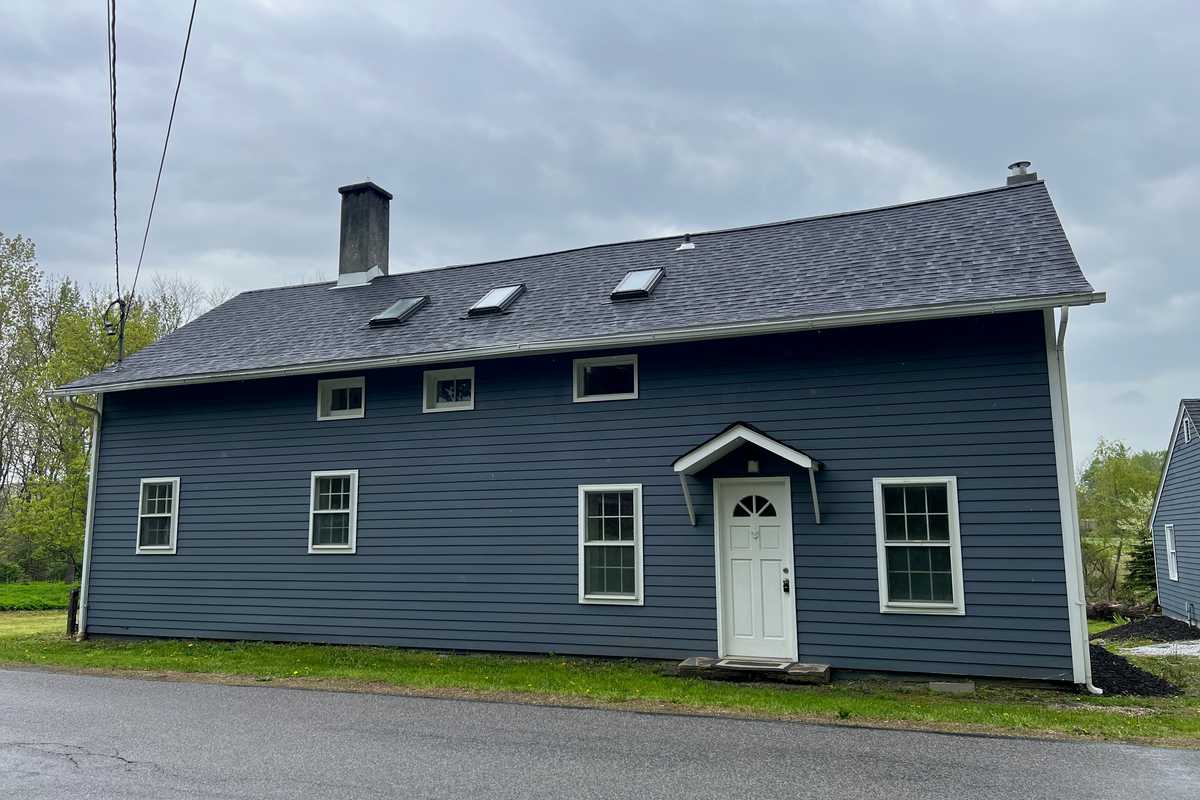
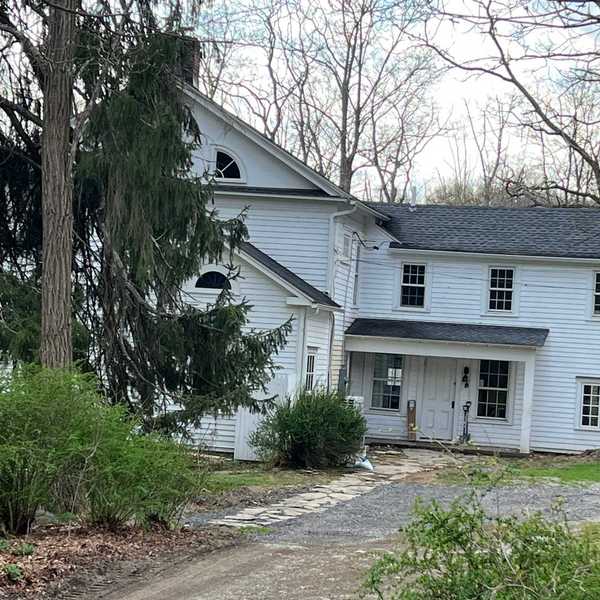
Known as the “Ice House,” 12 State Line Road on 3.81 acres was sold by the mortgage holder after standing vacant for years. The property was later renovated and resold for $400,000 on April 15.
MILLERTON — North East’s housing market continued to cool this spring, with home prices holding relatively steady and sales activity slowing compared with the post-pandemic surge that drove prices sharply higher across the region.
The 12-month trailing median sale price for residential properties in the Town of North East, including the Village of Millerton, was $420,000 for the period from May 1, 2025, through April 30, 2026. That figure remained essentially unchanged month-to-month, but marked the second consecutive year of declining annual median prices.
The residential median includes all types of housing sales — from modest village homes to large estates with significant acreage — but excludes commercial properties and vacant land sales. Among the higher-end transactions during the period was the sale of 5-15 Homestead Lane for $3.1 million.
Outside the village, where homes are generally situated on larger parcels, the median sale price reached $575,000. Within the Village of Millerton, where lots are typically smaller, the median price for the 10 homes sold during the period was $410,000.
The townwide median price of $420,000 was down 2% from the $430,000 median recorded during the 12-month period ending April 30, 2025. It was also 4% below the median recorded the year before that, continuing a gradual market slowdown following the price increases seen during and immediately after the COVID-19 pandemic.
Sales activity has also slowed considerably. North East recorded 24 residential transactions on a trailing 12-month basis at the end of April, down from 37 sales during the previous year.
Housing inventory showed modest improvement entering the spring market. In early May, 14 homes were listed for sale in North East, including four properties with asking prices above $1 million. Among them was the Hudson Valley Magazine “design home,” listed for $3.99 million.
Only two residential properties were listed for sale within the Village of Millerton in early May. Meanwhile, four commercial properties remained on the market in the village, along with eight parcels of vacant land throughout the town.
Town of North East March and April property sales
710 Smithfield Road — 23.89 acres were sold on April 20 for $190,000.
26 South Center St. —An investment property in the Village of Millerton was sold on April 15 for $700,000.
12 State Line Road — 3 bedroom/2 bath renovated home on 3.8 acres sold on April 15 for $400,000.
5-15 Homestead Lane — 3 bedroom/2 bath home built in 1950 on 258 acres sold on March 27 for $3.1 million.
Town of North East and Village of Millerton closed sales for March and April from realtor.com with property details from Dutchess Parcel Access. Median price and activity calculations for all residential properties from NY State Sales Web transfers through February 2026 with updated residential sales for March and April. Current market data from One Key MLS. Compiled by Christine Bates, Real Estate Advisor with William Pitt Sotheby’s International Realty, Licensed in Connecticut and New York.
Graham Corrigan
MILLBROOK — Innisfree Garden is set to welcome northeast Dutchess residents for its annual Spring Community Day.
The beloved community event returns Saturday, May 23 — with free admission for residents of Millerton, North East, Amenia, Wassaic, Pine Plains, Clinton Corners, Dover Plains, Pleasant Valley, Stanford, Wingdale, Washington, and of course, Millbrook. Visitors seeking free admission must present identification showing residency in one of the listed towns or hamlets.
There’s a day of programming in store, too. The garden opens at 10 a.m., then Qigong exercise lessons with Cris Caivano kick off at 10:30 a.m. Discounted tickets for the day’s events are available to Dutchess County residents, who are invited to “stretch like a tiger, twist like a dragon,” through guided stretching and acupressure exercises.
Then at 2:30 p.m., visitors are invited along on The Great Pollinator Ramble. Part scavenger hunt, part live theater, the Ramble features larger-than-life pollinator puppets spread across Innisfree’s 185 acres. Nature lovers can use the provided habitat map to find and identify 10 key pollinators that frequent the garden.
“We’re always looking for ways we can introduce the arts into Innisfree,” said Innisfree Executive Director Laura Palmer. “It’s a celebration of the natural environment and all the richness of the natural world.”
Birds, butterflies, beetles and other pollinators will be represented through the oversized puppets, which were designed by Processional Arts Workshop, a Red Hook-based collective led by co-directors Alex Kahn and Sophia Michahelles.
The concept dates back five years, when the COVID pandemic challenged Processional Arts to develop outdoor programming that could activate public spaces.
“The idea was, if you set loose pollinator puppets in a natural environment, you can encourage people to look deeper at their surroundings,” Kahn said. “It becomes a kind of hide and seek with these species.”
After successful rambles at Catskill’s Thomas Cole House, Hudson’s Olana State Historic Site, and Brooklyn Botanical Garden, Kahn and Michahelles are bringing their pollinators to Innisfree.
The puppeteers are instructed to be elusive and shy, hiding in the garden’s remote corners — as their real-life counterparts might. In that way, visitors are encouraged to investigate parts of the grounds they might bypass.
Spring Community Day is in its sixth year at Innisfree. It serves as the kickoff to the garden’s warm-weather programming season, which includes guided nature walks, wellness workshops, calligraphy classes and live music. A full calendar is available at innisfreegarden.org/events
Leila Hawken
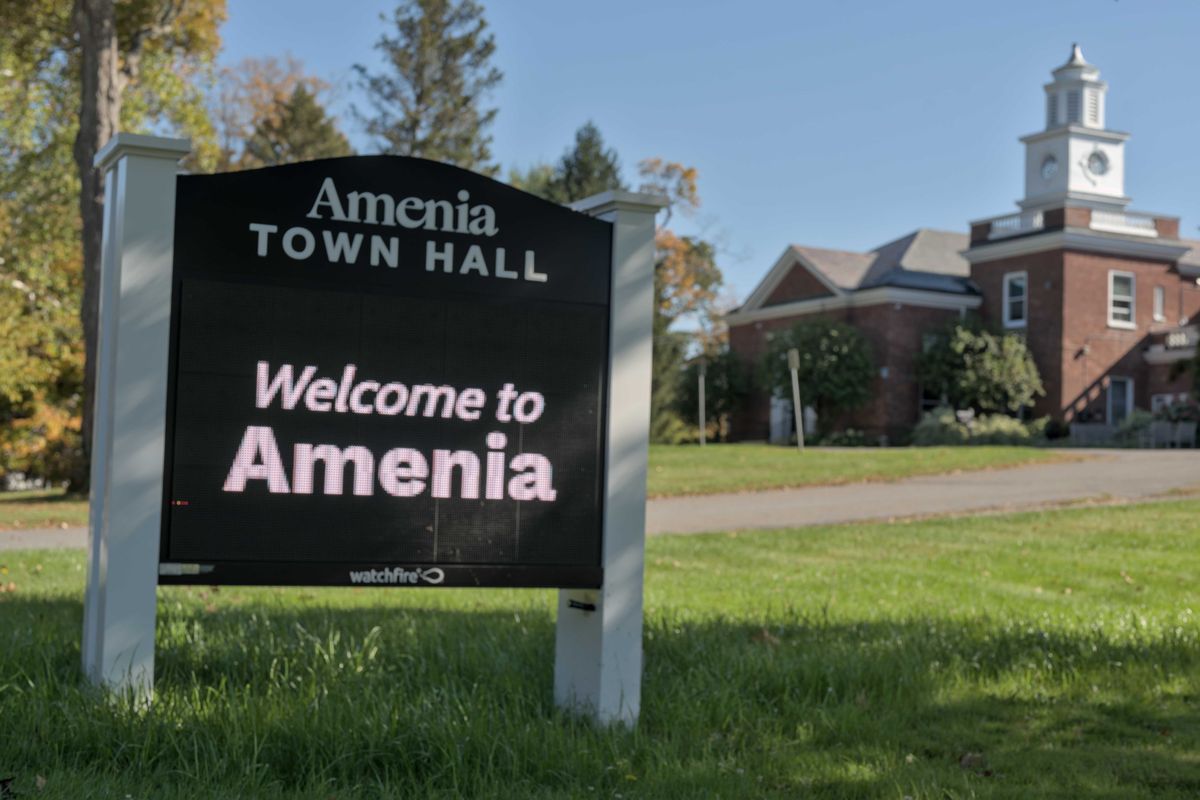
AMENIA — Housing Board members agreed on three potential uses for remaining grant funds, moving a step toward utilizing the money that was leftover from a Foundation for Community Health grant.
Board members voted on Monday, May 11, to draft a report for FCH detailing three initiatives for the leftover $13,000 aimed at clarifying local housing regulations, defining the board’s responsibilities related to the Housing Trust Fund, and expanding resources for residents seeking to create accessory dwelling units.
The funding will support efforts to simplify land use regulations for homeowners, develop guidance for Housing Board members regarding their oversight responsibilities, and create a step-by-step guide for residents interested in building an accessory dwelling unit, or ADU.
Grant consultant Christina Gast attended the meeting to help guide the discussion and ensure the proposals met both funding requirements and project deadlines. The agreed-upon initiatives closely mirrored ideas discussed at the previous Housing Board meeting on Monday, April 13.
Board members agreed that local housing and zoning regulations can be confusing to residents. They also pointed to a need to draft local legislation to provide a tax exemption for property owners who create an accessory dwelling unit, also known as an accessory apartment unit.
The board estimated that about $3,000 of the grant funding could be used to clarify the Housing Board’s role and responsibilities, particularly regarding oversight of the Housing Trust Fund.
In the coming weeks, the Housing Board will determine passages where the codes are unclear and ask the Planning Board attorney to clarify. The effort would also include preparation of an onboarding handbook for future Housing Board members, outlining the board’s duties and responsibilities.
“A handbook is a good use of a relatively small amount of funds,” Housing Board member Josh Frankel said.
The third initiative, with an estimated cost of $7,000, would see the development of step-by-step instructions about the process that residents need to follow in order to create an approved ADU. The instructions would be a clear guide toward creating a unit, along with a list of available resources.
Since her professional qualifications align with what is needed for the project, Gast offered to take on the work of drafting the materials. However, board members agreed with a suggestion from member Juan Torres that they should seek an additional outside quote for the work. Concerns about the appearance of a potential conflict of interest were first raised by member Shannon Roback.
Want more of our stories on Google? Click here to make us a Preferred Source.
Want more of our stories on Google? Click here to make us a Preferred Source.