Thank you!
Your gift keeps The Millerton News in our towns.

Julian Strauss’ new book ‘Home Farm’ explores rural continuity over centuries

Julian Strauss’ new book ‘Home Farm’ explores rural continuity over centuries

Retired local veterinarian Julian Strauss, whose Amenia roots run deep, shared stories of agricultural heritage and personal history based on his new book “Home Farm,” during a talk at the Amenia Free Library on Wednesday, June 11.

Photo by Leila Hawken

AMENIA — A sizable audience turned out on Wednesday, June 11, at the Amenia Free Library to hear local author Julian Strauss share stories of Amenia’s rural past and present.

Stories of local rural heritage are supported by Strauss’ 40 years as a farmer, along with experience as a beloved, recently retired veterinarian, historian, agriculturalist, and steward of land. Admired for depth of character, having been raised on a 284-acre Amenia dairy farm where he continues to live and farm, Strauss attracted an enthusiastic audience to greet the publication of his new book, “Home Farm.”

“I learned so much about the area by working with Julian,” said the book’s editor, David Stanford, who introduced Strauss’ talk. “Julian was one of the joys,” Stanford said of the project.

Describing himself as “an aspiring agrarian,” Strauss said that one of his aims is “to encourage listeners and readers to write their own history.” Strauss has enjoyed membership in the After-School Boys Club, begun in 2015, that has boasted a membership of 15 men, many of whom have contributed to Amenia’s agricultural history, while meeting regularly for ice cream and to further the restoration of the Indian Rock schoolhouse.

The subtitle of “Home Farm” defines the book’s theme, “The Love of Place in a Changing World.”

“I have more of an awareness of the civilization I am a part of,” Strauss said. “I am biased toward agriculture.”

An accomplished researcher with decades of practice in veterinary medicine, Strauss spoke of animals in rural life.

“I love draft horses,” Strauss said, reminding him of a rural cautionary note. “Never go through a gate and fail to close it, even for a minute.”

“I still like cows, most of the time,” he mused.

A 1915 journal kept by farmer Ed Dean and purchased at a local yard sale by Boys Club member Bill Burke, provides an underpinning for the book as it describes local farming extending into centuries past. Strauss interjects his own decades of farming experience and thoughtful commentary.

Additional Dean family farming journals, provided by Ed Dean’s granddaughter and woven into the book, add insights into the evolution of farming from early family farms envisioned by Thomas Jefferson to agri-business, the pressures and struggles endured by local farmers.

Strauss’ invitation to explore selected passages from the 1867 and 1921 farming journals, along with his own recollections and modern insight offers an important view of local farming roots that once defined the town and still echo.

“Home Farm” is available from area booksellers.
Latest News

Under the big top at Full Circus Farm

Under the big top at Full Circus Farm

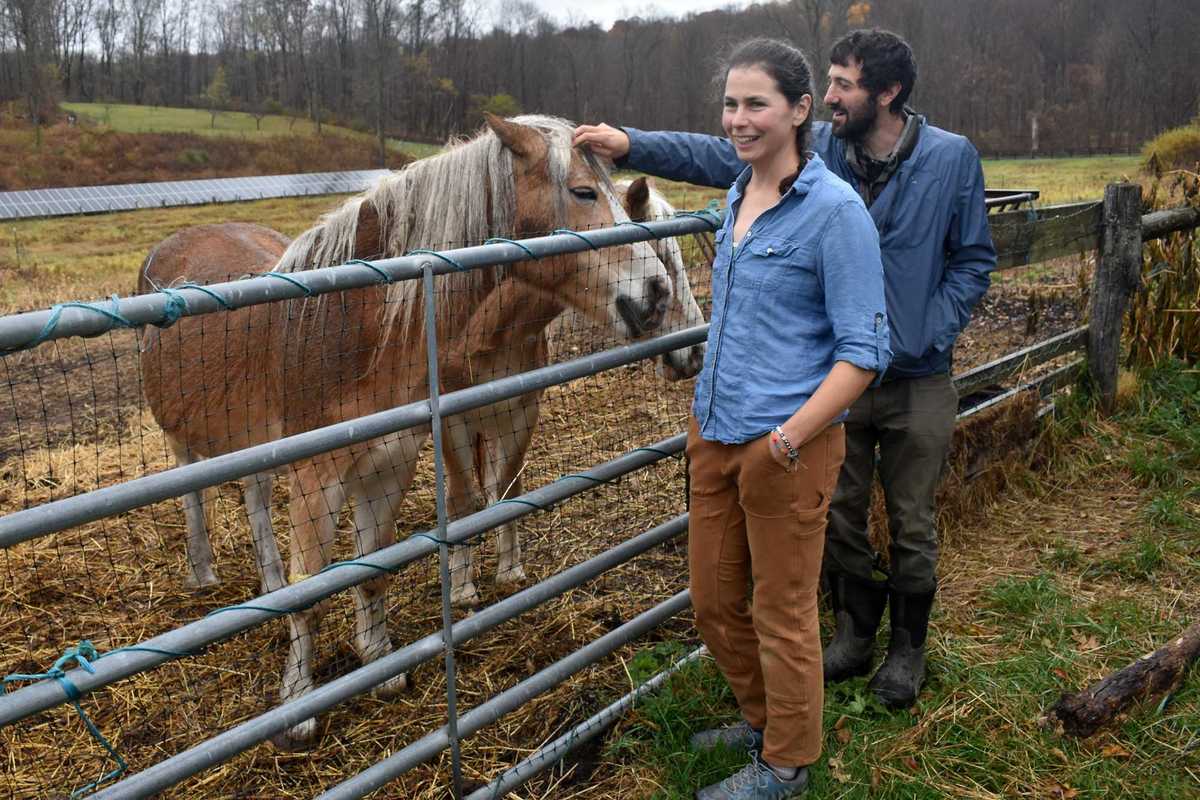
Miriam Goler and Mark Stonehill with their Haflinger horses, Sunshine and Sandy, at Full Circus Farm in Pine Plains.

L. Tomaino

We share this farm with such amazing human and nonhuman neighbors.
— Mark Stonehill

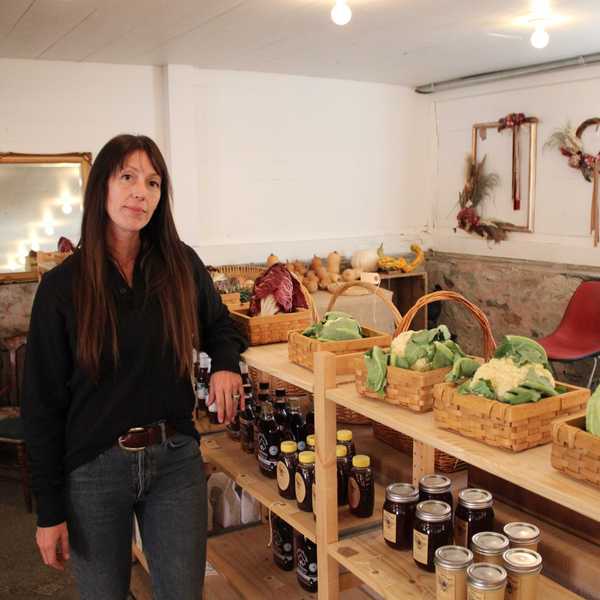
For Mark Stonehill and Miriam Stonehill Goler, the founder of Full Circus Farm in Pine Plains, farming has always been about more than what comes out of the ground.

“From the very beginning, we’ve envisioned the farm as a place not only for food production, but also merriment and community,” they said.

Keep ReadingShow less
google preferred source

Want more of our stories on Google? Click here to make us a Preferred Source.

At Ancram Center, community takes center stage
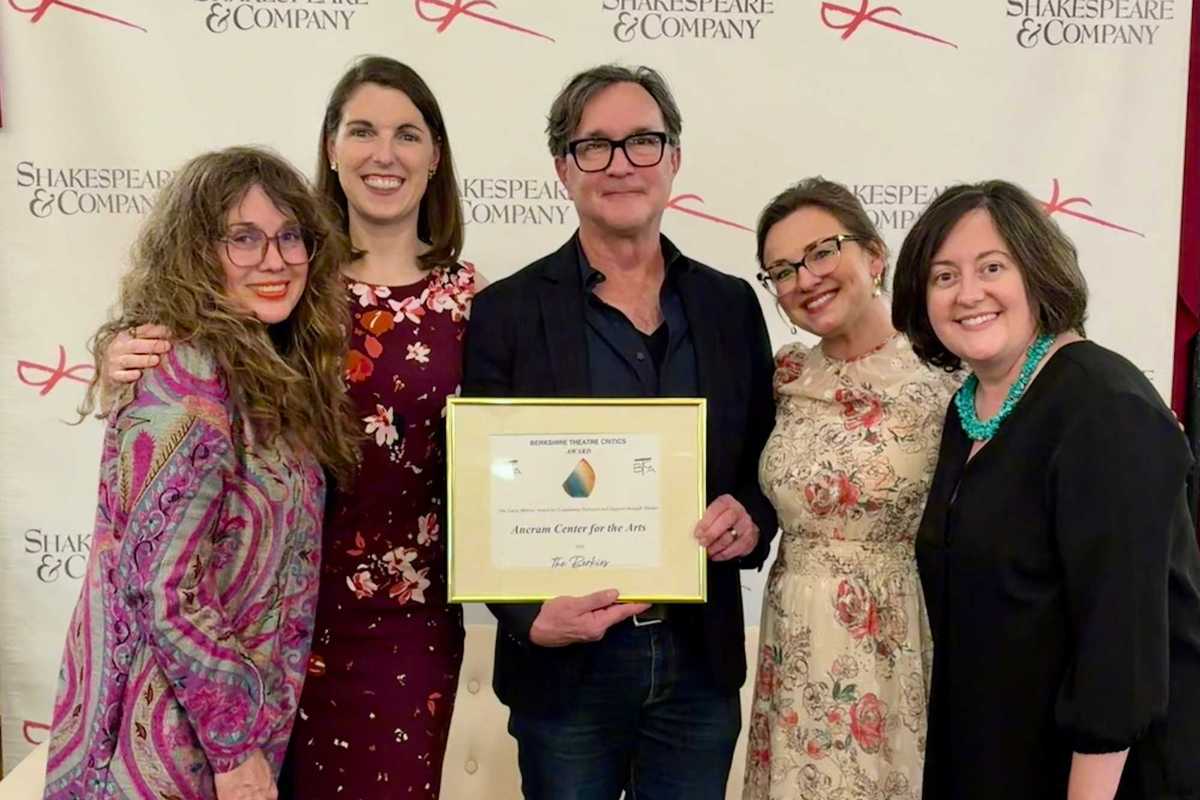
Ancram Center staff and teaching artists after the ceremony.From left to right,Simone Stevens, Sarah Katan, Jeffrey Mousseau, Erin Krom and Chris McCoy.
Provided

At the Ancram Center for the Arts, the stage has been host to numerous award winning professional actors, but it also often belongs to a neighbor with a story to tell. Other times, the performance moves out of the theater altogether, transforming a pond, a field or a corner of town into a stage.

That commitment to bringing theater into the community — and the community into the theater — has earned the Ancram Center the Larry Murray Award for Community Outreach and Support through Theater, one of the Berkshire Theatre Critics Association’s annual Berkie Awards.

Keep ReadingShow less

Social justice songwriting fall retreat

Social justice songwriting fall retreat

Singer, songwriter and activist Taína Asili leads a social justice songwriting retreat Nov. 20-23 at Soul Fire Farm in Petersburgh, N.Y.

Provided

Music has long been a powerful tool for protest, solidarity and social change. From civil rights anthems to contemporary songs of resistance, songwriting has helped give voice to movements and inspire collective action. Singer, composer and activist Taína Asili will explore that tradition during a four-day Social Justice Songwriting Retreat, Nov. 20 to 23, at Soul Fire Farm in Petersburgh, New York.

The retreat comes amid a renewed interest in collective singing as a form of activism. Organizations such as Singing Resistance are bringing people together across the country to use songs as tools for solidarity, nonviolent resistance and community building. The movement draws on the long history of music in social justice struggles, emphasizing the power of singing together to overcome fear, strengthen connections and inspire collective action.

Keep ReadingShow less
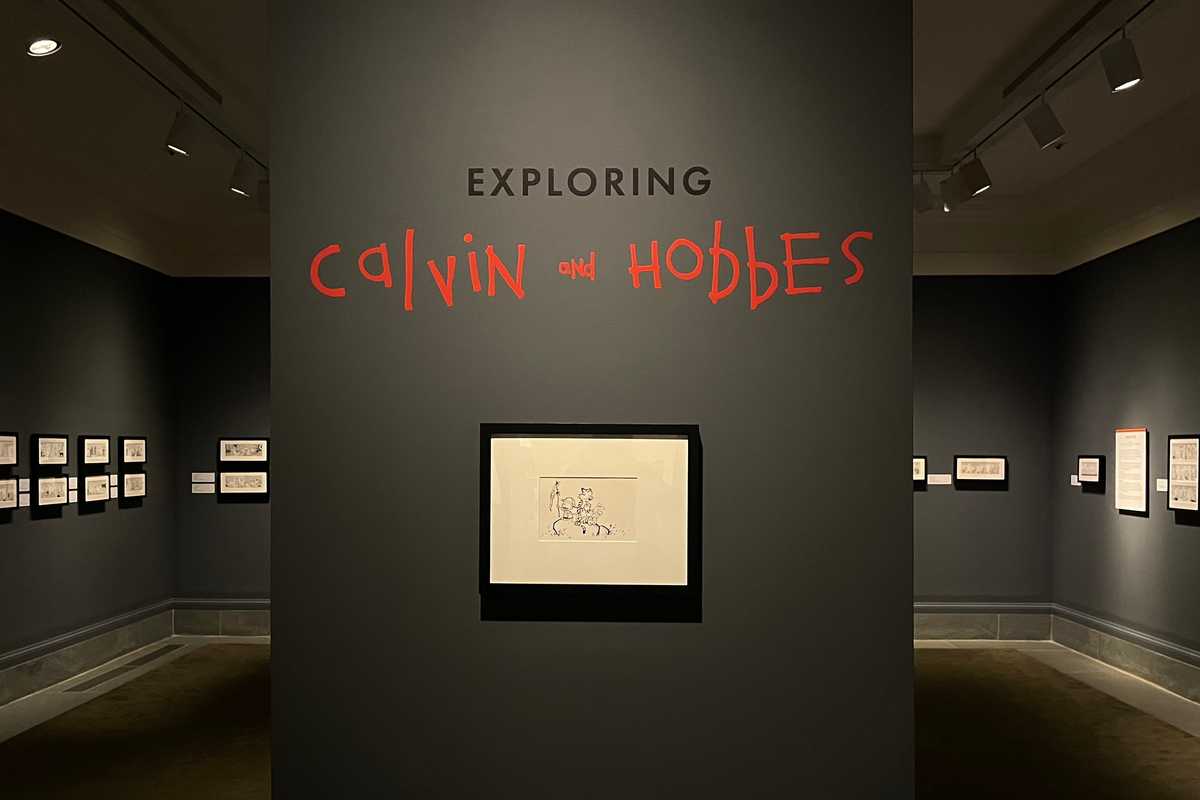
Where Calvin, Hobbes and Rockwell meet

Original “Calvin and Hobbes” comic strips by Bill Watterson are on view alongside works by Norman Rockwell in “Exploring Calvin and Hobbes” at the Norman Rockwell Museum. Stockbridge. The exhibition runs through May 31, 2027.

D.H. Callahan

Two distinctive approaches to American life and storytelling come together in a new exhibition at the Norman Rockwell Museum in Stockbridge, Massachusetts. Opening Saturday, Nov. 14, the exhibition brings the imaginative world of Bill Watterson’s “Calvin and Hobbes” into conversation with the familiar scenes of everyday life captured by Norman Rockwell. Though separated by generations and working in different mediums, both artists found humor, humanity and complexity in the seemingly ordinary.

Norman Rockwell skyrocketed to popularity when he started painting the covers for the Saturday Evening Post, a magazine with a history spanning more than two centuries.Its last print edition ran this past September, transitioning the publication to an online-only format. From 1897 until 1963, it published a new issue every week. Over that time, it published writings by literary legends like F. Scott Fitzgerald, Kurt Vonnegut, Agatha Christie, William Faulkner, Edgar Allan Poe, Louis L’Amour, John Steinbeck and Lenox, Massachusetts resident Edith Wharton, and featured comics by “Peanuts” creator Charles M. Schultz. In 1916, the magazine first featured one of Rockwell’s illustrations. He was just 22 years old.

Keep ReadingShow less
google preferred source

Want more of our stories on Google? Click here to make us a Preferred Source.

google preferred source

Want more of our stories on Google? Click here to make us a Preferred Source.