From farm to table with NWCT's Food Hub

From farm to table with NWCT's Food Hub
Northwest Connecticut Food Hub director Renee Giroux moving a pallet of regionally grown produce dropped off by farmers, aggregated, and prepared for outgoing delivery to food access organizations.
Photo by Janna Siller
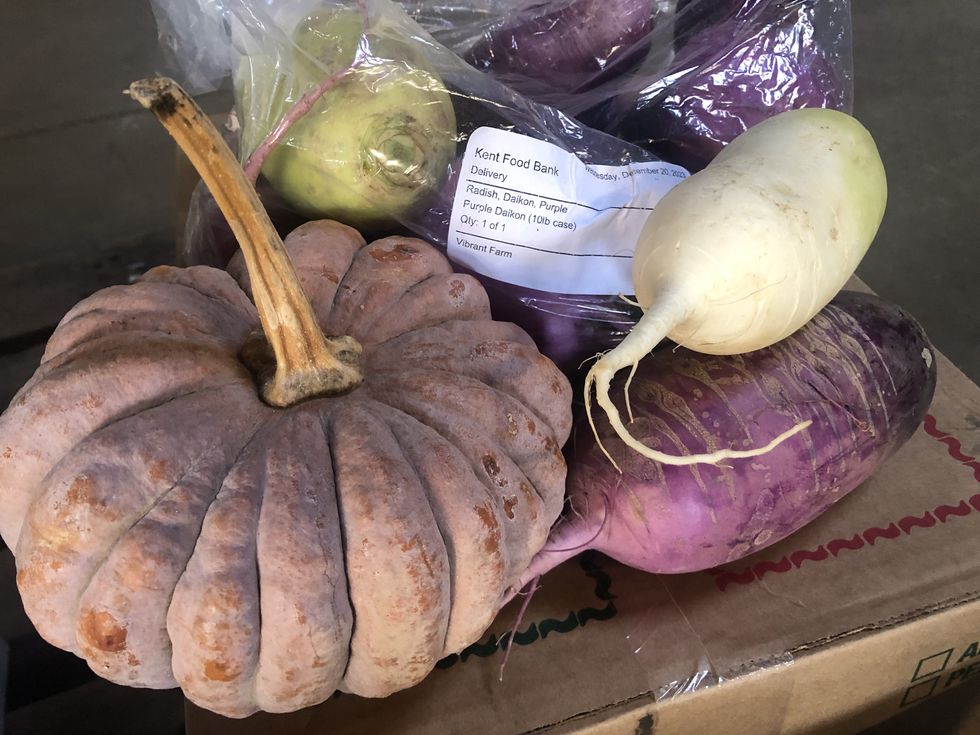
The Northwest Connecticut Food Hub connects regional farmers with wholesale customers, even during these winter months when local food is harder to come by.

Farmers list available items each week on the hub’s online platform — at this time of year mostly roots, squash, apples, mushrooms and greens. Restaurants, schools, grocery stores, and food pantries can go online and order aggregated items from multiple farms for delivery.

If one farm only has butternut squash left in storage from the fall harvest, another might be flush with arugula coming out of a winterized greenhouse, while another still has beets in the cooler. Alone, each crop might be hard to sell or hard to use, but put them together in a restaurant’s shopping cart through the Hub’s online platform and you have a winter salad special on the menu.

The Food Hub is a locally developed spin on a more typical industrial food distribution model where large farms that specialize in one item or another ship their crops to warehouses to be repackaged and trucked off to retail grocery stores or food service venues.

By the very nature of our region’s topography, farms are relatively small and far from customers. Valleys and slopes don’t make for wide, expansive fields, and quiet windy roads often set farmers at a distance from population centers. Growing a diverse range of crops is good for the soil and for business resiliency — if a crop is a flop one year, there are others that likely did well. All of these factors make for colorful, bucolic farm landscapes throughout Northwest Connecticut, but they also present local farmers with a significant marketing challenge, and local buyers with the significant logistical question of how to access fresh, local food.

The Food Hub began operations in 2017 as a project supported by the region’s economic development plan to help bridge these gaps between the unique growers we have in our region and potential customers. It is an initiative of the nonprofit Partners for Sustainable Healthy Communities, whose board oversees operations. Day-to-day management of the Hub falls to Renee Giroux, a farmer herself who knows firsthand the challenges and opportunities of farmers in the area.

“The Hub helps with distribution while lifting everyone up,” said Giroux. “It isn’t a place where farms are in competition with one another, but rather gives them an additional outlet to expand their businesses into.”

Photo by Janna Siller

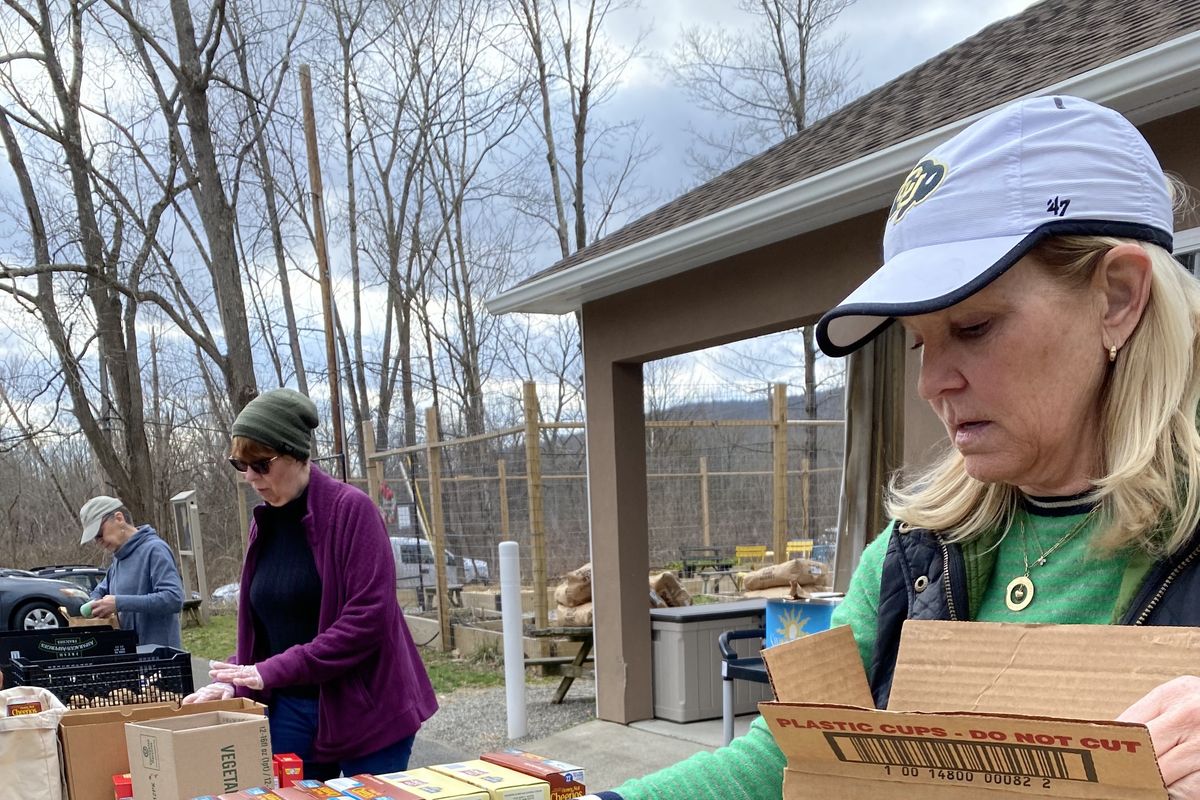
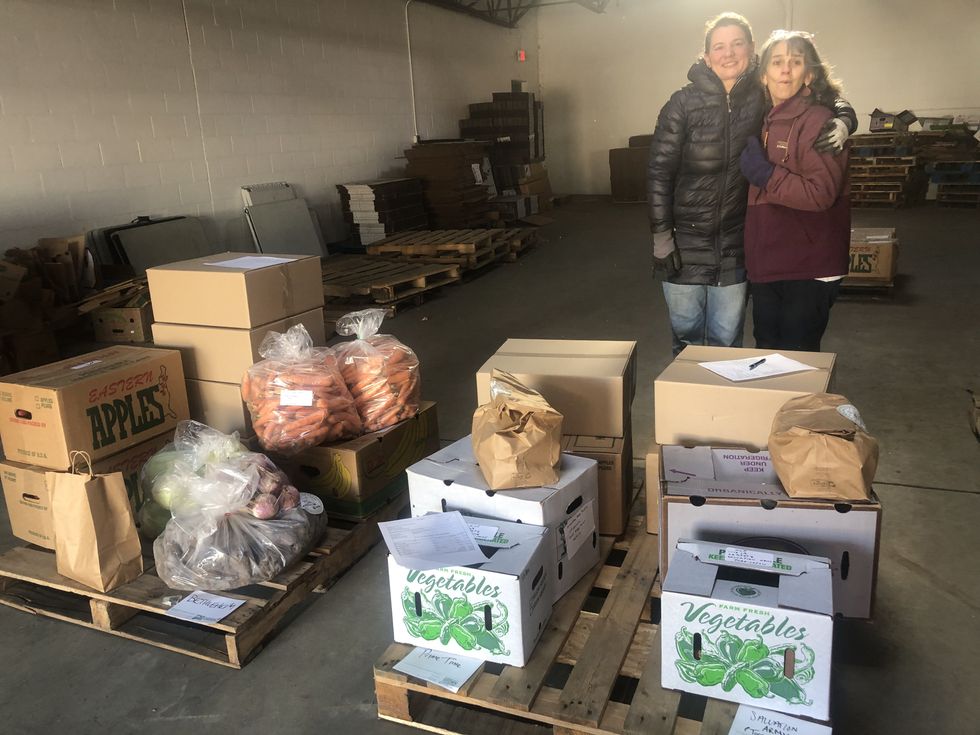
Renee Giroux and Susan Zappulla-Peters with produce aggregated from different regional farms and prepared for deliveries to local food access organizations.

While some buyers, like restaurants and grocery stores, pay full wholesale prices for the farm products, others have their deliveries subsidized by different grants. The Hub cobbles together a number of funding sources to allow them to work with schools, food pantries and health care facilities. Ed-Advance, an education nonprofit, helps fund farm-to-school initiatives facilitated by the Hub. A community wellness grant allows diabetes patients to receive produce prescription deliveries through Hartford Healthcare. Community foundations support food pantry purchases.

“Individual farmers don’t have time to navigate all the potential funding sources that can help expand their markets,” said Food Hub board member Jocelyn Ayer. “That’s where the Hub comes in. We work with partners to secure funding for a wide range of projects.”

On a frigid December day, Susan Zappulla-Peters arrived bright and early at the Hub’s Torrington warehouse with a delivery of radishes and scallions from the farm her son manages, Maple Bank Farm in Roxbury. “The first time I delivered here, I was so inspired by what Renee is doing that I asked if I could help. Now I volunteer every week after I drop off Maple Bank’s produce.”

Zappula-Peters spent the morning receiving produce off farmers’ pickup trucks and compiling orders as generated onto lists by the online purchase platform. The pallets quickly filled up with food, including apples from March Farm in Bethlehem; carrots and cabbage from Vibrant Farm in Bantam; and sweet potatoes and potatoes from River Bank Farm in Roxbury. Zappula-Peters helped Giroux and driver Stuart Rabinowitz load a van headed for a delivery route that included Charlotte Hungerford Hospital, the Corner Food Pantry in Lakeville, and Fishes and Loaves Food Pantry in North Canaan.

“I love that this food, the best our region has to offer, is reaching people who wouldn’t otherwise be able to access it,” said Zappula-Peters in between moving pallets.

Latest News

Eight dead geese found in Millerton pond, bird flu testing underway

File photo

Photo by Kaitlin Lyle

MILLERTON — Environmental investigators recovered eight dead Canada geese from a pond in Millerton on Jan. 22, prompting testing for highly pathogenic avian influenza, commonly known as bird flu.

The New York State Department of Environmental Conservation confirmed in a statement that the birds are undergoing testing, though results were not available at press time.

Keep ReadingShow less
Local group urges Millerton officials to publicly condemn ICE tactics

The Millerton Village offices on North Elm Avenue.

Photo by Aly Morrissey
“I urge you to be public in showing our community your moral compasses,” Millerton resident Eliot Ramos said. “Please show us that we have elected people who really do care.”

MILLERTON — Immigration enforcement became a central focus of the Village Board of Trustees meeting Tuesday, Jan. 27, which drew a group of residents who called on officials to take a public stance in support of vulnerable community members.

Following routine agenda items, community members used the public comment period to urge the board to publicly oppose Immigration and Customs Enforcement (ICE) activity and affirm protections for local residents. It marked the fourth time in eight months that residents have appeared before the village board to urge action on immigration enforcement, with no significant action or policy change to date.

Keep ReadingShow less
Millerton’s 175th committee advances plans for celebration, seeks vendors and sponsors

The Millerton 175th anniversary committee's tent during the village's trunk-or-treat event on Oct. 31, 2025.

Photo provided

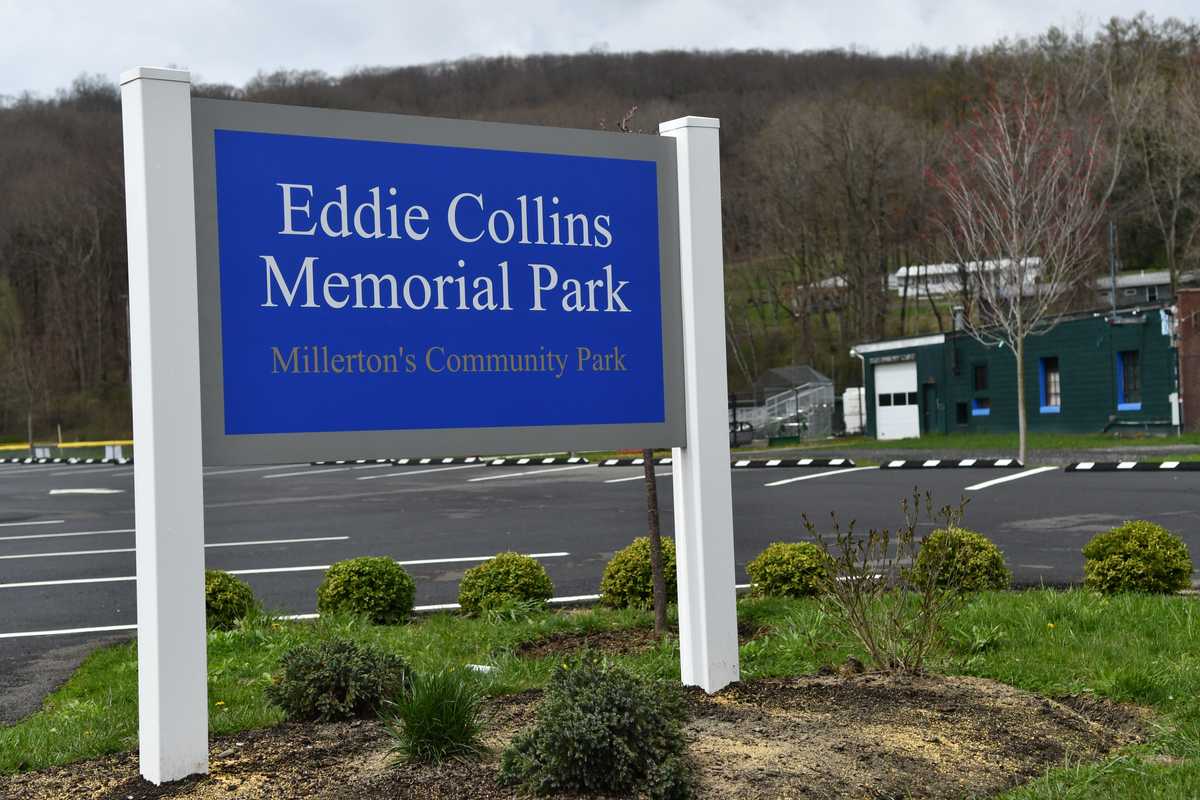
MILLERTON — As Millerton officially enters its 175th year, the volunteer committee tasked with planning its milestone celebration is advancing plans and firming up its week-long schedule of events, which will include a large community fair at Eddie Collins Memorial Park and a drone light show. The events will take place this July 11 through 19.

Millerton’s 175th committee chair Lisa Hermann said she is excited for this next phase of planning.

Keep ReadingShow less
Why the focus on Greenland?

As I noted here in an article last spring entitled “Hands off Greenland”, the world’s largest island was at the center of a developing controversy. President Trump was telling all who would listen that, for national security reasons, the United States needed to take over Greenland, amicably if possible or by force if necessary. While many were shocked by Trump’s imperialistic statements, most people, at least in this country, took his words as ill-considered bluster. But he kept telling questioners that he had to have Greenland (oftenechoing the former King of France, Louis XIV who famously said, “L’État c’est moi!”.

Since 1951, the U.S. has had a security agreement with Denmark giving it near total freedom to install and operate whatever military facilities it wanted on Greenland. At one point there were sixteen small bases across the island, now there’s only one. Denmark’s Prime Minister has told President Trump that the U.S. should feel free to expand its installations if needed. As climate change is starting to allow a future passage from thePacific Ocean to the Arctic, many countries are showing interest in Greenland including Russia and China but this hardly indicates an international crisis as Trump and his subordinates insist.

Keep ReadingShow less