Local group urges Millerton officials to publicly condemn ICE tactics

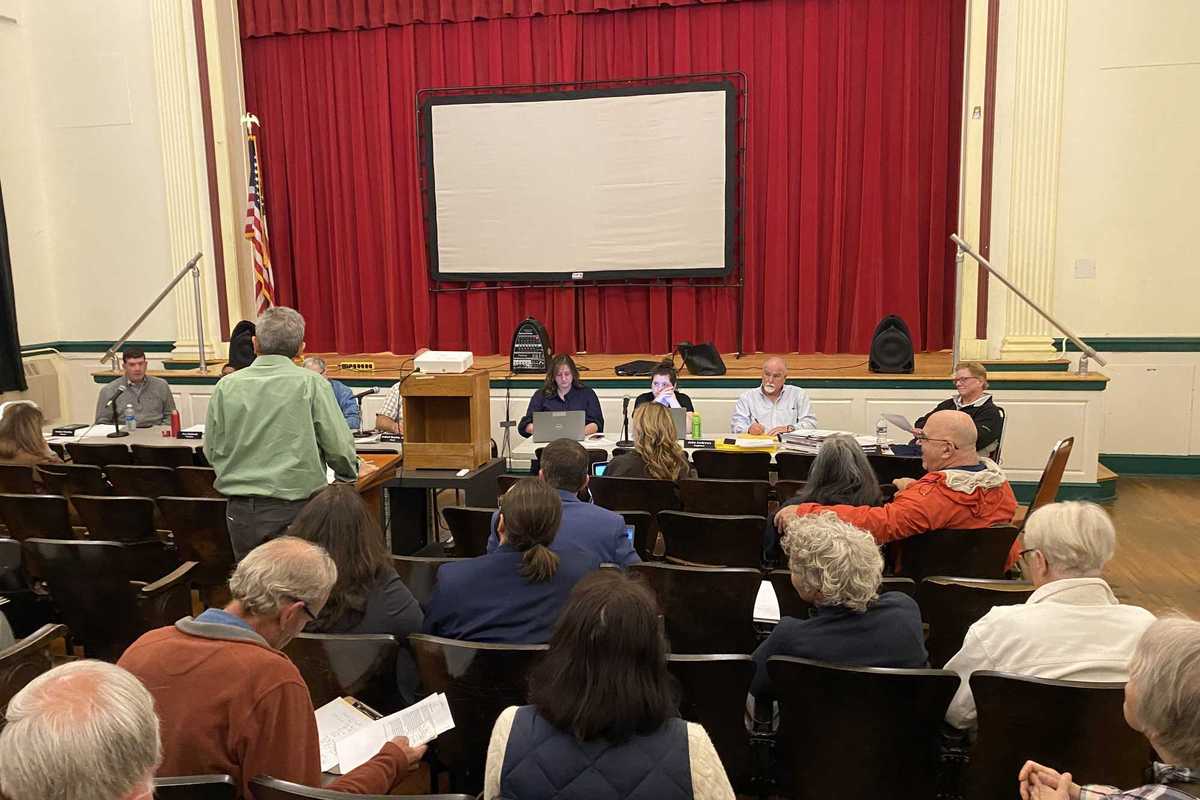
The Millerton Village offices on North Elm Avenue.
Photo by Aly Morrissey

The Millerton Village offices on North Elm Avenue.
“I urge you to be public in showing our community your moral compasses,” Millerton resident Eliot Ramos said. “Please show us that we have elected people who really do care.”
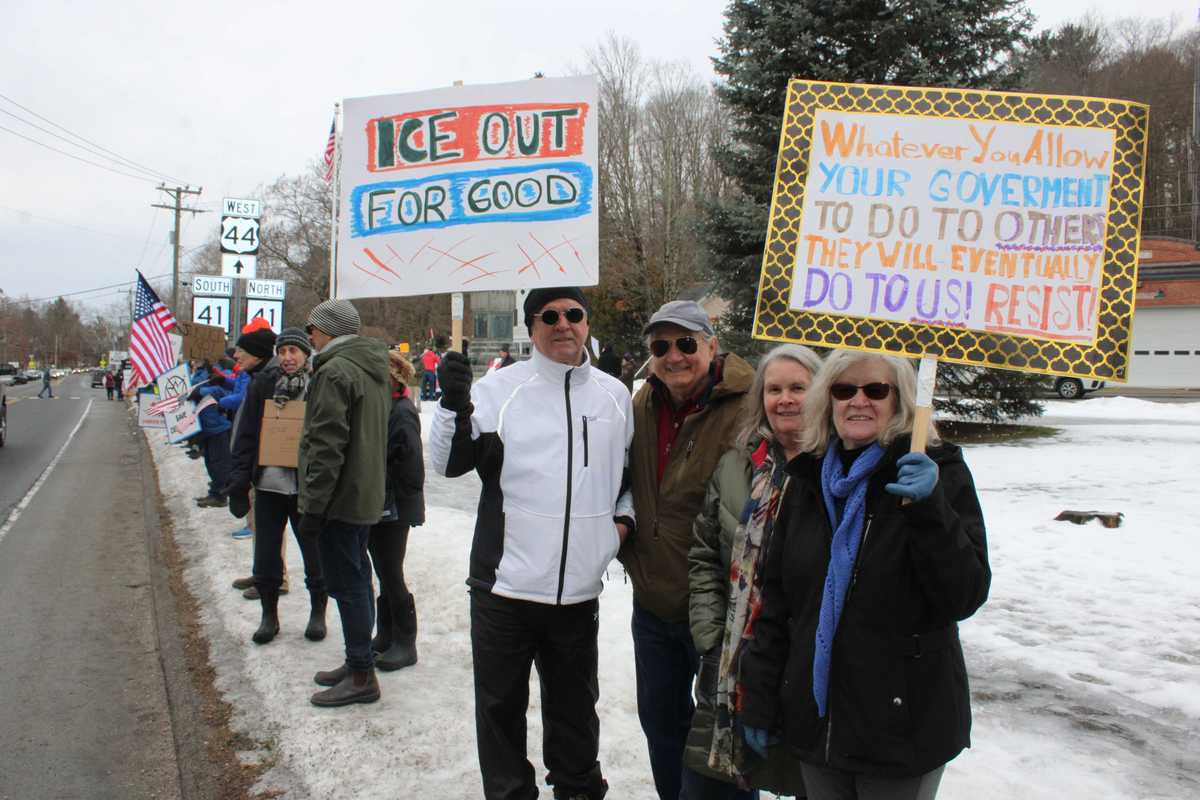
MILLERTON — Immigration enforcement became a central focus of the Village Board of Trustees meeting Tuesday, Jan. 27, which drew a group of residents who called on officials to take a public stance in support of vulnerable community members.
Following routine agenda items, community members used the public comment period to urge the board to publicly oppose Immigration and Customs Enforcement (ICE) activity and affirm protections for local residents. It marked the fourth time in eight months that residents have appeared before the village board to urge action on immigration enforcement, with no significant action or policy change to date.
Mayor Jenn Najdek declined to comment following the meeting and would not say whether the board plans further discussions or next steps. Other trustees — Deputy Mayor Matthew Hartzog, Matt Soleau, and Daivd Sherman — did not respond to requests for comment at the time of publication.
In contrast, Trustee Katie Cariello — who is several months into her first term on the board — made her position clear during the meeting and in a follow-up statement, saying she appreciated the group for holding local leaders accountable.
Cariello also acknowledged Joe Olenik’s dual roles as police chief and highway superintendent.
“This week's been really tough for lots of reasons,” Cariello said. “I just want to say, I hope we can keep snow out, and hopefully keep ICE out.”
In a statement, Cariello invited residents to continue the conversation by emailing her at katie.cariello@millertonny.gov.
“I heard our Police Chief say that he will uphold the law, and I believe that to be true,” Cariello said of the dialogue that occurred between Olenik and residents. “And I heard all of us say that we care about our neighbors and want everyone to feel safe.”
The village is not required to respond to public comments, but members of the board and the police chief engaged in a conversation with attendees and answered questions about hypothetical scenarios that could play out in Millerton.
Olenik said it is highly unlikely that ICE would notify the Millerton Police Department of their plans or request assistance given its part-time status and lack of involvement in immigration enforcement.
“If our police officers are present and another officer — whether federal, state, or sheriff’s department — was breaking the law and abusing somebody against the law, we would have to take action,” he said, though it was unclear whether that action would be through force in the moment or through a report and investigation.
“We treat all our people in this community with dignity, respect, and compassion,” Olenik added. “I won’t accept anything less than that from my officers.”
Nine residents used the public comment portion of the meeting to voice their concerns about what they described as increasingly violent and deadly immigration enforcement nationwide.
Resident Eliot Ramos, who has previously addressed the village board on the issue, read from prepared remarks, explaining that she was "extremely distressed and emotional.”
She asked the board and police department to take action, adding that she feels ready to lose faith in local elected officials if they do not commit to protecting the human rights and safety of all residents.
“I urge you to be public in showing our community your moral compasses,” Ramos said. “Please show us that we have elected people who really do care.”
Laura O'Loughlin also read prepared remarks that were co-written by what she described as a large group of Millerton and North East residents.
“We just want to keep naming that immigrants are not outsiders in our village,” O'Loughlin read, adding that they are coworkers, neighbors, business owners and friends who contribute to the strength of the community. “When they are targeted with fear, intimidation, or violence, it harms us all.”
O'Loughlin went on to express concerns about the national pushback on protesters by the Department of Homeland Security (DHS). “Peaceful protest is a cornerstone of our democracy,” she read. “Responding to it with force, especially against communities that already face disproportionate scrutiny and harm, is unacceptable.”
North East resident Bill Kish spoke to the importance of civic responsibility.
“I feel that if there's one thing I can do — and that others can do — at this point in time, it's to speak to power at every level, starting with the people who are here in this room,” Kish said, gesturing toward the board.
He urged trustees to recognize that “people are sad and angry and scared,” asking them to carry those concerns up the chain of command.
Kish concluded the final 30 seconds of his allotted time with a moment of silence for the lives that have been lost at the hands of federal officials.
Police Chief Joe Olenik shared highway and police department reports, with trustees expressing thanks to the short-staffed highway crew, which continues to operate without its full fleet of vehicles. The department has been working with the Town of North East to borrow equipment as needed.
“Bob Stevens has been fantastic,” Olenik said of the town’s highway superintendent.
The board voted to amend its fee schedule for fire inspections, doubling the cost for commercial properties from $50 to $100, a change that Najdek said aligns with other municipalities.
Trustees also approved the village’s annual agreement with Dutchess County to participate in its DWI control campaign, which aims to prevent people from driving while under the influence.
Village budget discussions are expected to be held throughout February, following the circulation of an initial draft to trustees on Tuesday night by Lisa Cope, village clerk and treasurer.
The board once again delayed its State Environmental Quality Review (SEQR) — a state-required process to evaluate potential environmental, social or economic impacts — related to planned upgrades at Veteran’s Park. The village is awaiting final designs from the engineer based on recent minor feedback from the county. Once those revisions are complete, Najdek said the project will be “ready to roll” and can go out for bid, adding that she hopes it won’t push back the targeted completion by Memorial Day.
The village is also expected to submit a letter of intent to apply for this year’s Community Development Block Grant funding, with the application deadline approaching on March 3. Trustees said the most likely use of the funding would be to complete additional sidewalk work, possibly on North Center Street.
Trustees spent a significant portion of the meeting discussing a proposed local law that would formally establish a new tree committee and allow Millerton to pursue national recognition as a Tree City USA. Village legal counsel attended the meeting to outline the requirements of the program.
Under the proposal, the village would be required to pass a local law designating responsibility for all public trees, adopt a formal tree management plan, set aside at least $2 per capita annually in the budget, and hold an Arbor Day observance each year.
The committee would consist of five volunteers to be appointed by the village board, with potential oversight from the town board or a town employee. Members will likely be able to join from throughout Dutchess County, though the hope would be to limit members to the village and town. Once the committee is established, the village could then apply for various funding and grants.
There are artists who make objects, and then there are artists who alter the way we move through the world. Tim Prentice belonged to the latter. The kinetic sculptor, architect and longtime Cornwall resident died in November 2025 at age 95, leaving a legacy of what he called “toys for the wind,” work that did not simply occupy space but activated it, inviting viewers to slow down, look longer and feel more deeply the invisible forces that shape daily life.
Prentice received a master’s degree from the Yale School of Art and Architecture in 1960, where he studied with German-born American artist and educator Josef Albers, taking his course once as an undergraduate and again in graduate school.In “The Air Made Visible,” a 2024 short film by the Vision & Art Project produced by the American Macular Degeneration Fund, a nonprofit organization that documents artists working with vision loss, Prentice spoke of his admiration for Albers’ discipline and his ability to strip away everything but color. He recalled thinking, “If I could do that same thing with motion, I’d have a chance of finding a new form.”
What Prentice found through decades of exploration and play was a kind of formlessness in which what remains is not absence, but motion. To stand before one of his sculptures is to witness a quiet choreography where metal breathes, shadows shift and time softens.
After Yale, Prentice co-founded the architectural firm Prentice & Chan in 1965. The firm designed affordable housing projects in New York City, work largely led by partner Lo-Yi Chan. Prentice also designed custom single-family homes and continued to develop sculptural ideas alongside his architectural practice. After leaving the firm in 1975 and eventually relocating full time to Cornwall, he undertook a range of local architectural projects while increasingly devoting himself to sculpture.
Prentice began producing larger-scale sculptural commissions in the 1970s, during a period of national expansion in public art funding tied to new building projects. His first major commission came in 1976 from AT&T, helping launch a career that would bring his kinetic installations to corporate, institutional and public spaces across the United States and abroad. While his work follows in the lineage of Alexander Calder and George Rickey, critic Grace Glueck observed that its “gently assertive character is very much his own.”
In Cornwall, Prentice established a studio devoted to designing and fabricating kinetic sculpture, where he continued working for decades. He had many assistants over the years including local artists David Bean, Ellen Moon and Richard Griggs. David Colbert worked with Prentice for many years, assisting with fabrication, installation and project development and in 2012, Prentice established Prentice Colbert Inc., helping ensure that fabrication and development of large-scale commissions could continue beyond his lifetime.
Colbert said Prentice could be imperious, but came to understand that he valued thoughtful critique over agreement. “That evolved into a free and easy give-and-take, along with some fierce arguments,” he said. “Our relationship was always developing, right through to the end.”
In the mid-1990s, Prentice was diagnosed with macular degeneration, a condition that gradually narrowed his field of vision. Rather than turning away from the visual world, he leaned further into it, focusing on movement, light and peripheral perception — on what could be felt as much as seen. The Vision & Art Project film documents this period of his life and the ways he adapted his creative process.
Even in his final years, Prentice continued experimenting. In the summer of 2025, he created a series of drawings titled “Memory Trees,” produced from recollection as his eyesight declined. The series sold out at the Rose Algrant show that August, offering a poignant example of an artist adapting and creating throughout their lifetime.
“He was interested in whimsy,” said Nora Prentice of her dad. “But he also worked seven days a week,” she said. “He’d come in for dinner and then go right back out.” His studio was known for its atmosphere of curiosity and play, with music often drifting through the workspace as sculptures moved overhead in careful, measured rhythms. His work reminds viewers how profoundly small movements shape perception, and how change itself may be the only constant.
In his poem “Among School Children,” William Butler Yeats asks, “How can we know the dancer from the dance?” Prentice offered his own answer. “I’m not making the dance,” he said. “The wind is making the dance.”
As Nora reflected, “I think that’s how he would want to be remembered: for making the wind visible.”
Hyalite Builders is leading the structural rehabilitation of The Stissing Center in Pine Plains.
For homeowners overwhelmed by juggling designers, architects and contractors, a new Salisbury-based collaboration is offering a one-team approach from concept to construction. Casa Marcelo Interior Design Studio, based in Salisbury, has joined forces with Charles Matz Architect, led by Charles Matz, AIA RIBA, and Hyalite Builders, led by Matt Soleau. The alliance introduces an integrated design-build model that aims to streamline the sometimes-fragmented process of home renovation and new construction.
“The whole thing is based on integrated services,” said Marcelo, founder of Casa Marcelo. “Normally when clients come to us, they are coming to us for design. But there’s also some architecture and construction that needs to happen eventually. So, I thought, why don’t we just partner with people that we know we can work well with together?”
Traditionally, homeowners hire designers, architects and contractors separately, a process that can lead to miscommunication, budget overruns and design revisions once construction begins. The new partnership seeks to address those challenges by creating a unified team that collaborates from the earliest planning stages through project completion.
“We can explore possibilities,” Marcelo said. “Let’s say the client is not sure which direction they want to go. They can nip that in the bud early on — instead of having three separate meetings with three separate people, you’re having one collaborative meeting.”
The partnership also reflects an expanded view of design, moving beyond surface aesthetics to include structural, environmental and performance considerations. Marcelo said her earlier work in New York City shaped that perspective.
“I had a 10-year career in New York City designing townhouses and penthouses, thinking about everything holistically,” she said. “When I got here and started my own business, I felt like I was being pigeonholed into only the decorative part of design. With the weight of an architect on our team now, it has really helped us close those deals with full home renovations, ground up builds and additions.”
The team emphasizes what it describes as high-performance design, incorporating modern building science, energy efficiency and improved air quality alongside aesthetic goals.
“If you’re still living inside 40-year-old technology and building techniques, we haven’t really handed off the best product we could,” said Soleau. “The goal is to not only to reach that level of aesthetic design but to improve the envelope, improve the living environment within a home and bring homes up to elevated standards of high-performance building.”
This integrated approach has proven particularly useful for renovation projects, where modern materials and systems can be thoughtfully incorporated into older structures. The firms also prioritize durability and long-term functionality, often incorporating antiques, vintage elements and high-quality materials designed to support clients’ lifestyles.
“I’m very big on investing in pieces that are going to be quality and last you the test of time,” Marcelo said. “Not just designing for a five- to 10-year run, but really designing for the long haul.”
The collaboration is already underway on several projects, including a major renovation in Sharon that involves rebuilding a 1990s modular home to maximize views while upgrading structural and performance systems. The firms are also exploring advanced visualization technology that would allow clients to experience projects through virtual reality before construction begins.
“For me, as somebody who wants to take the project all the way from beginning to end and make the process as effortless as possible for my client, it’s easier to do that with collaboration and a team than to do it alone,” Soleau said. “Most clients, especially second-home owners, want a team that can lead the project from concept through completion; aligning design, budget, and construction.”
On Feb. 19, the three firms will officially launch the initiative at an invitation-only event at The Stissing Center in Pine Plains, where Hyalite Builders is leading the structural rehabilitation of the historic building. A limited number of “hard hat tour” reservations will be available by request, providing rare, behind-the-scenes access while work is actively underway. Those interested in attending may contact event organizer Lauren Fritscher of Berkshire Muse at hello@berkshiremuse.com.
Autumn Knight will perform as part of PS21’s “The Dark.”
This February, PS21: Center for Contemporary Performance in Chatham, New York, will transform the depths of midwinter into a radiant week of cutting-edge art, music, dance, theater and performance with its inaugural winter festival, The Dark. Running Feb. 16–22, the ambitious festival features more than 60 international artists and over 80 performances, making it one of the most expansive cultural events in the region.
Curated to explore winter as a season of extremes — community and solitude, fire and ice, darkness and light — The Dark will take place not only at PS21’s sprawling campus in Chatham, but in theaters, restaurants, libraries, saunas and outdoor spaces across Columbia County. Attendees can warm up between performances with complimentary sauna sessions, glide across a seasonal ice-skating rink or gather around nightly bonfires, making the festival as much a social winter experience as an artistic one.
The Dark’s lineup includes several world and U.S. premieres. Highlights include Thomas Feng performing “Night Prayers,” a program of compositions by late Ethiopian composer and Orthodox nun Emahoy Tsegué-Maryam Guèbrou; Phil Kline’s outdoor participatory score “Force of Nature (February);” an audiovisual collaboration between composer David Lang and Academy Award-nominated filmmaker Bill Morrison; an interdisciplinary performance by Lee Ranaldo of Sonic Youth and multimedia artist Leah Singer; and “We Survived the Night: A Coyote Story in Four Parts” by Julian Brave NoiseCat.
For more information about The Dark or to purchase tickets, visit ps21chatham.org/the-dark

Want more of our stories on Google? Click here to make us a Preferred Source.
Exterior of the Linde Center for Music and Learning.
The Tanglewood Learning Institute (TLI), based at Tanglewood, the legendary summer home of the Boston Symphony Orchestra, is celebrating an expanded season of adventurous music and arts education programming, featuring star performers across genres, BSO musicians, and local collaborators.
Launched in the summer of 2019 in conjunction with the opening of the Linde Center for Music and Learning on the Tanglewood campus, TLI now fulfills its founding mission to welcome audiences year-round. The season includes a new jazz series, solo and chamber recitals, a film series, family programs, open rehearsals and master classes led by world-renowned musicians.
“We have been thrilled and humbled to see the Tanglewood Learning Institute embraced as a year-round destination for a breadth of exceptional programming, including classical, jazz and family-friendly events,” said BSO President and CEO Chad Smith. “Our 2025–26 fall, winter and spring season reflects our deepening commitment to engaging the vibrant, year-round Berkshires community and to fully exploring the potential of TLI as a space where BSO programs make thought-provoking connections between music, art and society.”
TLI is once again presenting its Chamber Concerts series on Sunday afternoons, with small ensembles of BSO musicians performing familiar favorites and classic mainstays, as well as new music by contemporary composers. There are upcoming chamber concerts scheduled for Feb. 22, March 8 and March 15.

New this season is the TLI Jazz series, which continues March 20 with the Sullivan Fortner Trio, led by Grammy Award-winning artist and educator Sullivan Fortner, whose eponymous ensemble won the 2024 DownBeat Critics Poll for Rising Jazz Group. “Soul-sax sensation” Nick Hemp brings his free-blowing blend of “barroom excitement and modern jazz finesse” for a rousing night of soul jazz April 10. Rounding out the jazz series, and back by popular demand, is Grammy Award-winning trumpeter and singer Jumaane Smith, who brings his repertoire of jazz and American Songbook standards to the Linde Center on May 9.
Another season highlight comes April 12 with an animated live concert screening of the 3D stop-motion adventure film “Magic Piano.” Produced by the Academy Award-winning BreakThru Films production company in Poland, the film will be accompanied by a screening of “The Chopin Shorts,” a collection of animated films set to Chopin’s etudes, performed by pianist Derek Wang.
All performances take place in Studio E, the Linde Center’s 4,000-square-foot multiuse room that serves as TLI’s main performance and event space. It features retractable seating, acoustic and technical systems, flexible configurations, and is accessible and comfortable for all patrons.
The entire Linde Center for Music and Learning is worth a visit in itself. The complex, which also includes the informal Cindy’s Cafe (seasonal) for a quick bite, is conceived not as a single building but as a cluster of pavilion-like spaces connected by an outdoor covered walkway and arranged around a century-old red oak tree. The center promotes a welcoming and serene sense of place and continuity with the rolling Tanglewood lawn and surrounding woodlands.
Smith said, “This ongoing work is also a passion project for our musicians, who form deep ties to the area and are eager to remain active in the Berkshires beyond the summer months. We look forward to welcoming new and returning audiences to experience all that TLI offers — all year long.”
The Tanglewood Learning Institute is located at 3 W. Hawthorne Road, Lenox, Mass. For more information and to purchase tickets,
visit bso.org/tli.
Natural light can be a powerful tool for wellness.
Wellness is often framed as something we do — a dog walk, a yoga class, a healthy resolution. But as we retreat indoors in winter, we are reminded that wellness is also something we live inside. Our homes quietly influence how we breathe, sleep, focus and feel — sometimes for better, sometimes not.
Interior design for wellness is less about color and style trends and more about intentional choices. Specialty designers create spaces aligned with the health-first framework of the World Health Organization’s guidelines. But with some basic knowledge, homeowners can borrow from that playbook and embrace wellness at home.
One of the most overlooked elements of a healthy home is air quality. In winter — especially this one, thanks to seemingly endless frigid temperatures — windows stay shut. As a result, heating systems run constantly and indoor air can become more than just stale. Many common household items — synthetic rugs, vinyl flooring, pressed-wood furniture, harsh cleaners and scented room sprays — release volatile organic compounds, or VOCs, that linger long after use or installation. Headaches, poor sleep and respiratory irritation are often traced back to what is quietly circulating in a home’s air.
Choosing natural materials makes a measurable difference. Wool rugs, for example, are naturally stain-resistant, biodegradable and free of the chemical treatments found in many synthetic alternatives. Wool helps trap airborne pollutants because it contains keratin, a naturally occurring protein that interacts with those particles, improving indoor air quality over time. Solid wood furniture, natural stone and low-VOC paints offer similar benefits, especially in bedrooms and living spaces where we spend the most time.
Light is another powerful wellness tool. Natural daylight regulates circadian rhythms, lifts mood and improves focus. Keep window treatments simple during the day. Trim back heavy drapery. Position seating to catch morning or afternoon sun. Even reflective surfaces — a mirror opposite a window or a lighter wall color — can amplify daylight without adding glare.
Just as important as letting light in is knowing when to shut it out. Good sleep thrives on darkness. Bedrooms benefit from blackout shades or lined drapery with minimal light bleed at the sides. Correctly measured and installed window treatments are key to blocking streetlights, early morning sun and winter glare off snow. Layering a rattan Roman shade with light-filtering drapery panels allows flexibility — bright and airy by day, cocooned and calm by night. This balance between exposure and protection is central to wellness-focused design.
Scent and atmosphere matter as well. Candles may seem like a small detail, but they play a significant role in air quality. Many are made from paraffin wax, a petroleum byproduct that releases toxins when burned. Beeswax or soy candles, especially those scented with essential oils rather than synthetic fragrances, burn cleaner and more slowly. I follow a simple, non-scientific rule: If a candle smells unbearably overpowering when the lid comes off, the ingredients are likely problematic. Price point can also be an indicator — not always, but inexpensive often means artificial and unsafe.
Sound and softness also contribute to well-being. Hard surfaces amplify noise, subtly increasing stress levels. Area rugs, upholstered furniture, curtains and bookshelves help absorb sound, making a home feel calmer. In open-concept spaces especially, these elements can dramatically improve comfort without altering architecture.
Finally, consider what you see first and last each day. Clutter increases cognitive load; calm visuals allow us to rest. Edit surfaces, simplify and restock nightstands and create intentional pause points — a chair by a window, a softly glowing lamp beside a favorite book, a clear kitchen table that feels welcoming in the morning.
Designing for wellness does not require a full renovation. It begins with awareness: what you breathe, what you touch, what you see in the quiet hours.
As winter lingers, summer is already taking shape at the Sharon Playhouse, with local auditions this weekend for the upcoming theatrical season under the watchful eyes of casting director Judy Bowman and artistic director Carl Andress.
“Every time you do a local search, new people crop up,” said casting director Judy Bowman. “People who have moved here, people who hear about [the Playhouse]from friends, people who started as actors and then raised families and want to come back into the business.”
The hopefuls will have five minutes and are asked to prepare a piece of musical theater (classical or contemporary). If all goes well, they could be asked back the following week for a dance audition.
Every second counts. Bowman’s process is simple and every second counts. “I really need to know how they audition, what they’re like as people when they come into the room and interact with the theater,” she said.
If it doesn’t work out this time around, Bowman encourages positivity.
“Sharon Playhouse isn’t year-round, but I am. I have plenty of other projects, and they should come in and put their best foot forward.”
For more information and to schedule an audition, visit sharonplayhouse.org

Want more of our stories on Google? Click here to make us a Preferred Source.

Want more of our stories on Google? Click here to make us a Preferred Source.