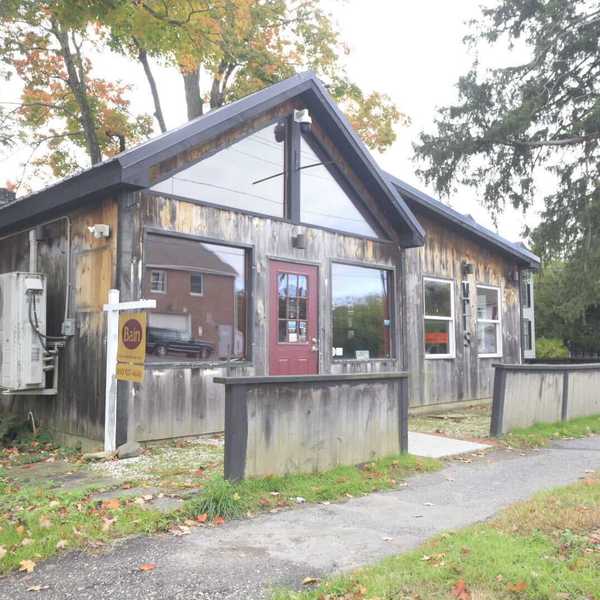
MILLERTON — A decades-long dispute on Cooper Road returned to the spotlight on Thursday, Jan. 15, as a tense meeting of the Zoning Board of Appeals (ZBA) concluded with members unanimously rejecting a request to reconsider a decision that was made more than 20 years ago — a move that would have reopened conditions tied to the property’s original approval.
At the center of the conflict is an illegal dwelling owned by Erasmo and Josephine Vitiello on Cooper Road that has never received a certificate of occupancy. Although the structure received a building permit in 2005, it remains illegal under the town’s zoning code. Litigation between the town and homeowners in 2018 resulted in an injunction requiring the property to be vacated. The home, however, remains occupied, prompting public questions about enforcement by the Town Board.
Homeowner Josephine Vitiello appeared before the ZBA and spoke at length about her family’s efforts to “do all of the right things” in pursuit of a certificate of occupancy, telling the board that the prolonged dispute has caused significant turmoil for her family and their neighbors. Vitiello claimed the two outstanding items stemming from the 2005 decision — issues related to her driveway and drainage — have been “substantially completed.” ZBA member Jeff Stark pressed Vitiello with sharp questions before the board voted unanimously not to move forward with reconsideration.
The zoning issue
Town Attorney Warren Replansky said during the meeting that the building permit never should have been issued, explaining that the structure was approved as a shed but built as a single-family residence without the required frontage. Replansky characterized the original paperwork submitted to the building inspector as a “false application.”
Under the town’s zoning code, a residential lot must abut a public street for at least 40 feet in order to be legally permitted. While the Vitiellos’ driveway provides access from Cooper Road to the home and is approximately 10 feet wide, the lot itself does not meet the frontage requirement because it does not directly abut the roadway as required by zoning.
Family impact
Vitiello said that her son, daughter-in-law, and two young grandchildren live together in the home.
“We have been part of the community for 30 years,” she said. “My children literally grew up here, and we’ve done everything possible to try to resolve any issues.”
She described the home as well maintained and said the driveway is safe and fully functional, adding that meeting the town’s sight-distance requirements is impossible because the driveway is curved.
“I’ve tried it all,” Vitiello said. “Twenty years is a long time to still be dealing with this. I just want to move on and continue minding my own business — like we always have.”
Public criticism
The request for reconsideration follows renewed public criticism from Cooper Road residents, including comments at recent town meetings calling for stronger zoning enforcement related to the property.
North East resident Tyler Graham recently created a group called “Save Millerton” that he hopes will call attention to gaps in town zoning enforcement and demand greater transparency, among other things.
The group’s focus grew out of the long-running dispute on Cooper Road, where Graham and several neighbors allege that the Vitiello property has gone unenforced for years and caused tension in the neighborhood. Graham was not present at the Thursday night meeting.
Ed Covert, whose property is adjacent to the Vitiellos’, has also expressed frustration with the lack of zoning enforcement. He maintains that the driveway is actually not a driveway, but a “right of way” that passes over his property that he said is being “destroyed” by widening the path, changing angles and laying down peastone without permission. Covert said he was pleased with the decision of the ZBA.
Strong questioning from ZBA’s Jeff Stark
ZBA member Jeff Stark was the first to question Vitiello, referencing the long history of litigation tied to the property.
“In the past 20 years, the Vitiellos have sued everyone and everyone has sued the Vitiellos over this property,” Stark said, before asking why the Highway Supervisor and the Building Inspector were the only officials not involved in past lawsuits.
Stark asked, “Are you aware that if a building inspector refuses to grant the building permit and abuses his discretion, that a judge has the power and the duty to require him to issue them?”
In response, a confused Vitiello asked, “You're questioning why I'm not suing one of your departments? I find that a little rough, but if I can't get it resolved in this manner then I guess that's going to have to be the next step.”
Changing course, Stark said he was not suggesting any specific course of action. He framed his comments as questions about jurisdictions, asking why Vitiello believed the issue fell under the ZBA’s jurisdiction and not the highway department.
Under town law, the ZBA does not have authority to determine whether a driveway meets safety or highway standards, which fall under the jurisdiction of the highway supervisor.
“Everyone keeps pointing to everyone else,” Vitiello said. “I’m here to tell you that I’ve tried it all.”
Internal conflict among ZBA
In the lead-up to the vote, tensions surfaced among board members during a procedural discussion involving Town Attorney Warren Replansky, who attended the meeting in-person at the request of ZBA Chair Edie Greenwood. Replansky said reconsideration would require a unanimous vote and that a motion to reconsider would first need to be made, though such a motion would not constitute a vote in favor of the homeowner.
Stark pushed back sharply.
“I don't believe that,” he said. “In fact, I don't believe much of what our attorney just said.”
Stark went on to argue that the wording of the board’s original decision 20 years ago was “faulty in the extreme,” and likely led the Vitiello family to believe the ZBA had taken on responsibility for determining whether their driveway met legal or safety standards.
“We don't have the right to take over that decision,” Stark said. “But reading our first decision, she might well have believed we thought we did.” He reiterated that the role belongs to the highway supervisor.
Tensions emerged again over the written statement to be issued following the vote, which requires signatures from board members. While Greenwood asked Replansky to draft the document, Stark objected, saying he would not sign a version prepared by the town attorney.
“I’ve already written a decision,” Stark said. “You can have Mr. Replansky write a decision for the rest of you. But I’ll be signing the decision that I wrote.”
The News was unable to reach Stark for clarification as to why he had prepared a written decision prior to the hearing.
The board ultimately voted in favor to request a statement from Replansky, with Stark as the only member who voted “no.”
Stark also criticized Greenwood’s decision to request Replansky’s attendance at the meeting, citing the cost of legal fees and pointing out the collective experience of the board. “I request that any future decisions about whether we need counsel or not be determined by the board,” Stark said.
With the ZBA declining to reopen the case, any further action related to the occupied dwelling — including enforcement of the existing injunction — now rests with town officials outside the board.





 Justine and Victor Valla in their studio with a painting of Victor’s,”Jonah and the Whale.” Robin Roraback

 A ceramic vase by Kathleen Heidemann.Provided
  Joy Brown’s delightful ceramic sculptures.Provided