"The field of illustration is very close to my heart"
— Stephanie Plunkett
For more than three decades, Stephanie Haboush Plunkett has worked to elevate illustration as a serious art form. As chief curator and Rockwell Center director at the Norman Rockwell Museum in Stockbridge, Massachusetts, she has helped bring national and international attention to an art form long dismissed as merely commercial.
Her commitment to illustration is deeply personal. Plunkett grew up watching her father, Joseph Haboush, an illustrator and graphic designer, work late into the night in his home studio creating art and hand-lettered logos for package designs, toys and licensed-character products for the Walt Disney Co. and other clients.
“The field of illustration is very close to my heart,” she said. Inspired by that example, she studied illustration at Pratt Institute and began her career as an illustrator before shifting toward museum work. An internship at the Brooklyn Museum proved pivotal. “It was inspiring to see the children come alive in front of art,” she recalled.
In addition to her curatorial work, Plunkett is the author of two children’s books, “Kongi and Potgi: A Cinderella Story from China” and “Sir Whong and the Golden Pig,” and has written or co-authored numerous books on illustration, including “Drawing Lessons from the Famous Artists School” and “Leo Lionni: Storyteller, Illustrator, Designer.” She earned an MFA from the School of Visual Arts and built a museum career that included positions at the Brooklyn Museum, the Brooklyn Children’s Museum and the Heckscher Museum of Art before joining the Norman Rockwell Museum, where she has worked for 31 years.
But elevating illustration has meant challenging decades of critical skepticism.
“The goal has been to shine a light on this important American art form and to elevate public awareness of its artistic and cultural importance,”Plunkett said.
As a popular and widely circulated art, illustration is sometimes thought of as inferior to fine art, such as painting and sculpture. Plunkett considered why. She theorized that the 1913 New York Armory Show, the International Exhibition of Modern Art, with works by artists such as Picasso, Matisse and Duchamp, initially contributed to this evaluation. In the 1930s and ’40s, abstract expressionism became the art of the nation, and the rift widened further.
“Norman Rockwell became the antihero for many art critics of the time,” said Plunkett. “Illustration was viewed as too commercial and sentimental because of its emphasis on visual storytelling.”
Plunkett calls illustration “art with a job to do.” She explained, “Illustrators are adept at solving visual problems for their clients while expressing their own aesthetic and artistic vision.”
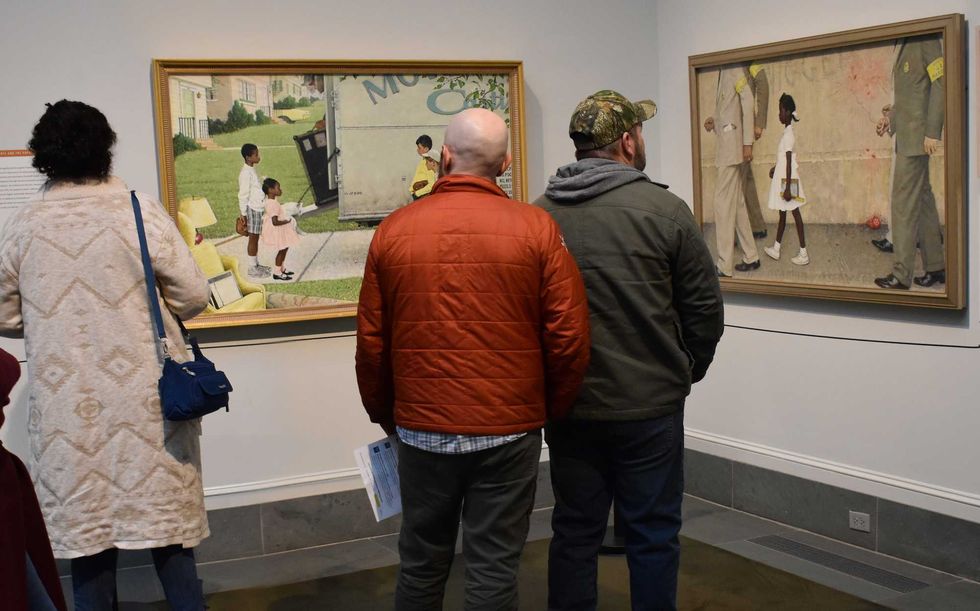 Visitors consider Norman Rockwell’s paintings on Civil Rights for Look Magazine, “New Kids in the Neighborhood” (1967) and “The Problem We All Live With” (1963.) L. Tomaino
She noted that the line between the fine and applied arts “is much more porous now, with many artists working across platforms and styles.” She cited late-20th-century illustrators like Marshall Arisman, Barbara Nessim, Robert Cunningham, Bernie Fuchs and Mark English as illustrators who forged unique approaches to working and seeing.
Plunkett commented that people want to see the original illustrations. “Generally, Rockwell exhibitions bring high attendance. Currently, our traveling exhibition, ‘Norman Rockwell: From Camera to Canvas,’ is at the New Britain Museum of American Art, but we’ve traveled Rockwell and illustration to 45 states and several countries, including Japan, France, Italy and Germany.”
Nowadays, illustrators take on subjects that are important to them. “The children’s book industry is committed to sharing the richness and diversity of people and cultures with young readers.” Plunkett cited the late illustrator Jerry Pinkney’s commitment to this goal. As a boy, Pinkney found no books portraying children like him, and “his life’s mission as an artist was to present inspiring, positive images of children of color.”
The Norman Rockwell Museum and Rockwell Center seeds were sown when “Rockwell placed the first 199 artworks in the care and collection of the Norman Rockwell Museum upon its founding in 1969, some of which he personally acquired for the fledgling collection,” said Plunkett. “The museum’s current Rockwell holdings include 865 original artworks, the artist’s Stockbridge studio and an archive of 400,000 photographs, letters, props and first uses of the artist’s work. We also hold about 25,000 illustrations by other artists, from the historical to the contemporary.”
“We call ourselves the home for American illustration. We have a real commitment to illustrators and what they’ve accomplished,” said Plunkett.
The Norman Rockwell Museum is located at 9 Glendale Road, Stockbridge. For more information and to purchase tickets, visit
nrm.org




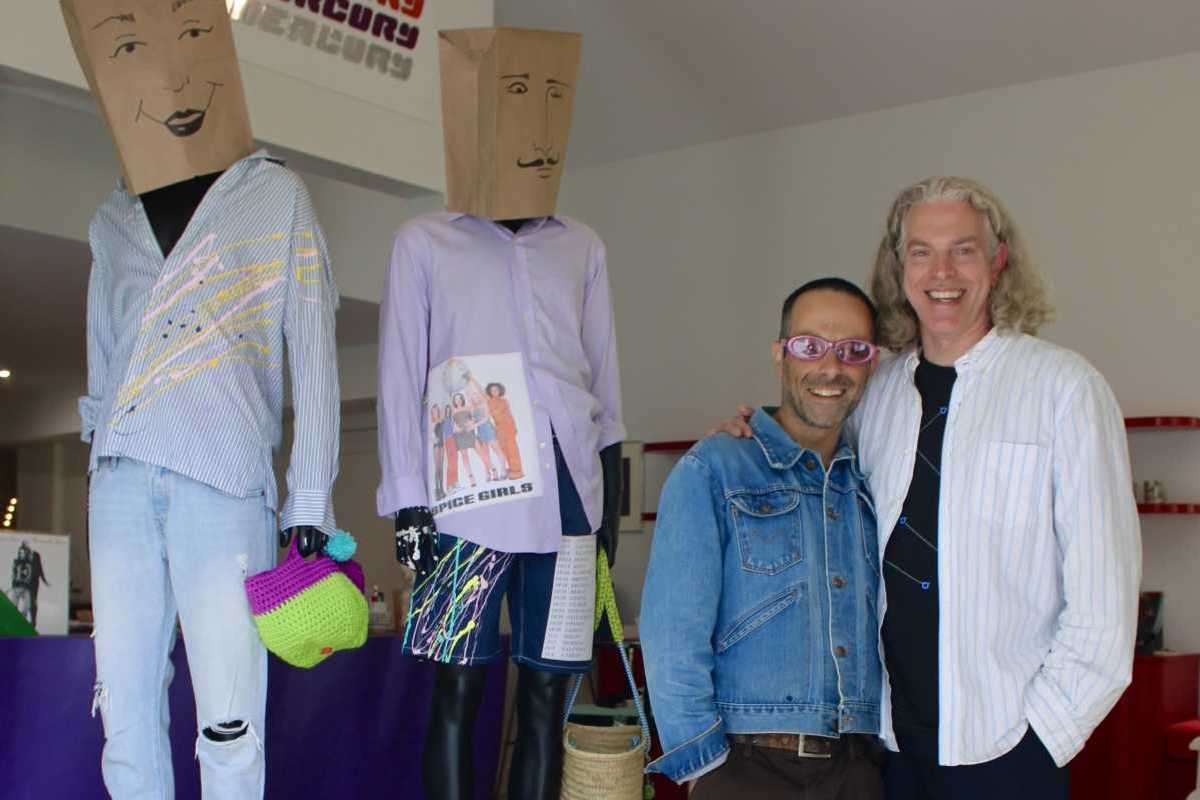
 Classic styles, bold colors, and creative concerts make up the “Imaginary Concerts” line at Peggy Mercury.Provided
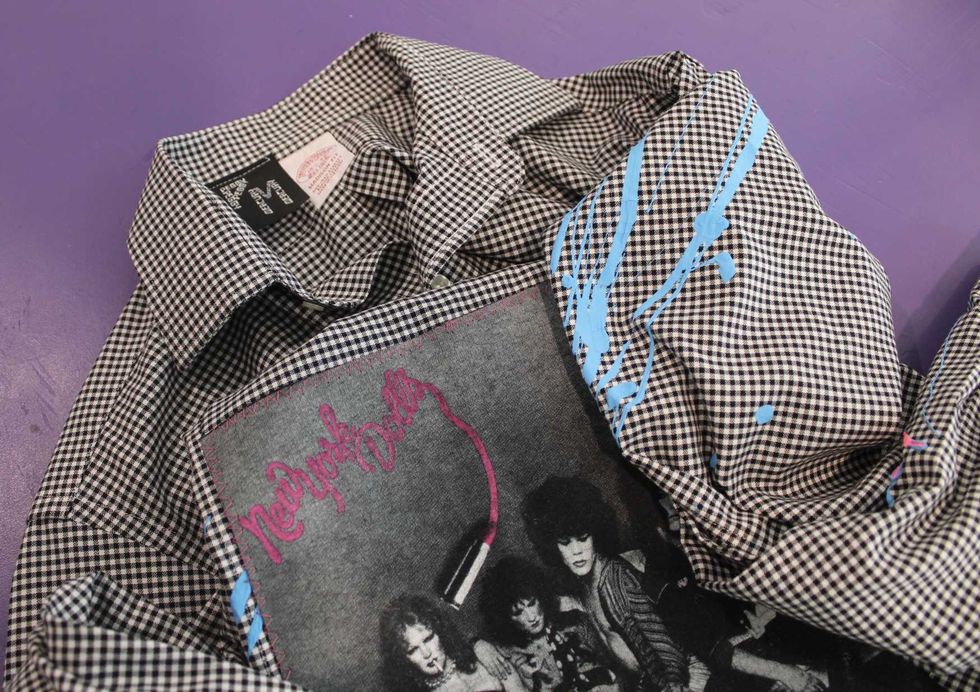
 Shirts from Peggy Mercury’s first fashion line, “Imaginary Concerts,” hang on display.Provided