Pulver announces county exec run

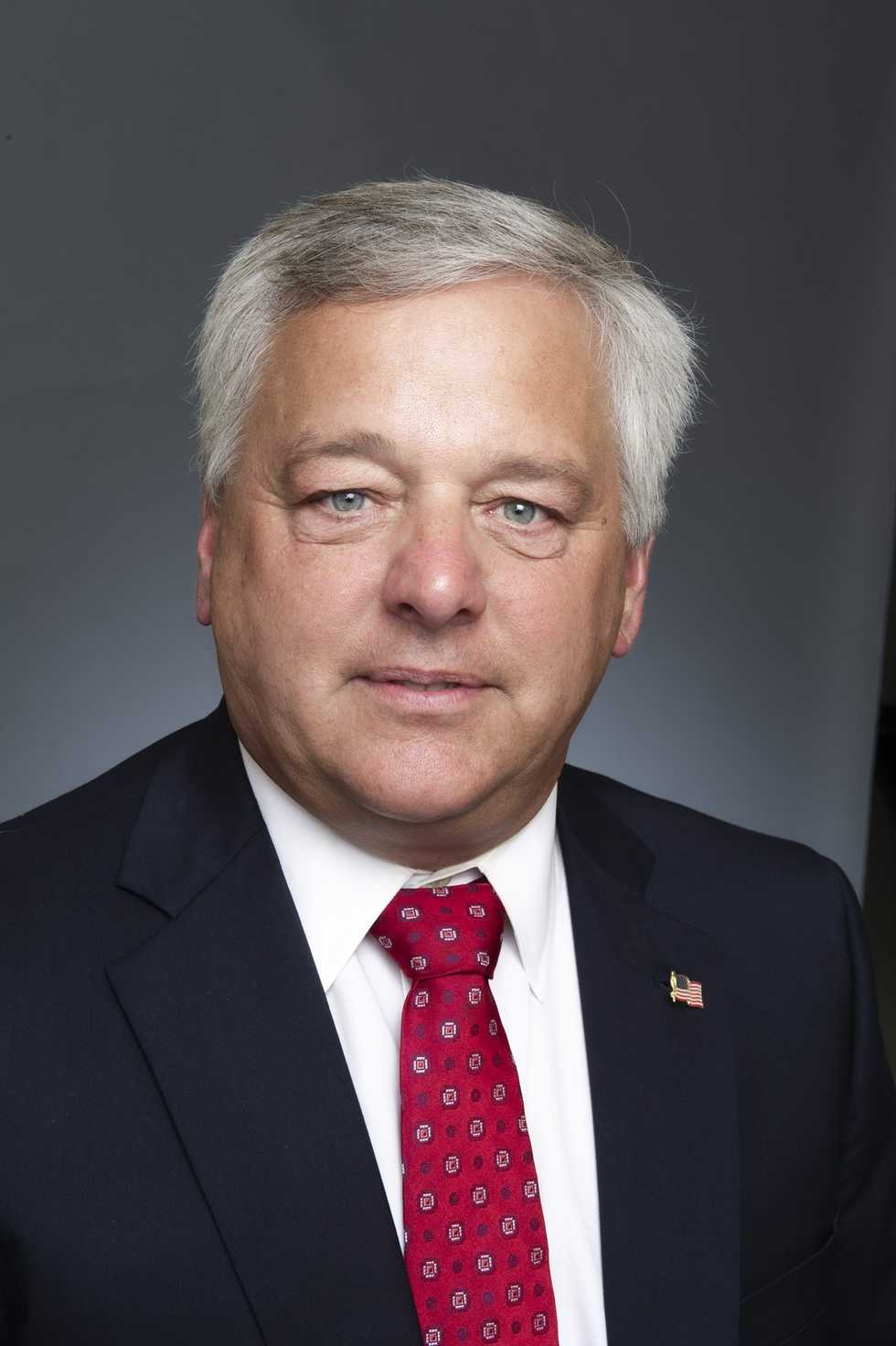
Chair of Legislature Gregg Pulver (R-19) Photo submitted

PINE PLAINS— “I told you you’d be the first to know, and now you’re the first to know,” said Chair of the Dutchess County Legislature Gregg Pulver (R-19), regarding his official announcement of his candidacy for the county executive position come 2023. Pulver shared his intentions with The Millerton News on Friday, Sept. 16.
“I personally have 100% decided I’m going to run for county executive,” said the Pine Plains native, a multi-generational farmer and longtime public servant. “I think I am, actually, ready to share [the news].”
Pulver has been contemplating entering the race for months. Starting Jan. 1, 2023, the office will be vacated by three-term County Executive Marcus Molinaro.
Molinaro, a Republican residing in Red Hook, confirmed he would step down from the top county post after announcing plans to run for the Congressional seat left open by former U.S. Rep. Antonio Delgado (D-NY-19).
Delgado relinquished his congressional seat when Governor Kathy Hochul appointed him lieutenant governor in May. Delgado replaced former Lt. Gov. Brian Benjamin, who resigned in disgrace after being arrested and indicted for fraud, bribery and falsification of records. Delgado is New York’s third lieutenant governor in the past year, starting back when Hochul was promoted to helm the state in the wake of former Gov. Andrew Cuomo’s controversial resignation.
Molinaro lost the Aug. 23 Special Election for Congressional District 19 to former Ulster County Executive Pat Ryan, who was sworn into office on Sept. 13.
Down but not out, Molinaro is on the ballot to run for the newly-drawn Congressional District 18 (CD 18) in the ‘23 General Election, necessitating his deputy to fill out the remainder of the county executive term.
That position will be up for grabs, though, in November 2023. Pulver said he’s expecting others in the GOP to express interest in the county executive seat, and that he will have to “make sure I’m the Republican nomination; if I don’t get that, probably, I will continue to run for the Dutchess County Legislature.”
Pulver said his “goal is to win the nomination in the winter of the political calendar,” adding that calendar has been moved up because “of everything.” He noted the state GOP will likely have a convention sometime in February 2023.
Pulver also hopes to gain the support of the county’s Conservative Party, backing he’s had for some legislative elections but not for all. Additionally, he said he will run on the Independent Party line he created for his last race, the Common Ground Party.
If he loses the Republican bid for county executive and remains a legislator, Pulver said he will again run for the one-year term chairmanship.
Legislators serve two years per term, while the county executive’s term is four years.
As far as who else might be throwing their hat into the ring for the county exec’s seat, Pulver said he “hasn’t heard of anything official on anybody.
“I know there’s been speculation on some people,” said the five-term legislator. “I think being chair of the Legislature for the last four years — this is my fifth year — I think it gives me a unique opportunity for working hand-in-hand with Marcus, and keeping the county moving in what I believe is a strong direction.”
Pulver began his public service career with the Pine Plains Central Schools’ Board of Education; he also volunteered as an EMT with the Pine Plains Fire District’s Rescue Squad; with the National Ski Patrol; on the Pine Plains Conservation Advisory Council; the Pine Plains Board of Assessment Review; and the Pine Plains Planning Board. Before becoming a county lawmaker, Pulver spent 12 years serving as the Pine Plains town supervisor.
“There are people that are doing it for the right cause, and I hope I am,” he said. “I hope I’ve always done this for what I believe are the right reasons.”
He added that his decision to run for county executive was prompted by “how many people have reached out to me in last two to three months; it’s almost daily that people ask me to run. A lot of those people I respect immensely, and they kept telling me the same thing: that I should run.”
Pulver said he “hasn’t heard anything from the Democrats or anyone else,” about who may make a run for the county executive position outside of the Republican ticket. He said one reason is because it’s “so early in season.”
Nonetheless, Pulver said “it’s going to be an interesting election… ”
Before Pulver and any others seek voters’ support for the November ‘23 county executive race, Deputy County Executive William O’Neill will fill out the remainder of Molinaro’s unexpired term. Molinaro will vacate the office come January, whether or not he’s successful in his bid for CD 18. O’Neill will serve the last year of Molinaro’s four-year term.
“Marcus made it very public that he is done as the county executive, win, lose or draw,” said Pulver, “once he said that I felt pretty confident it’s time for me to move on.”
O’Neill is a Republican who has belonged to the Molinaro administration for the past decade. He has never been elected to serve in public office.

Nathan Miller
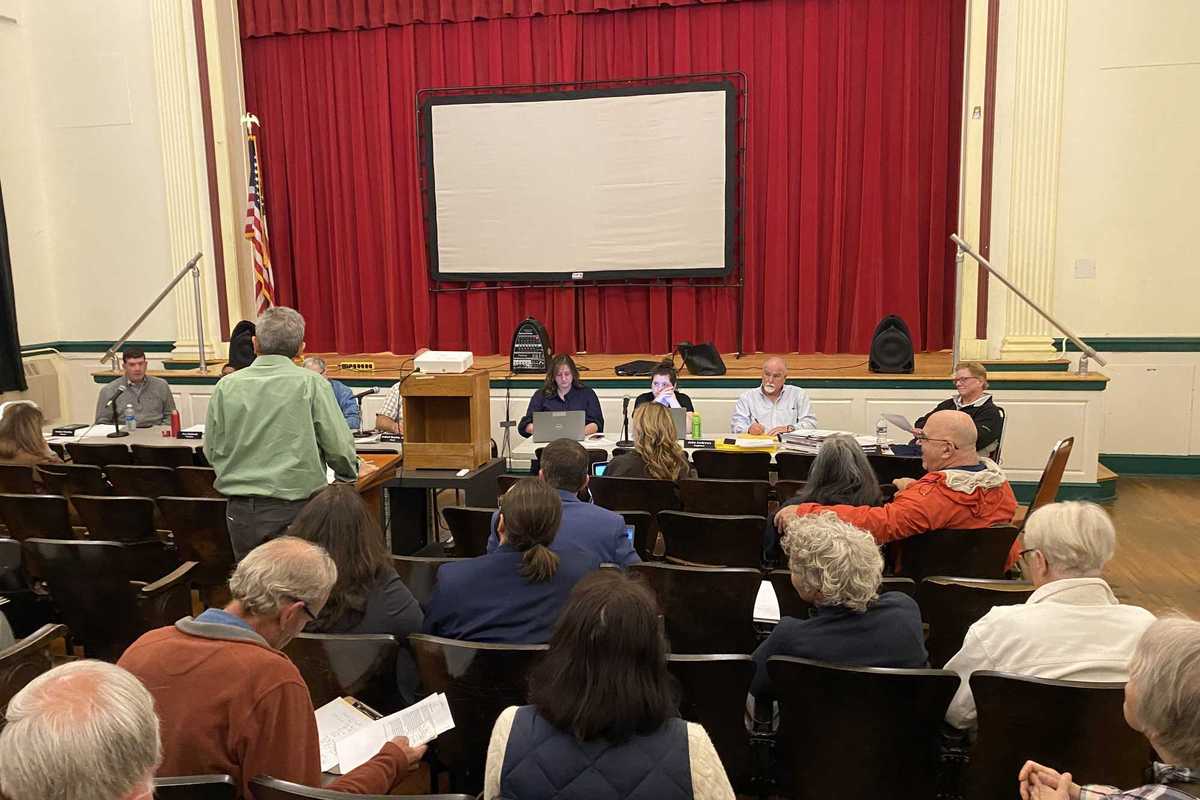
Architect Michael Sloan of Millbrook-based firm Sloan architects describes plans for the proposed Thorne Building renovation to the public for the first time at a public hearing of the Millbrook village Planning Board on Monday, March 16, at the Millbrook Firehouse on Front Street.
MILLBROOK — Community members had a chance to weigh in on plans to renovate the Thorne Building on Franklin Avenue into a state-of-the-art event and community center.
Architect Michael Sloan of Millbrook-based Sloan Architects outlined a proposal that includes a rear addition to expand the stage, an enlarged parking lot, new exterior lighting, a front garden and the removal of the portico on the building’s east side. Sloan said the building, originally constructed as a K-12 school, would be transformed into a space for the community to gather and create.
Public comment was generally supportive, though several residents sought more details about the lighting plan and disability accessibility. The public hearing was continued to the board’s April 20 meeting.
Sloan said the renovations would breathe new life into the century-old building, which has sat vacant in downtown Millbrook for years. The plans call for nearly every space across the building’s four floors to be put to use.
“This project is taking the Thorne Building on Franklin Avenue and giving it purpose and life again,” Sloan said. “The project entails basically making the Thorne Building an actual community center for the community that’s going to be open for the public.”

The renovations are being funded by the Millbrook Community Partnership, a nonprofit headed up by Millbrook resident Oakleigh Thorne — a descendant of the building's namesake — to support the creation of Bennett Park on the former Bennett College campus and the restoration of the historic Thorne Building. Thorne said Monday the building is still several years from opening, but the organization has already outlined potential uses for the interior space.
At the center of the project is the auditorium, which Sloan said will be expanded to better accommodate professional performances.
"It's what we call a high school stage," Sloan said. "It's really for graduation and very shallow."
Sloan said the building would be expanded by about 20 feet, 9 inches at the rear to provide more stage depth and allow for the installation of an accessibility ramp behind the stage. He said the auditorium would be transformed into a performance hall capable of hosting films, live music, plays, dance productions, community meetings and other events. The first floor would also include co-working space available for community members to rent.
"It's for everybody," Sloan said.
In the basement, Sloan said, plans call for a culinary arts space similar to a catering kitchen. While it would allow for food preparation and serving, he said, it would not function as a full production kitchen. The basement would also include a digital arts lab that Sloan compared to a makerspace.
He said the area would house 3D printers, computers, sewing machines, music-recording equipment, practice rooms and other tools for digital creation.

The arts-focused uses would continue on the upper floors, Sloan said. The second and third floors would be dedicated to gallery and studio space for visual artists. The second floor would also include a dance floor, allowing the space to host both community and private events.
Comments from the public were largely favorable, though some neighbors raised questions about lighting and accessibility.
Millbrook resident Heather Lavarnway, drawing on her experience as a professional municipal planner, praised the proposal while pressing Sloan for more information on lighting details. She asked for clarification about lighting temperatures and suggested alternative fixtures for some lights that could create unwanted glare.
"This project is clearly very well thought out," Lavarnway said. "It's sensitive to both the building and the neighborhood."
Other commenters asked for more details about the building’s accessibility features, prompting Sloan to explain that the structure would be brought up to current accessibility standards, including New York’s updated requirements that took effect Jan. 1.
"This is going to be state-of-the-art for accessibility, this building," Sloan said. He said he has experience designing buildings with high accessibility standards due to a high volume of work with universities. "I do this every single day."
Aly Morrissey
Robin Wall Kimmerer inspired the audience with her grassroots initiative “Plant, Baby, Plant,” encouraging restoration, native planting and care for ecosystems.
Robin Wall Kimmerer, the bestselling author of “Braiding Sweetgrass” and a member of the Citizen Potawatomi Nation, urged a sold-out audience at the Cary Institute of Ecosystem Studies on Friday, March 13, to rethink humanity’s relationship with the natural world through gratitude, reciprocity and responsibility.
Introduced by Cary Institute President Joshua Ginsberg, Kimmerer opened the evening by greeting the audience in Potawatomi, the native language of her ancestors, and grounding the talk in a practice of gratitude.
“Gratitude is the doorway to reciprocity,” Kimmerer said.
Kimmerer, also a mother, botanist and professor, said that Indigenous wisdom does not have to be at odds with Western science, but rather it can help humans reframe the way they understand the Earth.
She also reflected on the personal journey that led to her lifelong commitment to promoting a lens of Indigenous wisdom in Western science. As a young woman entering the field of botany — then largely dominated by men — she said her path in academia was not always welcoming as a female Native scientist.
“It has been a lifelong journey,” she said. “I was born a botanist.”
Throughout the lecture, Kimmerer described how Indigenous ecological knowledge — rooted in observation, experience and ethical responsibility — can complement scientific inquiry and help solve today’s environmental crises.
She pointed to global data showing that about 80 percent of the planet’s remaining biodiversity is found on lands stewarded by Indigenous peoples, many of whom remain under threat from continued colonization and development.
A central theme of the evening was the concept of the “Honorable Harvest,” a code of practical ethics that governs what humans take from the natural world. Its principles include never taking the first one, always asking permission, taking only what is needed, minimizing harm and giving something back.
“Science is a great way to listen for the answer,” Kimmerer said, referring to the practice of asking permission of the natural world and paying attention to ecological limits.
By the end of the talk, Kimmerer turned to the question she said she hears most often: “What can I do?”
Her answer included a call to reciprocity and action. She urged audience members to consider their own “human gifts” and how those gifts might be used in service of the Earth. For example, Kimmerer said she uses her own gift of storytelling to distill complex information and inspire people to think differently about the living world.
“The Earth asks us to change,” she said.
Kimmerer left the audience with a call to action through her latest initiative. In contrast to the slogan “drill, baby, drill,” she said she has helped launch “plant, baby, plant,” a grassroots initiative that encourages people to support the living world through restoration, native planting and care for ecosystems.

Want more of our stories on Google? Click here to make us a Preferred Source.
D.H. Callahan
"There is no better feeling than working through something with your own brain and your own hands." —Melissa Gamwell
In an age of automation, Melissa Gamwell is keeping the human hand alive.
The Cornwall, Connecticut-based calligrapher is practicing an art form that’s been under attack by machines for nearly 400 years, and people are noticing. For proof, look no further than the line leading to her candle-lit table at the Stissing House Craft Feast each winter. In her first year there, she scribed around 1,200 gift tags, cards, and hand drawn ornaments.
Each piece makes a gift, a note or even a Christmas tree seem more personal, more considered, and more connected to humanity. Since then, demand for her personalized, hand-lettered tags, ornaments and cards has only grown, appearing in mailboxes across the region and at shops like the Cornwall Whale and Marton & Davis in Chatham, New York. Her precision is remarkable, and to watch her create these one-of-a-kind pieces is an art all unto itself.
In recent months, we’ve seen a deluge of stories on digital replacement. Data managers, bankers and even therapists are being replaced by computer programs in mass waves of layoffs. But what many still find surprising about the proliferation of nonhuman competitors in the job market is how it’s affecting the arts. Illustrators, animators, photographers, musicians and even on-screen actors are being supplanted by bots touted as “artificial intelligence agents.”
But calligraphy — and handwriting in general — has been in the crosshairs of mechanical progress for centuries. There was a time, if you can believe it, when writing anything required ink, paper and sometimes even a living, breathing human scribe. No typewriters, no word processors, no voice-to-text programs.
Then came Gutenberg’s printing press. Sure, it changed the world for the better, ensuring a greater distribution of ideas, and helping spark some of the most important political movements in history. But it also marked one of the first moments when technology replaced the artistic work of the human hand. Over the centuries, printers, designers and technologists have continued to innovate. Today, with Photoshop or Illustrator, an entire universe of alphabets exists, from ornate and embellished to precise and futuristic — all designed to replace the human hand.

Yet, despite this centuries-long assault from technology, Gamwell has found her own way to thrive. Largely self-taught, she combines her drawing and industrial design background with an old-school New England childhood in Maine that involved “very tangible, hands-on, creative problem-solving using many materials.” Raised by “parents who loved antiquarian books, often filled with hand-written dedications,” hers was the kind of upbringing in which “traditional practices were cherished and flaunted” — a time and place with “hand-painted lettering on churches, street signage, the stones in beautiful churchyard cemeteries, and log books.”
Those early impressions have stayed with her, heightening her appreciation of sometimes overlooked details.
“There’s so much ephemera floating around with traces of beautiful handwriting to see everywhere, even now in Connecticut,” she said.
Even in a digital age, she keeps technology at a distance.
“You will not find ChatGPT on my phone, and you will usually not find my phone on me,” she said. Instead, she opts for a notebook, a scrap of paper or the back of a receipt. Sometimes, she goes even further, gathering black walnuts from trees on her property to make the specialized ink for her practice.
Gamwell’s approach to her craft is also philosophical. “There is no better feeling than working through something with your own brain and your own hands, even if you find it less exemplary than you would hope. And it only uses the water you’re already consuming. Do you need to convey an idea? Draw it, however horrific or childish. Write it, even if you never learned proper grammar — because you’ve always had programs do it,” she said.
“Sometimes I think that everything I like is ‘historic’ but it’s really that I just find more value in the traditional methods, which are still alive and well, and desperately in need of stewards for the future.”
After nearly 400 years of pressure, it’s encouraging to see handwriting — an art form that once seemed destined for obsolescence — still thriving, one careful stroke at a time. And thanks to Gamwell, perhaps there’s a new generation of observers, collectors and future calligraphers ready to carry it forward.
D.H. Callahan is a voice actor, creative director and trail steward. He lives with his wife, artist Lane Arthur, in West Cornwall, Connecticut.
Natalia Zukerman
The cast of “The Addams Family” from Northwest Regional School District No. 7 with Principal Kelly Carroll from Ann Antolini Elementary School in New Hartford.
Nearly 50 students from across the region are helping bring the delightfully macabre world of “The Addams Family” to life in Northwestern Regional School District No. 7’s upcoming production. The student cast and crew, representing the towns of Barkhamsted, Colebrook, New Hartford and Norfolk, will stage the musical March 27 and 28 at 7 p.m., with a 2 p.m. matinee on March 29 in the school’s auditorium in Winsted.
Based on the iconic characters created by Charles Addams, the musical follows Wednesday Addams, who shocks her famously eccentric family by falling in love with a perfectly “normal” young man. When his parents come to dinner at the Addams’ mansion, two very different families collide, leading to an evening of secrets, surprises and unexpected revelations about love and belonging.
For director Ann DeCerbo, the show’s mix of humor, spectacle and heart made it an ideal choice for a high school production.
“It’s funny and a little spooky, but underneath that it’s really about family, acceptance and learning to embrace what makes us unique,” she said.
The large cast and crew also made the musical a good fit for the school’s thriving theater program.
“What’s impressed me most is the level of commitment,” DeCerbo said. “These students are balancing school, sports, work, family, lessons, driver’s ed. The list goes on and on. But they show up ready to work and to support each other.”
Senior Gustavo Zurita stars as Gomez Addams opposite Ivy Wallace as Morticia. The cast also includes Kaileigh Grant as Wednesday and Domonic Salz as her love interest Lucas Beineke, along with Maribelle Roach as Uncle Fester, Violet Swanson as Alice Beineke, Levi Swanson as Mal Beineke, Krystal Janak as Grandma Addams, Lorelai DeCerbo as Pugsley Addams and Juan Pablo Urbina Labarrere as Lurch.
Behind the scenes, students are also responsible for set construction, lighting, sound, costumes and stage management, essential elements in creating the Addams family’s famously eerie home.
“We started by really embracing the color palette for the show,” said DeCerbo. “Black and white with very purposeful pops of color. This is the biggest set we’ve had on the NWR7 stage in as long as I can remember.”
While the story is packed with humor and gothic charm, DeCerbo said its message resonates strongly with teenagers.
“High school can be a time when people feel pressure to fit in and meet external expectations,” she said. “This show does a great job of showcasing how much we all have in common while also celebrating individuality.”
That spirit, she added, is part of what makes theater such an important space for students.
“One of the things I appreciate most about theater is that it offers a really welcoming environment where students feel comfortable being exactly who they are,” she said.
Ultimately, DeCerbo hopes audiences come ready to laugh and leave with a reminder that every family has its quirks.
“First and foremost, I hope they have fun,” she said. “But beyond that, I hope audiences leave with a reminder that families and communities don’t have to look the same to work. There’s a lot of joy in celebrating what makes people unique.”
Robin Roraback
Garth Kobel, Art Wall Chair, Mary Randolph, Frank Halden, Ruth Giumarro, Project Chair, Maria Bulson, Barbara Lobdell, Sherry Newman, Elizabeth Frey-Thomas, Donna Heinz around “The Green Man.”
In honor of National Quilt Day, a tradition established in 1991, Hunt Library’s second annual quilt show, “Quilts of Many Colors,” will open Saturday, March 21, with a reception from 5 to 7 p.m. The quilts, made by members of the Hunt Library Quilters, will be displayed through April 17. All quilts will be for sale, and a portion of each sale goes to the library.
At the center of the exhibit is a quilt the Hunt Library Quilters collaborated on called the “Quilt of Many Colors,” inspired by Dolly Parton’s song”Coat of Many Colors.” Each member of the Hunt Library Quilters made two to four 10-inch squares for the twin-size quilt, with Gail Allyn embroidering “The Green Man” for the center square. The Green Man, a symbol of rebirth, is also a symbol of the library, seen carved in stone at the library’s entrance. One hundred percent of the sale of this quilt benefits the library.
Ruth Giumarro, who led the Hunt Library Quilters in this project, explained that the quilting group started last year with the theme “Playing With Art,” which was inspired by children’s book illustrator Eric Carle. Giumarro said, “We had so much fun last year that everyone said, ‘Let’s do it again!’”
“This has been exciting,” said Giumarro. “We started off small with seven people. This year more people came, and there are more who want to come.” The range of experience varies from none to years of sewing and quilting. All are welcome; be a resident of Falls Village is not required.
“It’s all practice,” explained Giumarro, who has been sewing since she was in seventh grade. “Getting a straight line is hardest.”
On March 6, the quilters gathered at Hunt Library to bring their own creations for the show and admire the finished “Quilt of Many Colors.” After looking at each other’s quilts and pricing them, they celebrated with cake.
The Hunt Library is located at 63 Main St. in Falls Village. More information is available at huntlibrary.org

Want more of our stories on Google? Click here to make us a Preferred Source.

Want more of our stories on Google? Click here to make us a Preferred Source.