PINE PLAINS — More than 30 residents attended a Planning Board public workshop on Saturday, March 11, to learn about the status of a proposed community solar project proposed near Pulvers Corners that is under review.
As the meeting began in the Community Room of the Pine Plains Free Library, 7775 S. Main St., residents were presented with a summation of issues that have been identified by the Board.
Planning Board Chairman Michael Stabile began with a nuts-and-bolts explanation of the role of the board in evaluating the application by Carson Power of New York City, and introduced Frank Fish of BFJ Planning of New York, a planning consulting firm.
Fish reviewed the town’s solar law as well as the Planning Board’s role and responsibilities in considering the application to install a Tier-3 solar plant, which, under town law adopted in 2022, is considered a large-scale solar installation. The project would require a special permit and site-plan approval if it advances.
The three big study areas of the Planning Board, Fish said, are impact on habitat, visual impact of the project and evaluating the project’s consistency with community character.
“Now we’re approaching the end of the beginning of the process,” said Stabile, noting that the Board has held public hearings and workshops on Carson Power’s application and considered some environmental questions.
Stabile talked through a list of issues that have surfaced from public comments and from the Board, at times providing the Board’s perspective on the relevance of concerns raised.
At the outset, Stabile announced that — time permitting at the end of the workshop — anyone who wished to speak would be given the opportunity.
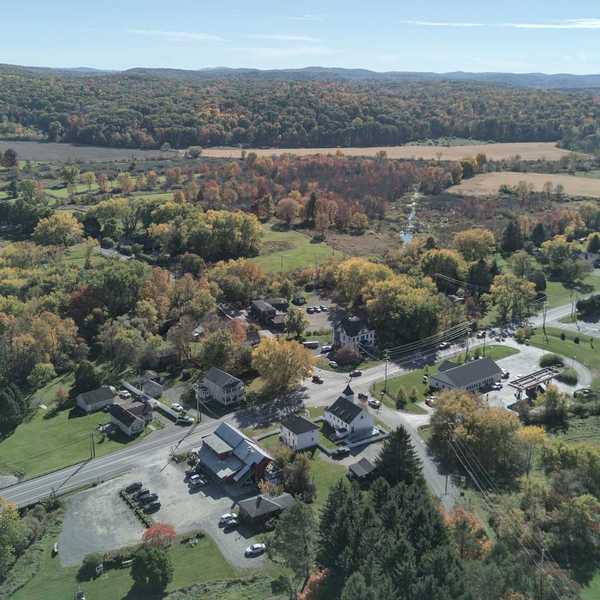
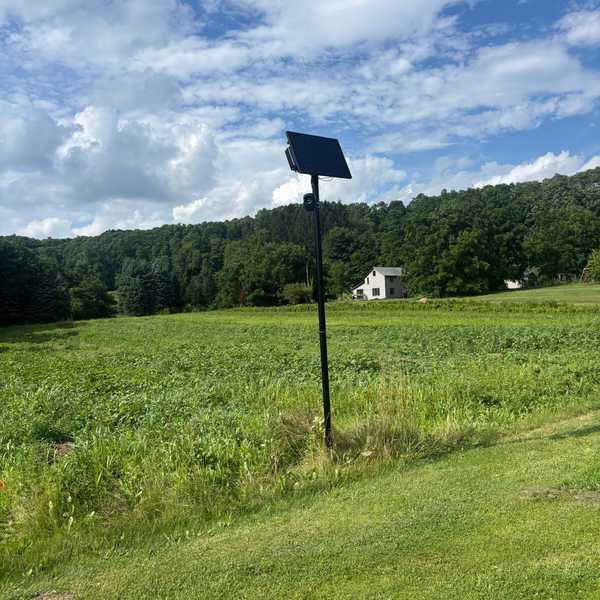
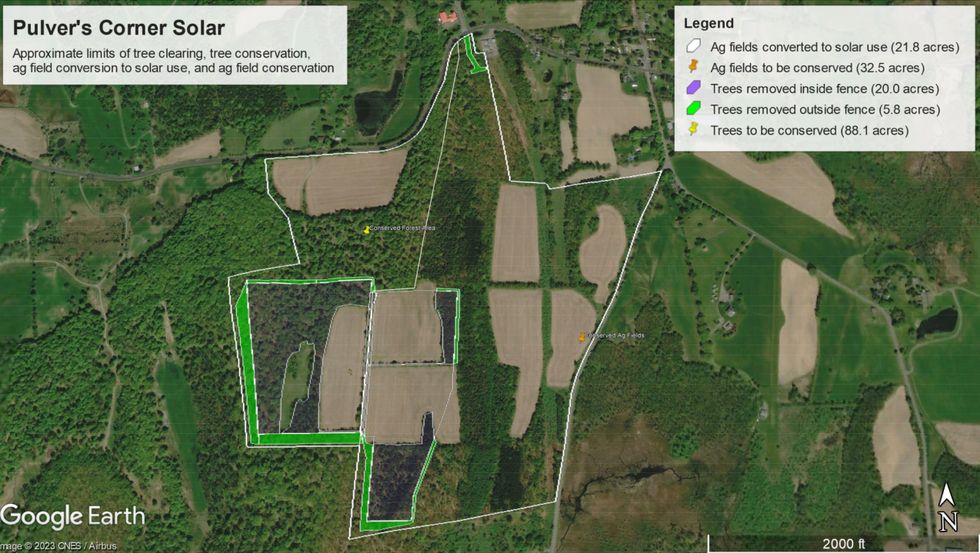
The list of issues included concerns about whether there were wetlands on the proposed site, the impact of cutting trees, threats to wildlife, runoff concerns and issues related to the use of herbicides. There also were issues raised about the impact on property values of nearby residents, including the visual impact of a 171-acre solar farm with 24,000 panels on agricultural and forested land, plus questions about traffic and safety.
“There are still some outstanding questions,” Stabile said, reiterating that the Board is evaluating all the things that have been said by Carson Power as well as all comments from the public. “This meeting is a review of the Planning Board’s work and the hearings that have been held to date.”
Ten residents who live near the project, to be located off Bean River Road, have organized their opposition to the project by hiring Grant and Lyons LLP of Rhinebeck, an environmental land use, zoning and real estate law firm.
John Lyons of Grant and Lyons submitted new comments to the Board prior to Saturday’s workshop that were based on expert reviews. The expert group includes: Erik Kaviat, co-founder of Hudsonia Ltd; George Janes, a planner; and Nan Stolzenburg, a community and environmental planner.
“We don’t agree with the sort of semi-conclusions that have been reached so far on some things,” Lyons told the Board Saturday. “We have some real questions about visual assessment. Visual impact is one of the biggest impacts posed by this project.”
Lyons also said that it may seem obvious that the project is consistent with the town’s Comprehensive Plan, but it’s a much more complicated question.
All three experts, who did not attend Saturday’s workshop, concluded in their reports that the project deserved further study.
Stolzenburg wrote: “It is my opinion that the Carson Solar proposed project is not consistent with the Town’s Comprehensive Plan, nor with community character and that there are many areas where there are potentially significant adverse environmental impacts to community character.”
Kaviat was critical of the level of detail in the application. “The proposal lacks important detail as to site preparation, construction, and operation, especially with regard to soil management and large trees, and including agricultural co-location and pollinator plantings, to ensure that the project’s harm to biodiversity is minimized and mitigated.”
Kaviat recommends taking a hard look at the potential impacts on the bog turtles, bats, large trees, forests, downslope and offsite waters and wetlands, among others.
Jaynes concluded that “this project may cause a significant adverse impact on visual resources. The materials that the applicant produced simply do not demonstrate the potential for visual impacts.”
Lyons is advocating for a “positive declaration” by the Planning Board, which would require Carson Power to prepare an environmental impact statement that studies the significant adverse environmental impact and proposes mitigation.
A few other residents spoke to the board Saturday after the workshop ended, including Allison Galliher, a resident of Skunks Misery Road, who said her family is involved in the community — in the schools, by volunteering, getting involved in the Little League. “We’re trying to make a positive impact to our community, where we’re living,” she said.
“They (Carson Power) don’t have a long-term interest here,” she said to applause from those present.
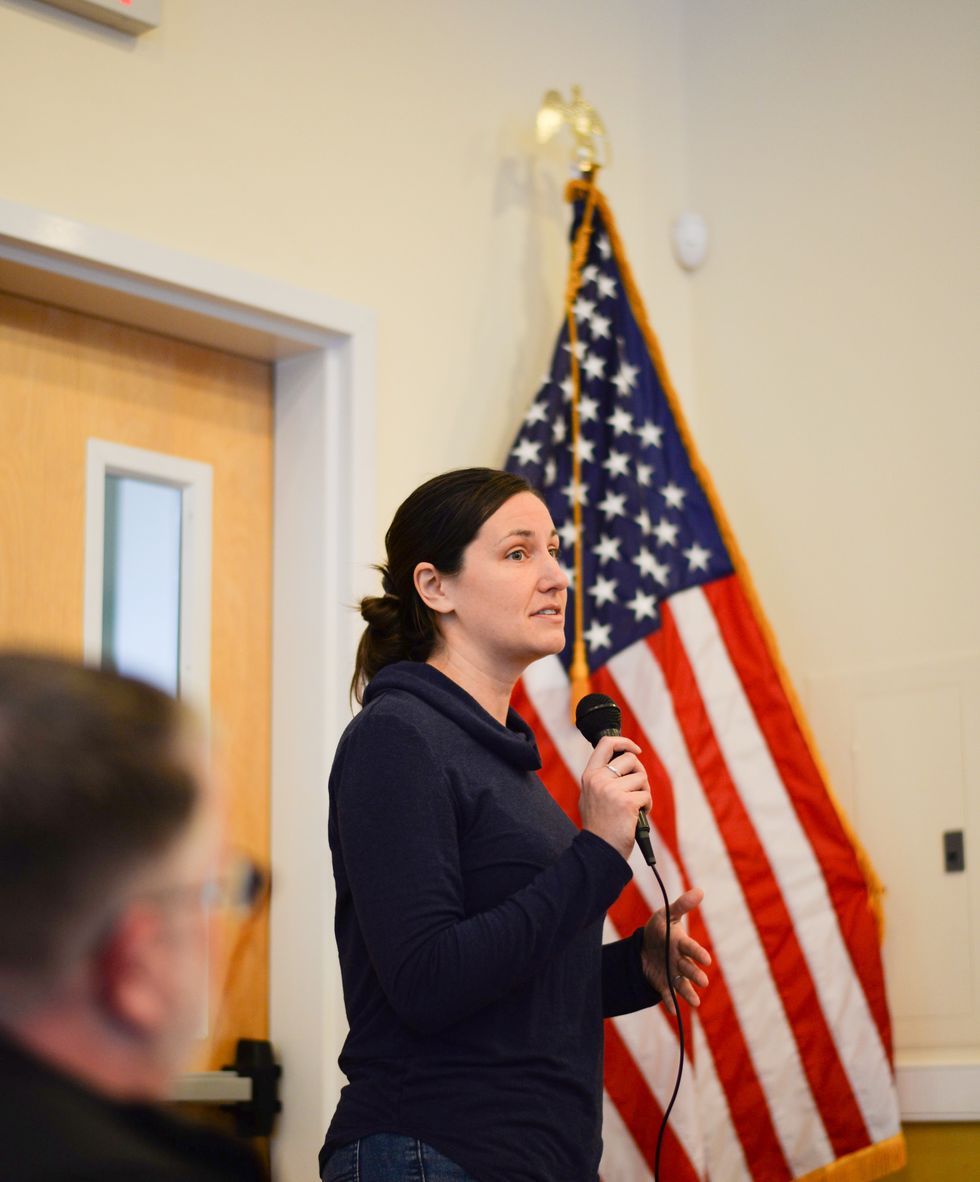
Allison Galliher of Pine Plains commented on Saturday, March 11, that Carson Power doesn’t have a long-term interest in the town. Photo by John Coston
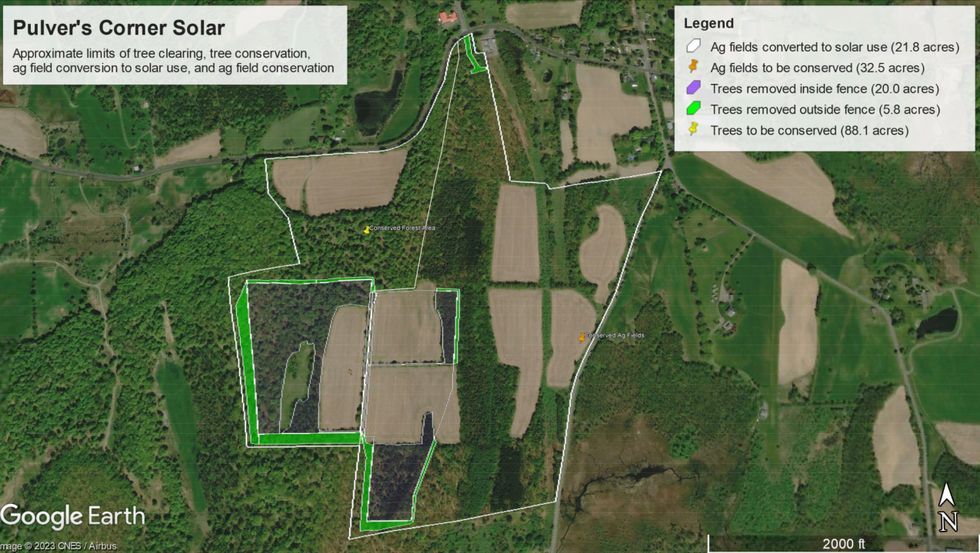
Provided by Pine Plains Planning Board





 Pay Bill for Robin Starr’s service in the Continental Army.Courtesy the Alex Breanne Corporation
 John Mills speaking at Quinnipiac University.Courtesy the Alex Breanne Corporation
 Stephanie Saetta,with her rescue dog George and Blue (left), a shepherd mix awaiting his forever home.Madi Long