Patricia Kim Leslie

MILLERTON — Patricia Kim Leslie, 71, a three-year resident of Millerton, New York, formerly of Poughquag, New York, since 1980, died peacefully on Thursday, Nov. 27, 2025, surrounded by her loving family in Millerton. Mrs. Leslie retired from Beekman Elementary School on July 1, 2018 following over a twenty-year career as a teaching assistant.
Born April 5, 1954, in Mount Kisco, New York, she was the daughter of the late Raymond and Patricia (Dwyer) Newman. She was a graduate of Pleasantville High School and received her associate degree from Westchester Community College. On Oct. 18, 1975 she married William F. Leslie. Bill and Pat celebrated their 50th wedding anniversary on Oct. 18, 2025. Bill survives at home in Millerton. Pat was an avid reader and enjoyed crafting, knitting, gardening, traveling to Rhode Island and Martha’s Vineyard on vacations and spending time with her beloved grandchildren. She will be dearly missed by her loving family and many dear friends.
In addition to her husband Bill, Pat is survived by three children, Christopher Leslie and his wife Emma Sampedro of Millerton, Meghen Bathrick and her husband Andrew of Pine Plains, New York and her son, Justin Leslie of Millerton; six grandchildren, Isabela, Alex, Isaac, Brooke, Lukas and Tucker; her sister, Kip Newman of Poughquag and several nieces and nephews.
Calling hours will be held on Thursday, Dec. 4, 2025, from 4 p.m. to 7 p.m. at the Scott D. Conklin Funeral Home, 37 Park Avenue, Millerton, NY 12546. Funeral services and burial at Irondale Cemetery will be private. Pastor William Mayhew will officiate. Memorial contributions may be made to the North East-Millerton Library, P.O. Box 786, Millerton, NY 12546.
To send an online condolence to the family, flowers to the service or to plant a tree in Pat’s memory, please visit www.conklinfuneralhome.com
Nathan Miller
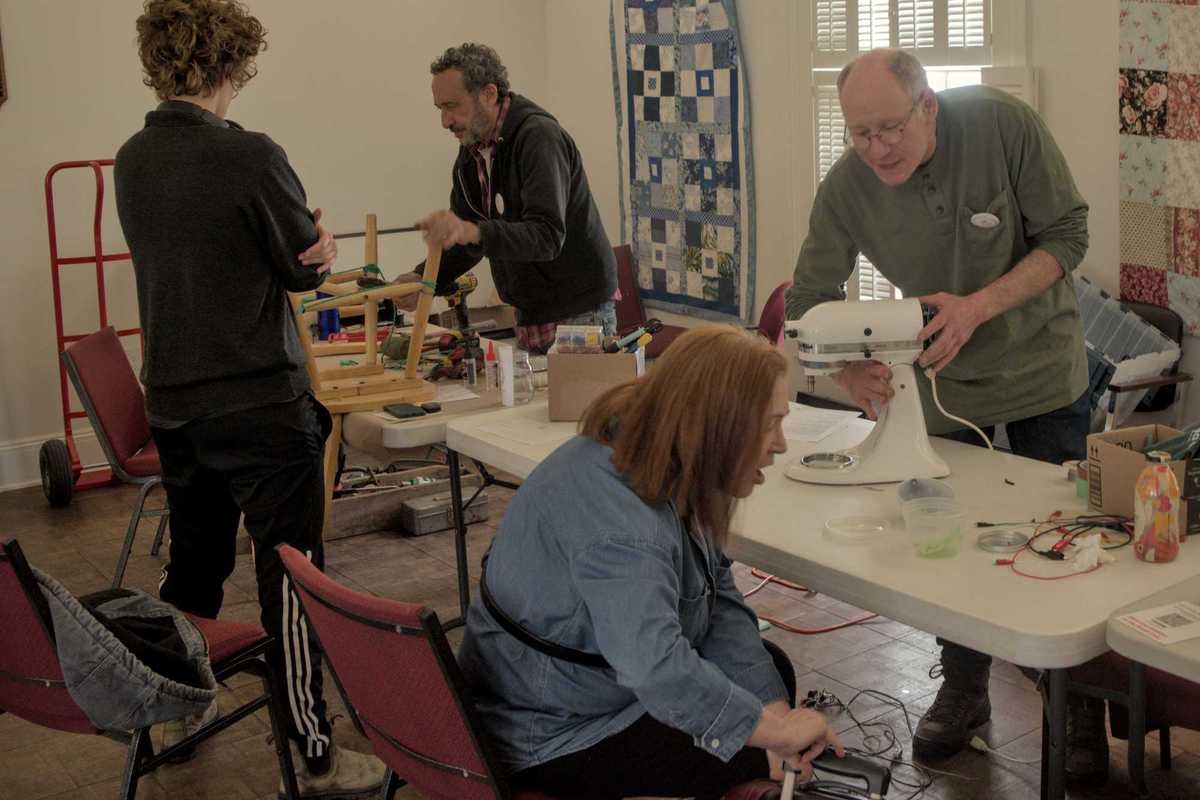
Local volunteers provide repair assistance at a Repair Café in the NorthEast-Millerton Library Annex on Saturday, April 25. The initiative, sponsored by the Millerton/North East Climate Smart Task Force, provided repairs to small electronics and appliances, furniture and textiles for up to two items per person for free.
Graham Corrigan
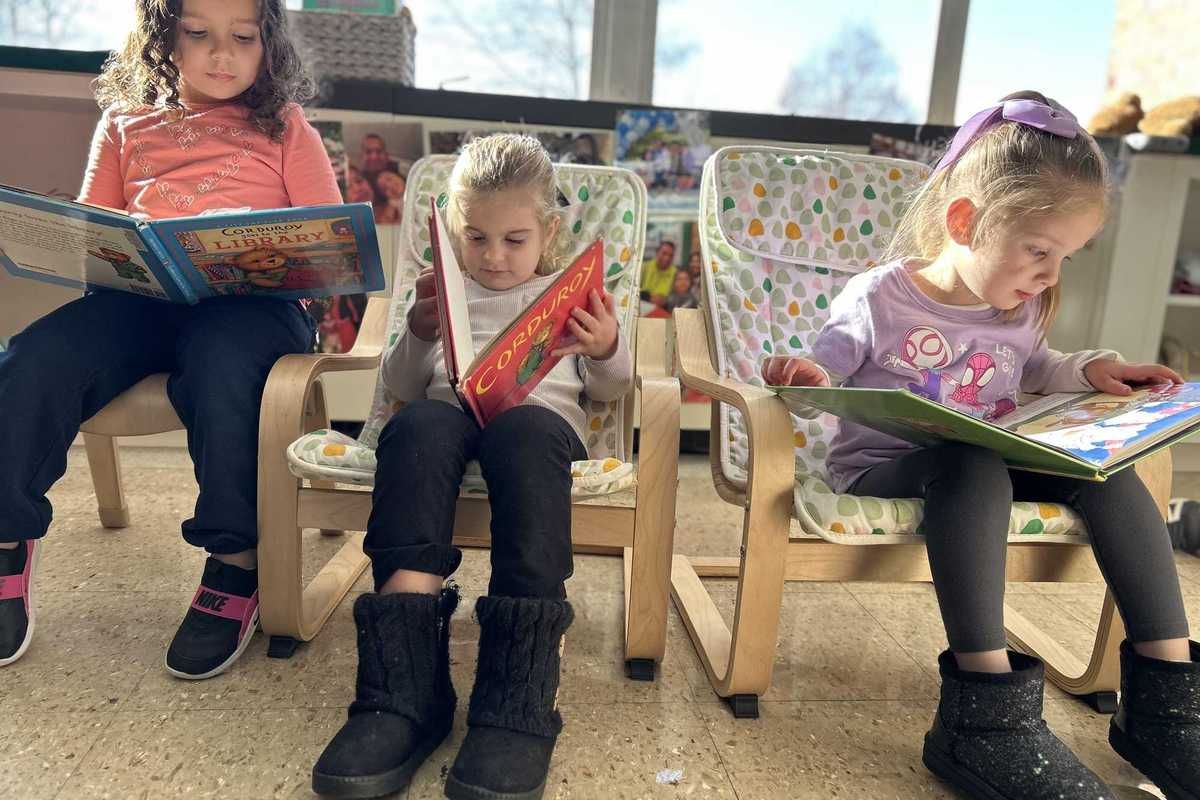
Webutuck Pre-K students enjoy quiet reading time together at Webutuck Elementary School.
AMENIA — Webutuck Elementary School has extended registration for its free Pre-K and kindergarten programs, opening enrollment until all remaining spots are filled as demand for early childhood education continues to rise.
The program is open to children who will be 3 or 4 years old on or before Dec. 1, 2026.
“We’re seeing the need for this in the community,” said Webutuck Elementary principal Amanda Coppola.
Affordable childcare is a pressing concern for Dutchess County. The number of county-wide early learning centers has dipped sharply, including the closure of North East Community Center’s Early Learning Program in December 2025.
New York Governor Kathy Hochul has made universal childcare a priority, earmarking $4.5 billion for a statewide program. A pilot program of $60 million for Dutchess, Monroe and Broome Counties was announced in January.
But that money isn’t available until 2027. Webutuck Elementary is one of the local schools trying to bridge the gap — this is the first year the school is including 3-year-olds in their Pre-K programming.
Previously, only 4-year-olds were eligible to participate. “It’s a start into socialization,” Coppola said. “We encourage a lot of outdoor activities, and the kids learn how to deal with different personalities.”
Pre-K also allows teachers to identify children who may struggle with the transition to school and provide support they might not otherwise receive.
To participate in the Pre-K 3 program, parents can call the school’s main office and set up a screening appointment. They’ll be asked to provide proof of residency and documents verifying their child’s age. To sign up, parents can call the school at 845-373-4100, ext. 1111. An orientation for registered students is scheduled for May 8.
Leila Hawken

Emma Berley has recently launched her mostly on-line endeavor called Underdog’s Revival Candle in her Amenia home.
AMENIA — A local artist is repurposing discarded glassware as vessels for handcrafted candles, blending sustainability with creative expression through her small business, Underdog’s Revival Candle.
Underdog’s Revival Candle is the home-based workshop of Emma Berley, an artist who has expanded her practice into candle-making using natural ingredients and repurposed vessels.
“I became obsessed with making candles,” Berley said during a studio tour on Wednesday, April 22. She began the learning process in 2020, she recalled, before moving with her family to Amenia in 2023.
What sets the candle company apart is devotion to artistic expression that also sees possibilities in items that have been devalued or discarded, returning them to usefulness in the form of candles.
“The first step is to collect the glassware,” Berley explained, citing likely sources such as thrift shops, yard sales and auction sites.
“There are tons of vessels out there in the world,” Berley said, adding that intriguing containers can also be created using a glass cutter on wine and beer bottles. She also repurposes vintage china, pressed glass and cut glass — items no longer widely used in modern homes.
Beyond the containers, candle colors and fragrances are natural. Berley said that she avoids synthetic fragrances, often handcrafting her own using lavender, citrus and vanilla beans, having learned early on that commercial vanilla extract cannot be used in wax because of its flammable alcohol content.
Berley grows many of the herbs used for her candles in her home garden.
“I want local people to come and pick up the candles,” Berley said, offering a 20% discount for customers who order online and choose pickup.
“I want to get the marketing and business side going,” Berley said. “I could sit and make candles, but how do I market them?”
Plans for the future may include teaching the art, especially around holidays, she said.
“Making candles is not that simple,” Berley said. “You have to know what wick goes with what container,” she added as something learned from experience. Also, she has learned that wax with added fragrance does not reheat well.
“Sometimes, I just need to discard rather than re-melt,” she said.
Berley’s workshop studio is located at 4942 Route 22, next to the former location of Tent. Berley resides on site, along with her husband, Joe, and their daughter Raina.
To learn more about Underdog’s Revival Candle and see the offerings, visit www.underdogcandles.store or on Instagram @underdogsrevivalcandles.

Want more of our stories on Google? Click here to make us a Preferred Source.
Leila Hawken
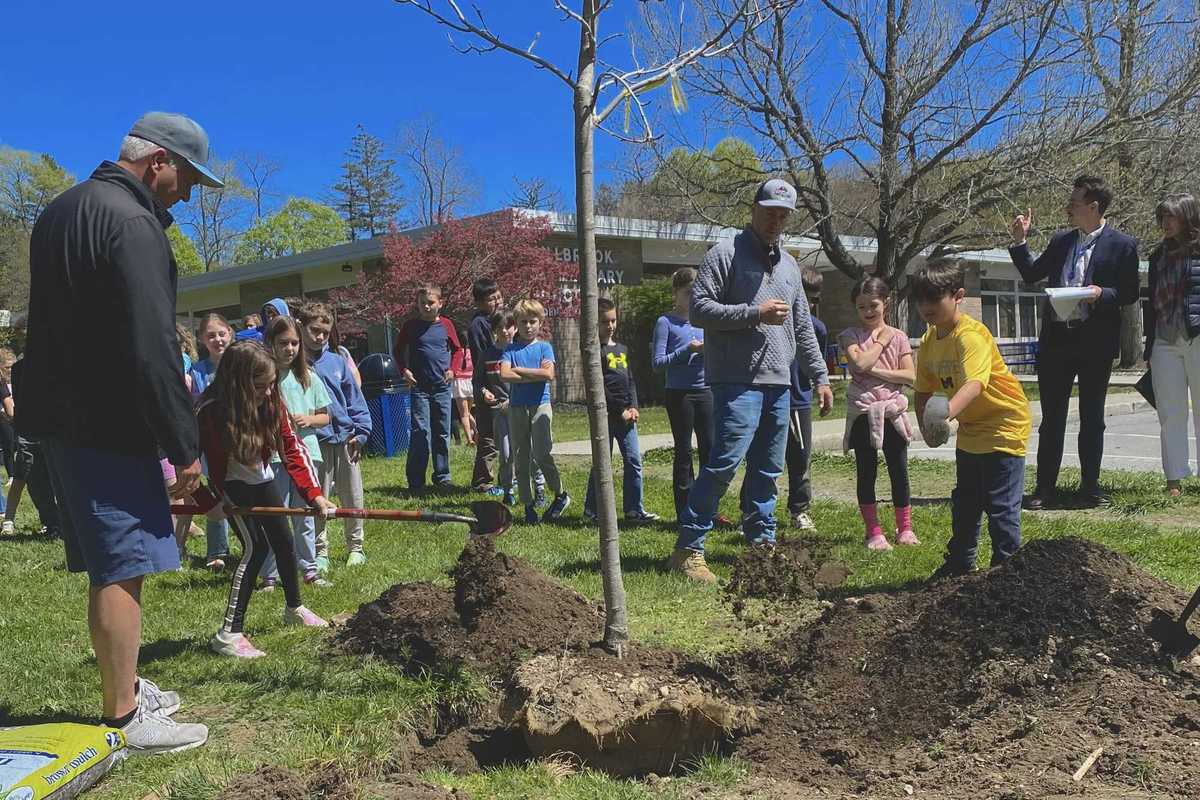
In observance of Arbor Day on Friday, April 24, third grade students at Alden Place School took turns shoveling soil around a newly planted sweetgum tree, helping give it a strong start.
MILLBROOK — Nothing says Arbor Day like planting a tree.
The third grade class at Alden Place School gathered on school grounds Friday, April 24, for a ceremony that included a proclamation reading and the planting of a young sweetgum tree.
“I am an arborist and this is my favorite day,” Dennis Gendron of Twin Brooks Farm told the students. His farm had donated and prepared the spot where the 8-year-old tree would grow. He pointed out that the young tree was about the same age as the students. Then he pointed out a 25-year-old Sweetgum tree providing ample shade for the school’s entrance. The youngsters marveled at the size difference.
To mark the occasion, Village Trustee Julia Bucklin read an official proclamation issued by Mayor Peter Doro. The 45 students then lined up each to take a turn at shoveling one spadeful of soil onto the roots.
“This is a great opportunity for our students to learn about the role that trees play in our community,” said Alden Place’s Principal Andrew Cedermark, noting that trees provide animal habitat, clean fresh air and beauty within view of the classroom windows.
A similar Arbor Day observance and tree planting was held a short time later at Elm Drive Elementary School.
Leila Hawken
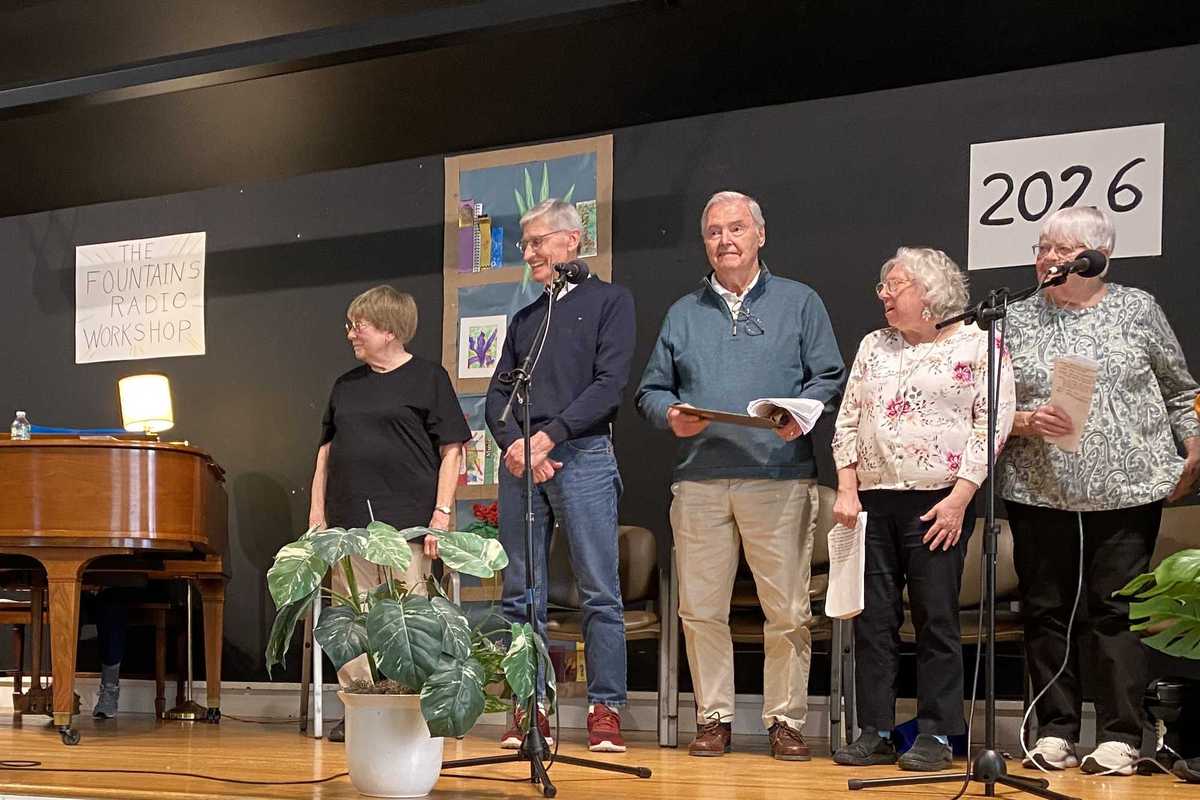
The cast took a well-earned bow following their performance at the annual Fountains Radio Play presentation of “The Speakeasy’s Secret” on Friday, April 24.
MILLBROOK — A capacity audience filled seats at The Fountains assisted living facility on Friday, April 24, for another production by the Radio Workshop.
Now a regular feature of The Fountains’ entertainment lineup, the Radio Workshop — a resident-led group that produces live, old-time-style radio plays — returned with an original mystery, continuing a tradition that began in 2024.
“Each year the group grows in numbers,” said Marge Wardrop, playwright, project director, play narrator and The Fountains resident who leads the Radio Workshop venture.
This year’s production,“The Speakeasy’s Secret,” moved between 1929 and 2026, with a brief stop in 1949, all kept straight by Wardrop’s narration. A third of the stage held the 1929 action, while the remaining two-thirds represented present day life at The Fountains. A piano situated between the two eras and played by Judy Handman and Arline Wood provided musical interlude before and during the performance.
Additional fun spots were provided by familiar old-time radio commercials presented by the cast and giggled over by the audience.
Live sound effects were in the hands of Shelia Attlesey and Pat Carr, while Wayne Chadwell managed the audio equipment.
The 11-scene story begins in 1929, when speakeasies operated in secret under Prohibition and backroom bookmaking was common. At Harry’s Place, business is faltering and a raid appears imminent. Harry, along with two associates and his wife Velma, decides to hide $100,000 in a location in upstate New York before authorities close in. Think Millbrook.
Harry is eventually imprisoned for 20 years, but the cash is said to have made it to Millbrook undetected and hidden somewhere. Harry’s granddaughter, Mabel, in 2026, is determined to find it, so she moves into The Fountains, along with her disagreeable, alienating personality.
Mabel’s behavior raises the suspicions of The Fountains residents, many of whom are into detective work.
The single clue that Mabel carries with her from her grandfather, Harry, is: “You’ll find the money if you change your ways.”
As residents reach out in friendship, Mabel gradually softens and shares the clue, having been assured that they just want to help her and don’t want a share of the cash.
Friendship wins out. Mabel changes her ways and her rough demeanor, and in short order, the cash is found in The Fountains’ chapel basement. That building did exist in 1929.
Mabel is so changed that she decides, along with her new friends, that money is no longer important and donates the funds to the chapel renovation fund. Mabel announces that she will move permanently to The Fountains.
The final scene takes care of the loose end of Harry’s release from prison in 1949, as his wife and cohorts are there to pick him up. They show interest in driving to Millbrook to reconnect with the money stash, but Harry reports that he has gone straight, no longer interested in the money, having turned over a new leaf thanks to the excellence of a prison program.
This final scene was clearly critical to seeing that the stash remained in place until 2026 for Mabel to find.
Judging from the hearty audience approval, The Fountains Radio Workshop will likely be encouraged to create more radio adventures for residents and visitors.
Millerton News
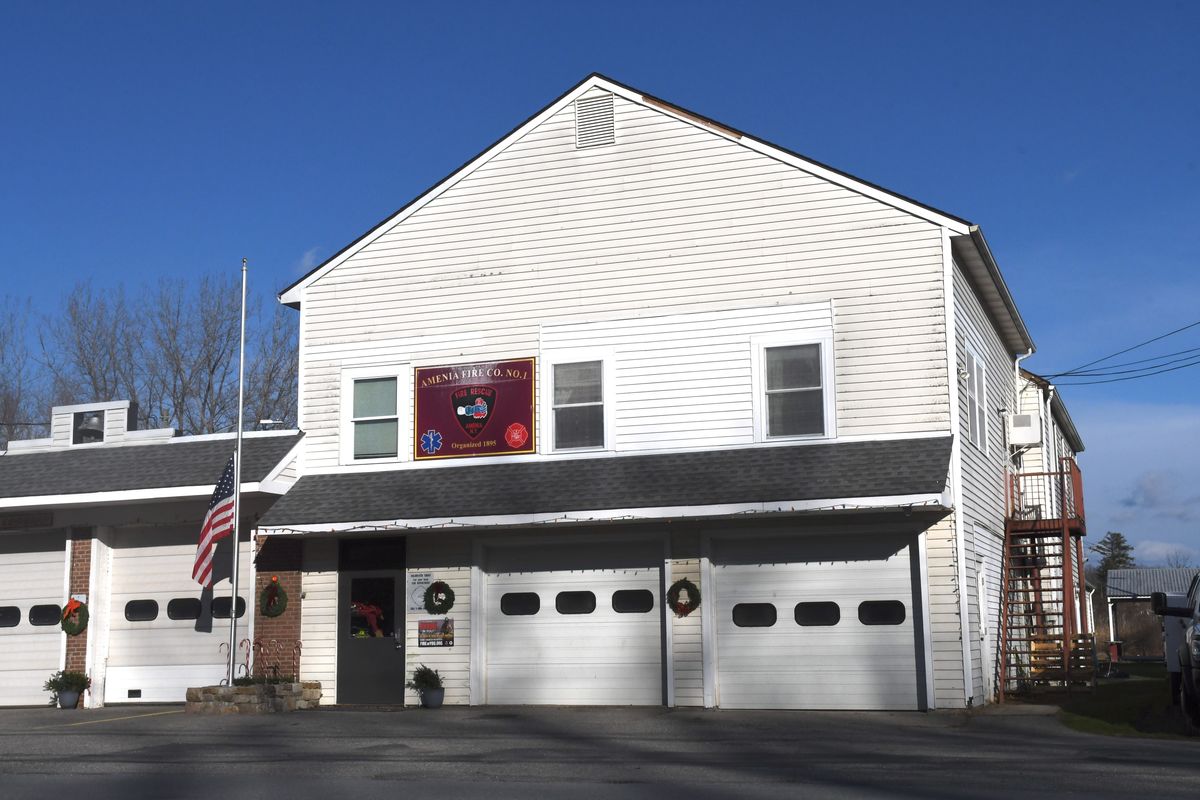
AMENIA — The Amenia Fire Company will be sponsoring a Steak Bake on Saturday, May 2, from 4 to 6 p.m. at the firehouse.
The meal includes mashed potatoes, corn, salad, dinner roll and a dessert.
Diners may pre-order a meal by calling Shawn Howard at 845-418-8633.
The meal is eat-in or take-out. Tickets are $25 each and are available from any fire company member.
The firehouse is located at 36 Mechanic St. in Amenia.
Want more of our stories on Google? Click here to make us a Preferred Source.
Want more of our stories on Google? Click here to make us a Preferred Source.