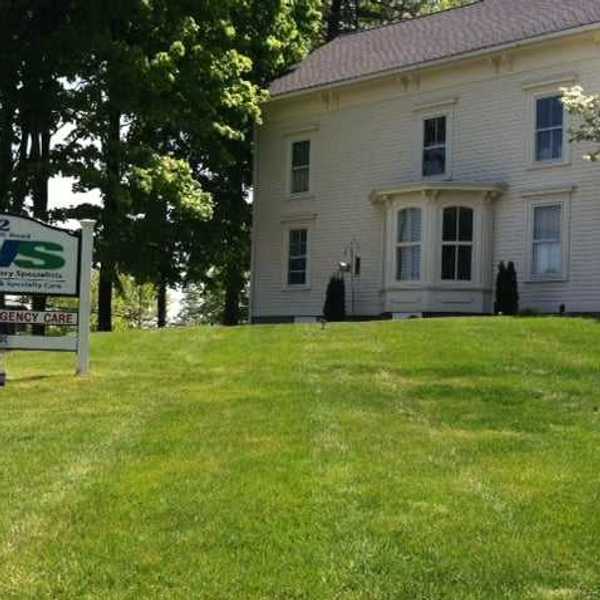
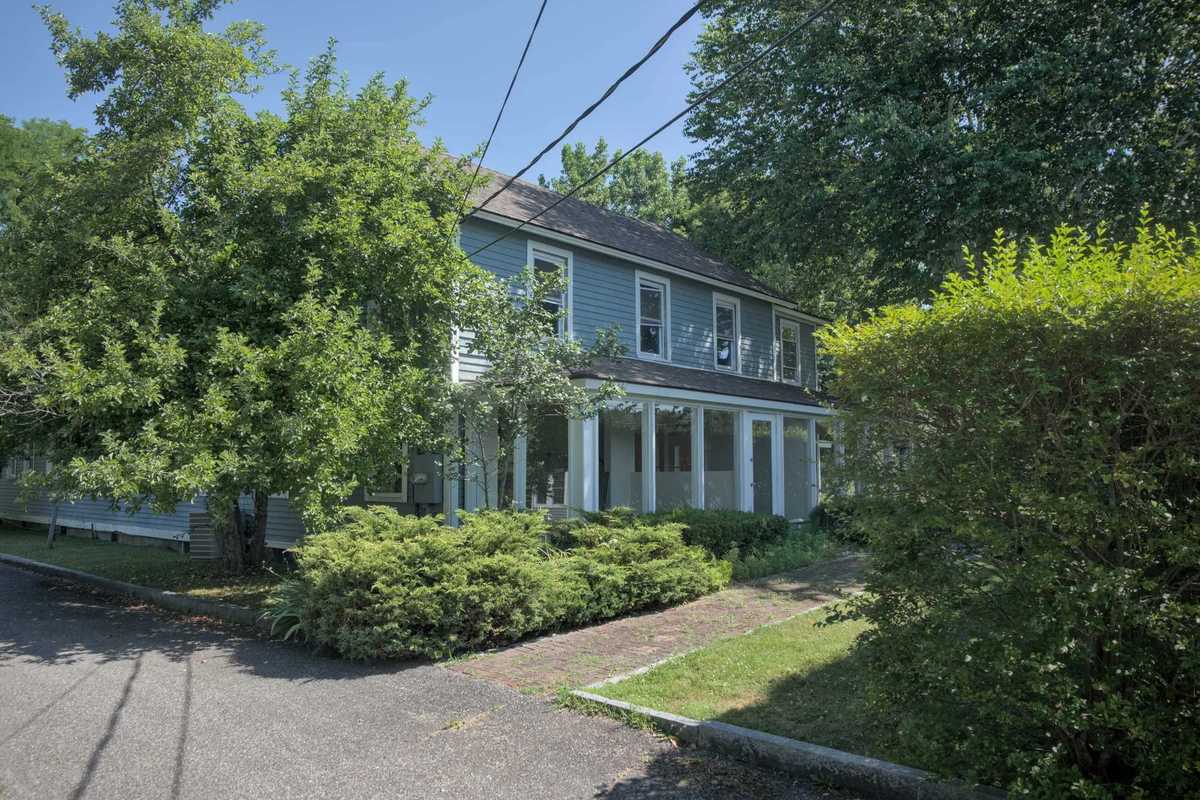
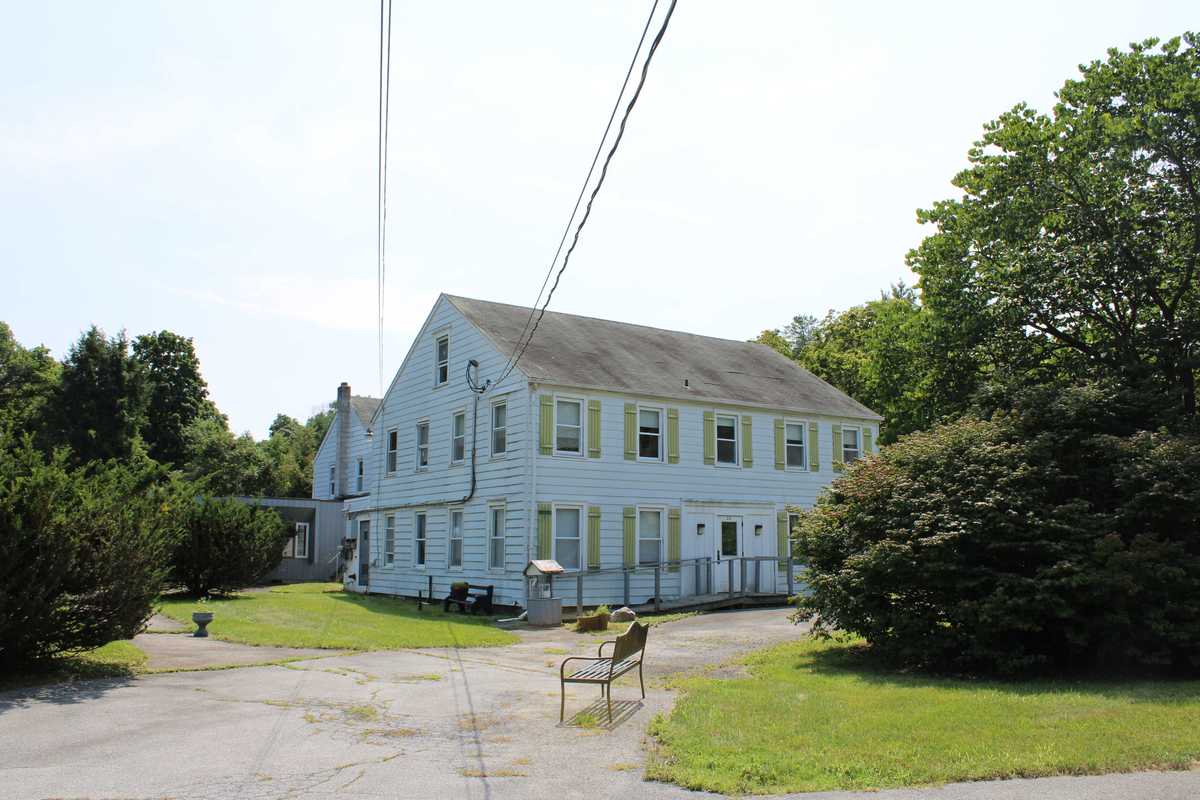
MILLERTON —Nearly four weeks after a furnace fire sent deadly levels of carbon monoxide inside 7-9 Main Street and forced as many as 18 residents to evacuate, a dispute between displaced tenants and the building’s owner has raised questions about safety, management and whether the property will reopen.
As of press time, the village had posted a notice on the building declaring it an “Unsafe Structure,” barring residents from returning until required repairs are completed. Village officials said required repairs include installing a new furnace, carbon monoxide and smoke detectors, and an ADA-compliant ramp. However, the owner said he is hesitant to undertake those upgrades after years of challenges with the village and some tenants.
Several tenants described their displacement as the latest failure of the owner, Kastriot “Chris” Rrapi, to properly maintain the 126-year-old building, an argument that Rrapi disputes.
“Our entire world got flipped upside down in a matter of hours,” said Brittney Watson, 22, who said she woke to the smell of smoke and felt dizzy as alarms sounded. Her family — including her father, Tim Watson, who uses a wheelchair after losing both legs — was among those forced to evacuate.
The property now appears unoccupied. Village officials said they shut off water to the building as an additional measure to prevent anyone from living there.
The Watson family is currently staying in temporary housing with assistance from the American Red Cross — an arrangement that is set to expire in early March, around 30 days after they first moved into the temporary home. The family said their future living situation is now uncertain.
Tenants describe displacement and past conditions
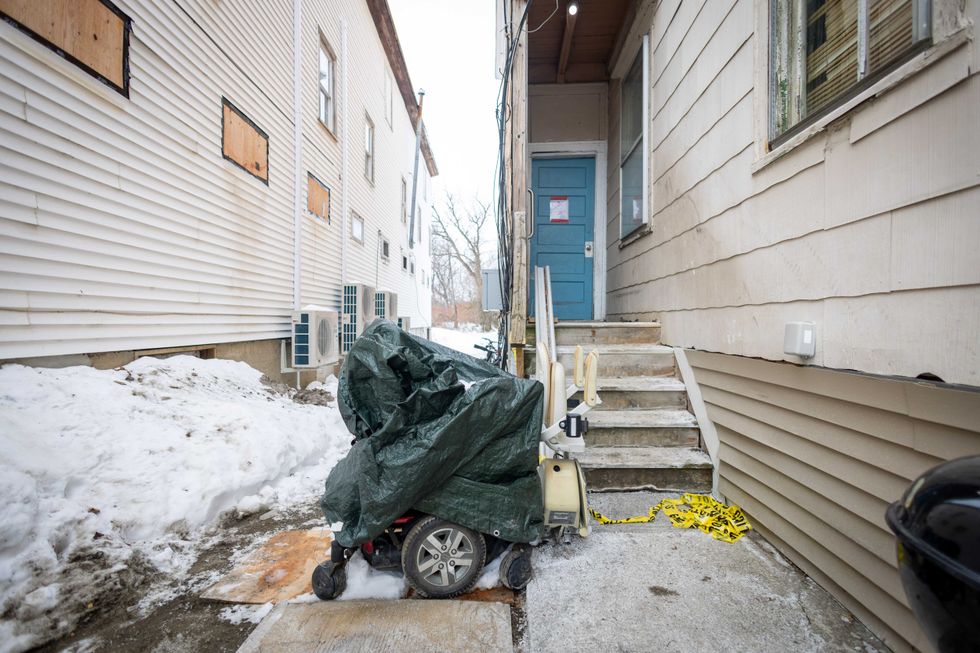 Tim Watson's electric wheelchair sits in an alley space near a side entrance to the 7-9 Main Street apartment building. Watson said his brother helped him install a stairlift on the staircase leading to the door because the building lacked wheelchair-accessible entrances.Photo by Aly Morrissey
Tim Watson said he and his family moved into a first-floor apartment in the building about three years ago — though Rrapi describes it as less than two — and did not sign a written lease. Watson said his family was asked to pay rent in cash under a verbal agreement that would allow for weekly payments based on their fixed-income financial situation. Rent was $1,650 per month for a two-bedroom apartment.
“There was no lease,” Watson said. “It was always cash.”
The Watson family described long-standing problems, including pests, unreliable heat, and water leaks. The family said they repeatedly raised concerns about maintenance issues that went ignored. In the weeks leading up to the fire, Watson said the apartment went days without heat or hot water, forcing the family to rely on a space heater.
Jason Wendover, who is married to one of Watson’s daughters, described similar issues during his time in the building in 2025 in a second-floor apartment, including concerns about whether utilities were properly separated by unit and what he said was a severe cockroach infestation.
“They got into everything,” Wendover said of the cockroaches. “I’d wake up in the morning and, if I forgot to change the coffee, there would be roaches floating in the coffee pot.”
Rrapi disputes many of the Watsons’ claims and said they stopped paying rent months ago, leaving their unit in disarray after the evacuation.
“The building is old, I understand that,” Rrapi said. “It needs work. But the drama this family puts landlords through — it’s unacceptable.”
He said the family destroyed the apartment and caused tension for other tenants, noting complaints about loud arguments and smoking indoors.
Rrapi disputes allegations that he required cash-only payments, saying all of his tenants are welcome to pay by cash, check or Zelle — a cellphone banking app that allows for electronic payments. He also said a professional exterminator was sent to the building and that the Watson family refused to allow them into their apartment.
“I submitted the receipt to the Dutchess County Department of Health,” Rrapi said.
Rrapi said the Watsons owe him nearly $22,000 in back rent and damages, and eviction proceedings are underway. He said they were provided with notice in the months leading up to the fire. He described the apartment left behind by the family as severely damaged, saying they did not maintain the interior of the apartment.
“It’s a wreck to the point that it has to be gutted,” Rrapi said. “It’s my fault that I rented to them, but I felt sorry for them.”
Tim Watson denied ever receiving an eviction notice and rejected claims that his family caused damage to the apartment. He said he withheld as much as $15,000 in rent in the months leading up to the fire, describing the decision as a protest against what he called “slum-like” conditions in the building.
Foreclosure, zoning roadblocks and an uncertain future
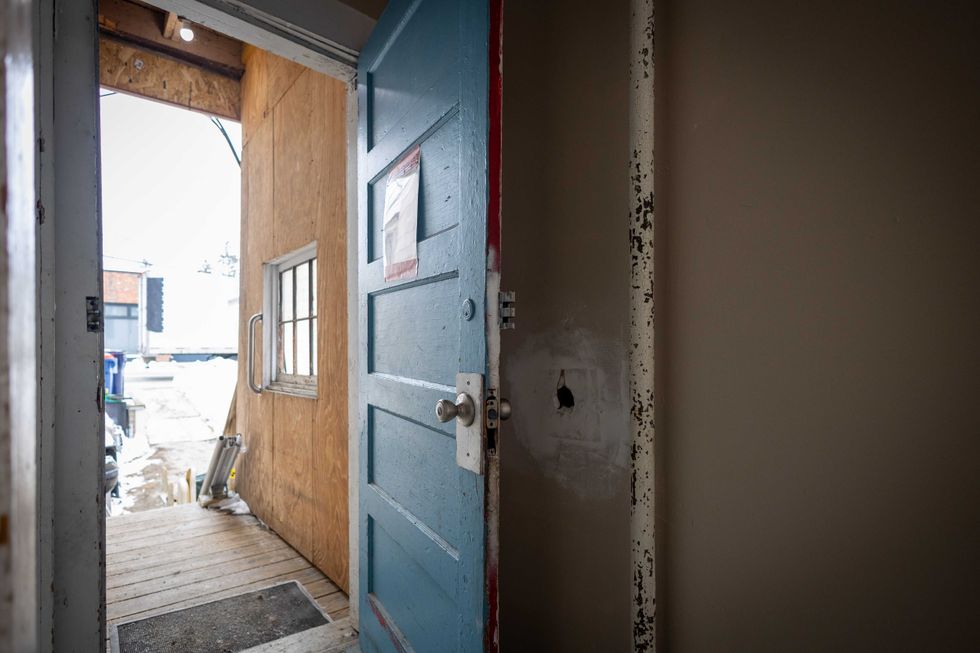 Just inside the building's side entrance is a hole in the wall caused by the doorknob.Photo by Aly Morrissey
Rrapi said the building’s future remains uncertain amid foreclosure proceedings that began in 2023 after a commercial loan went into default, which he attributed largely to a discrepancy he said he discovered after purchasing the property with his father, Zef Rapaj.
With 12 electrical meters on the building, the pair believed it was configured for 12 units, but they later learned it is legally zoned for six, which complicated the property’s finances and prompted him to pursue a variance through the village’s Zoning Board of Appeals.
He described the property as “the biggest headache I ever bought,” citing years of zoning roadblocks and financial strain that have left him uncertain how much more he is willing to invest in the property. Rrapi purchased the Millerton property along with two residential properties in Amenia and a vacant lot in Dover Plains from Christine Lilley of Brewster in 2021.
“I’m not going to put that kind of money into it if I’m not allowed to use the building the way it’s set up,” he said.
While he said he plans to replace the furnace, Rrapi said renovation plans have stalled amid what he described as shifting standards and mixed signals from the village.
With his legal team and architect Ray Nelson of Earthwise Architecture, Rrapi sought to scale back a proposal from 12 units to nine, which the ZBA rejected in June 2025.
The variance request was denied in part due to parking requirements, which mandate 1.5 spaces per unit — a standard that village officials have acknowledged has been difficult to meet in Millerton’s dense downtown.
Rrapi said he considered demolishing the building out of frustration, though he said he still has hope that there is a path forward to rehabilitate the building.
No timeline has been set for repairs or occupancy. Village officials said residents may not return until all safety requirements are met. Rrapi said he will complete the required work but remains undecided about whether he will continue renting the building long-term.






 Tiffany Lemelin, shelter manager, brushing Marsala upon arrival.Provided
 Michael DeBarba, certified dog trainer working with Marsala.Jennifer Almquist
 Marsala wins a heart.Jennifer Almquist
 Sadie, center, a Carolina dog, plays with her friend Negra, a terrier mix. Bella Linda, the small poodle, has since been adopted.L. Tomaino
 Wesley, a young, exuberant mix, is looking for an active home.L. Tomaino
 Bonnie and Clyde, an affectionate terrier pair.L. Tomaino