Winter is a season that invites us to notice our surroundings more closely and crave small, comforting changes rather than big projects.
That’s often when clients ask what they can do to make their homes feel finished or fresh again — without redecorating, renovating or shopping endlessly. My answer: start with one tray.
A tray creates a moment. It gives the eye a place to land and turns everyday objects into something intentional. More importantly, it’s approachable. There’s no measuring, no commitment, no pressure to get it “right.” It’s a small, easy project — affordable, functional and even a little fun — that can be tailored entirely to you.
One of the things I love most about styling trays is that your cozy “moment” becomes mobile. Everything you love is gathered in one place and can be easily moved from room to room as your day unfolds. A tray that starts on an entry table can later migrate to a coffee table or kitchen counter, adapting to how you’re actually living in your home.
In one client’s entryway, we styled a tray that sets the tone the moment you walk in. A simple pair of brass candlesticks adds warmth, a blue-and-white chinoiserie vase brings character, and two vintage books ground the arrangement. It’s not decorative for decoration’s sake — it feels collected, welcoming and personal, all while keeping the surface from becoming cluttered.
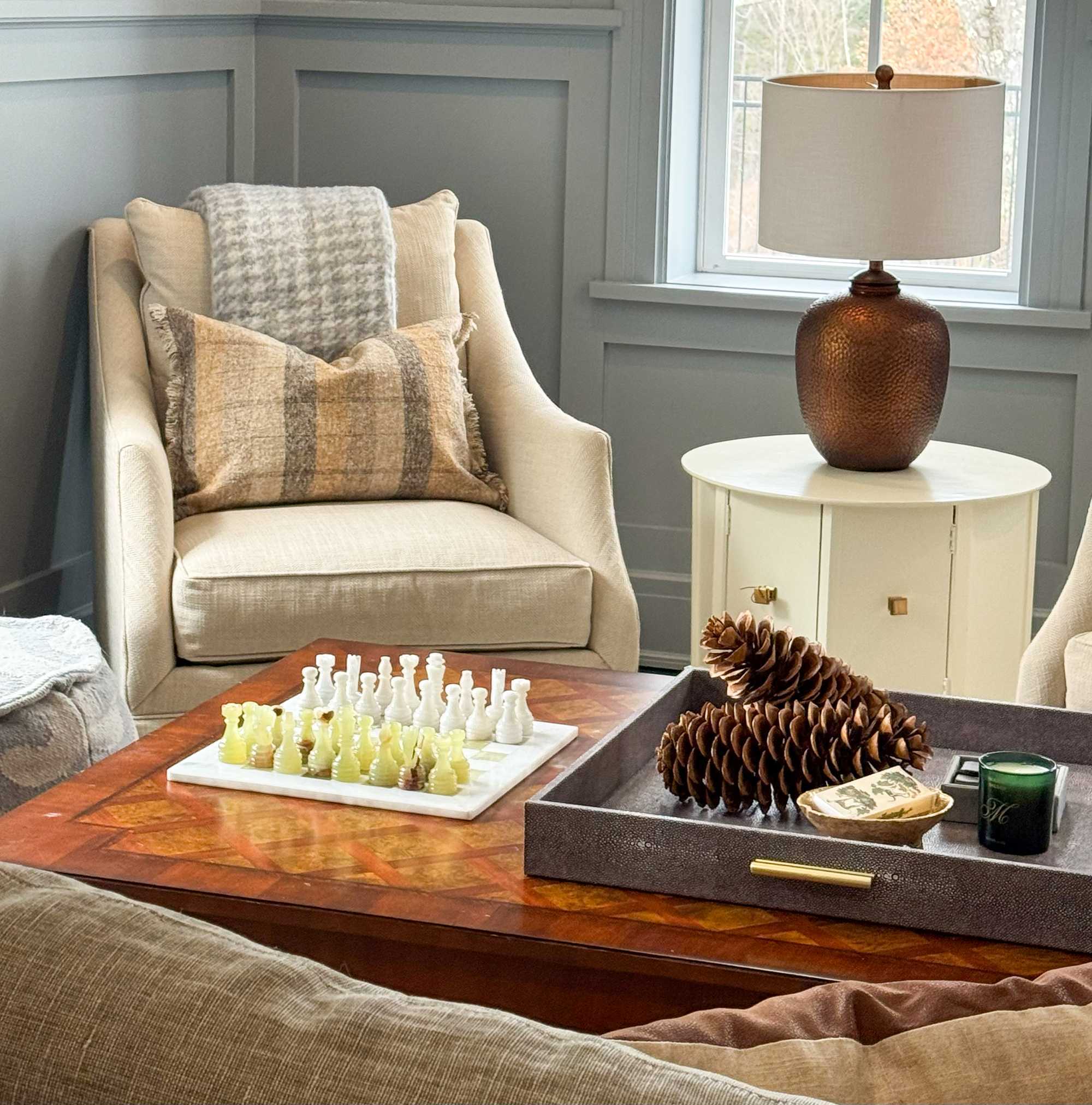
In another home, a coffee table tray became the quiet anchor of the living room. We included a strand of wooden beads for texture, the TV remote tucked neatly into a small vintage box, and a plant nestled in a pottery bowl. The tray keeps everyday necessities close at hand while making the space feel relaxed and lived-in rather than chaotic.
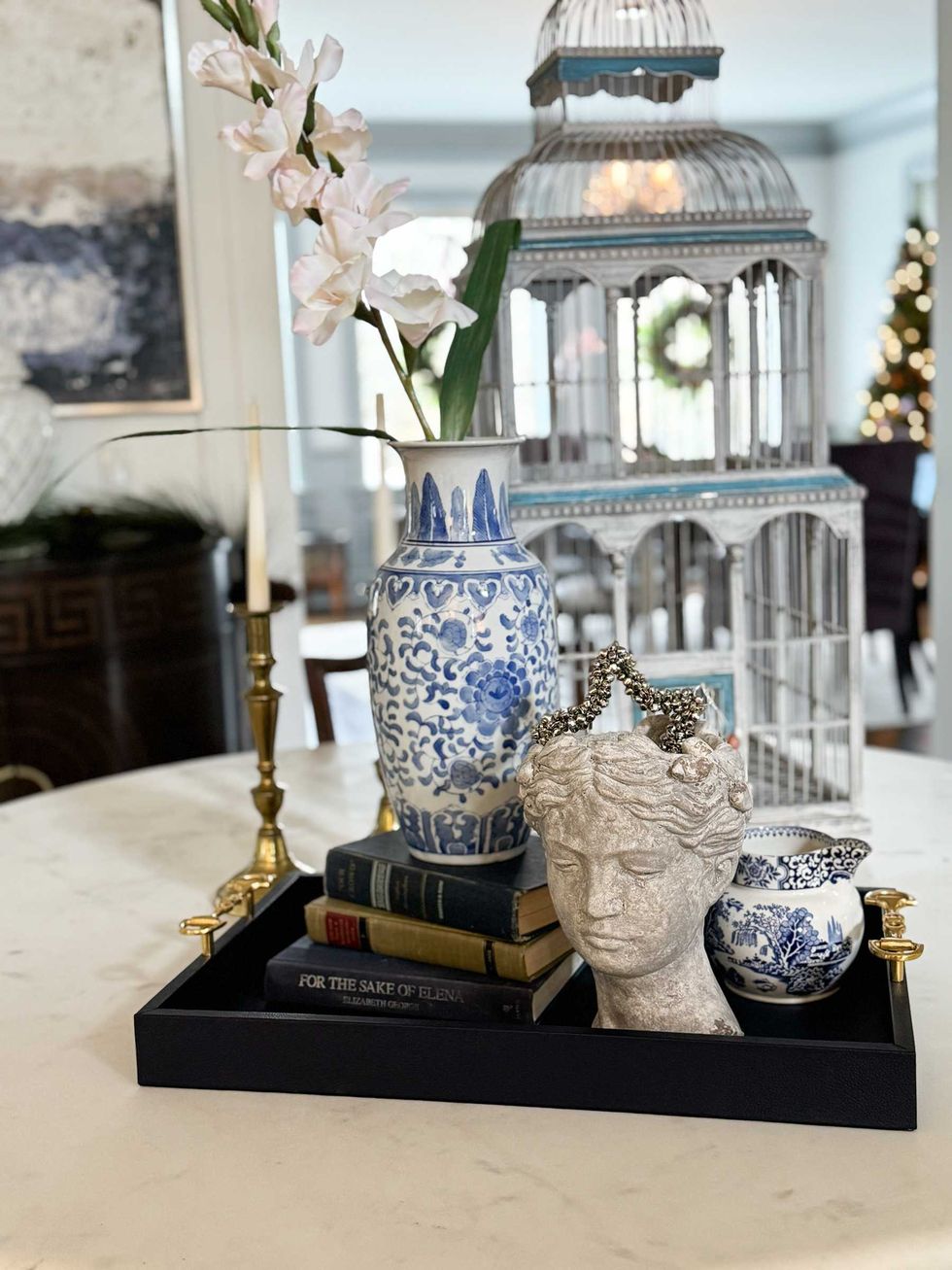 Styling a tray can give a home or room a re-fresh.Kerri-Lee Mayland
Kitchens may be where trays work hardest, especially in winter when we’re cooking inside more and gathering more casually. For one client, we styled a tray with a pepper mill; a shallow bowl for garlic, shallots and onions; and a white Italian ceramic container filled with olive oil. It’s practical and beautiful, and it makes cooking feel intentional instead of rushed. The tray warms up the counter while keeping essentials within reach.
Another version I often create is the cocktail, mocktail or tea-and-coffee tray — endlessly useful for friends popping over to say hello. A few cups, a teapot or carafe, honey or sugar, and a candle create an inviting setup that’s ready at a moment’s notice. It says, “Stay a while,” without any fuss.
What makes trays so effective this time of year is that they respond to winter’s quieter rhythm. Winter decorating isn’t about bold color or dramatic statements — it’s about texture, warmth and restraint: wood, stone, ceramic, linen, candlelight. A tray helps you edit rather than add, grouping items so they feel thoughtful instead of scattered.
When the seasons shift, the same tray evolves with you. Heavier elements can be swapped for lighter ones — fresh flowers, glass, pale ceramics — without starting over. One tray, styled seasonally, becomes a constant that gently changes rather than something that has to be replaced.
Remember, good design doesn’t have to come from big gestures. Often it comes from small moments done well — a surface that feels intentional, a corner that feels cared for. In winter’s stillness, creating a simple tray may be just enough to make your home feel calm, personal and complete.











 Justine and Victor Valla in their studio with a painting of Victor’s,”Jonah and the Whale.” Robin Roraback