People who don’t study history — or think they can rewrite history to suit their ideals — are fundamentally unsound, morally and practically. Their undoing may happen all at once, over short periods of time, over periods of passionate revolt or, indeed, years. But it will happen, historical facts simply cannot be swept aside.
America was founded by disaffected people. America was populated — in waves of immigration — by disaffected people from across the globe. Not one person who immigrated to America who came here hundreds of years ago, two hundred years ago, one hundred years ago, fifty years ago, or in the past few decades came here to become part of a rigid and fixed establishment, to become a sheep as a followers, nor just someone to fit in with a crowd. Americans, each and every one of us, are ambitious, fiercely independently minded, setting personal freedom as our core existence, never permitting the concept of loss of liberty to become commonplace.
Do you feel I am wrong? Think simply of the first settlers here. These men and women were allowed to actually own — freehold — the land they farmed. Nowhere else on the entire planet was that possible at the time. That’s a fundamental USA right. Or you might ask yourself, when you get stopped speeding by a police car, what is you first reaction? Compliance or questioning authority? What do you say to the officer? Probably a defiant, “Why have you stopped me?” Because in America you have the right to defend your personal freedom, question authority, rebel – so you speak up from only that perspective, not that you want to break the law, but you are not sure your independence is subject to the law at that time. You are a rebel. You are American.
We are a nation of rebels. Think I am wrong? Remember back to 1970 when students and “peaceniks” across the country demonstrated, often facing down police with batons, guns, watercannon, and tear gas against the Vietnam War. Students at Kent State were shot dead in that protest. Think of the Black Lives Matter demonstrations, clearly out-gunned, out-manned on the streets across the nation. Lawbreakers? Hell yes but unarmed, vulnerable, defiant. Rebels, in a true, real, American way. Pink hatted ladies marching? Think they are not rebels? They are and they will be back in force, soon.
Now, stop for a moment and ask yourself — if you have any grasp of world history — could any of the typical American demonstrations, riots even, have happened in Italy or Germany in the 30s? People there did not have the same spirit of independence as Americans do, they could not, in their innermost being, understand being that defiant. They were raised to be subservient, not free-thinking, not liberated.
Even today, think of that American crossing the street in the middle of a block. Jaywalking is a technical offence. But how many Americans jaywalk? How many Germans do even today? None. The simple truth is, we’re not a very law-abiding nation of individuals. Sure we’ll comply, we’re not deliberately law-defiant speeding over the limit, “Yes officer, you’re right I was speeding… sorry…” But somewhere in our mind, at that moment, we had reason, and that reason is always based on our feeling of our right to proceed with liberty; to do as we damn well please, not simply to follow orders. Orders are, often in America, first questioned and then seen as only a slight barrier to common-sense self-motivation.
And that’s why authoritarian regimes here can never prosper. They will fail, sometimes quickly, sometimes over weeks, months, maybe even years or after a calamity like a war. But the spirit of the very people who chose to be here, generationally chose to be here, is fiercely independent and those few who seek to change that moral code have misjudged the real America. Authoritarians will fail. Historic fact cannot be rewritten to suit their false hopes. And wannabe authoritarians are, in truth, foolish to think otherwise. In their ignorance of what makes America great, they cannot help but lose.
Peter Riva, a former resident of Amenia Union, New York, now lives in Gila, New Mexico.



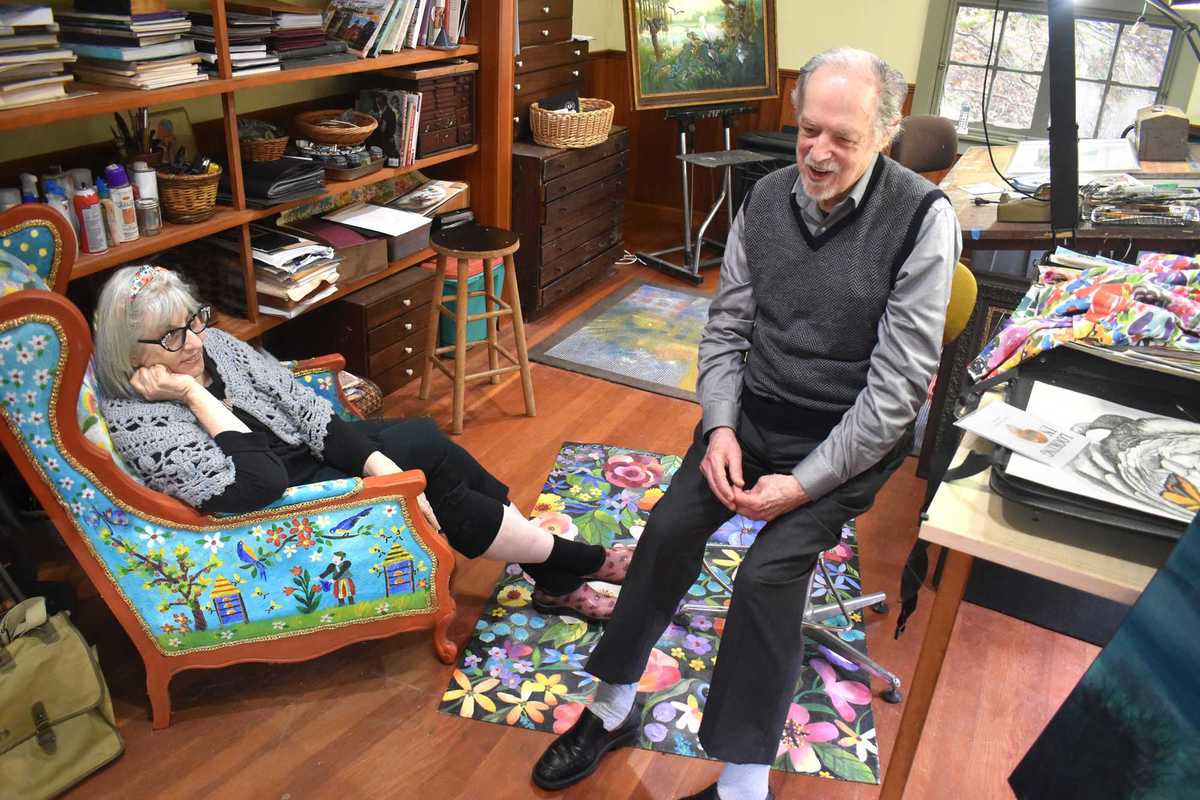
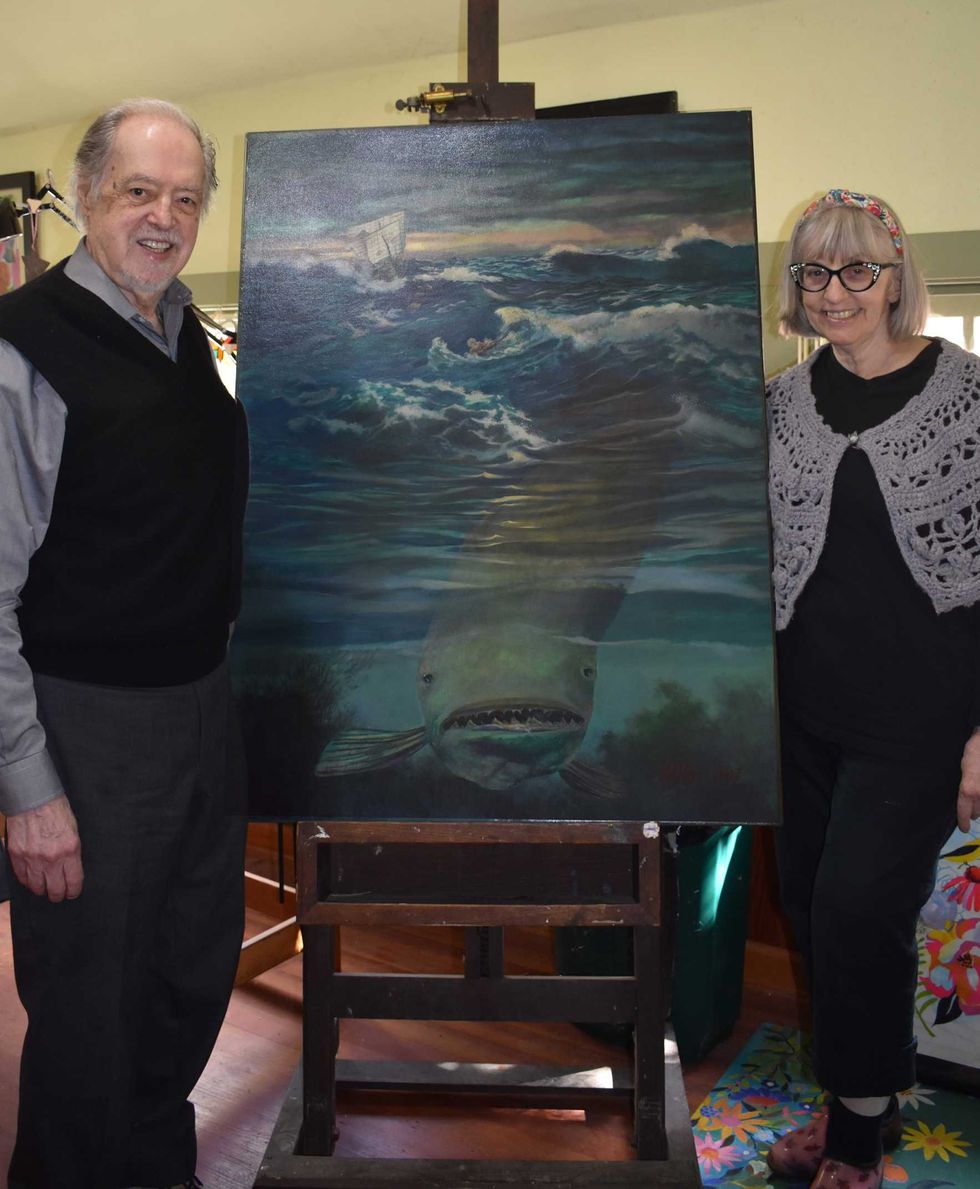 Justine and Victor Valla in their studio with a painting of Victor’s,”Jonah and the Whale.” Robin Roraback