NORTH EAST — It’s taken some time, what with the world being in the midst of a global health pandemic and the state shutting down in mid-March to fight the spread of the deadly coronavirus, but the North East Town Board has finally appointed eight of its nine-member volunteer Zoning Review Committee (ZRC), after months of anticipation. The ninth member will likely be announced by next month. North East town Supervisor Chris Kennan said he couldn’t be happier — or more excited — to get the work underway.
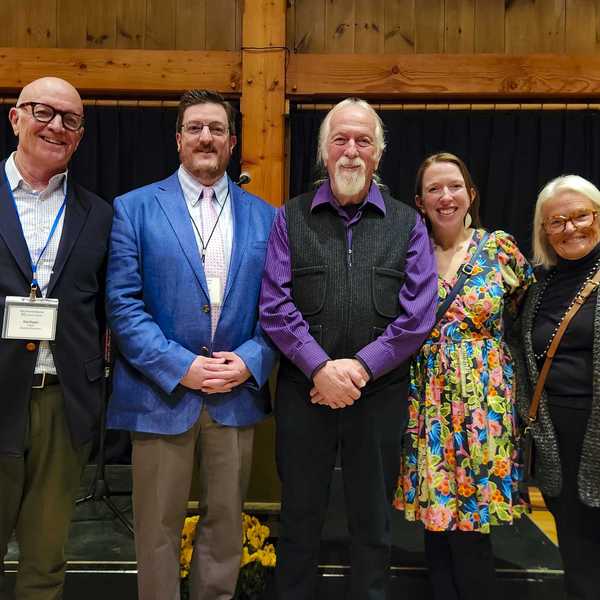
“I think it’s a first rate committee,” he said following the board’s virtual Zoom meeting on Thursday, June 11, at which time the ZRC members were named. They include North East Zoning Board of Appeals (ZBA) Co-Chair Edie Greenwood, who will chair the ZRC, North East Planning Board Chair Dale Culver, Millerton attorney and President of the North East Historical Society Ed Downey, North East Town Councilman (and former town Supervisor) George Kaye, North East Planning Board member Bill Kish, ZBA Co-Chair Julie Schroeder, former North East town Supervisor Dave Sherman and Millerton business owner and landlord Betsy Trotta.
“It is a committee with deep roots in Millerton and North East, with a lot of knowledge of how the town has developed, and with knowledge of zoning. A lot of members of that committee know a good deal about zoning,” said Kennan. “Zoning is fairly technical, so it’s more [involved] than the Comprehensive Plan Committee; it’s important that [we have] people who really understand zoning and the nuances of zoning.”
Kennan added that some of the members volunteered; others were drafted, but “nobody had to have their arms twisted.” Their terms will be randomly assigned among one, two and three year terms.
As explained by Kennan, the ZRC “is the logical follow up to a comprehensive plan,” which the town just completed last year in conjunction with the village of Millerton. The town hasn’t refreshed its zoning since the 1990s. “It’s very important for a town to up date zoning… Technology is changing. Employment patterns are changing. Living patterns are changing. Things can get out of date quickly. Nobody ever heard of Airbnbs in 1997.”
“We will look at all of the zoning in town,” added Kennan, “as changes occur in property ownership and usage, it is appropriate and logical to have us take a look at zoning and see whether our zoning code reflects the comprehensive plan and how we want the town to grow… my hope is that the zoning will have a positive effect on the potential for development, particularly in the Boulevard Zone, which we want to make friendly to appropriate development,” said the supervisor. Another important zone needing immediate evaluation is the Route 22 business district, said Kennan.
But first the ZRC must hire a consultant, he said, to which Greenwood agreed. She said in an interview last week that she hopes to begin the search process immediately.
“A consultant will walk us through the process of the best and most effective and efficient way of revising the zoning code,” said the ZRC chair, adding she expects there to be two parts to the project and two sections of the code involved: Section 150 of the subdivision regulations and Section 180 of zoning, much of which will focus on definitions. “We’ll work hard looking at the definitions we have and see if they’re still applicable… Things have been added over time [including] local laws and things like that. The gist is you have to take a look at it — a kind of clean sweeping look rather than Gerry-rigging a particular section to fit an immediate need.”
Greenwood, who also chaired the joint village/town committee that reworked the comprehensive plan last year, said that plan is the community’s “vision statement” while zoning is “the nuts and bolts to implement through land-use regulation, which is zoning, the concepts that were developed and agreed to in the comprehensive plan — and how we get there is why we need a consultant.”
As to how long the process will take, Greenwood said that’s “a very good question.” It could take years — many or few — depending on a myriad of factors.
“We don’t want to rush,” she said, adding a long-gone town committee once created a binder full of definitions that she’s hoping to find in the attic of Town Hall to propel the ZRC forward in the process. Her first step, though, is to put together a Request for Proposals (RFP) for three planners she’s started to vet who she’s interested in interviewing with committee members by August. The three all have prior knowledge of the town.
“I think one of the three will probably be the ticket,” said Greenwood, adding one challenge will be going through the process virtually due to the coronavirus pandemic. “Of course this is a process that will be open to the public.”
There will be other challenges, too, Greenwood predicted, though she’s unsure of exactly what those will be.
“I have no idea what the challenges are, but people don’t like change and there’s an awful lot for us,” said Greenwood. “We’re going to learn a great deal. I have a feeling this is going to be controversial. It has the potential to be more controversial than the comprehensive plan was. This is where the rubber meets the road.”







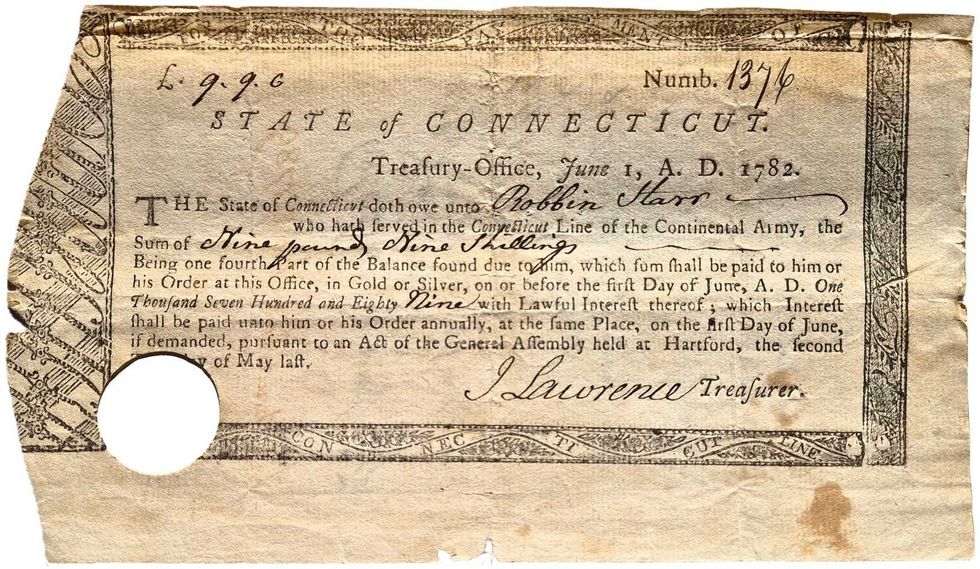 Pay Bill for Robin Starr’s service in the Continental Army.Courtesy the Alex Breanne Corporation
 John Mills speaking at Quinnipiac University.Courtesy the Alex Breanne Corporation

 Stephanie Saetta,with her rescue dog George and Blue (left), a shepherd mix awaiting his forever home.Madi Long