Republican George Kaye fights to stay on Town Board

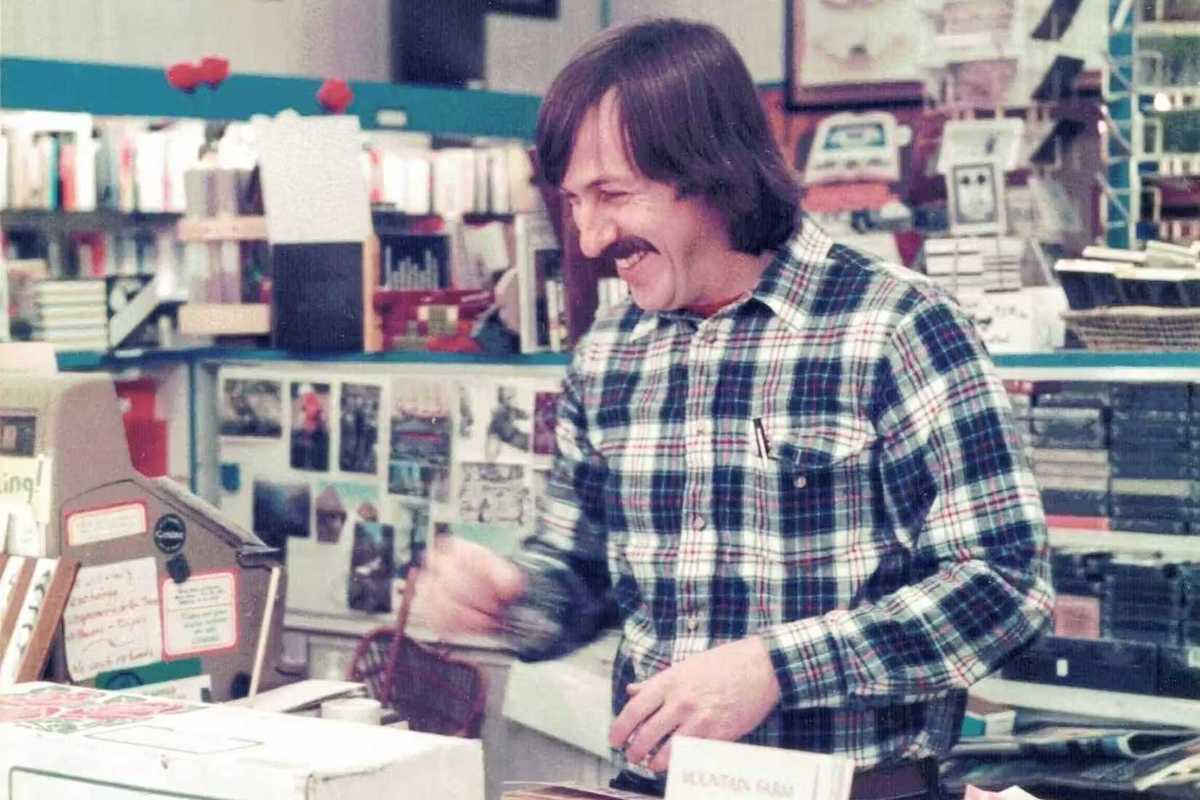
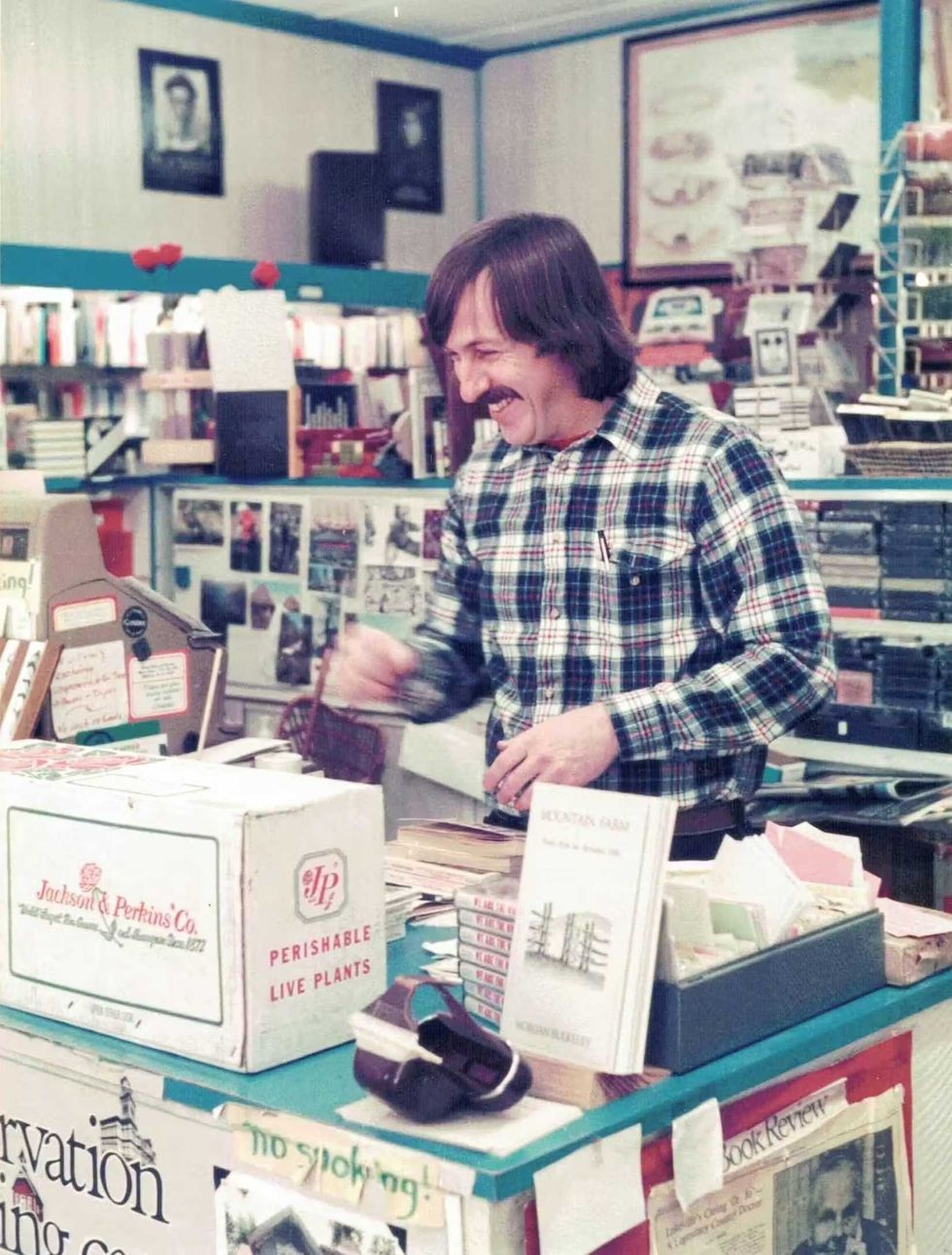
Born and raised in the town of North East, incumbent Republican Councilman George Kaye is running for an unexpired one-year term on the North East Town Board. Photo submitted

NORTH EAST — Local voters will find a familiar name listed on this year’s election ballot as Republican incumbent Councilman and former town Supervisor George Kaye has decided to run for the open seat on the North East Town Board.
Born and raised in the town of North East, Kaye has channeled his strengths as a leader and his love of community to serving the town through several local boards throughout the years. Following two years of service on the town’s Zoning Board of Appeals (ZBA), he served four years on the Town Board as a councilman and then four years as town supervisor.
“I think it’s difficult to understand everything about the town without having served some capacity within local government,” Kaye said.
This past January, Kaye was appointed to fill a vacant seat on the Town Board, which was created when then Councilman Chris Kennan was elected as town supervisor. The board unanimously voted for Kaye to fill Kennan’s seat and carry out the councilman responsibilities for the remainder of the year. Now, the last year of Kennan’s term must be filled, which is the position that is up for vote come Tuesday, Nov. 3.
When asked about his return to the councilman position after serving as a supervisor, Kaye said, “To be honest, there were several projects that I started as supervisor that I didn’t have time to complete and I felt my experience and knowledge of those projects would serve a useful purpose and be helpful to the current Town Board.”
Reminiscing about what he considers his greatest accomplishments during his time of service to the town, Kaye immediately called to mind the creation of the 2019 Town of North East/Village of Millerton Comprehensive Plan, which he hailed as “a guideline for how we wish the town to be in the future.”
Along with commending the Comprehensive Plan Update Committee for its hard work and commitment, Kaye added he was “greatly honored” by the committee’s decision to dedicate the updated plan to him.
Looking down the road at impending town projects, Kaye said he is currently working on two major projects for the town: the completion of the joint town/village highway garage, which has been years in the making, and the formation of the Zoning Review Committee, which will ultimately make recommendations to the Town Board to update the town’s zoning codes.
As of this time, he said the first two phases of the highway garage project have been completed and the town is moving into its third phase. As for the Zoning Review Committee, he said the committee aims to revise, update and help “to guide the town into the future with zoning codes that are more in keeping with what the town is today, not what it was 20 or 30 years ago.”
Kaye commented on what he hopes for local politics: “I would hope that people would leave aside what is going on in national politics. I would say we are a small town, we love that small town flavor and feeling and we don’t need to bring national politics into a local election.”

A new exhibition at the Norfolk Library traces the artistic evolution of longtime resident and illustrator Katie Atkinson, showcasing decades of work that grew from children’s book–inspired imagery into internationally licensed art.
“I put together the Norfolk Library show, ‘Seasons of Painting,’ to show my evolution as an artist through the years,” she explained.
The show will be on display at the Norfolk Library from Jan. 31 to Feb. 25, with an opening reception on Feb. 1 from 4 to 6 p.m. On Feb. 15 at 3 p.m., Atkinson will give a presentation and answer questions about her work.
“I remember loving painting and drawing as a child. I knew that I wanted to be an artist in elementary school,” Atkinson recalled.
After graduating from college, she lived in New York City, taking jobs in graphic design and advertising, but not feeling she had found her own style and direction yet.
She married and moved to Norfolk. “Once we had our sons and I was reading children’s books to them, it helped me to see the kind of expressive art I wanted to create.” She realized, “It was really about capturing and conveying a feeling more than about any technique.”
“It took 10 years before I was able to really have a consistent look and create my own art that felt natural to me, not trying to fit any particular market, and then the right markets came to me.”

Her children loved winter, and that became a theme for her. “I felt the magic of winter as I saw it through my children’s eyes,” Atkinson remembered. She said one of her first paintings, “Winter Wonderland,” was quickly licensed by an English greeting card company “as soon as I placed it in Illustration Source,” the agency that represents her.
Around the same time, she went to the New York Stationery Show, where she showed her work to Good Source Greetings, which “bought five cards from the start.”
“These paintings were more universal, idealized and symbolic in theme, yet still with the expressive feel of children’s book illustration.” Her work was marketed worldwide by Illustration Source. “Finally, I had found two areas where I could create what I wanted, and my work was selling — often multiple times for uses and publications I wouldn’t have found on my own.”
“One of my most exciting licensing deals was in 2004, when my art was published by the American Lung Association for Christmas Seals,” Atkinson said.
That is when she felt she had finally found her way. “My ‘Tree of Peace’ and ‘Dove with Trail of Stars’ sold all over the world. I finally felt like I had my direction.”
“Then in 2007, Lands End called me to design their gift card and gift box for 2007. It was like a dream come true for me.”
While looking in a Barnes & Noble one day, Atkinson came across Bookmarks magazine. “I felt my art was in keeping with their look, and I actually painted a cover and sent it in an email to the art director.” Since then, Atkinson has since has painted more than 50 covers for the magazine, and “this has become my longest, steady, ongoing source of assignments over the past 15 years.”
“I hope this exhibit inspires other artists who have not yet found their niche to just keep on creating art, pursuing and refining what you love. It is worth the time it takes,” Atkinson said.
Artist Aaron Meshon
When artist Aaron Meshon arrived in the Berkshires with his family, the move followed a series of upheavals — a devastating fire, mounting financial stress and the COVID-19 pandemic — that ultimately led him to a quieter, more grounded life.
Meshon grew up in a small town outside Philadelphia, an only child raised around horses by parents he describes as “strict liberals.”
School was a struggle, but early on Meshon was impelled to translate words into pictures. “I would hear a story and automatically get an image in my head,” he said. He was accepted to every art school he applied to and chose the Rhode Island School of Design.
Meshon went on to become an award-winning children’s book author and illustrator. His first children’s book, “Take Me Out to the Yakyu,” was inspired by a deeply personal longing. After seven years of trying to have a child with his wife, who is Japanese, he imagined the story he would tell his future child about the differences between baseball in the United States and Japan. The book went on to receive multiple awards and wide recognition.
Japan itself became central to his life and work. His first visit left a lasting impression. “I felt an intense sense of safety and tranquility,” he said. Another award-winning illustration, “The Public Bath,” was inspired by meeting his wife’s father for the first time — an introduction that ended up at a Japanese public bath. “Can you imagine?” Meshon laughed. “I just met my wife’s father, and the next thing I know, I’m naked with him.”
In 2012, Meshon received a gold medal from the Society of Illustrators for “The Public Bath.” He also earned an Ezra Jack Keats New Illustrator Honor for “Take Me Out to the Yakyu.” In addition, that book received multiple starred reviews, including from The New York Times Book Review, School Library Journal and Publishers Weekly.
Even before some of those accolades, Meshon said his illustration work had begun to slow.
By 2009, city life grew increasingly expensive, particularly after the birth of his son. “For the first time, I had to work just for money,” he said.
Over the following years, the stress mounted and his health suffered. Then one morning he woke up with a clear realization: “We can’t continue living like this. Something has to change.” Then, within a few days, everything did change.
While Meshon was at work, a friend called with shocking news: His Brooklyn apartment building was on fire — so big it could be seen from Manhattan. His first thought was not about his belongings but his dog, Chubu. Firefighters could only access two apartments, and luckily, one of them was his.
They lost nearly everything. “I had to grow up at 45 and realize I have truly only myself to rely on,” Meshon said. Shortly after that, the pandemic arrived. As New York City shut down, they packed their dog, son, piano and fish tank into the car and drove north. “It felt like the world was shutting down,” he said. “My wife and I looked at each other and knew that this was it, and we were never going back.”
Today, Meshon sells his artwork at the Railroad Street Collective in Great Barrington and at the local farmers market. He also teaches art at the School of Visual Arts in New York City. His Berkshire-inspired illustrations resonated immediately with the community. “It’s like being back in art school,” he said, describing the camaraderie of local artists supporting one another.
He credits nature and community with helping him heal. “Things happen, and sometimes you have no control,” he said. “You learn to accept that life is short and to be thankful for what you have.”
Elena Spellman is a recent Northwest Corner transplant. She is a Russian native and grew up in the Midwest. In addition to writing, she teaches ESL and Russian.
The fatal shooting of Alex Pretti, and before him Renée Good, by federal agents in Minnesota is not just a tragedy; it is a warning. In the aftermath, Trump administration officials released an account of events that directly contradicted citizen video recorded at the scene. Those recordings, made by ordinary people exercising their rights, showed circumstances sharply at odds with the official narrative. Once again, the public is asked to choose between the administration’s version of events and the evidence of its own eyes.
This moment underscores an essential truth: the right to record law enforcement is not a nuisance or a provocation; it is a safeguard. As New York Times columnist David French put it, “Citizen video has decisively rebutted the administration’s lies. The evidence of our eyes contradicts the dishonesty of the administration’s words.”
Separately, law enforcement agencies across the country are expanding their capacity to watch the public. Here at home, as we’ve reported, Dutchess County’s Real Time Crime Center brings together feeds from automated license-plate readers, including systems provided by Flock Safety, allowing police to track vehicles across jurisdictions in real time. These tools collect detailed movement data on vast numbers of people who are not suspected of any crime, often with limited public discussion of safeguards or oversight.
When citizens document state power, they are told to step back or trust official explanations. When the state documents the public, continuously and at scale, it is framed as efficiency. One form of observation is treated as suspect; the other as routine.
What magnifies the alarm in the Minnesota shootings isn’t just the loss of life, but the response that followed. Federal force was used against members of the U.S. public, and officials responded not with clarity or accountability, but with statements that collapsed under visual evidence. That willingness to lie, and to do so reflexively, signals a deeper problem: an administration increasingly willing to treat truth as an obstacle rather than an obligation.
A democratic society depends on shared facts. The right of citizens and journalists to observe, record and document matters because it anchors truth in evidence, not authority. That right is not a threat to public safety. It is among the few remaining tools the public has to insist that power remains answerable to the truth.
It is hard not to equate military spending and purchasing with diplomatic or strategic plans being made, for reasons otherwise unknown. Keeping an eye out for the physical stuff can often begin to shine a light on what’s coming. – good and possibly very bad.
Without Congressional specific approval, the Pentagon has awarded a contract to Boeing for $8,600,000,000 (US taxpayer dollars) for another 25 F-15A attack fighters to be given to Israel. Oh, and there’s another 25 more of the F-15EX variant on option, free to Israel as well.
Meanwhile, many European countries have switched their purchases of the F-35 fighters to the French Rafale or the Joint European Fighter as well as Saab’s advanced concept fighter Gripen.Turkey and Airbus, meanwhile, have sold the Hurjet trainer to Spain and other countries over the US trainer. And France is about to begin laying the keel for a new aircraft carrier (though that will take almost a decade). Meanwhile, Airbus is now, since 2024, the primary supplier to all EU countries for military helicopters… Saab is making GlobalEye airborne aircraft for France, Italy and Germany… France’s Rafale Company is making and delivering Iron Beam high-energy laser weapons… Airbus has ramped up delivery to all its new EU customers of 18 new C295 tactical transports.
Some may wonder why EU leaders as well as the UK, have been so soft tongued when it comes to this Administration’s recent diplomatic transgressions over Greenland (oops, Iceland?). The reason is simple: For decades the US has been the cheapest and best supplier of the finest military hardware – planes, tanks, weapon systems, and defense capability. What every nation understood was that the US held the controls of the safe operation of those aircraft. For example, the electronics of every F-35 can be controlled remotely from the US. Go against us? We can pull the plug. That was never an issue before, where we had trust and mutual goals. The current rush to re-prioritize local EU manufacture and longer term self reliance in the EU is a direct consequence of this Administration’s changing of priorities and allied trust.
It is true that DJT can take credit for EU and UK increased military budgeting and preparedness, his actions have forced them to that reality. It is also true that his long term damage to American jobs and industry are just now becoming evident as less of our hardware is attractive to foreign buyers and our military oversight will be slowly eroded to a position where nations no longer feel the need for diplomatic or industrial reliance on America.
Peter Riva, a former resident of Amenia Union, New York, now lives in Gila, New Mexico.