MILLERTON — Hoping to instill the next generation of students with the fundamentals of their country’s government, students just over the border at Hotchkiss School in Salisbury, Conn., are pretty excited about having created a civics education program. It’s currently being taught to elementary and middle school students in the area in a collaboration among the Hotchkiss students with the NorthEast-Millerton Library (NEML), the Star Library in Rhinebeck and the Scoville Library in Salisbury.
As co-head of the program, Hotchkiss student Isabel Su said the idea for the program came to her about a year ago when her then-12-year-old sister couldn’t name the three branches of the federal government. This inspired Isabel to think about the lack of comprehensive civics education in the United States.
“Most states require only half a year of civics education, and some have no civics education requirements at all,” Isabel said. “Especially today, in an environment so rife with division, I think it is crucial for students to learn about the structure of our government and the rights and responsibilities of citizens. Without this baseline understanding, engagement with our democracy has declined dramatically, or, as shown by the Jan. 6 attack on the Capitol, become violent.”
Joining Isabel in moving the program forward was her Hotchkiss classmate Chase Dobson, the program’s first volunteer and now its co-head.
Responding to Isabel’s social media post about starting a civics education initiative, Chase said they had a conversation about young students needing to learn about civics and government, and the lack of such opportunities for education in both Connecticut and Chase’s home state of Vermont.
From there, he said the objective developed into something simple:
“To provide high-quality education regarding the structure of government, the political process and the importance of civic engagement of young learners, and thereby encourage civics participation at the local, state an0d national levels.”
Isabel added that one of their main goals is to make civics education both more accessible and more hands-on.
“I believe that it is impossible for us to continue to uphold the founding beliefs of this nation if our youngest generation isn’t even clear on what those are,” she said. “Civics education gives people the tools they need to truly participate in democracy, to become active and engaged citizens.”
Along with the five dedicated student volunteers who have joined to teach in the program, Isabel and Chase credited Caroline Kenny-Burchfield for connecting the program with local libraries and schools.
Starting Sunday, Jan. 9, just days past the one-year anniversary of the Jan. 6 riot at the U.S. Capitol, the weekly Creating Active Citizens program opened to middle-school students (grades six through eight) on Sundays at 4 p.m., and to elementary school students (grades three through five) on Tuesdays at 7 p.m.
The program for middle-schoolers will run until Sunday, Feb. 13, while the program for elementary-schoolers will run until Tuesday, Feb. 15.
As they gain an enhanced overview of federal, state and local government and their functions, Chase said participating students are encouraged to get involved in the civics process.
“I hope that students who take part in our program gain an understanding that their government is not something to observe, but something with which to engage,” he said.
Among the lessons being taught, Chase said students will learn about checks and balances in the U.S. Constitution, the function of Congress, the importance of the Supreme Court, the concept of judicial review, how the Electoral College works, how elections work and the rights and responsibilities of citizenship in the United States.
Both sessions are being offered via Zoom and are open to all age-appropriate students.
In fact, NEML Youth Services Coordinator Kristin McClune said the program has had students attend from as far away as Saugerties, on the other side of the Hudson River. She credits part of the program’s success in drawing in students from so far afield to its virtual platform. Thus far, she’s counted 12 elementary school students and 12 middle school students who have signed up.
When the civics program was offered last May, McClune recalled students taking part in a Meet and Greet with Connecticut State Representative Maria Horn, saying Horn “really enjoyed communicating with young people and it was a great opportunity for them to learn about citizenship and government and at the end of the day meet someone who does this day in and day out.”
This year Chase said they hope to bring in more guests.
McClune added one component that sets the program apart is “the sense of ownership and responsibility it builds in students for their roles as citizens at a relatively young age.
“These workshops instill a sense of agency and power in being aware that having knowledge about civics and participating in the decision-making processes and other roles have a measurable impact on the world they live in, both now and in the future,” she said.


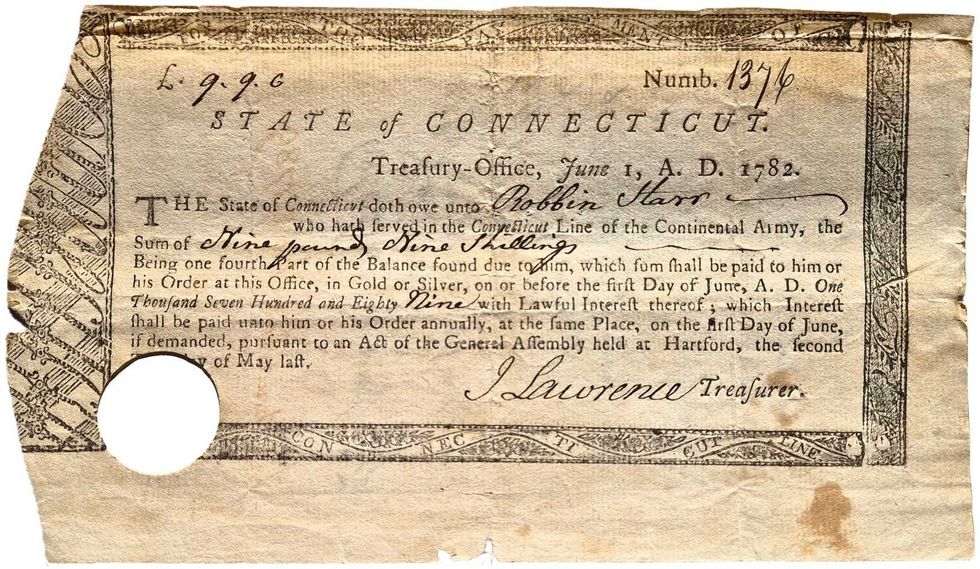 Pay Bill for Robin Starr’s service in the Continental Army.Courtesy the Alex Breanne Corporation
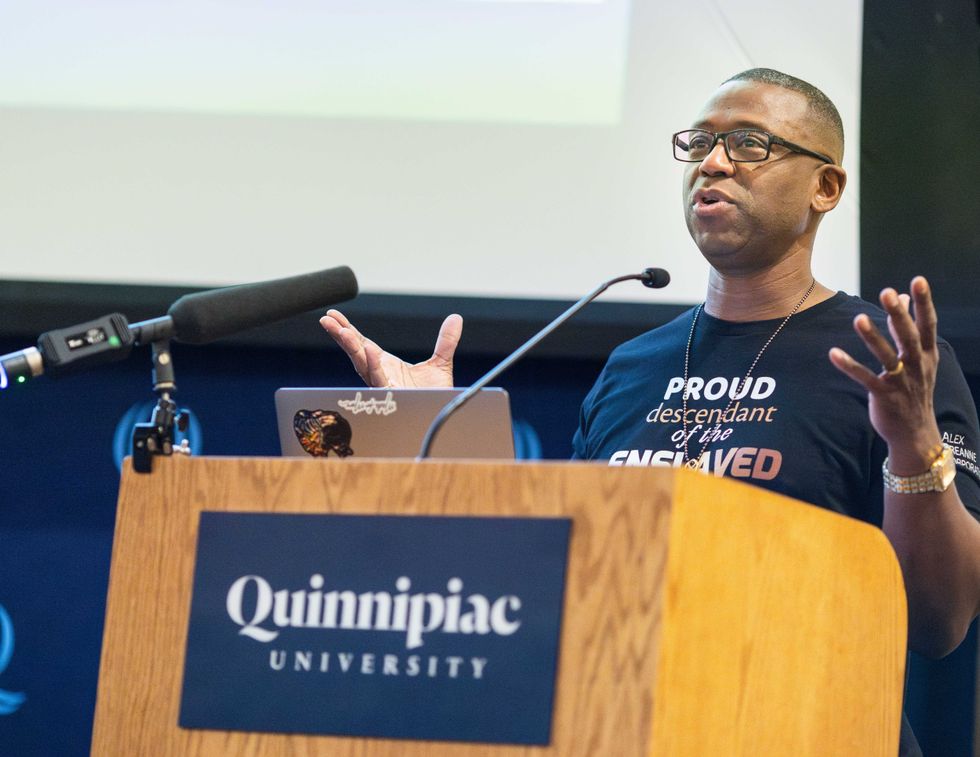 John Mills speaking at Quinnipiac University.Courtesy the Alex Breanne Corporation
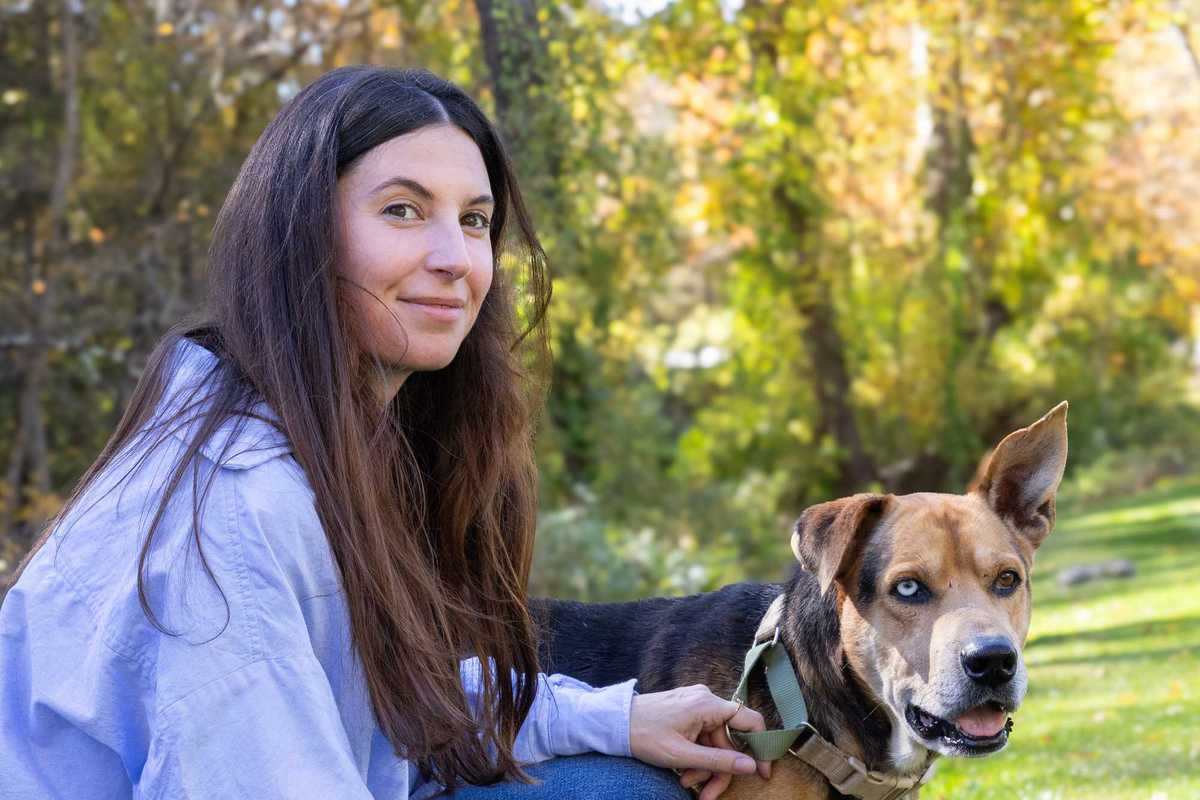
 Stephanie Saetta,with her rescue dog George and Blue (left), a shepherd mix awaiting his forever home.Madi Long