Thank you!
Your support is sustaining the future of local news in our communities.

Solar power debate

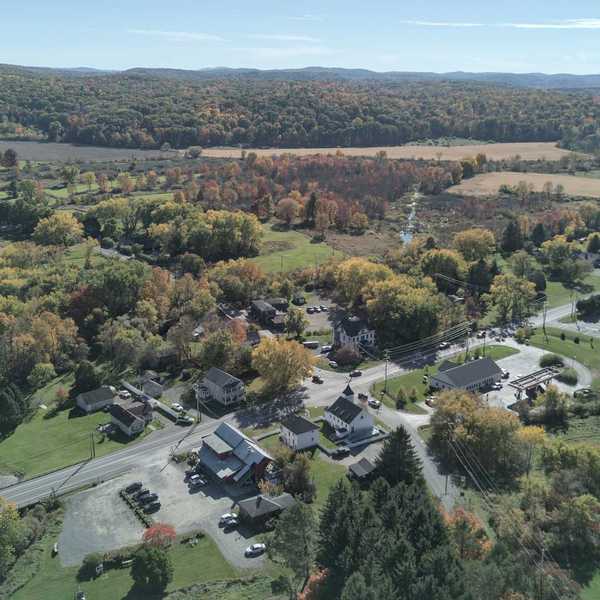
Last summer the Pine Plains Planning Board agreed that the solar project at Pulvers Corners, proposed by Carson Power of New York City, would not create significant harmful impact. That meeting in June was viewed by many as a significant advance for the project. 

But there was more to be done, and more meetings, workshops and hearings to get through. Even after there had been many already.

In the last week of November, the long process came to fruition for Carson Power. The Planning Board, in a 7-0 vote, approved the project. The Planning Board didn’t get to this decision without a lot of hard work and diligence. We commend this all-volunteer body for all its hard work. The resolution approving the project is a testament to its due diligence. Through 22 pages of  “whereas” this and “whereas” that, the Board establishes consideration of dozens and dozens of fact-finding and stipulation matters.

No matter whether you stand “for” or “against” the project, the Planning Board deserves credit for doing its job. Some might consider that it is a model for this kind of project evaluation. 

The members of the Board have faced a persistent opposition to the project, ranging on several issues from its impact on the environment, its fit in the Pine Plains rural countryside, its impact on wildlife and its threat to the pastoral viewshed and real estate values. And more.

While we’re at it, we offer praise to the Planning Board for its transparency and documentation on the town web site. 

Our story on Page A1 by Judith O’Hara Balfe reports on the Board’s decision at its special meeting in the Town Hall. But throughout the year, as we said, the project was the subject of dozens of meetings. Over time Carson Power agreed to stipulation after stipulation — weekly erosion inspection during construction, no herbicides, and much more. Planting pollinator-friendly plants, such as the milkweed preferred by the Monarch butterfly, became part of the agreement. And more, including having the town retain the right to permit a beekeeper to keep bees on the property. 


The day after the Pine Plains Planning Board gave the green light to Carson Power, about 125 concerned residents of Sharon, Connecticut, attended an informational meeting about another, considerably smaller solar project. 

Less than a half an hour drive to the east, the townspeople of Sharon are wrestling with a municipal solar project proposed adjacent to the Sharon Center School. Their late November meeting was a chance to learn about the status of the project — already started down the road — and to explore options that might still be available. See story on Page A2. 

The Sharon project had received initial approval at a town meeting in August, attended by only 14 residents. (The town has 635 residents, according to the 2020 U.S. Census.) With the approval of the dozen-plus residents present, the town signed a power purchase agreement with the Connecticut Green Bank. Preliminary implementation has begun.

But a recent petition carrying 209 signatures requested reconsideration of the project and the scheduling of a town-wide referendum vote, which has now been scheduled by the Board of Selectmen for Friday, Jan. 5. The referendum will decide by “Yes” or “No” vote whether the project may proceed.

Latest News

A life reshaped by clay in “Matin”

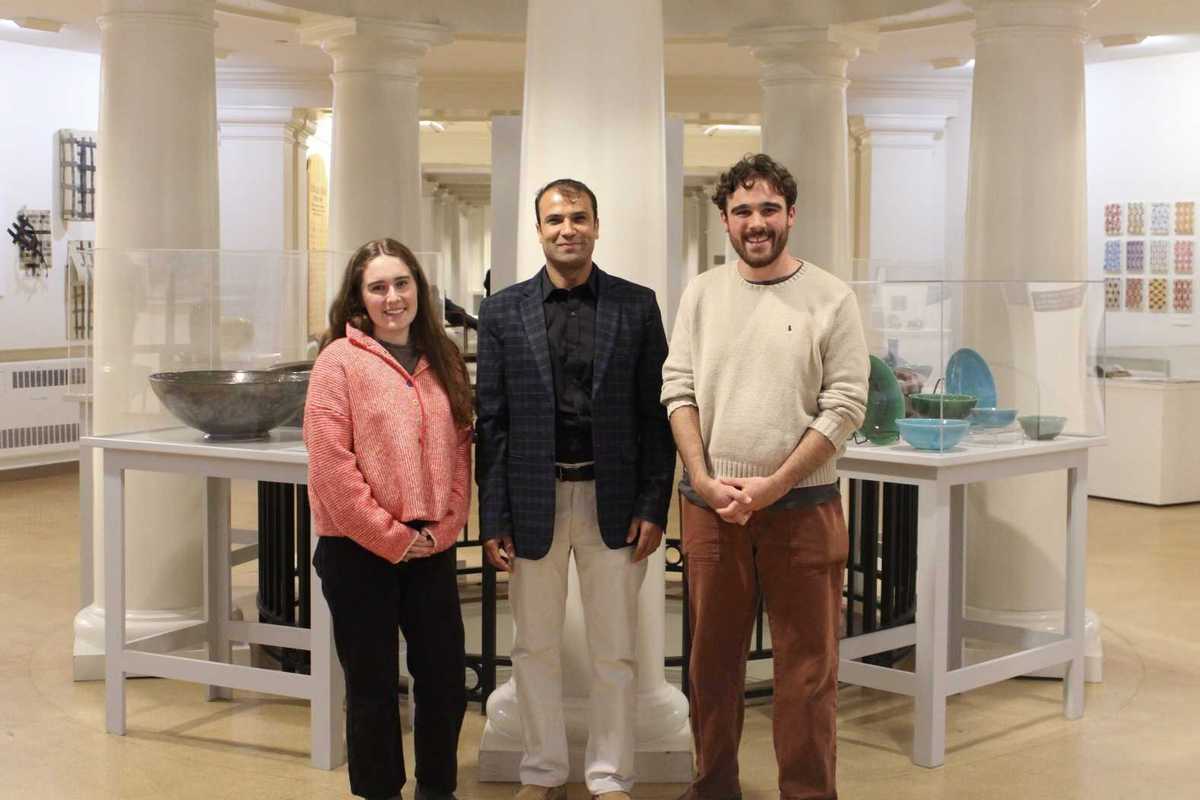
Left to right: Hannah Wheeler, Matin Malikzada and Yonah Sadeh.

D.H. Callahan

On Monday, Oct. 26, a group of students, teachers and local residents gathered at the Hotchkiss School in Lakeville for a screening of the new short documentary “Matin.” The film tells the story of Matin Malikzada, a seventh-generation Afghani potter making a new life in New Milford, Connecticut. The film was made by local filmmaker Yonah Sadeh, creator of the Video Wall at the David M. Hunt Library, and Berkshires-based potter Hannah Wheeler, who were both present for the screening, along with Malikzada himself.

As a member of the seventh generation of his family to master the art of pottery, Malikzada had done things the way his family had for over a century. Istalif, the village where his family has lived for generations, was known throughout Afghanistan for its pottery, with wares sent across the country for use as everyday cups, bowls, plates and other vessels. The pottery-making families of Istalif gathered clay from the same mountain, about 30 to 45 minutes away by donkey. Every July, they would head north toward the Uzbekistan border to gather ishkar, a plant they processed by hand to make their signature glazes.

Keep ReadingShow less
google preferred source

Want more of our stories on Google? Click here to make us a Preferred Source.

Meg Sher finds her calling among the stacks

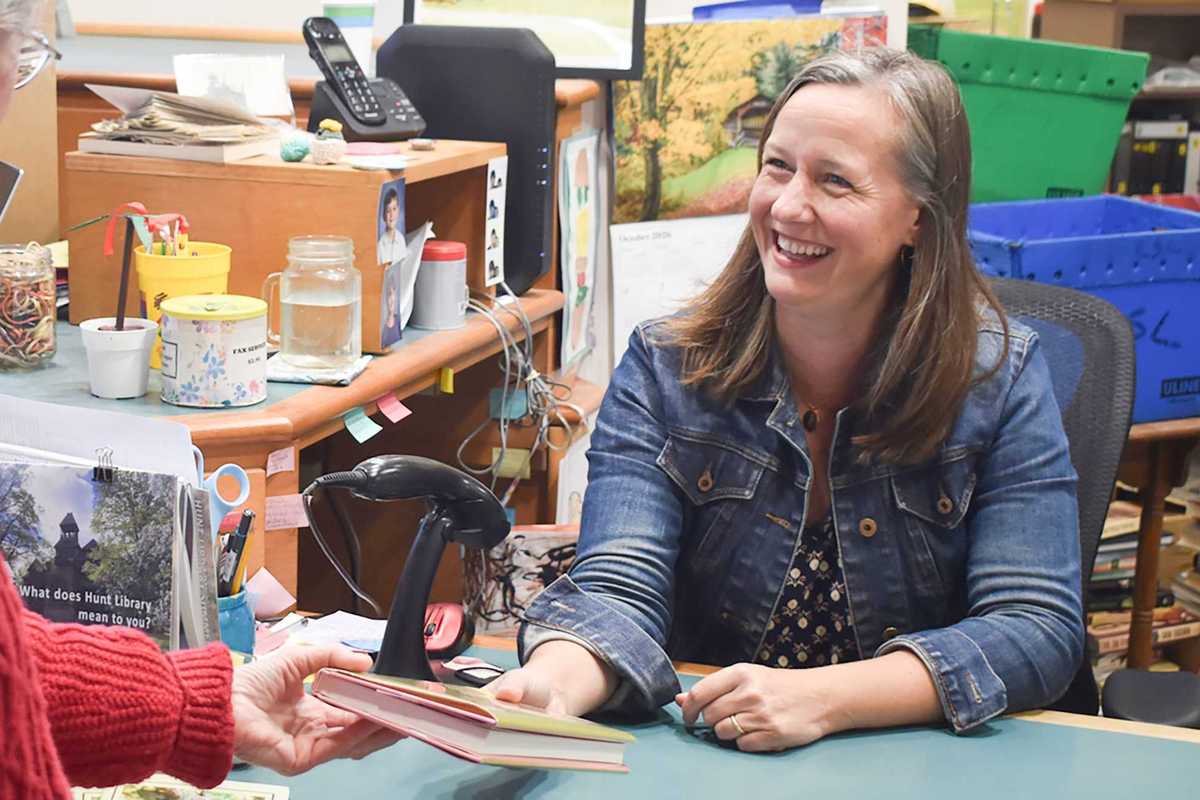
Meg Sher, executive director of the David M. Hunt Library in Falls Village.

L. Tomaino

When Meg Sher came to Falls Village in 2006 from Old Lyme, Connecticut, where she grew up, she never imagined she’d someday be the executive director of the David M. Hunt Library.

Although, in hindsight, perhaps it makes sense.

Keep ReadingShow less
Crescendo’s 23rd season speaks to the heart and mind

Christine Gevert, founding artistic director of Crescendo, conducts the audience at a performance.

Steve Potter

For Christine Gevert, founding artistic director of Crescendo, music from centuries past is anything but a relic. It is a living, breathing art form, full of drama, emotional complexity and, occasionally, surprises. As the regional choral and period-instrument ensemble launches its 23rd season, Gevert is once again bringing forgotten masterpieces into the present.

“Early Music has been my lifelong passion and the focus of my specialization in Europe and South America,” Gevert said. “Bringing this repertoire to our audiences in a nuanced way that does justice to its incredible depth, intensity, and beauty is deeply important to me.”

Keep ReadingShow less
Close Encounters with Music celebrates 35 years of musical discovery

Close Encounters with Music’s 35th season opens with “Saluting the Clarinet” featuring clarinetist Alexander Fiterstein.

Provided

For 35 years, cellist Yehuda Hanani has been inviting audiences to experience classical music in unexpected ways. As founder and artistic director of Close Encounters with Music, Hanani has built a concert series that goes beyond the music itself, exploring connections to literature, history, politics and the human experience.

This year, Close Encounters celebrates its 35th season with “Celebration & Discovery,” a seven-concert series that opens Sunday, Nov. 1, at the Mahaiwe Performing Arts Center in Great Barrington.

Keep ReadingShow less
google preferred source

Want more of our stories on Google? Click here to make us a Preferred Source.

google preferred source

Want more of our stories on Google? Click here to make us a Preferred Source.