From students to owners at New Milford’s award-winning dance studio

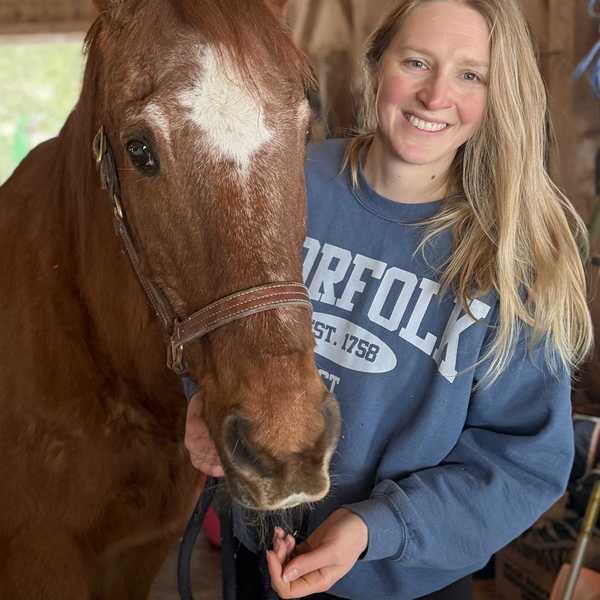
Elizabeth Frabizzio and Zoe Czerenda, once both students at FineLine, are now co-owners.
Provided

Elizabeth Frabizzio and Zoe Czerenda, once both students at FineLine, are now co-owners.
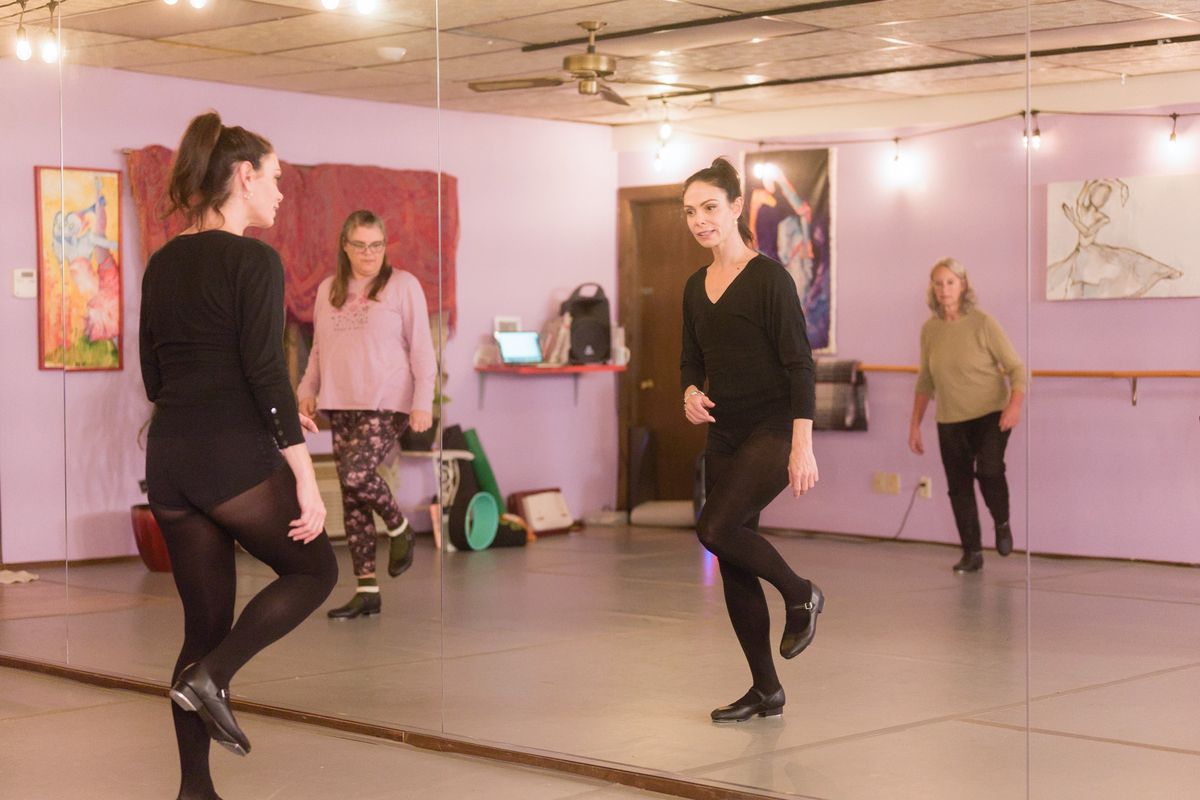
For Elizabeth Frabizzio and Zoe Czerenda, the studios at FineLine Theatre Arts in New Milford, Connecticut hold a lifetime of memories. Both women grew up there, first as students, then as young teachers. Last September, they became the studio’s new owners.
The studio was founded in 2006 by Broadway veterans Elizabeth Parkinson and Scott Wise. Parkinson, a former principal with the Joffrey Ballet, and Wise, a Tony Award winner for “Jerome Robbins’ Broadway,” built the school on professional-level training paired with a strong sense of community. As they prepared to step back from running the school, they didn’t look far for successors. In September 2025, they handed the studio keys to two dancers who had come up through its ranks.
“It felt like the natural progression of my career,” Frabizzio said.
Frabizzio joined FineLine as one of its earliest students during her senior year of high school. Not long after graduating, the founders offered her a small class to teach.
“They gave me my first class as I was dabbling in the professional world and auditioning and performing,” she said.
Her career soon took her well beyond New Milford. She performed as an ensemble dancer in the Radio City Christmas Spectacular at Radio City Music Hall, with the modern dance company Momix, and appeared in Darren Aronofsky’s “Black Swan.”
Over time, teaching pulled her back toward the studio. About 10 years ago, after getting married, Frabizzio began gradually taking on administrative responsibilities and helping run the school behind the scenes.
Also a New Milford native, Czerenda began dancing at FineLine as a child and later joined the studio’s pre-professional repertory company, Artists in Motion. By age 15 she was assisting with classes.

Today, Czerenda and Frabizzio share the day-to-day work of running the studio. Their first school year as owners has come with a few surprises.
“It’s been kind of a wild ride,” Frabizzio said, laughing. She welcomed her second child last summer, just as the transition to ownership began.
“I’m so lucky that I have Zoe,” she said. “She’s an amazing partner. She kind of steered the ship and ran the show the first trimester of the year.”
While the leadership is new, the philosophy of the studio remains firmly rooted in what Parkinson and Wise built.
“I’m definitely preserving the technique and the passion that Elizabeth and Scott brought to FineLine,” Frabizzio said.
The founders’ Broadway backgrounds shaped the studio’s approach to training, emphasizing strong technical foundations for dancers of all levels.
“A solid technique is something that anybody would want, regardless of aspirations,” said Frabizzio. “If you want to be a professional or if you want to be a recreational dancer, it’s important to learn the right way.”
FineLine now serves more than 100 students ranging from age 3 through adults. Classes include ballet, tap, jazz, contemporary, lyrical, acrobatics and musical theatre, along with vocal performance and drama. The theatre program is led by Robin Frome, who also runs the Sherman Playhouse.

The studio recently received another sign of its local support, earning first place in Litchfield Magazine’s 2026 Readers’ Choice awards.
“We were really excited to come in first place,” Frabizzio said. “It’s so great for the area.”
At the same time, the new owners are mindful of how demanding dance culture can sometimes become.
“What I pulled from the professional world was how toxic it could be,” Frabizzio said. “I just want these kids to feel loved. I want them to feel empowered and to know that they are enough at any ability.”
For the past 15 years, Frabizzio has primarily taught children between the ages of 3 and 10 — often their first introduction to dance.
“I don’t take that role lightly, especially now that I’m a mom,” she said. “I know what those first impressions are and what they mean.”
Her goal is simple: “I want them to walk away with love and joy,” she said. “I want them to be excited to come to class.”
Accessibility is also part of the studio’s mission. This school year, FineLine awarded $23,000 in scholarships to students through an application process supported in part by community performances at the studio.
Looking ahead, FineLine will present its annual spring performance at the end of May, followed by its summer programs in July and August.
For Frabizzio and Czerenda, the studio’s next chapter is less about reinvention than stewardship.
“We’re really trying to preserve what they gave us,” Frabizzio said. “And that’s the love and the joy of dance.”
“Being an educator has been the greatest blessing of my life,” said Czerenda. “To be a safe space, a light of positivity or an outlet for these kids is what makes this experience so special. They teach me how to be a better educator and I like to think I help them become better humans as well as dancers and performers.”
Find out more and sign up for a class at finelinetheatrearts.com

Richard Kessin
One of the virtues of Science is to keep people from accepting a first thought that makes no sense. It says, “Let’s just think about that. Does it make sense? Are you sure?“ It says “No, Mr. Aristotle, eels do not form from the mud at the bottom ofrivers.”Authoritarianstend to hear what they want and decide that it is true. “Surely vaccines are dangerous.” is one such thought. The voice that proposes the first thought can be seductive; it is confident and speaks in a tone that says how can you not know this? People hearing the supposedly authoritative voice of RFK Jr., skipped their children’s measles vaccinations on the pretext that vaccines cause autism.
RFK Jr had been in American Samoa in June 2019 and spread the idea that measles vaccine begets autism. Low rates of vaccination declined further. A tourist with measles introduced the infection to the under-protected Samoan population and an epidemic ensued, introduced by a tourist, peaking in the Fall of 2019. Measles virus is exceptionally infectious. Thousands of people were infected, and the island closed down--schools, factories, markets, and tourism. Vaccinators from CDC and several countries, arrived went house to house, vaccinating the residents. The population was about 195,000, and 13,666 vaccinations were given to previously unvaccinated adults and 1,113 children. By Mid-December there were no new cases.
There were, nonetheless, 800 cases of measles in total and 83 deaths, most in children under 5. Eighty-three deaths is a horrendous number, when the vaccine could have prevented them.There is more to learn from these numbers. Of the vaccinated children who did not get measles, some, according to Mr. Kennedy’s theory, should have developed autism.I called the Samoan Health Authorities and asked if they were seeing more autism than usual. They were fighting filariasis, but not autism. Measles vaccination does not cause autism to increase, but something does, and Mr. Kennedy has no idea how to find out what that is.
Robert F. Kennedy Jr confessed to licking cocaine off toilet seats and then explained that’s why he doesn’t fear bacteria. That is hard to top, but perhaps God looks after fools and drunks, or perhaps someone had just swabbed the toilets with Clorox.Then he told us that mRNA vaccines are dangerous and should not even be considered by the FDA. He said they don’t work in the upper respiratory tract, but they do. That rookie error has been retracted. RFK Jr. should think first but does not.mRNA vaccines are part of the future, which does not guarantee that Moderna’s new influenza vaccine will be given a fair hearing at the next FDA meeting which has been seeded with vaccine skeptics.
The United States has withdrawn from the World Health Organization.After the Ebola outbreak in West Africa, more than a decade ago, an organization called CEPI (the Coalition for Epidemic Preparedness Innovations) formed. Their goal was to make vaccines for new pandemics and have them in the field in 100 days. That takes mRNA vaccines.Vaccines derived directly from the virus genome 9 which is usually made of mRNA, not DNA, can be made quickly. Later, chemists can make drugs as they did with Covid 19. CEPI is funded by the Norwegian Sovereign Welfare Fund, The Gates Foundation, and many others. But not the United States. They do not need our money but someday we may need their mRNA vaccines.
That we are set to discourage vaccines and better ways to make them means that we are ceding leadership in science and medicine that has been American for decades. European countries, Japan, China, Australia, Israel, India and others are now industrial powers, as good at advanced molecular genetics and vaccines as we are. We risk that they will collectively surpass us, a competitive deficit that we do not need.
The NIH and other research institutions work through study sections, which meet three times a year and go through about 100 grant applications, submitted by scientists in colleges and universities around the country. About 20 % are funded. The other 80 scientists can make changes and reapply. The judgmentdetermines the future of the applicant’s lab, including support for PhD students, so a lot is at stake.This process also faces disruption. I served on a study section forfour years and submitted applications to fund my own lab for nearly 30.The process was honest and apolitical. Now the Trump administration has decreed that applicants can have their grants moved up in rank if administrators think one meets the President’s priorities better than others. The system is now more open to political corruption. Is there to be a political officer at each study section?
There is good news. Congress has not cut the NIH budget by 40% as the Trump administration wanted.Let’s see if Universities and other research organizations can keep their Ph.D and MD fellowship programs going. That the number of students in them will be reduced, is a given.
Richard Kessin is Emeritus Professor of Pathology and Cell Biology at the Columbia University Irving Medical Center.
John Coston
Almost three years ago to the day, our NYS assemblymember Didi Barrett introduced her “Methane Bill” in the Assembly. Barrett claimed that it was her idea to gut New York’s climate law by deleting the potent greenhouse gas methane (AKA natural gas) from the popular Climate Leadership and Community Protection Act, but it became obvious that NYS Governor Kathy Hochul was actually pulling the strings. When New York residents saw what was about to happen and called Hochul out, she dropped her support for the bill, leaving Barrett holding the bag.
Now in 2026, when constant distractions (war, scandals, white-house remodeling) have driven the climate crisis off most American’s radar, Hochul has found a new opportunity to provide the largest gift yet to the oil and gas industry. Hochul has been talking up the supposed costs to upstate New Yorker’s if the state were to move forward with reducing our emissions. Of course these costs fall squarely on the Governor’s shoulders since she has blocked the actions demanded by the climate law at every turn.
Hochul would like to see New York’s climate goals tossed out. Why should she care about the billions of dollars NYS residents will lose as floods, fires and freak storms wreak havoc? She won’t be in office forever, and the oil companies remember their friends…
Those of us who care about New York’s leadership role in preventing the worst climate catastrophes call on Hochul and Barrett to lead, follow or get out of the way. Obstructing climate action is not an acceptable option.
Bill Kish
North East
Some Albany politicians, including Governor Hochul, are pointing to a recent report from the New York State Energy Research and Development Authority (NYSERDA) to argue that New York should weaken the Climate Leadership and Community Protection Act (CLCPA). That would be a mistake.
Communities like North East and Millerton are already seeing the effects of a changing climate. Stronger storms threaten our homes and critical infrastructure.Hudson Valley farmers face increasingly unpredictable weather and heavier downpours. The CLCPA was adopted in 2019 because New York recognized the need to confront these risks and transition to a cleaner energy system.
Recent increases in the price of oil and natural gas (which is burned to generate a lot of NY State’s electrical supply) should be a reminder that doubling down on fossil fuels is not a stable long-term strategy. Families and small businesses across our region have seen heating and electricity bills spike when fossil fuel prices rise. Electricity costs have skyrocketed seemingly overnight for some, and many neighbors are struggling to cope.This problem is not limited to New York.New Jersey has declared a state of emergency to address this crisis.Continuing or expanding our dependence on fossil fuels would only expose our families and businesses to more of that instability.
The transition to clean energy must be implemented carefully, with attention to affordability and reliability. But the solution to implementation challenges is to improve the plan to meet CLCPA goals rather than abandon them. Investments in energy efficiency, electrification, and renewable power can reduce pollution, stabilize and even lower energy costs over time, and create jobs across the Hudson Valley.
The undersigned residents of North East and Millerton call upon Governor Hochul, and all of our representatives in Albany, to stay the course and focus on making the clean-energy transition work better for communities like ours.We appreciate that our State Senator, Michelle Hinchey, and our Assemblymember, Didi Barrett, have reiterated their support for preserving the CLCPA.
The climate challenge hasn’t gone away. Neither should New York’s commitment to solving it.
Rich Stalzer
Kathy Chow
James Cole
Rachele Grieco Cole
Katie Cariello
Louise Meryman
Dean Nicyper
Tom Parrett
Camilo Rojas
Kathleen Spahn
Andrew Stayman
Millerton

Want more of our stories on Google? Click here to make us a Preferred Source.
Leila Hawken
The historic Thorne Building on Franklin Avenue in the Village of Millbrook was originally built in 1894.
MILLBROOK — The village Planning Board has scheduled a public hearing for Monday, March 16, to hear residents’ comments on plans to convert the Thorne Building on Franklin Avenue into a community arts center.
Expecting a large attendance, the Planning Board has announced that the meeting will be held at the Millbrook Firehouse at 20 Front St., beginning at 6 p.m.
Residents will be invited to comment on revised site plans for the Thorne Building. Envisioned to become a vibrant arts center serving the area, the Thorne building would offer a multi-faceted program of activities in the visual and performing arts, studio and practice space.
Formerly a school, the landmark Thorne Building would offer a state-of-the-art theater space for films, concerts, and dance recitals, a technology center, space for entrepreneurs, culinary education, gallery space, arts instruction, and more.
Also on the agenda will be a public hearing on site plans for the former Orangerie garden center nursery property that stands at 3416 to 3424 Franklin Avenue, at the intersection with Route 44.
The applicant is seeking to add three structures and to raze and replace one greenhouse. The application also asks to add a limited food enterprise to the site.
An application for the second phase of plans for the Reardon Briggs property will also be discussed by the Planning Board.
John Coston
AMENIA — The Amenia Fire Company will hold its monthly Pancake Breakfast at the Firehouse on Sunday, March 15, from 7:30 to 11 a.m.
The meal is all you can eat with a menu of pancakes, French toast, eggs and omelettes, home fries, bacon, sausages and beverages.
Diners may eat in or take out. The firehouse is located at 36 Mechanic St., Amenia. Adult tickets are $12, Seniors and children under 12 are $11.
Proceeds benefit the Amenia Fire Company.
For information call Andy Murphy at 845-373-8352.
Leila Hawken
Pre-K student August Casertano, 4, of Elm Drive Elementary School, enjoys refreshments beneath his own artwork — a set of cheerful acorns he created with classmates — during the Art Blast opening reception Friday, March 6, at the Millbrook Library. The reception invited families and residents to view artwork by students from the Millbrook Central School District, Dutchess Day School and the Millbrook Early Childhood Education Center. The exhibit runs through Saturday, March 28.

Want more of our stories on Google? Click here to make us a Preferred Source.

Want more of our stories on Google? Click here to make us a Preferred Source.