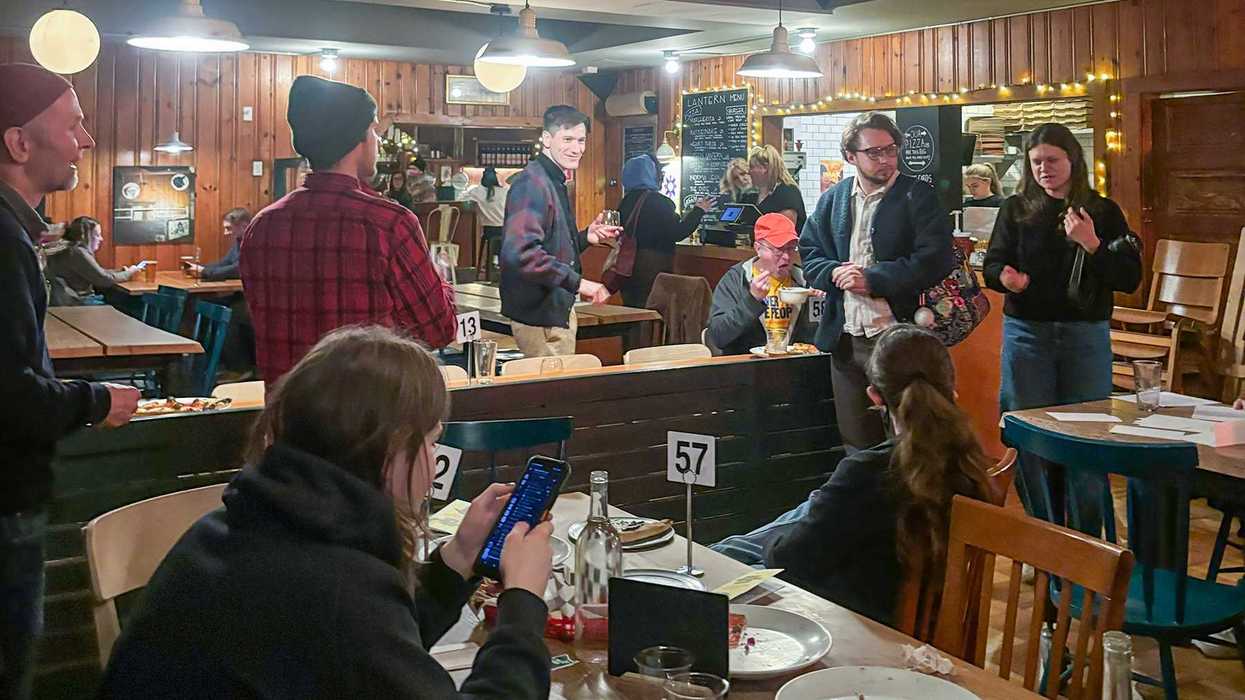
WASSAIC — On Thursday, Nov. 19, organizers and local leaders gathered at The Lantern on Wassaic’s Main Street to discuss a State Senate bill that would create a publicly-owned energy company in the Hudson Valley.
The New York bill, introduced by State Senators Michelle Hinchey and Sarahana Shrestha in June, is currently in committee. If it were to pass, it would see the state purchase Central Hudson Gas & Electric, which currently serves 315,000 electric customers. Its coverage area includes Millerton, Millbrook, Rhinebeck, and Red Hook.
The concept of a government-owned entity, called the Hudson Valley Power Authority, is still theoretical, but public energy companies do exist in other regions, including in Los Angeles, Long Island, Tennessee and Arizona. By removing profit incentives, the utilities have been able to lower costs for their customers, advocates say.
Event organizers such as Millerton resident Brandon Wolfe, a Mid-Huson DSA member and campaign manager for the HVPA, said now is the time to push for bold reforms.
“We’re living in a time of mass unaffordability,” he said. “People are realizing that just because we disagree on politics doesn’t mean that life should be as expensive as it is.”
About 30 supporters of the bill gathered in Wassaic to hear from local organizers about the campaign.
The event was described as a “casual social” by the Mid-Hudson Valley DSA, the organization that hosted the evening. Local legislators in attendance included Pine Plains Supervisor Trevor Roush, Millerton Village Trustee Katie Cariello, and County Legislator Chris Drago.
The concept in favor of the HVPA is a simple one: remove profit from an energy company’s objectives, and rates will fall. The Tennessee Valley Authority, originally created in 1933, has been in existence for nearly 100 years. Energy prices in Tennessee are 26% below the national average, according to ElectricRates.org. Just last month, the U.S. Department of Energy announced plans to expand the TVA with $250 million in federal funds.
Central Hudson customers have seen their utility bills rise 76% over the past 5 years, compared to the national average of 33%. “Something has to change in terms of how our community is interacting with Central Hudson Energy,” said County Legislator Chris Drago. But these are early days. “I think this is a first step to getting the area to hear about the bill,” said Millerton Village Trustee Katie Cariello. “You have to start somewhere, and that’s what’s happening here today.”
Both Cariello and Drago said energy costs were one of the concerns they heard the most about from their constituents. Most estimates put HVPA savings between 5-10% of the current energy bill, with savings increasing over time and depending on investments in advanced grid technology and renewable energy.
Supervisor Roush expressed an openness to the campaign, but said it’s a complicated issue for families in the region. “I think that many people in the region have some connection to Central Hudson. My understanding is that everything for the workers will still be there, and it could potentially be a better situation, but it’s a legitimate concern.”
Still, he said, the prospect of lower, more predictable utility bills was worth exploring. “It resonates with a lot of people who are looking for help,” Roush said. “And it’s my job as Pine Plains Supervisor to make sure people in my town can live the best life they can.”
The HVPA faces a number of challenges. Central Hudson representatives have said the utility is not for sale in comments to NPR station WAMC and that a government takeover would actually drive rates higher. The cost to purchase Central Hudson is another potential hurdle. The bill puts the estimated purchase price between $3.5 and $7.5 billion. Central Hudson also contributes more than $60 million in local taxes, while the HVPA would be tax-exempt.
Electricity prices have outpaced inflation by 49% in the last three years, according to the American Economic Liberties Project.
But enacting the HVPA would first mean gaining wide support from New York’s political sector. Once that happens, the company would likely need to issue revenue bonds to finance itself, which could be recovered through customers’ bills.
Despite the mammoth task ahead, Mid-Hudson DSA’s Brandon Wolfe closed the night on an optimistic note. “What we’re doing here may be a small community effort,” he said, “but the way we pass things like this is by showing that small, rural communities want change.”


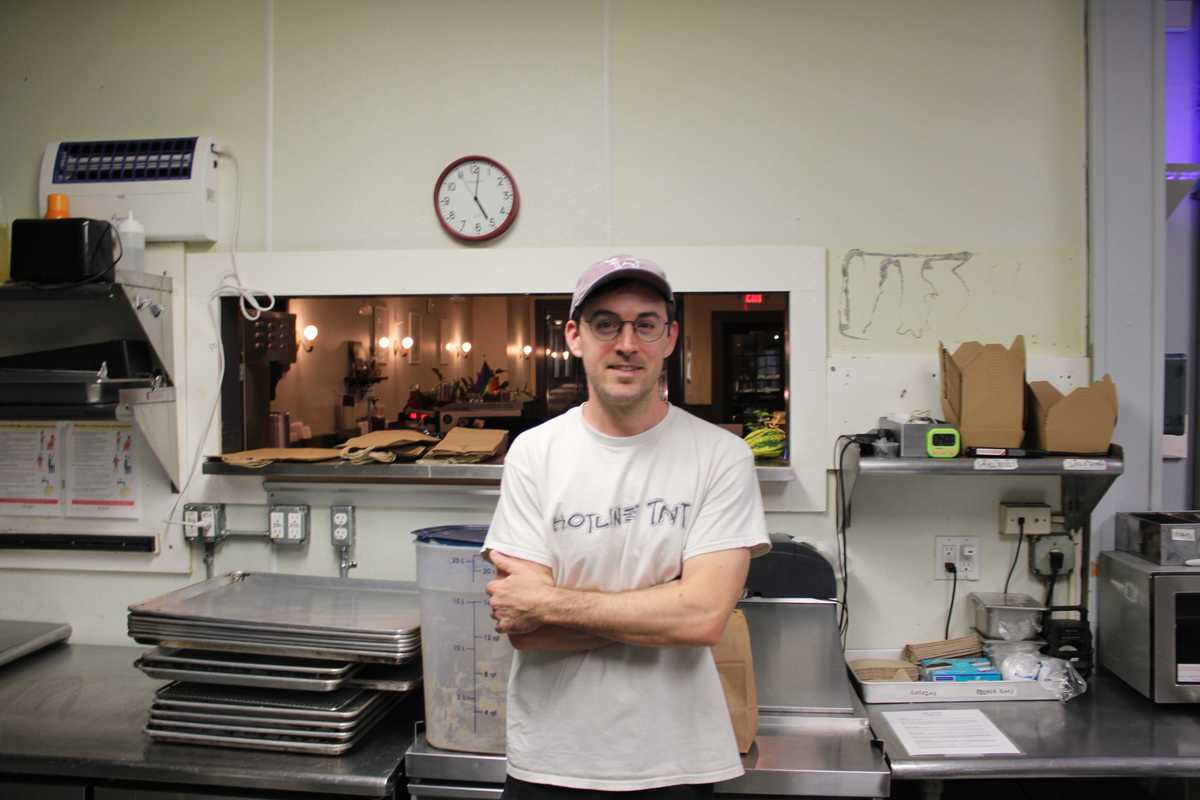


 Illustration by Nathan Miller