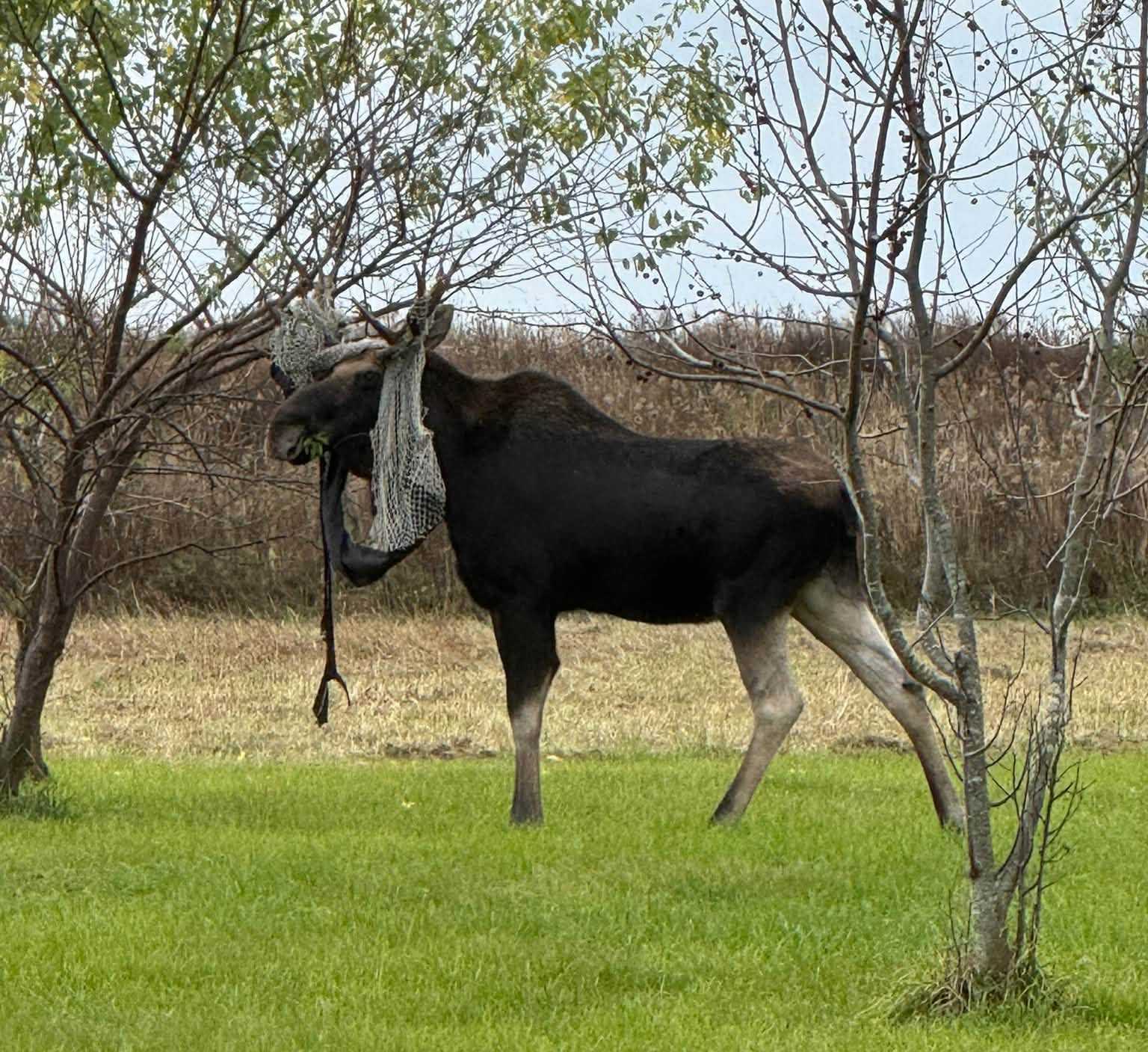
A moose with netting tangled around its antlers has drawn attention as it wanders through Dutchess and Columbia counties, but New York’s Department of Environmental Conservation says there’s no need to intervene for now.
Residents raised concerns last week after photos of the moose circulated in local Facebook groups. The DEC observed the animal and said it “appeared to be in good condition and not exhibiting signs of distress … the animal was moving freely, and could eat.”
At the time of publication on Tuesday, Nov. 17, the DEC confirmed that no further action had been taken.
“Oftentimes in these scenarios, the netting will come off on its own, which is why wildlife staff is not intervening,” said Jomo Miller, a public information officer with the DEC.
Bull moose shed their antlers every year, usually between December and March, after their mating season ends. The bull moose can travel hundreds of miles looking for possible mates. There are about 700 moose in the Adirondacks region, according to the DEC.
The moose was spotted in Millbrook on Sunday, Nov. 8, with no netting on its head. But by the time the animal reappeared in Copake by Tuesday, Nov. 10, netting was tangled around both antlers.
The netting did not stop the moose from roaming. At Journey Equestrian farm in Copake, it ate fruit from trees, took a nap and headed west. Residents later reported sightings along Route 7A in Ancram and Ancramdale. The most recent sightings put the moose back in Copake on Friday, Nov. 13.
As the moose traveled, residents shared photos and videos of its stops. Some outlets dubbed it “Hammock Moose.”
Moose are becoming a more common sight in the area. Last September, a moose was spotted in Millbrook. It collided with a car, but escaped unharmed. No one was injured in the accident.


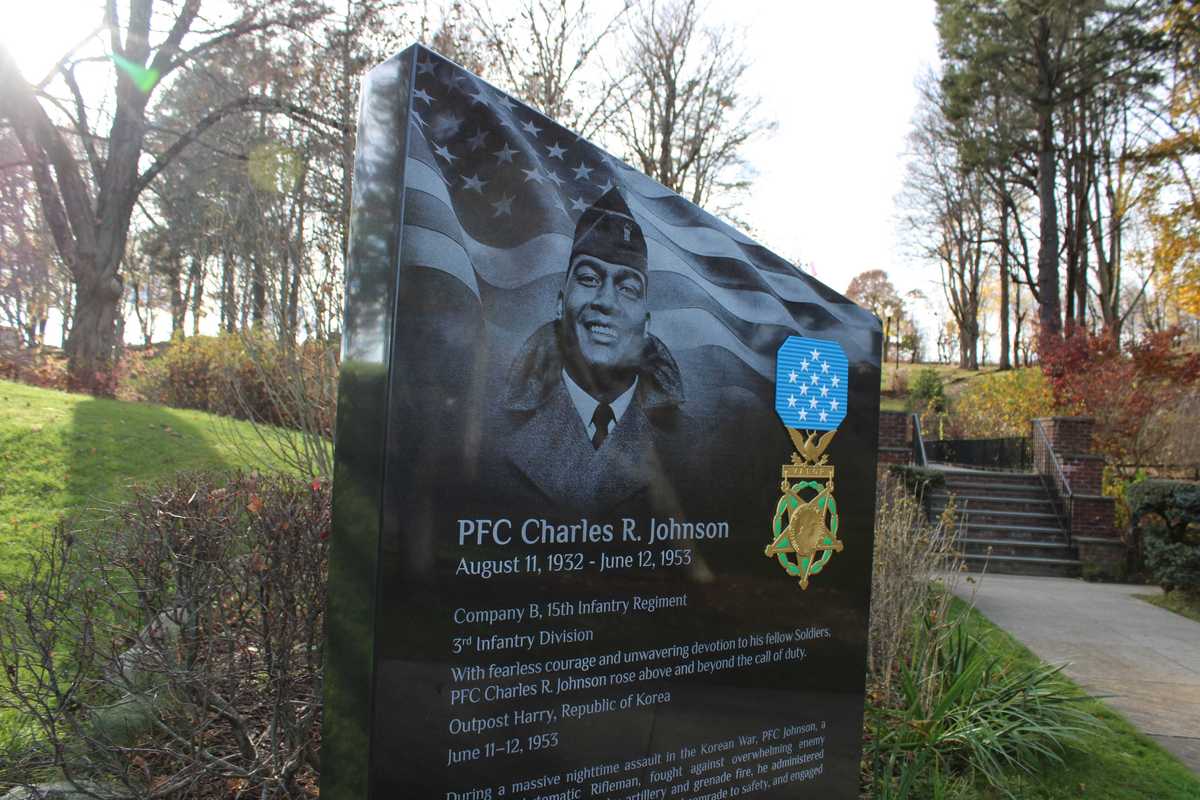
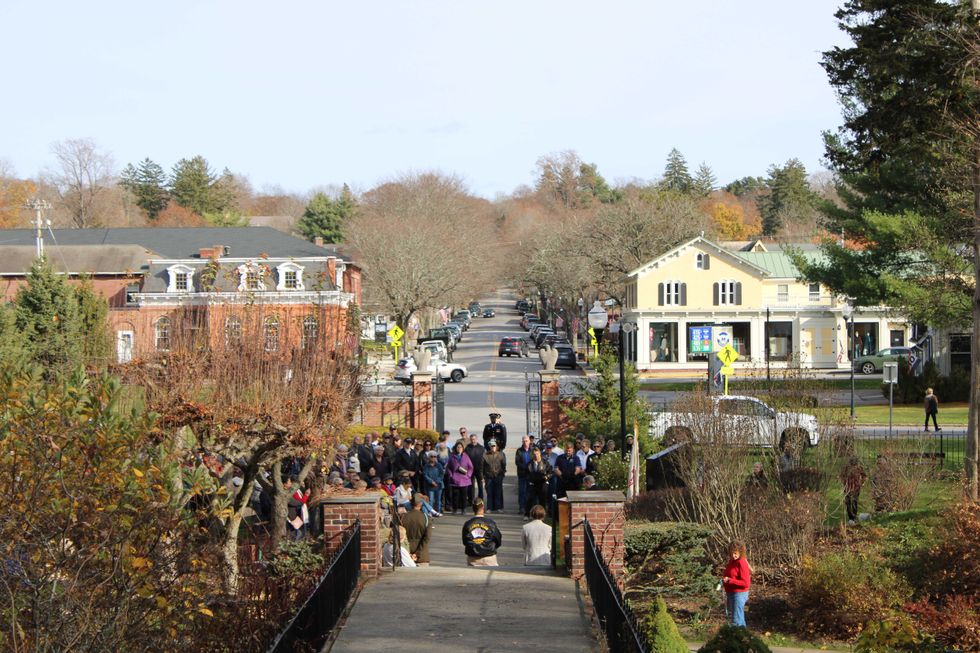 Millbrook celebrated Veterans Day with a color guard, a performance of “Taps,” and speeches from service members in honor of local war hero Charles Johnson.Photo by Graham Corrigan


 Photo by Nathan Miller