In a time of fear, John Carter revives a network of “neighboring”

John Carter
Photo by Deborah Carter

John Carter
"The human cost of current ICE practices is appallingly high."
—John carter
John Carter, who served as rector of St. John’s Episcopal Church in Salisbury from 1999 until his retirement in 2014, launched the first iteration of the nonprofit Vecinos Seguros 1 (Safe Neighbors) in 2017 by introducing a misa, a Spanish-language worship service, at Trinity Lime Rock Episcopal Church.
In December 2024, amid concerns over a renewed federal crackdown on immigrants, a group of volunteers revived the program as Vecinos Seguros 2 (VS2). According to its 2025 annual report, the initiative “created a network of trusted allies to help those who may be targeted by immigration enforcement agents,” taking a low-key approach that prioritizes in-person connections.
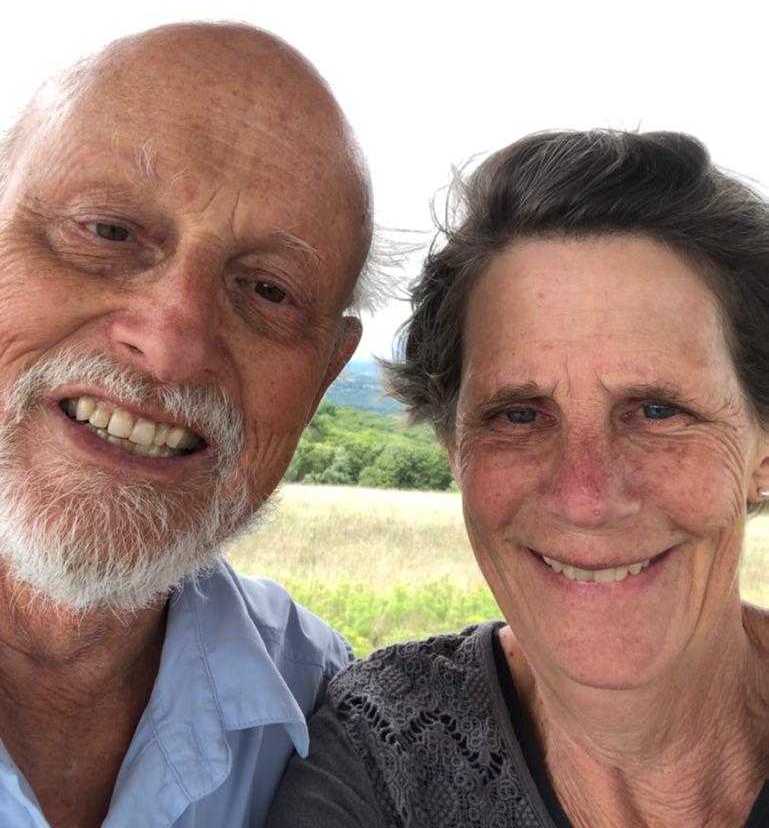
Carter arrived at his calling by a circuitous route. After graduating from Yale, he joined the Peace Corps, then returned to his hometown of Milton, Mass., where he founded and ran the Carter Tree Co. for seven years. After closing the business, he attended Virginia Theological Seminary, earning a Master of Divinity. During that time, he and his wife, Deborah, were involved in the hunger movement. Carter said every venture he undertook was made possible by Deborah, whom he described as his constant companion and indispensable partner in his pursuit of compassion and justice. Still, he questioned himself: “Who am I, and what should I be doing that I’m passionate about?”
In the face of new challenges, volunteers joined the effort to revive the original program, VS1. The Rev. Heidi Truax, recently retired rector of Trinity Lime Rock, has been a strong supporter of Vecinos Seguros from its inception. Glenn Formica, an immigration attorney from New Haven, gave a presentation informing the community about the second Trump administration’s amended policies. Formica also generated written materials in English and Spanish, advising private citizens and employers how to prepare in the event of a visit from ICE (U.S. Immigration and Customs Enforcement). William Tong, Connecticut’s attorney general, a proponent of many social justice issues, including the opioid crisis and fair pricing for generic drugs, has also provided support since the establishment of Vecinos Seguros.
The VS2 steering committee, which includes Carter, is led by Jill Drew, a local civic leader. Drew has worked with Judiciary Committee co-chairmen Gary Winfield and Steven Stafstrom in support of SB 91, a proposal by Connecticut Gov. Ned Lamont to limit ICE actions in “protected areas,” including schools, hospitals and religious buildings. She has also supported HB 5499, which would place limits on the use of automated license plate readers, addressing concerns that the Trust Act is being circumvented through technology deployed for other purposes. Other committee members include Amy Lake and Lee and Sophia DeBoer.
VS2 has launches a range of initiatives, including distributing “know your rights” flyers; creating an online resource with local legal and social services for immigrants; hosting in-person events to educate neighbors and train volunteers; organizing a rapid response team to verify reported immigration enforcement activity and support those affected; providing financial assistance for legal expenses, rent and utilities; and advising employers — from farms and restaurants to stores and private homes — on how to protect workers if immigration agents arrive.
As the annual report states: “We are committed to building on the powerful work of Rev. Carter, who, in the first seven years of Vecinos Seguros, assisted a significant number of individuals and families. It is our mission to continue this important work.”
Few descriptions capture the moment more clearly than Carter’s own words:
“The human cost of current ICE practices is appallingly high. Evidence of the brutality and cruelty of these practices is everywhere. Minneapolis is a recent and egregious example. ICE enforcement is doing much more than deporting individuals. It is also the systematic destruction of families. According to some reports, 90% of deportees are male. They are husbands, partners and fathers, often the primary contributors to family finances. There is heartbreak, trauma and stress experienced by the families left behind. The humanitarian response to the violence and chaos in Minneapolis is inspirational and instructive. Both citizens and immigrants came to the aid of residents living in fear and peril. It should be noted that people of color, whether their status was legal or undocumented, were also deeply shaken by what they witnessed in their communities.”
Carter also described how communities responded. That out of devastation, he said, came something else:
“A new word was born out of the compassionate response in Minneapolis: ‘neighboring.’ In caring for each other, they were ‘neighboring.’ The mission of Vecinos Seguros 2 is to ‘neighbor’ members of the immigrant community whose lives have been turned upside down by current immigration policies.”

Nathan Miller
Bob Stevens, right, enjoys the swinging sounds of country and western music during a trip to Nashville, Tennessee, with his son, Robert Stevens Jr., not pictured.
MILLERTON — North East Highway Superintendent Bob Stevens died Monday, March 30, after 20 years in the role and nearly four decades with the town’s road crew.
The sudden death shocked road crew members and town officials, who said they had been speaking with the 63-year-old Millerton native the day he died and he hadn’t shown signs of illness. Town officials said a search for a replacement will start as soon as possible.
Stevens’s only son, 39-year-old Robert Stevens Jr., along with employees at the town garage and others in the community, remembered Stevens as a dedicated man with a singular passion for highway maintenance.
“It was an absolutely huge part of his life,” Robert said.
Robert Jr. said Stevens was as supportive as a father as he was dedicated to his work for the town. He recalled a week-long BMX biking trip to Camp Woodward in Pennsylvania that his father drove him to and from, making the round trip twice without a complaint.
“It didn’t matter how little or how far we were going,” Robert said. “If it was to support me, he was on. Always.”
Road crew foreman Shawn Morrison said that supportive nature extended to Stevens’s role as Highway Superintendent, where he prioritized the safety of workers and drivers above all else.
“He always said to me, ‘If you don’t feel safe doing it, then we’re not going to do it,’” Morrison said.
Morrison praised Stevens’s dedication to his post, saying he often worked long hours and weekends out of a love for the job. Winter was a favorite season, as Morrison said he was obsessive about clearing the town’s roads during snowstorms.
“A lot of people had nicknames out there for him — calling him ‘Bare-road Bob,’” Morrison said. “He was anal about his roads in the winter.”
Stevens rarely missed a day of work, for sickness or for pleasure, road crew employees and Town Supervisor Chris Kennan said. Joshua Schultz, a road crew member and Stevens’s godson, said he could remember one notable absence. “He took his son to Nashville,” Schultz said.

Robert Jr. said he and his father traveled twice to Nashville, Tennessee — among the few trips they took together — but a third visit was canceled due to the COVID-19 pandemic. Other travel opportunities often depended on Stevens’s work at the town garage. “If it was wintertime, he’s here,” Robert said. “He’s taking care of the town.”
Sickness didn’t keep Stevens at home either. Morrison said he would work from his well-known orange pickup truck to keep from spreading colds to people.
The orange pick-up truck was a fixture around town, Supervisor Chris Kennan said. Stevens was often spotted inspecting roads across town in the recognizable truck, when it wasn’t parked at the town garage while he worked in his office.
Kennan said the town will begin a search for a new Highway Superintendent, with a committee expected to form at the Thursday, April 9, Town board meeting. He also expects the board to install a plaque at the town garage on Route 22 honoring Stevens’s service.
Kennan proposed the plaque at a special meeting of the Town Board on April 1, saying a modest display would respect Stevens’s private nature.
“I’m excited that we’re going to put a plaque on that building,” Kennan said. “It’s appropriate that there be some reflection of what he put into it.”
Debra A. Aleksinas
Packets of Blue Razz botanical extracts in pill form are among herbal remedies offered as an alternative to kratom at The Smoking Ape in North Canaan and Torrington.
MILLERTON — A new Connecticut ban on kratom — a substance with opioid-like effects linked to dependence and withdrawal — is reshaping border behavior, with some residents crossing into New York to obtain it.
Derived from a Southeast Asian tree, kratom has been marketed across the country as a natural remedy for pain, anxiety and opioid withdrawal. But officials warn it can act like an opioid at higher doses, prompting Connecticut to classify it as a Schedule I controlled substance.
Some officials are also raising concerns about 7-hydroxymitragynine, or 7-OH, a more potent compound derived from kratom that can also act like an opioid.
At gas stations and smoke shops in New York, kratom remains on shelves, drawing customers from Connecticut’s Northwest Corner.
Since the ban took effect March 25, retailers in Millerton and nearby Amenia report a noticeable uptick in cross-border traffic from towns where the once-common substance is now illegal.
The shift has created a stark divide: Connecticut classifies kratom as a Schedule I controlled substance, banning its sale and possession, while New York continues to allow regulated adult sales.
“It’s illegal,” said Connecticut Attorney General William Tong in announcing the ruling and warning of strict enforcement. “You can’t buy it, you can’t sell it or possess it because it’s dangerous, unregulated and unsafe.”
Along Route 44 in Dutchess County, the change is subtle but visible.
Employees at Smokes 4 Less in Amenia and Cumberland Farms in Millerton said they have seen increased traffic from Connecticut customers, though none could estimate by how much.
For some residents of Connecticut’s Northwest Corner, the nearest New York retailer is just minutes away — a convenience now shaping behavior.
A similar dynamic is emerging to the north in Sheffield, Mass., where kratom also remains legal and available.
Empty shelves
in Connecticut
In Connecticut’s Northwest Corner, the ban’s impact was immediate.
At Smoker’s Choice and The Smoking Ape, two smoke shops located about a mile apart in the center of North Canaan, kratom has disappeared entirely from shelves. A once-stocked wall now sits bare.
“You can see the empty shelves,” a worker at Smoker’s Choice said, declining further comment.
At The Smoking Ape, owner Omar Nasser said the financial hit was significant at his two locations, including Torrington.
“I sold what I could,” Nasser said. The remainder of stock, he noted, was returned to his distributor at a loss.
In the days leading up to the ban, he said, demand surged as customers stocked up.
Withdrawal
concerns emerge
Clinicians say the early days following the ban represent a critical window.
New data from Mountainside Treatment Center in North Canaan shows kratom-related admissions have nearly tripled over the past year.
“With the ban taking effect, we are deeply concerned about what happens next,” said Jana Wu, director of clinical integration.
“Withdrawal symptoms can include anxiety, insomnia, nausea and intense cravings,” she said. “When access disappears overnight, people may find themselves in crisis.”
Now, medical providers warn, some users may seek riskier alternatives.
Since the ban, Nasser said customers continue to seek replacements.
“They’re looking for something,” to ease the withdrawal, he said. His stores now offer botanical extracts in pill form, but he said the results are limited.
“I don’t think it does the same job as kratom. Not even close,” he said, describing withdrawal as “very serious.”
He fears some customers will turn elsewhere, to more powerful remedies.
“I think people will be going definitely to hardcore drugs.”
A national moment
At Mountainside, Wu said calls are rising — from Connecticut and beyond.
“People are getting nervous,” she said.
Connecticut is now the eighth state to enact a full kratom ban.
“We are being watched. All eyes are on Connecticut,” Wu said. “It’s a bold move — and a divisive move.”
Patients are asking what comes next.
Clinicians are responding with counseling and medications such as naltrexone and Vivitrol — even as cross-border purchasing becomes part of the conversation.
“People are definitely going into New York to buy kratom,” Wu said.
Before the ban, kratom was widely available across the Northwest Corner.
Now, access depends on geography.
In Connecticut, kratom is fully banned. In New York, it is legal for adults over the age of 21, and in Massachusetts, while there is no statewide ban, legislation is under consideration.
The result is a regional patchwork — one that places border towns like Millerton at the center of shifting consumer patterns.
Some users have asked whether online purchases offer a workaround.
Under Connecticut law, the ban applies to possession — meaning even out-of-state shipments could carry legal risk.
“It doesn’t matter where it comes from,” Nasser said. “It’s illegal here now.”
Leila Hawken
AMENIA — The Town Board approved two resolutions by unanimous vote at its Wednesday, April 1, meeting, including one authorizing herbicide use at Troutbeck’s spa and hotel facility.
The second resolution awarded a contract to paint the stage area in the Town Hall auditorium.
The herbicide approval follows a recommendation from the Housatonic Valley Association, which advised allowing controlled spot spraying and removal of small patches of invasive plant growth within the property’s conservation easement area. The organization assists the town by monitoring activities within Troutbeck’s easement acreage.
Larry Weaner Landscape Associates, based in Glenside, Pennsylvania, will perform the spot spraying work.
The painting project, initially suggested by resident George Bistransin, will apply black paint to the walls and ceiling surrounding the auditorium stage, enhancing the flexibility of the space to accommodate the needs of stage productions or other performances. Invitations to bid resulted in one bidder, Jaybird Painting of Wassaic, providing an estimate of $1,685 to complete the work.
The project will cover approximately 1,264 square feet and includes surface preparation, patching, application of matte black paint, protective masking and final cleanup.
During public comment, resident Ken Topolsky said his research into fair housing laws suggests the legislation may allow municipalities to prioritize local families for future affordable housing opportunities. He cited several regulations governing priority selection systems and urged the Town Board to review those provisions.
Topolsky said families of local workers could qualify for priority status under certain guidelines.
“All code elements have provisions for a point system as long as the system is not discriminatory,” Topolsky said.
People eligible to receive points are local volunteers in fire departments or EMTs, municipal or school employees and families with children in the local public school system.
“Unless it’s codified, it cannot happen,” Topolsky told the town board, urging them to study the legal citations and continue active discussion.
In other business, the board continued discussing how to allocate revenue generated from leasing its tower space to communication service providers.
“It should be used for a specific purpose,” said resident Judy Moran, urging that the revenue not be deposited into general funds.
The board agreed to discuss the issue further at its next meeting, allowing time for more research into how it has been used in the past and any restrictions on its use.

Want more of our stories on Google? Click here to make us a Preferred Source.
Nathan Miller
MILLERTON — The Board of Trustees approved the coming year’s budget Monday, April 6, following no public comment.
The village’s expenses increased 15.8% over last year’s adopted budget. Board members attributed those increased costs to unavoidable spikes in health insurance rates and retirement payments.
Mayor Jenn Najdek said property assessments are slated to increase, which would provide the village with additional revenue. Najdek estimated tax increases of about $11.48 per $250,000 of assessed property value.
Tentative budget documents available on the village’s website reflect that wage increases and newly filled staffing positions further drove increases to the budget. Expenses for the Clerk and Treasurer’s office, along with the building department, each increased by more than 40% over last year. Deputy Mayor Matt Hartzog emphasized the board’s desire to provide raises to village staff.
“We have not given ourselves a raise,” Hartzog said. “But we would like to give all of our employees a raise, so that they can keep up with inflation.”
Hartzog called attention to rising medical insurance rates. Medical insurance expenses rose 15% to $38,300, representing roughly 4% of the total budget.
“Health insurance has just gone through the roof,” he said. “Nobody’s going to be happy about that.”
The Village Clerk budget increased by more than $21,000, driven by the separation of the Clerk and Treasurer line items, with both receiving hikes. The 15.9% rise, bringing the total to $70,240, represents the largest share of this year’s overall budget increase.
A similar additional line item in the Building Department expenses drove the 44% increase in that department’s budget. In addition to the “Building sec salary” line receiving a small increase, a “Building sec” line lists $11,700, contributing much of the total $11,852 increase to that department’s overall budget.
Police salaries increased by a total of $5,000. Highway crew salaries increased by $4,210 total.
Overall, the village expects to spend $975,156 this year, an increase of $132,836 over last year’s budgeted expenses.
Increases to expenses are partially offset by a $70,000 increase in expected non-tax revenue. That’s 22% higher than in 2025, but not quite enough to make up for the increased costs.
Millerton News
MILLERTON — The NorthEast-Millerton Library is set to host a free repair café on Saturday, April 25, in the library’s annex on Century Boulevard.
Fixers will offer free repairs for small electronics, clothing and textiles, and minor bicycle repairs among other things such as lamps and knife sharpening.
The event will run from 11 a.m. to 3 p.m.
Repairs are limited to two items per person. Five knives count as one item.
The Millbrook Library will also be hosting a repair café on April 25 from 11 a.m. to 3 p.m. That event coincides with Millbrook’s community-wide yard sale.
Nathan Miller
MILLERTON — The North East Town Board will add a workshop meeting to its regular monthly schedule after members said an additional meeting could help advance projects more efficiently.
Councilwoman Rachele Grieco Cole first proposed holding two meetings per month at the board’s March meeting. The discussion was continued at a workshop meeting on Wednesday, April 1, with council members agreeing to regularly hold a workshop meeting on the first Wednesday of every month at 5:30 p.m.
The additional meeting will provide time for discussion and planning, while the regular business meeting will continue on the second Thursday of each month. Council members supported the change, citing major projects and grant opportunities that would benefit from additional discussion.

Want more of our stories on Google? Click here to make us a Preferred Source.

Want more of our stories on Google? Click here to make us a Preferred Source.