Remembering Todd Snider at The Colonial Theatre

“A Love Letter to Handsome John” screens at The Colonial Theatre on May 8.
Provided


“A Love Letter to Handsome John” screens at The Colonial Theatre on May 8.
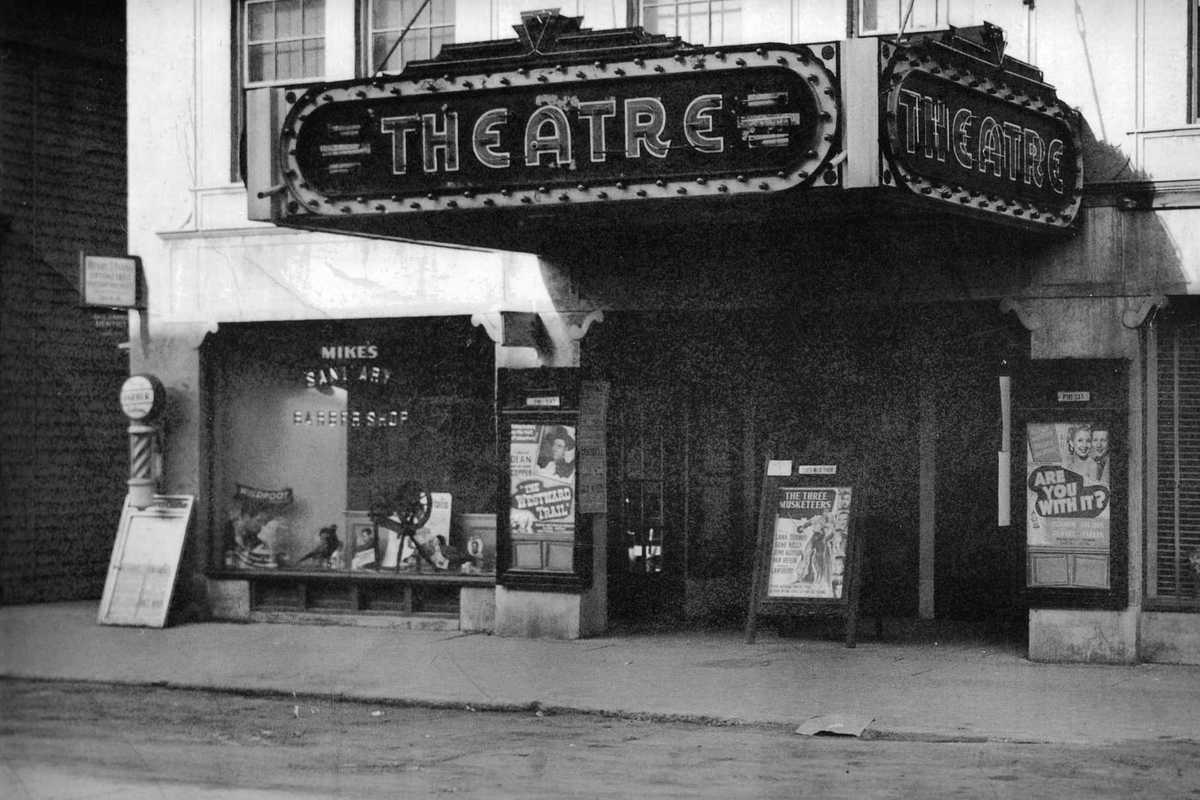
Fans of the late singer-songwriter Todd Snider will have a rare opportunity to gather in celebration of his life and music when “A Love Letter to Handsome John,” a documentary by Otis Gibbs, screens for one night only at The Colonial Theatre in North Canaan on Friday, May 8.
Presented by Wilder House Berkshires and The Colonial Theatre, the 54-minute film began as a tribute to Snider’s friend and mentor, folk legend John Prine. Instead, following Snider’s death last November at age 59, it became something more intimate: a portrait of the alt-country pioneer during the final year of his life.
What began as a simple gesture of gratitude evolved into a poignant meditation on friendship, artistic influence and loss, offering viewers an unusually personal glimpse of Snider at home in his quietest moments.
For Brad Sanzenbacher of Wilder House Berkshires, bringing the film to the Northwest Corner has been deeply personal.
“I’ve been a huge fan of Todd Snider and John Prine for 20 years,” he said. “I lived in the Bay Area before I moved here, and I would see Todd live probably at least four times a year — sometimes back-to-back nights. I was that kind of super Dead Head-type fan that was on tour.”
Sanzenbacher said he had the chance to meet Snider several times and attended the musician’s Catskills retreats.
“He was just one of those people that I really connected with strongly,” he said. “Like a lot of people, when he passed away, I was really shocked and devastated.”
When he learned screenings of the film were beginning to pop up around the country, he wanted to bring that communal experience here.
“I know there are a lot of Todd Snider fans everywhere who want closure on his life and maybe a chance to feel like they’re in the room with him again,” he said. “I thought it would be a really cool experience to bring the film to the community.”
The screening is part of what Sanzenbacher calls the film’s organic, fan-driven momentum.
“I love the grassroots movement of the film,” he said. “They were going to do two screenings and that was going to be it, and now they’re showing it all over the country because fans have reached out to say, ‘How can I bring a screening to my town?’ I feel really lucky we’re able to show it.”
He hopes the evening captures some of the camaraderie that defined the Todd Snider fan experience.
“One of my favorite things about being a Todd Snider fan was when you’d go to two or three shows in a row, you’d turn into a little caravan and make friends with strangers and become this community,” he said. “That’s kind of something I’m hoping happens at the film.”
The screening begins at 7 p.m. Friday, May 8, at The Colonial Theatre, 27 Railroad St., North Canaan. Run time is 54 minutes, with time afterward for audience members to gather and connect.

Patrick L. Sullivan
This fish took a Wooly Bugger in basic black, with rubber legs. Always get the rubber legs.
Largemouth bass are not picky eaters. When engaged they usually dive and tug. Once in a while they leap. They are easily discouraged, however, and after a minute or two come meekly to the net.
Every August I shift gears and head to the ancestral HQ with no electricity, minimal plumbing and a warm-water lake chock-full of largemouth bass, not to mention smallmouth, perch, pickerel and panfish. The largemouth are the main attraction.
I used an antique rowboat for years. Then a canoe, which was awkward to manage solo, especially when the wind picked up.
Then I hit on a succession of inflatable pontoon and belly boats, powered by oars and/or swim fins, and there I have remained.
Did I forget to mention that no motors are allowed on this lake? Well, no motors are allowed, and it’s no good arguing that a small electric trolling motor couldn’t possibly hurt anything. Ask me how I know this.
It’s a quiet, rejuvenating few weeks. The phone gets enough signal on one end of the deck to receive messages and maybe make a call if the wind is right. If something comes up, it’s only 15 minutes to so-called civilization.
When not fishing, I read, visit assorted cousins, listen to baseball on the AM radio and/or stare blankly into the middle distance.
Bassing with a fly rod in still water is a different game than chasing trout in streams.
A medium-fast-action rod, 8 to 10 feet, in line weight 7 or 8 is the starting point. The flies are big, and the wind is constant, so the angler needs some power, tempered with a bit of finesse.
I usually bring two rods. One is rigged with a floating line with a heavy front taper for turning over surface flies such as poppers.
The other has either a sink-tip or intermediate line. The lake is not all that deep, and the Woolly Buggers, Clousers and other streamers are heavy. The idea is to stay out of the vegetation while getting close to where the lunkers are hunkered down.
I use short nylon leaders, 7.5 feet with 1X tippet out of the package, and modify them constantly with additional sections of fluorocarbon tippet, snaps and droppers.
Surface action is usually minimal during the day unless it’s overcast. The lake runs east-west, so the angler can track the midmorning and late-afternoon shadows and work those areas.
Or the angler can wait until about 6:30 p.m., when things start to pick up.
Or get out there at the crack of dawn, which is best if surface action is the goal.
For subsurface fishing, some experimentation is required to find the right combination of flies, leader and sink rate. The angler also has to decide whether to troll.
There are a few places where a dry-dropper rig is appropriate, the dry being an extremely buoyant popper with a piece of stout fluorocarbon tippet tied to the bend of the hook and something heavy and wiggly at the end, like a stonefly nymph with rubber legs. (Always get the rubber legs.)
If this sounds like a bobber, it’s because it is. Don’t tell anyone. The purists don’t like it.
A net with a long handle is necessary. There is no leverage when sitting in what amounts to a floating chair.
I do not bring my phone for fish pictures. I will drop it into the depths. Ask me how I know this.
Instead I bring a small point-and-shoot camera. These get lost too, but perversely I have better luck keeping the cheap gear safe than the expensive items.
Sunscreen is applied liberally and frequently. After 50-odd years of being outside, I now have to visit the dermatologist every so often to have my face edited, and I don’t enjoy it.
A baseball cap does nothing for the ears and neck. I have a hat with a wide brim and a vented top, so it doesn’t get too hot. It looks stupid, but this is an acceptable risk.
Finally, a word about the quarry. Largemouth bass are not picky eaters. When engaged they usually dive and tug. Once in a while they leap. They are easily discouraged, however, and after a minute or two come meekly to the net.
Smallmouth, not so much. These aren’t especially big, but every smallie I’ve ever met thought it was much bigger than it actually was. Expect acrobatics.
Perch usually grab my fly when I don’t want them to.

Panfish are everywhere. They are extremely cooperative. Chasing sunnies is a good way to get a newcomer started.
And then there are the pickerel. These are nasty fish. Very antisocial. I keep a pair of long-handled pliers handy to get the fly out of their mouths safely while admiring the large number of very sharp teeth. They will bite the pliers. Do not use your fingers. Again, ask me how I know this.
Upon release, it’s not unusual to observe the pickerel hanging around a few yards away, glaring and plotting hideous revenge.
So this is the August routine, occasionally leavened with a scramble into a brook trout stream if conditions allow.
It’s peaceful. Kind of boring, in a good way.
And then in the fall the game shifts back to rivers and streams for trout.

Want more of our stories on Google? Click here to make us a Preferred Source.
Natalia Zukerman
Broadway is going way off Broadway when it heads outdoors for The Festival at Hutton Brickyards in Kingston Aug. 14-16, transforming the Hudson River waterfront into a three-day celebration of show tunes, stars and sing-alongs. The inaugural event features an all-star lineup including Audra McDonald, Kelli O’Hara, Renée Elise Goldsberry, Brian Stokes Mitchell and dozens more, along with a 30th anniversary celebration of the musical “Rent” featuring original cast members.
Hutton Brickyards is a former 19th-century brickyard transformed into a historic riverfront hotel and event destination spanning 100 acres along the Hudson. Beyond the nightly concerts, festivalgoers can expect campfire sing-alongs, dance parties, master classes, costume contests and a marketplace highlighting Hudson Valley food, drinks and artisans.
Three-day passes and more information are available at BroadwayFest.com.
Natalia Zukerman
MOMIX is one of the featured performers at this year’s Arts Connected fundraiser on Aug. 29.
The Northwest Connecticut Arts Council will celebrate the region’s vibrant arts community with Arts Connected 2026, its annual fundraising event, on Saturday, Aug. 29, from 5 to 8 p.m. at Buck’s Rock Camp in New Milford.
More than a fundraiser, Arts Connected is designed as a celebration of the artists, performers and organizations that make the Northwest Corner’s cultural landscape thrive. Guests can enjoy live music and performances, a curated gallery of artwork by regional artists, local food and drinks, and opportunities to connect with fellow arts supporters. Tickets include hors d’oeuvres, an open bar and all entertainment.

The evening will feature live plein air painting by artists from Plein Air Litchfield, performances by Our Culture Is Beautiful (OCIB), fire performer Cinderfella, and Susan Becker Aziz’s monumental humpback whale puppet, originally created for Paul Winter’s “Missa Gaia.” Guests will also have the opportunity to purchase artwork from a curated exhibition, with proceeds supporting the Arts Council’s mission to strengthen and promote the arts throughout Northwest Connecticut.
This year’s honorary host committee includes Meryl Streep, Diane von Furstenberg, Tim Daly, Téa Leoni, Maria Horn, Patti LuPone, Jack O’Brien, Sam Waterston and Paul Winter. Creative cocktail attire is encouraged, and attendance is limited. The event is open to guests 21 and older.
For more information or to purchase tickets, visit artsnwct.org
Robin Roraback
Once I get all the colors in, they change. Who knows? I might consider more radical colors and then bring it back a little.
— Robert Cronin
Renowned painter Robert Cronin of Falls Village celebrated his 90th birthday with an exhibition, “Robert Cronin: New Paintings,” at the Hunt Library in Falls Village which opened Aug. 8 and will be on view through Sept. 11.
Cronin paints most days in his home studio. He keeps his work fresh by trying new things and has had different phases of work, including figure paintings, paintings on paper, a modular, circle and enclosure series of paintings, as well as a tinplate sculpture series.
Cronin said he never expected to pursue art as a career. He started out at Boston College pursuing another degree but, luckily for him, flunked out and enrolled at the Rhode Island School of Design.
At first, he thought he’d pursue industrial design. But once he was immersed in drawing and painting, he realized he had a natural talent for it. “I fell in love with basic stuff. I had never owned a set of paints.” While at RISD, “In 1958, I instinctively fell into abstract work.”
After graduating from RISD and working for a time as a cleaner at Massachusetts General Hospital while painting whenever he could, he was awarded a full scholarship to an MFA program at Cornell University, along with a living stipend.
He went on to teach for 18 years at various schools, including Brown University, Bennington College and the School of the Worcester Art Museum, which he said he enjoyed the most. “I love my memory of that more than academic places. Whether Brown or a certificate program like Worcester, when you’re good, you’re good.”
After leaving Worcester in 1980, he moved to New York City to pursue his art career. He found success and exhibited his work in several galleries in New York City and around the world.
In 1990, Cronin moved to Connecticut, settling in Falls Village, where he left his tinplate sculpture phase behind and concentrated on painting again.
He explained his current approach to painting. “Everything in this show,” he said, “had a preliminary drawing. Most of my life has been starting from scratch, with no preliminary drawings.”
He makes many small sketches. “One out of 20 drawings may become a painting.” He enlarges the sketch on a copier, transfers it using a grid and paints it on a 16-by-20-inch canvas.
“Once I get all the colors in, they change. Who knows? I might consider more radical colors and then bring it back a little.”
Of starting a new painting, he said, “You don’t know what you are getting into, but it’s terrific.”
To learn more about Cronin and his work, visit robertcroninart.com.
The exhibition will be on view at Hunt Library in Falls Village through Sept. 11. Cronin will give an art talk Thursday, Aug. 13 at 5:30 p.m.

Want more of our stories on Google? Click here to make us a Preferred Source.

Want more of our stories on Google? Click here to make us a Preferred Source.