Will Summer Theater Go On Amid the Strike?

Litchfield County, Conn., resident and actress Christine Baranski marched on the SAG-AFTRA picket line at Rockefeller Center in New York City on July 20.
Photo by Scott Matheny


In November 2007, when the Writers Guild of America (WGA) went on strike, the results were instantaneous and obvious. Can the same be said today?
For the four months in 2007-08 that writers walked out of their offices, network television, the primary form of TV long before anyone used the word “streaming,” went completely dark. Big-ratings hits simply went off the air. During that long winter, Thursday night viewers of “Grey’s Anatomy” had to… pick up a book. Now 16 years later, as a new writers' strike goes on, the ramifications are perhaps less disruptive to the public, regardless of the increased media attention and awareness. Streaming platforms like Netflix, Amazon, and Disney+ are still releasing a library's worth of new series filmed in advance, even if the writers — and now the actors — can’t promote them. On a local level, there is the question: if the stars in Los Angeles and New York are holding picket signs, how can any actors appear in regional summer stock this year?
As of the writing of this article, WGA is continuing the strike that began on May 2, effectively shutting down productions that relied on writers' rooms — from scripted series to late-night talk shows — following an ongoing labor dispute with the Alliance of Motion Picture and Television Producers (AMPTP). A major source of tension has been establishing a minimum wage income and residual payment for writers working on shows contracted by a streaming platform as well as stipulations over the use of artificial intelligence programs.
Joining the writers' strike on July 14, the Screen Actors Guild-American Federation of Television and Radio Artists (SAG-AFTRA) in turn publicly launched its complaints with AMPTP. In June, Rolling Stone reported it had obtained a letter from SAG declaring intentions to strike if negotiations could not be settled, which was signed by over three hundred actors, including Salisbury, Conn., residents Meryl Streep and Laura Linney. In a bulletin released on July 17, when the strike had officially moved forward, SAG-AFTRA declared, “Here’s the simple truth: We’re up against a system where those in charge of multibillion-dollar media conglomerates are rewarded for exploiting workers.”
The dissonance between what's streaming and what's happening in real-time can seem strange. On Friday, July 14, as SAG-AFTRA officially went on strike, the second season of Amazon's series "The Summer I Turned Pretty," co-starring Sharon, Conn., resident and actress Kyra Sedgwick, was released to stream. Instead of promoting the show, four days later on Tuesday, July 18, Sedgwick was with her husband, actor Kevin Bacon, sign in hand at the picket line in New York. "I'm happy [the strike is] happening because I think it's been a long time coming," Sedgwick said to Deadline.
Professional theatrical actors, like those on the stages of Broadway and contracted by smaller theaters in The Berkshires for the summer season, operate under a different union from SAG-AFTRA — the Actors’ Equity Association (AEA). Notably, per the strike rules issued by SAG-AFTRA in an official bulletin, while actors in the union are prohibited from attending film premieres, awards shows, film festivals, or promoting their work through interviews with the press or social media posts, actors best known for their film/television work can continue to honor their AEA contracts with theater productions, from Broadway to summer stock. For now, at least, the shows go on.
Nathan Miller
Maitri Farm manager Fain Storey observes seedlings in a greenhouse at the community supported farm that sells fresh produce and flowers on Friday, Aug. 7.
WASSAIC — A local farm is selling fresh-cut bouquets at a weekly pop-up through August.
The pop-up, put on by Wassaic’s Maitri Farm, occupies a small stand next door to the Ten Mile Table wine shop on Friday mornings from 10 a.m. to noon. The farm also runs a store onsite at 143 Amenia Union Road, open on Fridays from noon to 6 p.m. and Saturdays from 10 a.m. to 2 p.m.
Maitri Farm started as a livestock farm ten years ago on Charlotte Ford’s land near Wassaic, Farm Manager Fain Storey said during a tour of the farm on Friday afternoon, Aug. 7. Over the years, the farm expanded to flower and vegetable production under a community supported agriculture model and eventually with a public farm store featuring fresh produce.
Storey said she took over as farm manager earlier this year after years working at farms in North Carolina, Virginia, West Virginia and the Florida-Georgia border. She said her goal is to further grow the farm’s CSA program and draw in more customers for the farm store.
“The potential is so great,” she said. “People still want produce, people still want to be a part of Maitri Farm.”
The CSA program currently has 20 members, but Storey said the farm has enough growing space to support more.
The farm produces a wide variety of vegetables, using about 5 acres of greenhouse tunnels and open fields to grow everything from tomatoes to peonies.
This month’s pop-up is part of regular events the farm runs or hosts. Right now, visitors to the farm can pick up a pair of flower snips and go cut their own sunflowers during farm store hours on Fridays and Saturdays. The “U-pick sunflower” event will run until the first frost of the season, and doesn’t require pre-registration.
Storey said the focus on events is intentional. Ford modelled the farm operation on nearby Sisters Hill Farm in Stanfordville, aiming to create a space where farmers could put their skills to work and invite community members in to learn and spread that knowledge to others. Other events include educational presentations from local craft education group Cottage Courses.
The connection to Sisters Hill Farm runs deeper than Maitri’s business model. Storey was originally trained by apprentices of longtime Sisters Hill Farm manager Dave Hambleton when she began farming in North Carolina. She said it was a happy accident that she ended up in New York so close to his farm.
“I apprenticed for them in North Carolina like nine years ago,” Storey said. “I knew he was in New York, but I just had no idea, and now I’m 20 minutes away from him.”
She said Sisters Hill’s mentor model was a big inspiration both to Maitri and to herself as a professional farmer, praising community-minded farmers for spreading knowledge about the work.
“It’s shaped me,” Storey said. “It’s very cool to be a part of that, even unintentionally.”
Graham Corrigan
MILLBROOK — Millbrook Vineyards and Winery is nearing three months since a change to public access policies restricted outside food and drink and required tickets for private tables.
Ian Bearup, Millbrook’s head winemaker, said the policy has faced some criticism.
“The response has been fantastic from new customers and mixed from long-time customers,” Bearup said. But overall, he said it’s been a boon for the business. “With our new policies, we’ve been able to squash a lot of the problems we’d been having in the past with overconsumption,” Bearup said, “and give our customers a better, wine-focused experience.”
The new rules come at a moment of larger change at Millbrook winery — and the industry at large. Though wine sales hit an all-time high of $115 billion in 2025, overall alcohol sales are steadily slumping. Tariffs, inflation, and fuel prices have raised prices across the board. In the last decade, wildfire smoke has regularly damaged grapes in California, most significantly in 2020.
Millbrook Vineyards is one of several wineries owned by Millbrook native John Dyson and his family. In 2021, the Dysons sold a minority stake in their Northern California property, Williams Selyem Winery.
Three years later, Dyson doubled down and sold a majority stake of Williams Selyem to the same buyer — the Burgundy, France, -based Domaine Faiveley. The Faiveley family is in its seventh generation of operation, and the sale allowed Dyson to focus on renovating his hometown winery. Renovations to Millbrook were finished in spring 2026.
The changes are both physical and administrative. An adults-only patio is on the right, peeking between a wall of cypress 20 feet high. Serene private tables and Adirondack chairs await behind the green curtain, available for $30 per table.
The upstairs tap room has been remodeled and renamed. It’s The Overlook now, and connects to the rustic barn, with its vaulted ceilings that define the winery from afar.
Midway through summer, the changes are in full effect. On a recent Saturday, families dotted the open seating area. Most of the lawn area is covered by a grid of picnic tables, but there’s still room for play — children romped in an adjacent sunflower field, and games of cornhole unfolded by the main building.
Food tents are in the corners. Valia’s Wood Fire offered Neapolitan pizzas for $15 to $20, while Oyster Party shucked their shellfish for $3 apiece. Previous weekends have included chicken from La Polla, meats from the BBQ Crew, and comfort food from Flavor Bandits.
But while Bearup is enthusiastic about the changes, he says they’ve been receptive to criticism — and adjusted accordingly. “After listening and sharing thoughts back and forth, we’re loosening our outside food policy in our picnic areas,” Bearup said. “We understand we can’t provide everything for everyone, so we’re allowing outside picnic-style food to be brought to our outdoor seating areas.”
The adults section was mostly full on a recent Saturday afternoon. A staff member watched the entrance as a fountain bubbled peacefully on an adjoining lake, far beyond a child’s grasp.
Music by Mary Ann Palermo and her band started at 5:30, and tickets were mandatory for any watchers on the lawn. Guests who didn’t want to pay the $15 made their way to the parking lot. Earlier this summer, Bernie Williams performed with his Band of Friends for a sold-out crowd. “New event spaces, new food options, and new release wines are driving customers in,” Bearup said. “Revenue has been great given the current state of the wine industry. It’s been a wonderful summer.”
Bearup says Millbrook winery will continue to adjust their policies to draw back some of the long-time customer base they’ve lost. “We’ve seen a drop in locals, and we want to address that problem head on,” he said. “Millbrook Winery is built for everyone: we don’t require reservations, we haven’t doubled our prices, we still allow children and pets, and we haven’t changed who we are. We’re a working, family-owned farm run by local people and we’re proud to keep agriculture alive in Dutchess County.”
Ruth Epstein
John Papp, right, and associate Jonathan Abbott formed Litchfield Building Inspection Services LLC, which serves as the building inspector for Falls Village, Kent, Norfolk and Warren.
A series of departures and retirements has left several towns confronting a regional shortage of qualified building inspectors, with four municipalities turning to a newly formed private company while Sharon filled its vacancy with a veteran inspector and contractor.
The vacancies arose throughout the spring and summer, when Jim Clark left his positions in Falls Village and Norfolk in May, Joseph Manley retired from Kent and Warren in July, and Stan MacMillan retired from Sharon in June.
The search for a building inspector was a shared concern among Falls Village, Warren and Kent town leaders. Before a recent Council of Governments meeting, Falls Village First Selectman Dave Barger said he spoke with Warren First Selectman Greg LaCava and Kent First Selectman Eric Epstein about their vacancies. LaCava told them that Warren contractor John Papp was forming an LLC to provide building inspection services.
“We had a vacancy and people weren’t knocking down the doors to take it on because of the stringent requirements,” Barger said.
He reached out to Papp, as did Kent’s Eric Epstein and Norfolk First Selectman Henry Tirrell. Papp has since been hired by all four towns.
Barger said Papp works as a subcontractor and his firm, Litchfield Building Inspection Services LLC, gets a percentage of the building fees.
“It’s interesting,” Barger said. “We no longer do anything by paper. Everything is electronic. This has moved Falls Village into the 20th century. Someday we’ll get to the 21st,” he joked.
Papp, 40, of Warren, and his associate, Jonathan Abbott, 33, of New Preston, were familiarizing themselves with the Kent office last week as they took on their new roles.
Papp acknowledged that the requirements for becoming a building inspector can make the field difficult to enter. There are approximately 200 inspectors around the state, he said.
A longtime contractor, Papp said he was looking for a new experience. He’s finding that Kent has a lot of new construction, especially with three private schools within its borders.
Asked if he’d take on other towns if needed, he said his team would definitely be willing to expand.
In Sharon, William Pietrefase, 61, who took over for MacMillan in Sharon as both building inspector and fire marshal, attributes the shortage to the rigorous and time-consuming courses needed to qualify for the inspector’s job.
There are 12 modules that have to be completed, including electrical, plumbing, residential energy and pool and spa installation. Completing all 12 can take multiple years. Classes are held in Hartford, but there is a shift toward online courses.
An alternate route for those with years of experience in the building trades is available. Candidates can challenge having to take particular courses and skip the test.
Pietrefase’s route to his position was a circuitous one. He began his career as a liquor salesman and was familiar with the area because he serviced customers in Sharon. He then worked as a building contractor for 35 years, but the physical demands of the work eventually took their toll.
In August 2022, he was hired as building inspector in Winsted. “They gave me two years to get certified,” he said. “I did it in seven months.”
Josh Kelly, Winsted’s town manager at the time, sent him to fire marshal school, which he was pleased to do, since many of his family members were firefighters.
After 18 months, he became a building inspector in Torrington, his hometown. He was there for two and a half years before learning that MacMillan was retiring. “I applied because this would give me the opportunity to do both,” Pietrefase said.
Pietrefase said Sharon has a lot of construction going on, a mix of both commercial and residential. “It’s a dynamic situation for a small community.”
The two jobs equal a 35-hour-a-week position, but he is on call 24/7 for incidents requiring a fire marshal.
Being an inspector is a natural step for those in the building trades, Pietrefase said, because it allows them to continue using the skills they have learned.

Want more of our stories on Google? Click here to make us a Preferred Source.
Millerton News
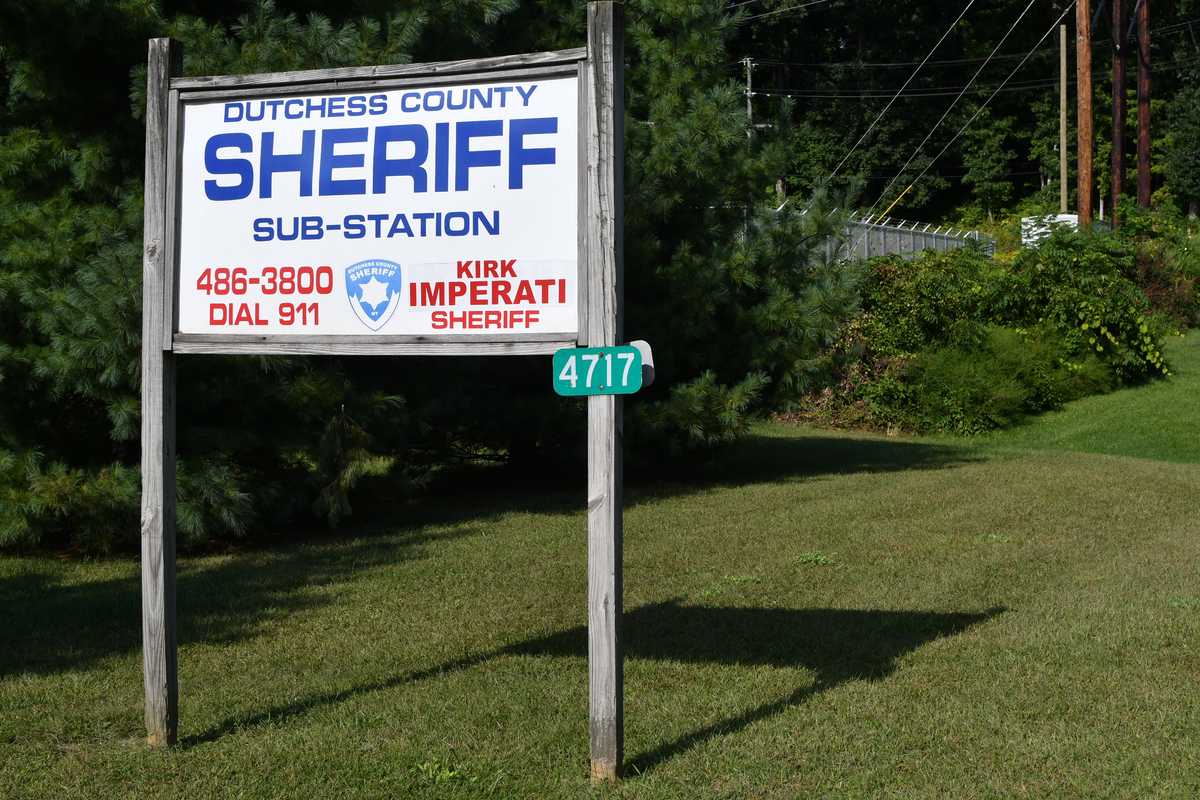
Dutchess County Sheriff's Report — Thursday, August 13
Dutchess County Sheriff’s Office Harlem Valley area activity report July 30 to Aug. 5
July 31 — Deputies responded to Allison Drive in the Village of Pawling to investigate a domestic dispute. The matter was resolved without further police intervention.
July 31 — Deputies responded to Pleasant Ridge Road in the Town of Dover to investigate a report of a vehicle being operated in an erratic manner upon said roadway. Vehicle located and subsequent investigation revealed that a domestic dispute was occurring in the vehicle. The matter was resolved without further police intervention.
Aug. 1 — Deputies responded to Route 22 in Amenia for a report of a single vehicle crash with the vehicle found unoccupied. Investigation led to the arrest of Ernest Wood, age 49, for driving while intoxicated. Wood to appear in the Town of Amenia Court at a later date.
Aug. 3 — Deputies attempted a traffic stop upon a UTV (off road recreational utility vehicle) that was being operated on Route 22 in the Town of North East. The vehicle initially failed to comply but eventually stopped. Subsequent investigation found the UTV to be a stolen vehicle. Paul Murphy, age 40, was arrested and charged with unlawful fleeing, criminal mischief in the second degree, and criminal possession ofsStolen property. Murphy to appear in court at a later date.
Aug. 4 — Deputies responded to Archambault Lane in the Town of Amenia to investigate a reported disturbance occurring at that location. Investigation resulted in the arrest of Mark A. Forrest, age 44, for obstructing governmental administration. Forrest to appear in the Town of Amenia Court at a later date.
PLEASE NOTE: All subjects arrested and charged are alleged to have committed the crime and are presumed innocent until proven guilty and are to appear in local courts later.
If you have any information relative to the aforementioned criminal cases, or any other suspected criminal activity please contact the Dutchess County Sheriff’s Office tip line at 845 605 CLUE (2583) or email dcsotips@gmail.com. All information will be kept confidential.
Millerton News
297 Wiltsie Bridge Road is currently listed for sale at $1,450,000, one of 15 homes currently on the market in Ancram.
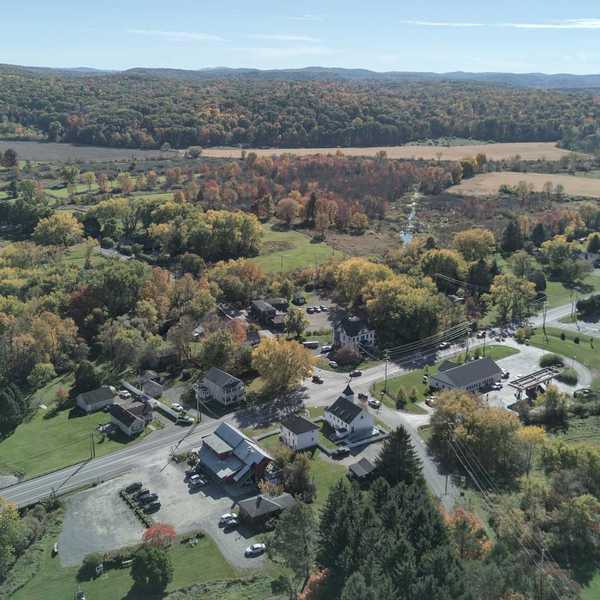
One of the most sought-after towns in the Hudson Valley is Ancram, in the southeast corner of Columbia County. With a blend of open fields, wooded mountains, quiet roads, and thousands of acres of conserved land, Ancram has been showing up on home buyers’ radar for a number of years. Once a purely agricultural community, the town still has a number of working farms, from traditional dairy operations to organic vegetable, grain and grass-fed meat options.
Ancram’s housing stock includes estates, charming farmhouses, modest ranches, quaint hamlet one- and two-families and a couple of affordable homes built by Habitat for Humanity. Comprised of two hamlets, Ancram and Ancramdale, each with a post office and an eatery, plus the Boston Corners neighborhood on the Massachusetts border, Ancram offers many choices for those looking for a quiet Hudson Valley home.
Ancram is named for the Scottish town associated with the Livingston family, an influential colonial family, which received an extensive grant of Mohican land from the British Crown in 1686. The town is part of the ancestral homeland of the Mohican people, many of whom were displaced during European colonization. However, some descendants of Ancram’s early European settlers continue to live in the area, alongside weekend residents and more recent arrivals from elsewhere in the United States and abroad.
Much of the soil in the town is extremely fertile, and many properties combine residential life with farming, with owners often leasing fields to local farmers. Locals and visitors from all over the region come to pick berries and to shop for farm produce.
Ancram has several bodies of water and a number of waterfront properties. Long Lake is home to two different neighborhoods, one a planned community, and Lower Rhoda Pond has a number of residences lining its shores. The Roeliff-Jansen Kill, which brings water from western Massachusetts to the Hudson River, flows through town and is lined with farms and homes.
Many landowners have put their property into conservancy, protecting it from development, thereby ranking Ancram among the towns with the most conserved land in the county. Some of that land is wooded, some is farmland, and some spots are hiking destinations, like Overmountain, which includes Round Ball Mountain, and the Drowned Lands Swamp area. There are also hiking trails in Taghkanic State Park, a portion of which borders Ancram, and canoeing and kayaking on the Roeliff-Jansen.
The varied housing choices in Ancram benefit from the rural and scenic benefits that residents have long enjoyed. From properties with expansive western views of the Catskill Mountains to ones facing the Taconic range along the Massachusetts border, homes of varying sizes and styles offer views of the landscape. And homes nestled among tranquil woods and fields also draw buyers to the area.
The high desirability and relative scarcity of available land for building have made land prices soar and has put pressure on the town’s ability to create affordable workforce housing. However, Ancram is attempting to address that challenge: its Housing Committee is tasked with finding ways to bring more housing to the town while still respecting the rural character to which the town is expressly committed.
Committee Chair Bonnie Hundt reports that questions of zoning and density are being addressed jointly by the committee and the zoning board in ongoing efforts to keep Ancram affordable to all. And the town allows accessory dwelling units (or ADUs), which can ease the inventory shortage.
The median home price in Ancram from Aug. 1, 2025, through July 31, 2026, was $672,500, compared with $663,500 during the preceding 12-month period, a 1.4% increase. Twelve homes sold between Aug. 1, 2025 and July 31, 2026, down from 16 for the same period one year prior.
As of Aug. 6, there were 15 homes for sale in zip code 12502 and 12 in 12503. That represents a 45.5% decrease year-on-year for 12502 and an increase of 100% in 12503.
Some homes currently for sale: 322 Arcadia Drive, a three-bedroom, four bath home in a planned lake community with amenities is listed at $575,000. 1715 County Route 7, a four- bedroom, three-bath 2004 hilltop colonial on 13 acres is on the market for $910,000. And with over 22 acres on the Roeliff-Jansen Kill an 1850 farmhouse with three bedrooms and three baths is on offer for $1,450,000.
With all it has to offer, from nature and food to attractive properties, Ancram is understandably in demand and inventory is tight.
David “Dave” Norman Hall is a real estate salesperson licensed in New York, and is an agent with Houlihan Lawrence.
Sales information from NY State Tax Department, and One Key and Hudson Valley Catskill Region Multiple Listing Services.

Natalia Zukerman
Curator Deborah Goodman Davis reads the Emily Dickinson poem “The Grass So Little Has to Do.” Spencer Finch’s “Following Three Bees (Zinnias)” buzzes in the background.
“The Grass Has So Little to Do,” on view at James Barron Art in Kent, takes its title from Emily Dickinson’s poem “The Grass So Little Has to Do,” written in 1862:
“The Grass so little has to do—
A Sphere of simple Green—
With only Butterflies to brood
And Bees to entertain—”
Curated by Deborah Goodman Davis, the exhibition borrows Dickinson’s meditation on the natural world as both its title — with a subtle shift — and guiding principle. The exhibition gathers more than 30 contemporary artists whose work examines flowers, leaves, insects, landscapes and changing light — not through scientific observation, but through memory, imagination and deep attention.
“I started spending so much time in the country that I began seeing things differently,” said Davis, a Montreal native. “I became drawn to artists who were also looking at nature.”
Davis has spent decades working in museums, galleries and as an art advisor, including positions at the Art Institute of Chicago, Yale University Art Gallery and with influential dealer Jeffrey Deitch, before returning to curatorial work in recent years. This is her third exhibition with James Barron Art, following last year’s “Boundless Color.”
The exhibition’s emotional anchor is Dickinson’s poem, which marvels at grass, butterflies, bees and sunlight while imagining a life devoted simply to existing in the natural world. The poem, and its simple and reverent message, echoes throughout the exhibition.
Spencer Finch’s drawing titled “Following Three Bees (Zinnias)” tracks the movement of three bees as they moved from flower to flower in the artist’s garden. Standing on a ladder, Finch patiently followed their movements, recording each insect’s path with a different line.
Montreal-based painter Veronika Pausova’s luminous moth paintings next to Finch’s work carry a thread — literally. Whether Pausova was familiar with Finch’s drawings before creating her painting “Cabin’s Moon,” commissioned by Davis for this show, is unknown, but the placement is certainly intentional. Davis’ thoughtful curatorial approach creates conversations, quiet whispers and surprisingly funny moments throughout the space.
Toba Khedoori, an Australian-born artist of Iraqi-Jewish heritage, contributes exquisitely detailed mezzotints that transform ordinary grasses into monumental landscapes. “Imagine rolling in the grass before ticks,” Davis said with a laugh. One is left longing for such a simple pleasure, the work inviting viewers to imagine a connection to the natural world that feels both familiar and increasingly distant.
One of Wassaic Project co-founder Eve Biddle’s ceramic snakes slithers up a nearby side wall, while internationally recognized artists including Ellsworth Kelly, Alex Katz, Lois Dodd, Kiki Smith and Charles Gaines offer their own interpretations of leaves, flowers, trees and changing seasons.
The exhibition also highlights several artists with local ties. Yale Norfolk School of Art co-director Byron Kim contributes one of his contemplative “Sunday Paintings,” documenting the sky over Norfolk alongside personal diary-like observations.
One of the show’s most unexpected works isn’t visual at all.
Inspired by Dickinson’s line, “And even when it dies to pass / In odors so divine,” Davis commissioned Brian Goeltzenleuchter, an interdisciplinary artist working at the intersection of olfactory art, social engagement, and image making to create a scent for the exhibition. “The grass so little has to do, I wish I were the hay!” wrote Dickinson, so Goeltzenleuchter created the scent of fresh hay specifically for the exhibition. Fragile glass vials sit in a bed of marble, waiting to be broken to release the scent, which also lives under a glass enclosure dewy with its fragrance. The faint odor permeates the gallery, adding an immersive sensory layer that extends the show’s meditation beyond sight alone.
There are quieter surprises throughout: concrete casts preserving cherry blossoms that will slowly fade over time by Japanese artist Motohiro Takeda; carvings of owls in Arctic marble by Sam Akesuk, an Indigenous artist from Kinngait (Cape Dorset); paintings of moonlight; the intricacy of spider webs placed next to a graph-like drawing of a tree; and Kiki Smith’s shadow of birds by the windows overlooking the majestic scenery of Barron’s property.
For Davis, the idea for this show has been growing since she began spending more time in the Northwest Corner.
“It’s been percolating for six years,” she said.
The resulting exhibition rewards viewers willing to do the same.
“The Grass Has So Little to Do” is on view at James Barron Art in Kent through Sept.12. By appointment only. Email maria@jamesbarronart.com or call (917) 514-3762. For a catalog of the exhibition, visit jamesbarronart.com.

Want more of our stories on Google? Click here to make us a Preferred Source.

Want more of our stories on Google? Click here to make us a Preferred Source.