What does it mean to be an American?

The national atmosphere has shifted. I hear a lot of talk proclaiming that real Americans are white, male and Christian. Coupled with hate crimes aimed at Asians, Blacks, Latinos, women and other minorities, intolerance and hatred are raising their ugly head.

I have seen a lot of change in my 84 years. Born in New Orleans I witnessed segregated schools, bathrooms, fountains, seating on public transportation. My father resigned his diplomatic post in the Nationalist Chinese government so we could grow up as Americans with the opportunity to freely forge our own lives. Moving to Chicago at the age of 11, I later found out my father had to engage the help of the local Presbyterian minister to buy our house. It was an all-white neighborhood. I saw the great white flight as our neighborhood changed when middle class African Americans purchased homes. My father was called in the middle of the night by realtors asking him to sell the house. He finally said he would for $150,000. The calls stopped. My father said, “No one is going to chase us out of our home.”

I witnessed my father working very hard to build low-income and affordable housing in Chicago’s Chinatown, especially elevating living conditions for the elderly with his senior apartments. I witnessed my mother being one of the first women financial advisors working for Investors Diversified Services, the precursor to Ameriprise.

I witnessed the change in civil rights and women’s rights, especially with the passage of Roe v. Wade. I witnessed Title IX where women could compete in sports. I also witnessed the push back against women in leadership positions. My PE classes in 1970 were boys and girls separately. I purposefully made sure they got the same lesson plan. When classes were combined after Title IX I made sure both boys and girls had leadership opportunities, not just boys, and that the teams were fair. At the end of my teaching career, I began to see acceptance, equity as normalcy when girls and boys, women and men worked together. We’re going in the right direction but still have a way to go where you are respected for your abilities, not what you look like.

Fast forward to today, I’m seeing the continuation of open discrimination based on gender, race, and religion. Being an American to me means acceptance — our right to be here, our right to thrive, our right to just be. Freedom to make decisions over our own body, to choose whom we want to marry, to contribute our talents to community, state, and country to make our nation a better place for all. Freedom to vote and choose our leaders, to peacefully assemble and express our opinions in the written and spoken word — all guaranteed by our Constitution. Opportunity for self-determination. Respect for who we are no matter our differences. Lately, labels have become the norm — wise or unwise. Am I a Chinese-American? Or just an American? Can I be an American and still celebrate my ethnicity without bringing suspicion of my loyalty? America is strengthened by the talents and contributions of people from around the world. I have grandchildren who are Chinese, English and German. This is what makes America. There is no other nation in the world like ours. I am proud to be part of this great experiment and call myself an American.

What does it mean to you to be an American?

Jo Loi is a 5th generation American who lives in Lakeville.
The views expressed here are not necessarily those of The Millerton News and The News does not support or oppose candidates for public office.

Latest News

Officials divided on allowing restaurants along Route 22

The Irondale district, currently known as Highway Business District III, is comprised of just six parcels along Route 22 that are currently occupied by light industrial businesses.

Photo by Nathan Miller

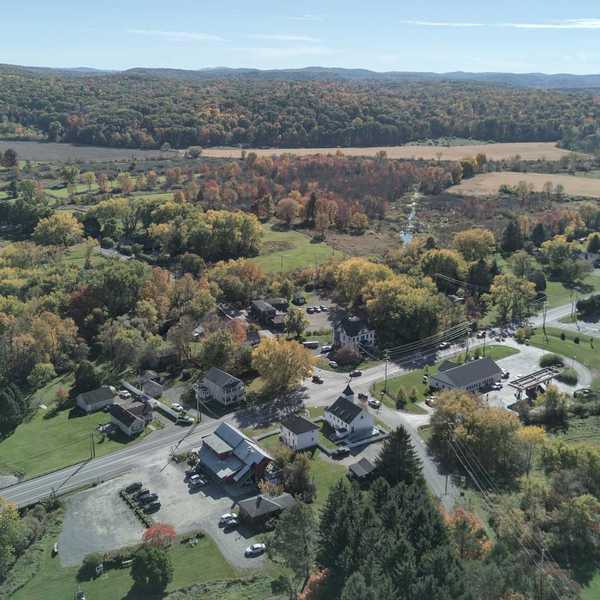
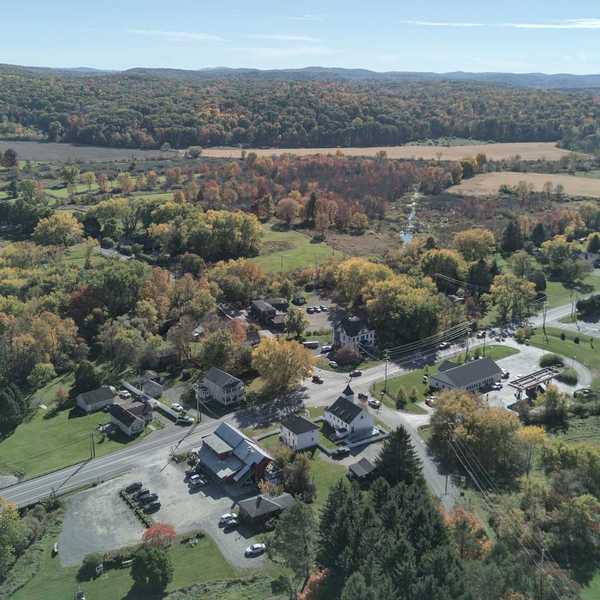
MILLERTON — Though the Irondale District lies just outside of the Village of Millerton, it has become the center of a divisive conversation as the Town of North East continues to review a significant overhaul of its commercial zoning code.

Irondale, officially known as the Highway Business district under current town code, is a small stretch along Route 22 south of the village that some officials and residents believe could support additional businesses, while others argue development there could undermine efforts to boost Millerton’s existing downtown.

Keep ReadingShow less
Robin Wall Kimmerer urges gratitude, reciprocity in talk at Cary Institute

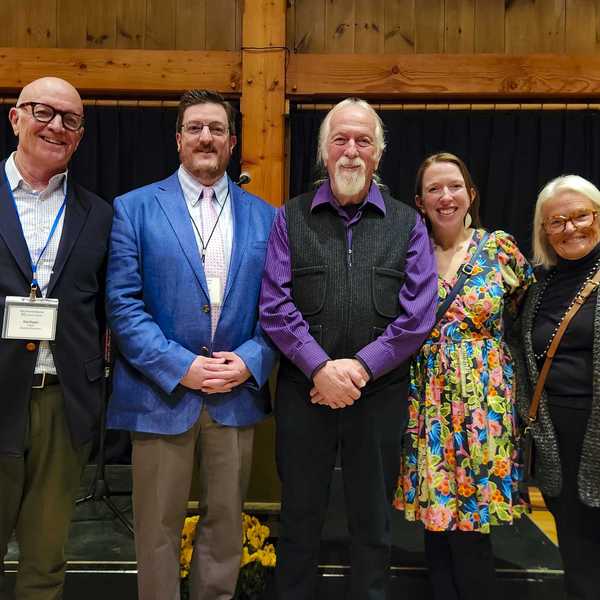
Robin Wall Kimmerer inspired the audience with her grassroots initiative “Plant, Baby, Plant,” encouraging restoration, native planting and care for ecosystems.

Aly Morrissey

Robin Wall Kimmerer, the bestselling author of “Braiding Sweetgrass” and a member of the Citizen Potawatomi Nation, urged a sold-out audience at the Cary Institute of Ecosystem Studies on Friday, March 13, to rethink humanity’s relationship with the natural world through gratitude, reciprocity and responsibility.

Introduced by Cary Institute President Joshua Ginsberg, Kimmerer opened the evening by greeting the audience in Potawatomi, the native language of her ancestors, and grounding the talk in a practice of gratitude.

Keep ReadingShow less
google preferred source

Want more of our stories on Google? Click here to make us a Preferred Source.

Melissa Gamwell’s handmade touch

Melissa Gamwell’s handmade touch
Melissa Gamwell, hand lettering with precision and care.
Kevin Greenberg
"There is no better feeling than working through something with your own brain and your own hands." —Melissa Gamwell

In an age of automation, Melissa Gamwell is keeping the human hand alive.

The Cornwall, Connecticut-based calligrapher is practicing an art form that’s been under attack by machines for nearly 400 years, and people are noticing. For proof, look no further than the line leading to her candle-lit table at the Stissing House Craft Feast each winter. In her first year there, she scribed around 1,200 gift tags, cards, and hand drawn ornaments.

Keep ReadingShow less
Regional 7 students bring ‘The Addams Family’ to the stage

The cast of “The Addams Family” from Northwest Regional School District No. 7 with Principal Kelly Carroll from Ann Antolini Elementary School in New Hartford at Botelle Elementary in Norfolk.

Monique Jaramillo

Nearly 50 students from across the region are helping bring the delightfully macabre world of “The Addams Family” to life in Northwestern Regional School District No. 7’s upcoming production. The student cast and crew, representing the towns of Barkhamsted, Colebrook, New Hartford and Norfolk, will stage the musical March 27 and 28 at 7 p.m., with a 2 p.m. matinee on March 29 in the school’s auditorium in Winsted.

Based on the iconic characters created by Charles Addams, the musical follows Wednesday Addams, who shocks her famously eccentric family by falling in love with a perfectly “normal” young man. When his parents come to dinner at the Addams’ mansion, two very different families collide, leading to an evening of secrets, surprises and unexpected revelations about love and belonging.

Keep ReadingShow less
‘Quilts of Many Colors’ opens at Hunt Library

Garth Kobel, Art Wall Chair, Mary Randolph, Frank Halden, Ruth Giumarro, Project Chair, Maria Bulson, Barbara Lobdell, Sherry Newman, Elizabeth Frey-Thomas, Donna Heinz around “The Green Man.”

Robin Roraback

In honor of National Quilt Day, a tradition established in 1991, Hunt Library’s second annual quilt show, “Quilts of Many Colors,” will open Saturday, March 21, with a reception from 5 to 7 p.m. The quilts, made by members of the Hunt Library Quilters, will be displayed through April 17. All quilts will be for sale, and a portion of each sale goes to the library.

At the center of the exhibit is a quilt the Hunt Library Quilters collaborated on called the “Quilt of Many Colors,” inspired by Dolly Parton’s song”Coat of Many Colors.” Each member of the Hunt Library Quilters made two to four 10-inch squares for the twin-size quilt, with Gail Allyn embroidering “The Green Man” for the center square. The Green Man, a symbol of rebirth, is also a symbol of the library, seen carved in stone at the library’s entrance. One hundred percent of the sale of this quilt benefits the library.

Keep ReadingShow less
google preferred source

Want more of our stories on Google? Click here to make us a Preferred Source.

google preferred source

Want more of our stories on Google? Click here to make us a Preferred Source.