
Latest News


The following excerpts from The Millerton News were compiled by Kathleen Spahn and Rhiannon Leo-Jameson of the North East-Millerton Library.
January 31, 1935
Fire Damages Home On Merwin Farm
The Millerton Fire Department was called out to battle a stubborn chimney fire in a tenant house on the Seth Merwin farm two miles north of Millerton at 1:30 o’clock Monday morning. Starting from a flue in one wing of the building, erected a number of years ago, the fire flared up between the plank walls. The firemen found it necessary to chop through the walls in order to get at the flames. The damage caused by the fire was estimated at between two and three hundred dollars by Fire Chief Oliver W. Valentine.
About Millerton
Miss Lila Kaye has returned to work at the Dutchess Auto and Supply Co., Inc., after four weeks absence because of injuries sustained in a sleigh riding accident.
January 29, 1976
Feds Say Money Tight For Millerton Project
It is still uncertain whether the Village of Millerton can get Federal grants to help finance a water tower to prevent pollution in the Village’s water system.
In September 1974, the New York State Department of Health ordered the Village of Millerton to take immediate action regarding the open storage distribution reservoir, west of the Village on Winchell Mountain.
Advised by a consulting engineer, the Village seeks to build a 300,000 gallon steel standpipe on ground near the reservoir. The engineer estimated the cost to be $240,000.
January 25, 2001
Heroic Kids Save Grandmother’s Life
MILLERTON — The memory of a recent instructional session on calling 9ll was still fresh when two Millerton kids summoned emergency personnel to rescue their unresponsive grandmother.
Last Thursday evening, Jan. 18, Betsy Murphy, a fifth-grader at Webutuck Elementary School (WES), went to check on her grandmother, Rosanna Robert.
“They hadn’t even pulled out of the driveway when she stopped breathing,”said Jane Murphy, Betsy’s mother “My mother’s eyes rolled back in her head.”
Unsure of what to do, Betsy went inside her grandmother’s house and called home, where 14-year-old brother Bobby answered the phone. The youth immediately called 911, as did Betsy herself — a situation that briefly confused emergency personnel.
From her hospital bed, Ms. Robert pronounced her granddaughter a hero.
“Betsy’s first reaction was, ‘If I’m a hero, I don’t have to go to school today, right?”” Ms. Murphy recalled.
Keep ReadingShow less
James Cookingham
Jan 28, 2026
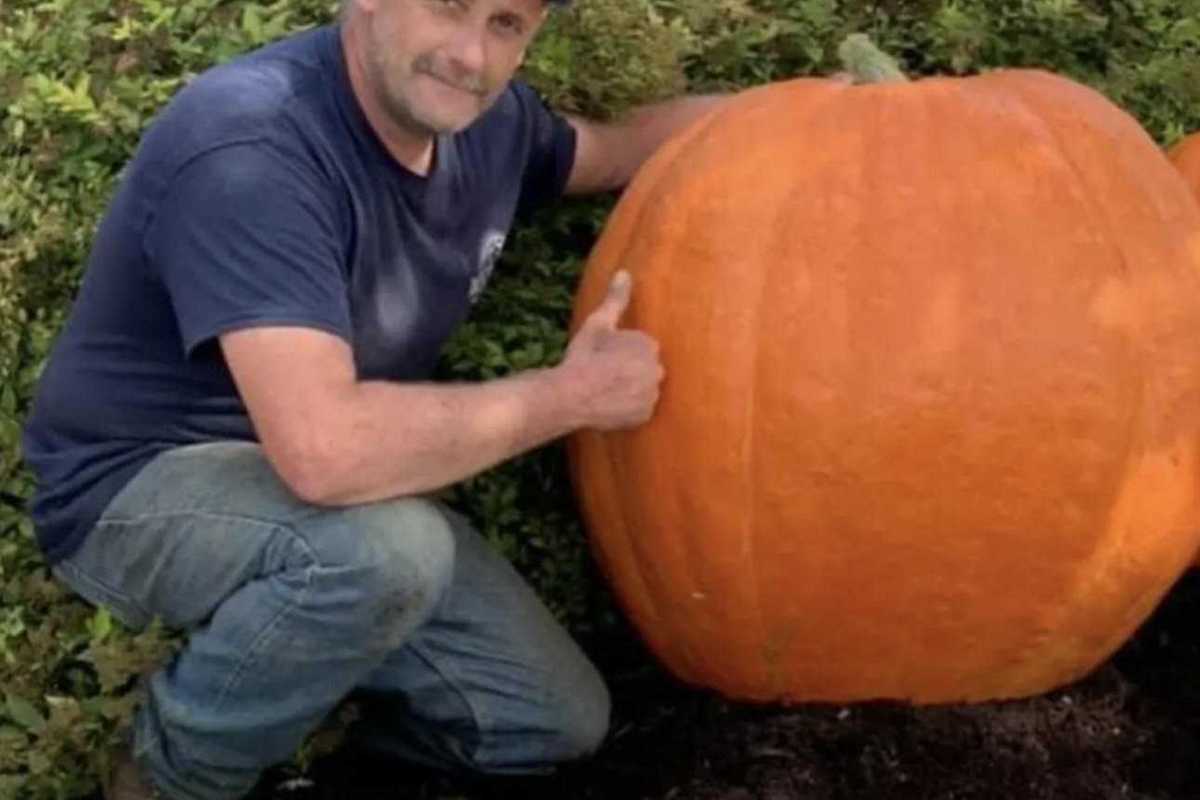
MILLERTON — James (Jimmy) Cookingham, 51, a lifelong local resident, passed away on Jan. 19, 2026.
James was born on April 17, 1972 in Sharon, the son of Robert Cookingham and the late Joanne Cookingham.
He attended Webutuck Central School.
Jimmy was an avid farmer since a very young age at Daisey Hill and eventually had joint ownership of Daisey Hill Farm in Millerton with his wife Jessica.
He took great pride in growing pumpkins and sweet corn.
He was very outdoorsy and besides farming, loved to ride four wheelers, fish, and deer hunt. He also loved to make a roaring bonfire.
He was a farmer, friend, husband, father, son and brother. He will be missed by many.
He is survived by his father, Robert Cookingham, wife Jessica (Ball) Cookingham, daughters, Hailey Cookingham-Loiodice (Matt), Taylor Ellis-Tanner (Jimmy) and sister Brenda Valyou, as well as many cousins, nieces and nephews.
He is predeceased by his mother, Joanne (Palmer) Cookingham.
His daughter, Hailey, will always keep his legacy alive by their father-daughter antics, such as their handshake, nicknames and making “quacking noises” at each other.
Services/Memorials will be held at a later date.
The Kenny Funeral Home has care of arrangements.
Keep ReadingShow less
Herbert Raymond Franson
Jan 28, 2026
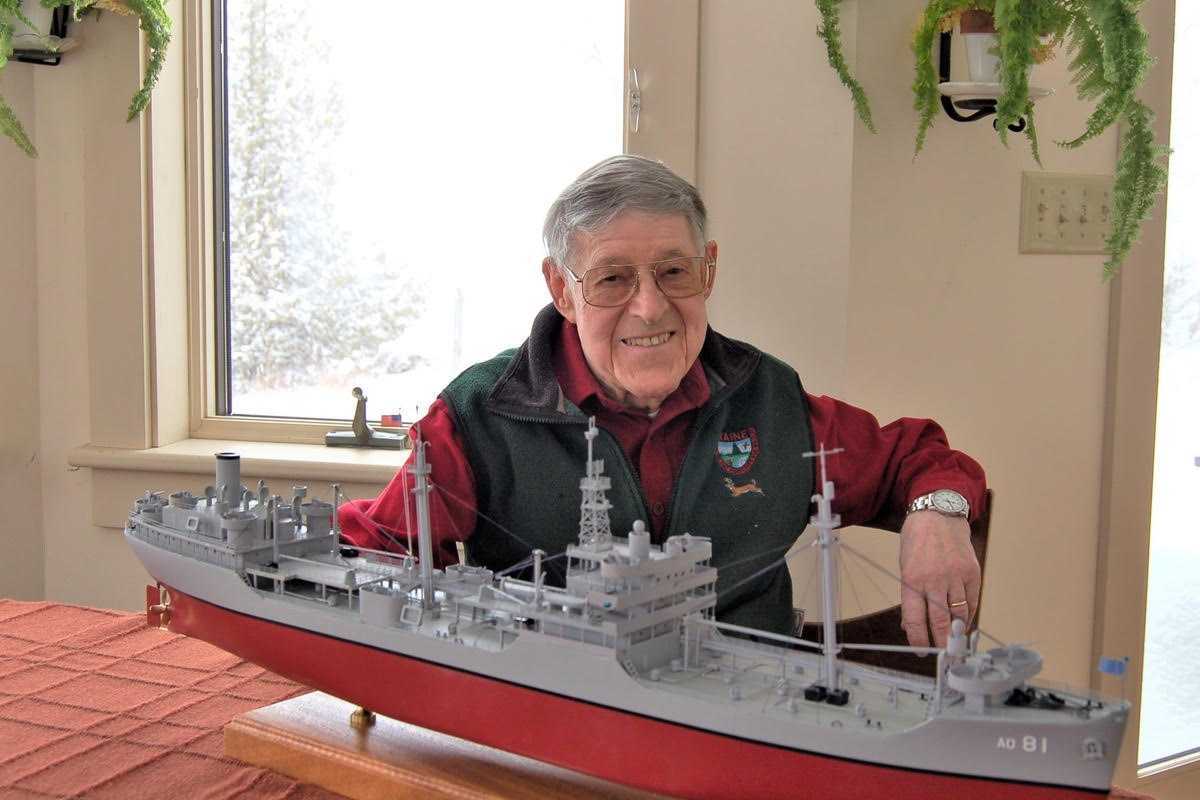
SALISBURY — Herbert Raymond Franson, 94, passed away on Jan. 18, 2026. He was the loving husband of Evelyn Hansen Franson. Better known as Ray, within his family, and Herb elsewhere.
He was born on Feb. 11, 1931 in Brooklyn, New York.
When he was three years old, he emigrated to Sweden with his mother, Amy (Larson), father Carl Herbert and sister, Ruth. He was nurtured by members of his extended family. Being owners and managers of manufacturing plants in rural Sweden, they gave this curious “nuts and bolts kind of guy” access to machinery where he could satisfy his needs to repair and build parts for his kid-style projects. At 18 he returned to relatives in Marlborough, Connecticut who encouraged him to continue high school. He met classmate Evelyn, his English tutor and future wife, at East Hampton High School and they graduated in the class of 1949.
He joined the US Navy and served in the Mediterranean aboard the USS Midway and, during the Korean conflict, aboard the USS Pine Island. Upon discharge he attended Porter School of Machine and Tool Design under the GI Bill. He then apprenticed as a tool and die maker for Pratt Whitney Aircraft, then worked for Stirling Engineering, culminating as a mold engineer with Becton Dickinson, Canaan, Connecticut; much closer to his home on Twin Lakes. At B-D he was involved in molding technology and traveled to plants worldwide overseeing production of syringes used to deliver vaccines.
Along the way, he renovated and constructed three homes in Marlborough and Salisbury and in Rangeley, Maine.
Ray and Evelyn retired to Rangeley in 1992 after living at Twin Lakes for 25 years. He joined the Rangeley Congregational Church just in time to coordinate renovation of the church’s old barn into a community center. This led to the position of “clerk of the works” when the Rangeley Region Guides and Sportsmen’s Association renovated and enlarged their clubhouse in Oquossoc. RRG&SA honored his dedication with a Lifetime Membership. He also volunteered driving the RRHAT van and coordinated meal deliveries for the Housing Development. He served on various boards of the church chairing buildings and grounds for many years. In his eighties, Ray turned to designing and building scratch built wood models including the Drottningholm (on which he had emigrated), the USS Midway and the steamship Rangeley to mention a few.
Ray leaves his wife of 72 years, Evelyn (Hansen), his sister, Astrid F. Harrison of Cromwell, Connecticut, brother, Carl B. Franson of Lime Rock, son Kenneth and wife Christine of Wolfeboro, New Hampshire and Rangeley, Maine, daughter, Jean F. Bell and husband Rick of Salisbury. Grandchildren Kayla J. (Bell) Johnson and husband Brett of Salisbury, and Cody J. Franson, wife Maria and great granddaughter Francesca Evelyn Franson of Rangeley, Maine.
In lieu of flowers, monetary remembrances may be made to the Rangeley Congregational Church, PO Box 218, Rangeley, ME, 04970.
The Kenny Funeral Home has care of arrangements.
Keep ReadingShow less
loading